

Can Gym Clothes Go in Dryer? Essential Care Tips Revealed
Can Gym Clothes Go In Dryer
After a tough workout, you probably want to wash your gym clothes and get them dry as fast as possible. But is it safe to put those stretchy leggings, moisture-wicking shirts, and sports bras in the dryer? Many people are unsure about this. Some say the dryer ruins gym clothes, while others have no problem tossing everything in. The answer depends on the fabric, the care label, and how you want your gym clothes to last.
Drying gym clothes seems simple, but it can affect how your athletic wear feels, fits, and performs over time. If you want to keep your workout gear comfortable, odor-free, and looking new, it’s worth learning the best way to dry it.
This article will give you clear, practical advice on drying gym clothes, common mistakes to avoid, and tips to make your athletic wear last longer. By the end, you’ll know exactly how to handle your gym clothes after every wash.
Why Drying Gym Clothes Properly Matters
Many people don’t realize how much the drying process can affect gym clothes. Athletic wear is made from special fabrics designed to manage sweat, stretch with your movements, and hold their shape. Putting them in the dryer the wrong way can cause:
- Shrinkage: Clothes may become too tight or lose their original fit.
- Loss of elasticity: Fabrics like spandex and elastane can lose their stretch.
- Damage to fabric technology: Special coatings or fibers for moisture-wicking can break down.
- Color fading: Bright colors and prints may look dull.
- Bad odors: Moisture trapped by poor drying can create smells that are hard to remove.
Proper drying helps maintain the comfort, performance, and life of your gym clothes. It also saves money in the long run because you replace items less often.
Understanding Gym Clothes Materials
Before you decide to use the dryer, it’s important to know what your gym clothes are made of. Most athletic wear uses synthetic fabrics. Each has its own reaction to heat and drying.
| Fabric Type | Common Use in Gym Clothes | Heat Sensitivity |
|---|---|---|
| Polyester | T-shirts, shorts, leggings | Medium |
| Nylon | Sports bras, running jackets | High |
| Spandex/Elastane (Lycra) | Leggings, compression wear | Very High |
| Cotton blends | Basic tees, some joggers | Low to Medium |
| Wool blends | Performance socks, base layers | High |
Polyester and nylon are common because they dry quickly and wick moisture. But they are sensitive to high heat. Spandex (sometimes called elastane or Lycra) is often blended with other fabrics for stretch, but it breaks down quickly when exposed to high temperatures.
Some gym clothes use cotton blends. Cotton can handle more heat, but when mixed with synthetic fibers, it’s safer to use low or medium heat.
Can Gym Clothes Go In The Dryer? The Short Answer
Yes, many gym clothes can go in the dryer, but with important conditions:
- Use low heat or air-dry settings.
- Check the care label for specific instructions.
- Avoid high heat cycles, which can damage the fabric.
The safest choice is to air-dry or use the dryer only when the care label allows it. High heat is the main reason for damage. If you want to dry gym clothes faster, use the lowest dryer setting or a “tumble dry low” program.
What Do Care Labels Really Mean?
Most people ignore the small tag inside their clothes, but it contains valuable information. Here’s what common care label instructions mean for gym clothes:
| Care Label Symbol | Meaning | Action for Dryer |
|---|---|---|
| Square with circle, single dot | Tumble dry, low heat | Safe on low heat only |
| Square with circle, two dots | Tumble dry, medium heat | Safe on medium heat, but better to use low |
| Square with circle, crossed out | Do not tumble dry | Air-dry only |
| Square with three vertical lines | Drip dry | Hang to dry, avoid dryer |
| Square with horizontal line | Dry flat | Lay flat to dry, do not hang or use dryer |
Non-obvious tip: Some labels use symbols only. If you’re unsure, look up the meaning before using the dryer. Even similar-looking gym clothes can have different care needs.
Credit: www.nike.com
Pros And Cons Of Using The Dryer For Gym Clothes
There are good and bad sides to using the dryer for gym clothes. Knowing both helps you make a smart choice.
Pros
- Saves time: The dryer is much faster than air-drying.
- Softens fabric: Some clothes feel softer after a gentle tumble.
- Reduces wrinkles: Dryer heat can help reduce creasing.
- Convenient: Easy when you need clean clothes quickly.
Cons
- Heat damage: High temperatures break down elastic fibers.
- Shrinkage: Clothes may get tighter, especially with spandex.
- Fade and wear: Colors and prints can lose brightness.
- Shorter lifespan: Clothes may lose stretch and shape faster.
- Odor risk: Incomplete drying or high heat can lock in bad smells.
Less-known downside: Frequent drying at even medium heat can make sweat-wicking technology less effective, which means clothes may feel damp during workouts.
The Best Way To Dry Different Types Of Gym Clothes
Every gym outfit is a little different. Here’s how to handle the most popular types:
Leggings And Compression Wear
These almost always have a high percentage of spandex or elastane. Never use high heat. If you must use the dryer, choose the lowest setting and remove as soon as they’re dry. Air-drying is best to keep the fabric’s stretch.
Sports Bras
Sports bras lose their support if the elastic band is damaged. Lay them flat to air-dry if possible. If you use the dryer, place them in a mesh bag and use the air or low-heat setting.
Moisture-wicking T-shirts
Most are polyester or nylon. These can handle some heat, but low is safest. Turn shirts inside out to protect prints and colors. Remove as soon as dry to prevent wrinkles.
Athletic Socks
Performance socks (with wool or special fibers) should be air-dried or dried on low. High heat can make them shrink or lose their sweat control.
Cotton Blend Shorts And Tees
These are a bit tougher and can take medium heat, but always read the label. Cotton blended with spandex should still avoid high heat.
Air-drying Vs. Tumble Drying: Which Is Better?
Both methods have their place. Let’s compare them:
| Method | Advantages | Disadvantages |
|---|---|---|
| Air-Drying | - No heat damage - Maintains elasticity - Eco-friendly (saves energy) |
- Takes longer - Needs space - May cause stiffness in some fabrics |
| Tumble Drying (Low Heat) | - Fast - Softens fabric - Easy for large loads |
- Possible heat damage - Can shrink or fade clothes - Uses more energy |
Non-obvious insight: Air-drying in a well-ventilated area helps prevent musty odors and can actually make clothes last longer than using the dryer, even on low heat.
How To Use The Dryer Safely For Gym Clothes
If you decide to use the dryer, you can do a few things to minimize the risk of damage:
- Use a mesh laundry bag: This protects delicate items and keeps straps from stretching.
- Select the lowest heat setting: Look for “air dry,” “delicate,” or “tumble dry low.”
- Don’t overload: Clothes need space to tumble, or they won’t dry evenly.
- Remove clothes early: Take out gym clothes while slightly damp, then air-dry the rest of the way.
- Clean the lint filter: A clogged filter makes the dryer hotter and less effective.
- Dry similar fabrics together: Mixing heavy and light items may cause uneven drying.
Insider tip: For sports bras, leggings, and other high-elasticity items, drying inside a pillowcase can reduce stretching and keep the shape better.
Common Mistakes When Drying Gym Clothes
Many people make small errors that shorten the life of their gym clothes. Here are mistakes to avoid:
- Using high heat: Even one cycle on high can damage elastic fibers.
- Skipping the care label: Don’t assume all gym clothes are the same.
- Leaving clothes in the dryer too long: Over-drying weakens fabric.
- Not separating loads: Mixing towels or jeans with gym clothes causes abrasion.
- Not turning clothes inside out: Prints and reflective details last longer if protected.
A less obvious mistake is drying clothes in direct sunlight for too long. While sun can kill some bacteria, it can also fade colors and weaken fabric if left for hours.
How Dryers Affect Odor And Bacteria
Some people think a hot dryer will remove all smells and germs from gym clothes. This is only partly true.
- Heat can kill some bacteria, but not all. Many athletic fabrics trap sweat and oils deep in the fibers.
- Improper drying (damp clothes left in the dryer or basket) can actually make odors worse.
To prevent bad smells:
- Wash gym clothes soon after use.
- Use a sports detergent for tough odors.
- Dry clothes completely, but avoid overdrying.
Surprising fact: Research has shown that some odor-causing bacteria survive normal washing and drying. For tough odors, try soaking clothes in a vinegar-water mix before washing.
:max_bytes(150000):strip_icc()/GettyImages-1969133432-a153359083064d42a9b3aa4b48c817de.jpg)
Credit: www.southernliving.com
How To Make Gym Clothes Last Longer
If you invest in high-quality gym wear, you want it to last. Here are proven ways to keep your gear in top shape:
- Wash after each use: Sweat and oils break down fabric if left for days.
- Turn inside out before washing and drying: Protects outer layers.
- Use gentle detergents: Harsh chemicals damage elastic fibers.
- Avoid fabric softeners: These coat moisture-wicking fibers, making them less effective.
- Wash in cold water: Hot water can shrink and fade clothes.
- Store dry and clean: Never leave sweaty clothes in a gym bag.
Little-known tip: Occasionally “reset” your gym clothes by washing with a cup of white vinegar (no detergent) to remove built-up residue and odors.
Signs Your Gym Clothes Are Damaged By The Dryer
Sometimes, it’s hard to tell if your dryer is causing harm. Look for these warning signs:
- Loss of stretch: Leggings or bras feel loose or saggy.
- Peeling or cracking prints: Logos and designs start to flake.
- Pilling: Small balls of fiber appear, especially on high-friction areas.
- Color fading: Clothes look dull even after a short time.
- Permanent odors: Bad smells remain after washing and drying.
If you notice these, try switching to air-drying for your next loads.
Special Tips For Gym Clothes With Technology Features
Many modern gym clothes have anti-odor, UV protection, or compression technology. These features are sensitive to heat.
- Anti-odor fabrics: Heat can break down silver ions or other odor-fighting agents.
- UV-blocking clothes: High heat may reduce effectiveness.
- Compression wear: Lose their tight fit if dried on high heat.
Always read the label for these items and choose air-drying or the lowest dryer setting. For more on fabric technologies, check this Technical Textile overview.
Travel And Gym: Drying On The Go
If you travel or use a gym with no dryer, you may need to dry clothes quickly by hand. Here’s how:
- Roll clothes in a towel: After washing, lay gym clothes on a clean towel, roll tightly, and press to remove water.
- Hang in a ventilated area: Use a hanger or a shower rod.
- Use a hairdryer (cool setting): For fast drying, blow cool air over clothes (don’t use hot air).
Pro tip: Carry a small bottle of quick-dry spray or use microfiber towels to speed up drying when traveling.
How To Handle Stubborn Odors And Stains
Sometimes, regular washing and drying aren’t enough. For strong odors or stains:
- Soak in vinegar and water: Use 1 cup white vinegar per sink of water, soak for 30 minutes.
- Use baking soda: Add half a cup to the wash to break down smells.
- Try enzyme-based detergents: These break down sweat and oils better than regular soap.
Drying in direct sun for 1-2 hours can also help kill bacteria, but avoid leaving clothes for too long to prevent fading.
Do Dryer Sheets Help Or Hurt Gym Clothes?
Dryer sheets can make clothes smell fresh and feel soft, but they’re not always good for gym wear. The waxy coating from dryer sheets can block the tiny holes in moisture-wicking fabrics, making them less effective at keeping you dry.
If you want softer gym clothes, use wool dryer balls instead. They soften fabric naturally and reduce static without chemicals.
Quick-reference: Gym Clothes Dryer Dos And Don’ts
Here’s a simple summary for busy people:
Dos:
- Check care labels.
- Use low heat or air-dry settings.
- Separate gym clothes from heavy items.
- Remove promptly after drying.
- Use mesh bags for delicate items.
Don’ts:
- Don’t use high heat.
- Don’t overload the dryer.
- Don’t use dryer sheets on moisture-wicking clothes.
- Don’t ignore strong odors—treat before drying.
How To Tell If A Dryer Is Too Hot For Gym Clothes
Some dryers run hotter than others, even on low settings. If you notice clothes coming out very warm or smelling burnt, try this:
- Place your hand inside the drum during the last minutes of drying. It should feel barely warm, not hot.
- If unsure, air-dry the most delicate items, especially those with high spandex or special technology.
When It’s Okay To Skip The Dryer Entirely
You might want to skip the dryer if:
- You have expensive or favorite gym clothes.
- Clothes contain more than 15% spandex/elastane.
- They have special coatings or features.
- You live in a warm, dry climate (air-drying is fast).
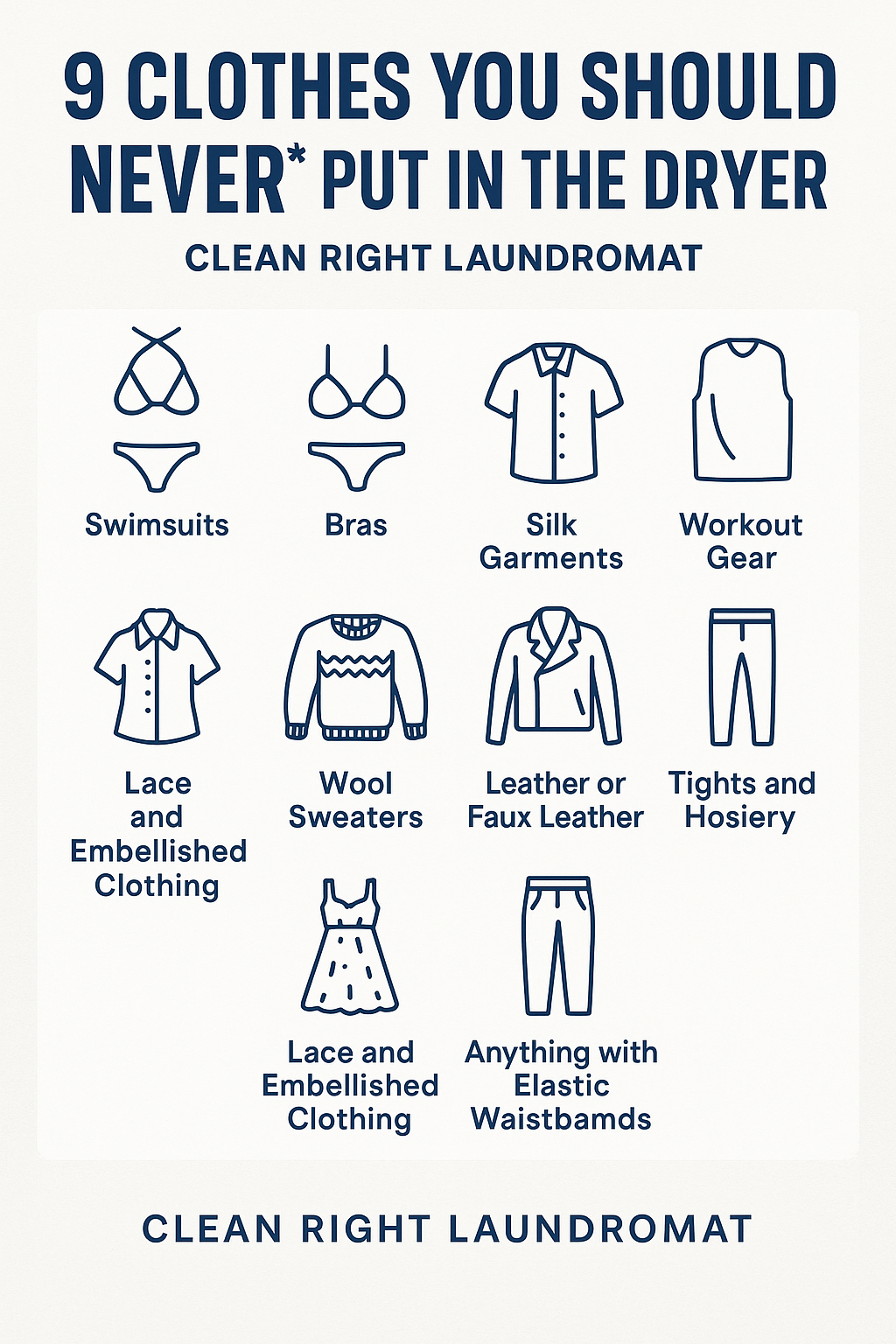
Air-drying is the safest for maximum lifespan. For everyday, cheaper gym clothes, a low-heat dryer is usually fine.
The Environmental Impact Of Drying Gym Clothes
Dryers use a lot of energy. Air-drying saves electricity and is better for the planet. If you dry clothes outside, you also reduce indoor humidity and wear on your dryer. Even air-drying half your gym clothes can make a difference over time.
Credit: www.cleanrightlaundromat.com
Frequently Asked Questions
Can All Gym Clothes Go In The Dryer?
No, not all gym clothes are safe for the dryer. Clothes with lots of spandex, elastane, or special coatings should be air-dried or dried on low heat. Always check the care label first.
What Happens If I Accidentally Dry Gym Clothes On High Heat?
High heat can shrink gym clothes, weaken elastic fibers, and damage moisture-wicking technology. If you make a mistake once, it may not ruin the item, but repeated high-heat drying will shorten its life and performance.
Are There Any Benefits To Using The Dryer For Gym Clothes?
Yes, the dryer is fast and softens some fabrics. However, these benefits are best enjoyed on low or air-dry settings. Avoid high heat to keep clothes in good shape.
How Can I Remove Bad Odors From Gym Clothes?
Soak in white vinegar or use enzyme-based detergents before washing. Air-drying in sunlight for a short period can also help, but avoid long exposure to keep colors bright.
Is It Better To Air-dry Or Tumble Dry Gym Clothes?
Air-drying is safest for most gym clothes, especially those with high elasticity or special features. Tumble drying on low heat is okay for some items, but always check the label and avoid overdrying.
Taking care of gym clothes may seem like extra work, but it pays off by keeping your favorite workout gear comfortable and durable. Whether you use the dryer or not, a little attention to drying makes all the difference in how your athletic wear looks, feels, and performs.
Your gym clothes work hard for you—give them the best care, and they’ll last much longer.
