

Business Casual Women vs Formal: Key Differences Explained
Business Casual Women Vs Formal
The way you dress at work says a lot about you. For women, the choice between business casual and formal attire can be a daily decision. It is not just about following company rules, but also about feeling confident and ready for any task. These two dress codes might sound simple, but they each have their own rules, style tips, and unwritten expectations. Understanding the difference is important, especially if you want to make a strong impression, feel comfortable, and move up in your career.
Choosing what to wear is not just about style. It is about understanding your work environment, the message you want to send, and even the culture of your company or industry. Some offices are more relaxed, while others expect a very polished look.
Sometimes, what is “business casual” in one place might be considered too informal somewhere else. In this guide, you will learn the real differences between business casual and formal attire for women. You will see how each style works, what items you should have, and how to avoid the most common mistakes.
You will also get data, examples, and tips that go beyond the basics—helping you dress smartly and confidently in any professional setting.
What Is Business Casual For Women?
Business casual has become one of the most common office dress codes. It offers a balance between the strictness of formal wear and the comfort of casual clothes. But what exactly does it mean for women?
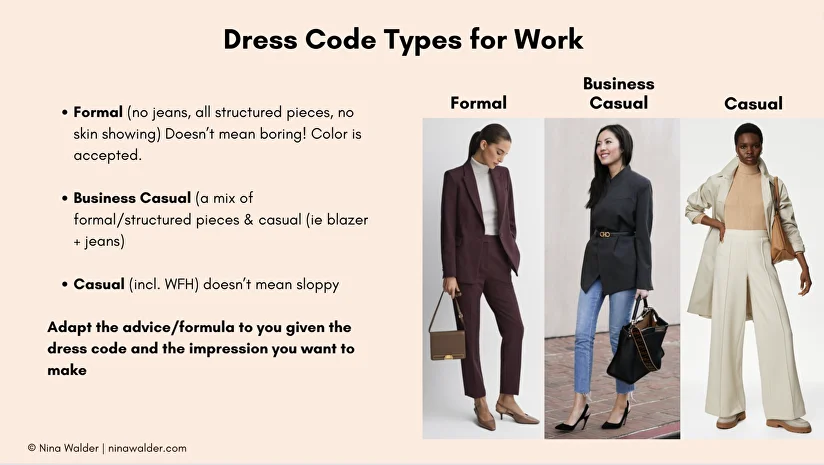
Business casual usually means neat, professional clothing that is less formal than a suit. It includes items like dress pants, skirts, blouses, cardigans, or simple dresses. Shoes are often closed-toe, but high heels are not required. You can add some personality with colors or accessories, but the look should still be tidy and work-appropriate.
Some common business casual staples for women include:
- Tailored pants or khakis
- Knee-length skirts or dresses
- Blouses or knit tops (not too revealing)
- Cardigans or blazers
- Closed-toe flats, loafers, or low heels
The goal is to look polished but comfortable. Business casual is popular in creative fields, tech companies, and many modern offices that want to relax strict dress codes without becoming too informal.
Key Features Of Business Casual
- Comfortable fabrics like cotton, wool, or blends
- Soft colors and simple patterns
- Minimal jewelry and accessories
- No jeans, shorts, or athletic wear
- Layering options (cardigans, light sweaters)
It is important to remember that “business casual” can mean different things in different places. Some offices allow dark jeans, while others do not. Always check your company’s dress code for specific rules.
What Is Formal Attire For Women?
Formal business attire is the most traditional and polished style of dressing for work. This dress code is common in law firms, banks, government offices, and some corporate environments where professionalism is expected at all times.
Formal business wear for women is about looking sharp, serious, and put-together. It usually means a matching suit (blazer and skirt or pants), a conservative blouse, and formal shoes. The colors are often neutral—black, navy, gray, or beige. Accessories are simple and understated.
Typical formal attire for women includes:
- Tailored pantsuits or skirt suits
- Dress shirts or high-neck blouses
- Knee-length (or longer) skirts
- Pantyhose or tights (sometimes required)
- Closed-toe pumps or dress shoes
- Minimal, classic jewelry
This style leaves little room for personal expression. The focus is on professionalism and not drawing attention away from your work.
Key Features Of Formal Attire
- Structured fabrics (wool, blends, high-quality cotton)
- Neutral colors and solid patterns
- Well-fitted garments
- No casual items (no denim, cotton tees, sandals)
- Polished shoes and subtle accessories
Many companies expect formal attire for important meetings, interviews, or when meeting clients. Even if your office is mostly business casual, you may need a formal outfit for special occasions.
Side-by-side Comparison: Business Casual Vs Formal
To clearly see the difference between these two styles, compare key elements side-by-side. This table shows the main features for each dress code:
| Element | Business Casual | Formal Attire |
|---|---|---|
| Typical Clothing | Blouses, cardigans, dress pants, skirts, simple dresses | Suit (blazer + pants/skirt), dress shirt, formal dress |
| Colors | Softer tones, muted colors, some patterns | Neutral, solid colors (black, navy, gray, beige) |
| Shoes | Flats, loafers, low heels | Pumps, classic closed-toe heels |
| Accessories | Minimal, but some personal style allowed | Very minimal, classic (pearls, simple watch) |
| Fabrics | Cotton, blends, knits | Wool, high-quality blends |
| Flexibility | More options, flexible layers | Little room for personal style |
This side-by-side view helps explain why business casual is seen as more relaxed, while formal attire is all about tradition and rules.
Why Dress Codes Matter In Business
Dress codes are not just about looks—they affect how people see you and even how you feel at work. Here are some reasons why choosing the right dress code is important:
- First Impressions: People often judge you by your appearance before you say a word. The right clothing shows you are serious, capable, and respectful of your environment.
- Company Culture: Dress codes reflect company values. Creative industries may allow more casual looks, while finance or law stick to formal wear.
- Confidence and Productivity: Wearing clothes that fit the company culture can make you feel more comfortable and help you focus on your work.
- Professional Growth: Dressing appropriately can affect promotions or new opportunities. Sometimes, being too casual can hurt your reputation.
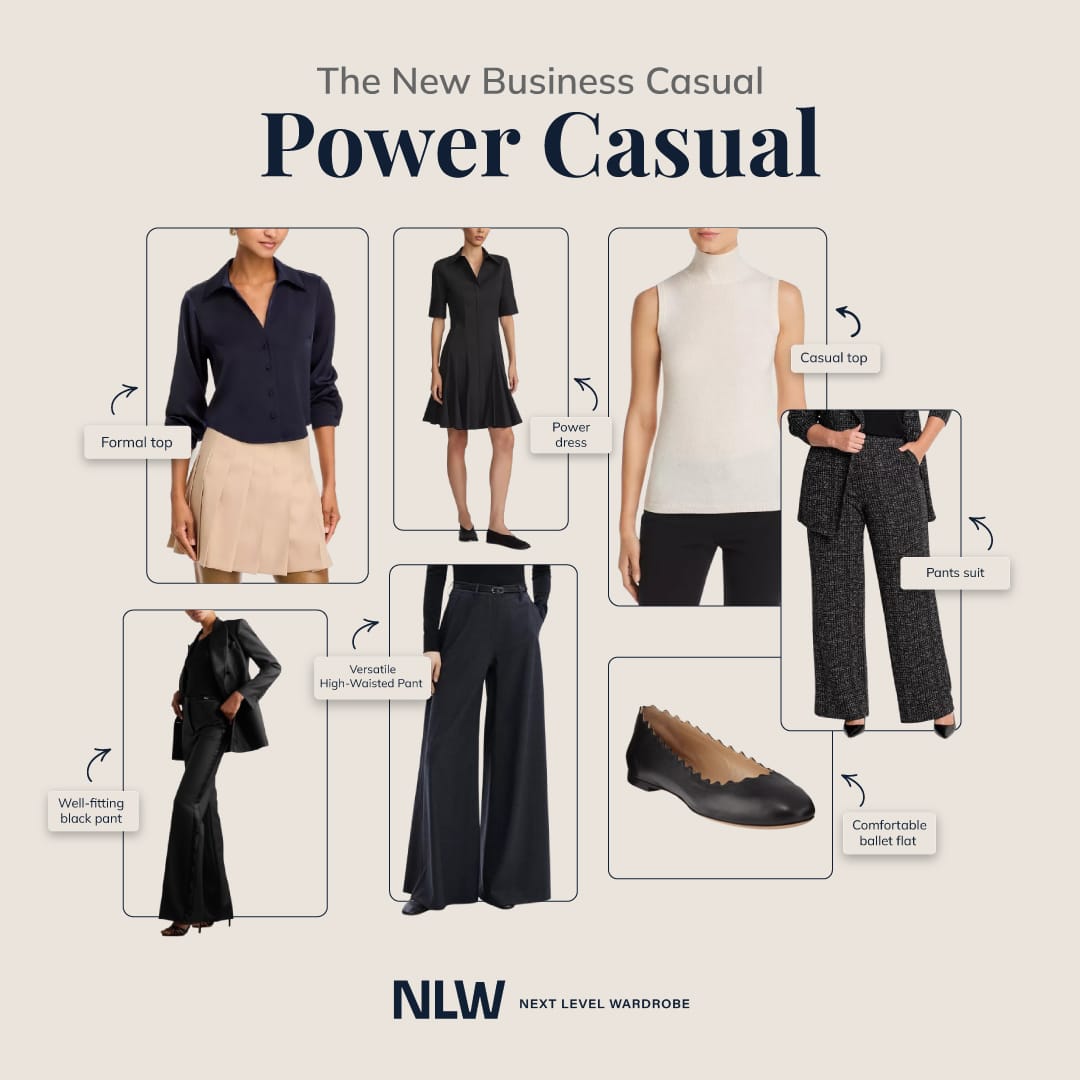
According to a study by the Society for Human Resource Management, 44% of companies have relaxed their dress codes in recent years, but 55% still expect formal business attire for important meetings or client events. This means knowing both styles is helpful, as you may need to switch between them depending on your role or task.
Credit: nextlevelwardrobe.com
Essential Items For Business Casual Women
Building a great business casual wardrobe does not require a huge budget. Focus on a few versatile pieces that you can mix and match. Here are some must-haves:
- Tailored Pants: Choose neutral colors like black, navy, or gray. Make sure they are well-fitted—not too tight or baggy.
- Knee-Length Skirts: Pencil or A-line skirts are safe choices. Avoid anything too short or too tight.
- Blouses and Tops: Go for simple, elegant blouses. Avoid tops that are too low-cut or have large logos.
- Cardigans and Light Sweaters: Great for layering and adding a professional touch to simple outfits.
- Simple Dresses: A knee-length sheath dress or wrap dress works well.
- Blazers: Optional, but a fitted blazer can instantly make an outfit look more polished.
- Comfortable Shoes: Flats, loafers, or low heels in neutral tones match most outfits.
Example Business Casual Outfits
- Navy pants, white blouse, gray cardigan, black loafers
- Black pencil skirt, patterned blouse, tan flats
- Simple dress with a belt, light sweater, closed-toe heels
Many women make the mistake of thinking business casual is the same as casual. Avoid jeans, sneakers, and t-shirts unless your company specifically allows them. Small details—like polished shoes or neat hair—can make a big difference.
Essential Items For Formal Attire Women
A formal wardrobe is simpler, but the quality and fit of each item are more important. Here is what you need:
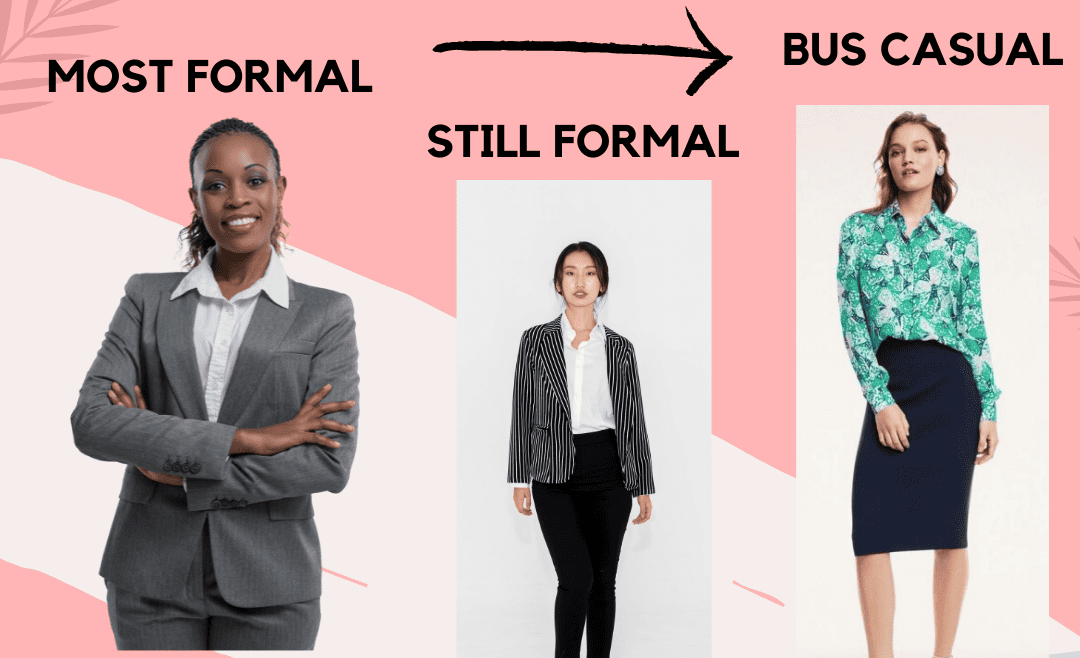
- Matching Suit: Invest in a high-quality blazer with matching pants or a skirt.
- Dress Shirts or Blouses: Stick to solid colors or very subtle patterns. White, light blue, and beige are safest.
- Knee-Length Skirt: If you prefer skirts, make sure they match your blazer.
- Pantyhose or Tights: Often required with skirts or dresses, especially in conservative offices.
- Closed-Toe Pumps: Classic, mid-height heels in black or nude.
- Minimal Accessories: A simple watch, pearl earrings, or a thin chain necklace.
Example Formal Outfits
- Black pantsuit, white dress shirt, black pumps
- Gray skirt suit, light blue blouse, nude heels, simple stud earrings
- Navy blazer and skirt, beige blouse, black pumps
Do not add bright colors or flashy jewelry. The goal is to look serious and focused. Some women think they can “dress up” casual items (like a sweater or cardigan) for formal events, but this can look unprofessional.
Credit: imagedesignconsulting.com
Key Differences In Fabrics, Colors, And Fit
The materials, shades, and tailoring of your clothes matter more than many people realize. Let’s look at how business casual and formal wear differ in these areas.
Fabrics
- Business Casual: Cotton, jersey, knit blends, twill. These are softer and more comfortable but still look neat.
- Formal Attire: Wool, high-quality synthetic blends, crisp cotton, silk. These hold their shape and give a structured look.
Colors
- Business Casual: Allows more variety. Soft pastels, muted prints, and some patterns are okay. Avoid very bright or neon colors.
- Formal Attire: Stick to black, navy, gray, and beige. Patterns should be almost invisible.
Fit
- Business Casual: Clothes should fit well but allow movement. Slightly relaxed shapes are fine.
- Formal Attire: Clothes must be perfectly tailored. Baggy or tight items look unprofessional.
A common beginner mistake is wearing business casual fabrics (like jersey or knits) in formal settings. These can look sloppy next to structured suits.
Practical Scenarios: When To Wear Business Casual Vs Formal
Knowing when to choose each style can be tricky, especially if your office has flexible rules. Here are some situations to help you decide:
Business Casual Is Best For:
- Everyday work in relaxed offices
- Internal team meetings
- Creative or tech companies
- “Casual Fridays”
Formal Attire Is Best For:
- Interviews
- Client meetings or presentations
- Important company events
- Working in law, banking, or government
If you are unsure, it is safer to dress more formally. You can always remove a blazer or swap shoes if you feel overdressed. Being underdressed, however, can damage your professional image.
Dos And Don’ts For Each Dress Code
Even with guidelines, mistakes happen. Here are some dos and don’ts for each style:
Business Casual
Do:
- Choose clean, wrinkle-free clothes.
- Add subtle personality with color or accessories.
- Wear comfortable, professional shoes.
Don’t:
- Wear jeans, sneakers, or flip-flops (unless your office allows).
- Show too much skin (avoid short skirts, low necklines).
- Use flashy or large jewelry.
Formal Attire
Do:
- Make sure your suit fits perfectly.
- Keep makeup and accessories minimal.
- Wear closed-toe shoes.
Don’t:
- Mix suit pieces from different sets.
- Wear bright colors or bold patterns.
- Skip pantyhose if required by company rules.
How Business Casual And Formal Attire Affect Perception
What you wear can shape how others see you at work. Studies show that people in formal attire are often viewed as more competent and trustworthy. However, business casual can help coworkers feel more relaxed and open.
A survey by OfficeTeam found that 80% of managers believe clothing choices can affect an employee’s chances of promotion. But the same survey showed that employees who dress too formally in a casual office can seem distant or unapproachable.
The key is to match your clothing to your work environment, your role, and your goals. If you want to build strong relationships, business casual might be better. If you want to show authority or prepare for leadership, formal attire sends a stronger message.
Regional And Industry Differences
Dress codes are not the same everywhere. In the US, business casual is popular in tech, marketing, and many startups. On the East Coast, finance, law, and consulting firms usually prefer formal attire.
In Europe, many companies still expect formal wear, especially in Germany or the UK. In creative fields—like advertising or design—business casual (and even smart casual) is more common. In Asia, formal business attire is often the norm, especially in Japan or South Korea.
If you are new to a company or industry, watch what managers and leaders wear. This is usually a safe guide for what is expected.
The Financial Side: Cost Comparison
Building a wardrobe can be expensive, especially if you are just starting your career. Here is a simple comparison of the costs for each style:
| Item | Business Casual (Avg. Price) | Formal Attire (Avg. Price) |
|---|---|---|
| Pants/Skirt | $40 - $80 | $80 - $200 |
| Blouse/Shirt | $30 - $60 | $50 - $120 |
| Blazer/Suit Jacket | $60 - $120 | $150 - $400 |
| Shoes | $50 - $100 | $90 - $200 |
| Accessories | $15 - $50 | $30 - $100 |
Business casual wardrobes are usually cheaper and easier to update with new trends. Formal attire is an investment but lasts longer if you choose classic styles.
How To Transition Between Business Casual And Formal
There will be times when you need to switch from one dress code to another quickly. Here are some tips for making the transition smooth:
- Keep a blazer handy: Adding a blazer to a business casual outfit can make it look more formal right away.
- Choose neutral pieces: Clothes in black, navy, or gray can work for both dress codes.
- Swap shoes: Keep a pair of pumps at work for emergencies.
- Update accessories: Remove large or colorful jewelry when you need a more formal look.
- Use layering: Layering a cardigan or sweater can dress down a formal outfit for casual days.
A non-obvious tip: Pay attention to your handbag or laptop bag. A structured, simple bag looks more formal, while a soft tote or backpack is more casual.
Common Mistakes Women Make With Work Dress Codes
Even experienced professionals can get dress codes wrong. Here are some mistakes to avoid:
- Wearing leggings or yoga pants as if they are dress pants. These are almost never office-appropriate.
- Over-accessorizing: Too many bracelets, large earrings, or bright scarves can look unprofessional in both dress codes.
- Mixing patterns or colors that are too bold for the workplace.
- Ignoring fit: Clothing that is too tight or too loose can ruin even the most expensive outfit.
- Forgetting about grooming: Neat hair, clean nails, and minimal makeup are just as important as the clothes you wear.
Another mistake beginners often make: Thinking that “business casual” means you can dress however you want. Always follow your company’s rules and observe what your managers wear.
Dressing For Remote Or Hybrid Work
With more people working remotely, dress codes are changing again. Some companies have dropped dress codes, but others expect employees to look professional on video calls.
Tips for remote or hybrid work:
- Wear business casual on top: Even if you wear jeans, make sure your shirt or blouse looks professional on camera.
- Keep a blazer or cardigan nearby: You can quickly put it on for a meeting.
- Pay attention to lighting: Some colors look better on video than others (avoid pure white or very dark shirts).
- Grooming still matters: Neat hair and minimal makeup help you look polished, even online.
The Role Of Accessories
Accessories can help you express your personality without breaking dress code rules. In business casual, you can experiment with scarves, belts, or subtle jewelry. In formal settings, keep it very simple.
- Business Casual: Small earrings, delicate necklaces, classic watches, simple scarves.
- Formal Attire: Pearl or stud earrings, thin chain necklaces, one ring, classic watch.
A watch is one of the best investments for both styles. It shows you are organized and pay attention to detail.
Credit: ninawalder.com
Sustainable Choices: Eco-friendly Business Wear
Sustainability is becoming more important in fashion. Some women now choose brands that use eco-friendly fabrics or fair labor practices.
Tips for sustainable business wear:
- Choose quality over quantity: Buy fewer, better-made pieces.
- Opt for natural fabrics: Cotton, wool, linen are better for the environment.
- Support ethical brands: Look for certifications or company values.
- Care for your clothes: Dry clean suits only when needed, and follow care labels.
For more on sustainable fashion, check out this Good On You resource.
Frequently Asked Questions
What Is The Main Difference Between Business Casual And Formal Attire For Women?
The main difference is the level of formality and structure. Business casual is more relaxed, allows some personal style, and uses softer fabrics. Formal attire is stricter, uses matching suits, and focuses on neutral colors and classic shapes.
Can I Wear Jeans In A Business Casual Office?
It depends on your company’s policy. Some business casual offices allow dark, neat jeans with a blazer or blouse. However, many still do not. Always check your dress code or observe what others wear.
How Can I Make A Business Casual Outfit Look More Formal In A Hurry?
Add a blazer, switch to closed-toe heels, and remove any large jewelry. Choose a structured handbag if possible. These small changes can instantly upgrade your look.
Are Dresses Acceptable In Formal Business Attire?
Yes, but they should be knee-length or longer, made from high-quality fabric, and in a neutral color. Avoid sleeveless or low-cut styles unless covered by a blazer.
Is It Better To Be Overdressed Or Underdressed For Work?
It is almost always safer to be slightly overdressed. Being underdressed can make you look unprofessional or like you do not take the job seriously. If unsure, start formal and adjust as you learn more about your office culture.
Dressing for work is not just about following rules—it is about feeling confident and ready for anything. Whether you choose business casual or formal attire, understanding the differences helps you make smarter choices. As workplaces change, being flexible and observant is key.
By investing in quality pieces, paying attention to detail, and respecting your company’s culture, you can always look and feel your best at work.
