

Business Casual Does: Essential Rules for Modern Professionals
Business Casual Does: What It Really Means In Modern Workplaces
Walking into an office for the first time, you might notice people wearing slacks, neat shirts, and clean shoes. They look comfortable, yet professional. This is the world of business casual. For many, the phrase sounds simple, but it causes confusion. What does business casual really mean? What does it allow, and what does it stop you from wearing? Is it the same everywhere? Let’s explore the full picture and clear up common misunderstandings. Along the way, we’ll look at examples, real-life stories, and practical advice so you can feel confident about your choices.
The Meaning Of Business Casual
Business casual is not a strict dress code, but a set of guidelines. It’s a style that sits between formal business attire and everyday casual wear. The goal is to look professional without being too stiff or uncomfortable. Companies use business casual to create a friendly, approachable atmosphere while keeping standards high.
This style is often seen in offices where employees don’t meet clients face-to-face every day. It’s also common at tech firms, startups, and modern corporate environments. But the definition of business casual is not fixed. It changes from place to place, and even from department to department.
That’s why it’s important to understand the basics and adapt to your workplace.
Why Business Casual Matters
Business casual helps people feel more comfortable at work. It can boost morale, encourage creativity, and make it easier for people to connect. At the same time, it shows respect for the workplace and colleagues. Many companies believe that the right balance between comfort and professionalism helps employees perform better.
A survey by Society for Human Resource Management found that more than 60% of companies offer business casual dress codes. This shows how widespread it is. But the flexibility also means more questions. What’s okay? What’s not? Let’s break it down.
What Business Casual Does Allow
Understanding what business casual allows is the first step to feeling comfortable. Here are the main elements:
For Men
- Dress slacks or chinos: Choose neutral colors like black, gray, navy, or khaki. Avoid jeans unless your company says it’s okay.
- Collared shirts: Button-down shirts, polo shirts, and sometimes sweaters are fine. Stick to subtle patterns or solid colors.
- Dress shoes: Loafers, oxfords, and brogues are all good options. Clean sneakers may be allowed in creative offices.
- Belts: Match your belt color to your shoes for a neat look.
- Blazers or sport coats: Optional, but they add a touch of formality.
For Women
- Dress pants or skirts: Knee-length or longer is safest. Neutral colors work best.
- Blouses or tops: Simple patterns, solid colors, or subtle prints are common. Avoid low-cut or overly tight clothing.
- Sweaters and cardigans: Great for layering, especially in colder months.
- Closed-toe shoes: Flats, loafers, and low heels are popular. Clean sneakers may be allowed in some workplaces.
- Blazers: Optional, but make any outfit look more polished.
Accessories And Personal Style
Business casual allows for some personal expression. You can wear jewelry, watches, or scarves, but keep it simple. Avoid loud colors or flashy pieces. Small, tasteful accessories show personality without being distracting.
The Role Of Comfort
One of the big benefits of business casual is comfort. You don’t have to wear a suit and tie every day. Soft fabrics, relaxed fits, and practical shoes make it easier to focus on work. But comfort should never come before professionalism.
Always look neat and tidy.
What Business Casual Does Not Allow
If you want to avoid mistakes, it’s just as important to know what business casual does not allow. Here are some clear guidelines:
Clothes To Avoid
- T-shirts: Unless your company says it’s okay, avoid T-shirts without collars.
- Shorts: Never business casual, even in summer.
- Ripped or distressed jeans: Too casual for most offices.
- Tank tops and sleeveless shirts: Not professional.
- Flip-flops or sandals: Too relaxed for business settings.
- Athletic wear: Gym clothes, sweatpants, or leggings are not suitable.
Common Mistakes
Many people make small errors when trying to dress business casual. Here are a few non-obvious insights:
- Over-accessorizing: Too much jewelry or bold colors can distract.
- Wearing wrinkled clothes: Even if the item fits business casual, it must be clean and pressed.
- Ignoring fit: Clothes that are too tight or too loose look sloppy.
- Logo overload: Large logos or brand names make outfits look less professional.
When Rules Change
Some companies relax their rules for certain days or events, like casual Fridays or team outings. Always check the company guidelines or ask HR if you’re unsure. If you’re meeting clients or attending a big meeting, dress up a bit more.
Business Casual In Different Industries
Business casual looks different depending on the industry. Let’s compare a few examples:
| Industry | Common Business Casual Choices | What to Avoid |
|---|---|---|
| Finance | Slacks, button-down shirts, blazers, closed-toe shoes | Sneakers, T-shirts, flashy accessories |
| Tech | Chinos, polos, clean sneakers, sweaters | Shorts, flip-flops, athletic wear |
| Creative | Dress pants, stylish tops, bold accessories | Ripped jeans, tank tops, overly casual shoes |
| Healthcare Admin | Simple dresses, cardigans, flats | Open-toe shoes, bright patterns, casual wear |
As you can see, the definition shifts slightly depending on where you work. Always observe your environment and learn from colleagues.

Credit: www.rd.com
How Business Casual Has Changed
Business casual is not a new idea, but it has evolved. In the past, it was much closer to formal business wear. Today, it’s more relaxed. This change is driven by several factors:
- Remote work: Many people now work from home or hybrid setups, so comfort is a bigger priority.
- Tech companies: Silicon Valley made casual dress normal, even for big companies.
- Diversity and inclusion: Companies want employees to feel comfortable expressing their culture and personality.
But there is a risk: If business casual becomes too casual, it can hurt the company’s image. That’s why smart guidelines are important.
The Shift Toward More Comfort
Data from a Gallup poll shows that over 70% of employees prefer casual or business casual dress codes. This trend is likely to continue. But companies still want to maintain a sense of professionalism. The balance is key.
Practical Tips For Mastering Business Casual
Knowing the rules is good, but applying them is better. Here’s how to master business casual in real life:
Observe Your Workplace
Look at what managers and senior staff wear. They often set the standard. If everyone wears blazers, add one to your outfit. If people favor polo shirts and chinos, do the same.
Build A Versatile Wardrobe
Start with basics that mix and match easily:
- 2–3 pairs of slacks or chinos
- 3–4 shirts or blouses
- 1–2 pairs of shoes
- 1 blazer or cardigan
This way, you can create many outfits without spending a lot.
Prepare For Special Events
Have a few items ready for important meetings or presentations. A blazer, tie, or dressy shoes can quickly make your outfit more formal.
Keep Clothes Clean And Neat
Always iron your clothes and keep shoes polished. Small details matter in business casual.
Use Layers
Layering lets you adjust for the weather and look stylish. A sweater or cardigan works well in colder offices.
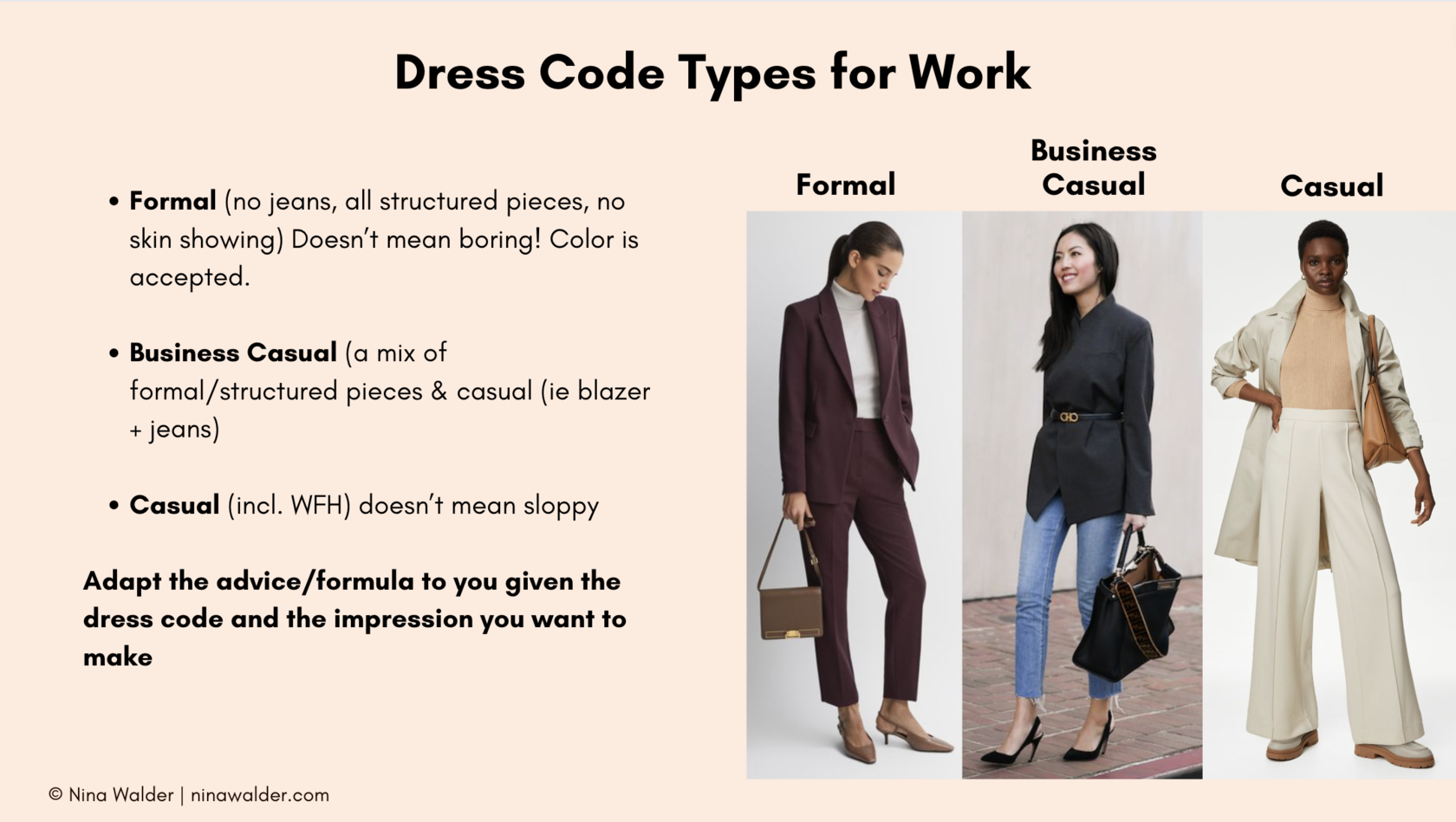
Business Casual Vs. Other Dress Codes
It helps to understand how business casual compares to other dress codes. Here’s a simple comparison:
| Dress Code | Main Features | Suitable for |
|---|---|---|
| Formal | Suits, ties, dress shoes | Board meetings, client events |
| Business Casual | Slacks, shirts, blouses, clean shoes | Daily office, team meetings |
| Casual | Jeans, T-shirts, sneakers | Casual Fridays, creative firms |
| Smart Casual | Mix of casual and formal, stylish touches | Client lunches, networking events |
Business casual is flexible, but still requires a professional look.
Real-life Examples Of Business Casual
Let’s make it clear with a few real-life examples:
- John works at a bank. He wears gray slacks, a light blue button-down shirt, black loafers, and a simple belt. He leaves his tie at home but adds a navy blazer for meetings.
- Maria is in a tech startup. She wears khaki chinos, a white polo shirt, clean sneakers, and a light sweater. She feels comfortable but looks tidy.
- Rachel is a graphic designer. She likes to add a bright scarf to her black dress pants and simple blouse. Her flats are stylish but not flashy.
- Liam works in healthcare administration. He wears black pants, a pale yellow blouse, a cardigan, and closed-toe shoes. He avoids loud patterns or open-toe footwear.
These examples show that business casual can be personal, but always professional.
How Culture And Location Affect Business Casual
Business casual means different things in different countries. In the US, it’s common to see polo shirts and khakis. In Europe, business casual might be more formal, with dark colors and tailored fits. In Asia, it often includes neat slacks and conservative shirts.
Climate also matters. In hot places, lighter fabrics and short-sleeve shirts are common. In cold climates, layering is more popular.
If you travel for work, always check local customs before packing your wardrobe.
Business Casual For Remote Workers
Working from home has changed business casual. Many remote workers dress more casually, but video calls still require a neat appearance. Here’s what works:
- Solid-colored shirts or blouses
- Simple sweaters
- Clean, tidy hair
- No distracting backgrounds
Some companies have relaxed rules for remote staff, but it’s smart to keep your look professional. You never know when you’ll have an important video call.
Gender Differences In Business Casual
Business casual guidelines are slightly different for men and women, but the goal is the same: look professional and comfortable.
For Men
- Stick to collared shirts and neat slacks.
- Avoid shorts, ripped jeans, and loud patterns.
- Shoes should be clean and closed-toe.
For Women
- Choose blouses, dress pants, skirts, or simple dresses.
- Avoid overly tight, short, or revealing clothes.
- Shoes should be neat and comfortable.
Both men and women should avoid excessive accessories and keep hair tidy.
Seasonal Business Casual
Dressing business casual changes with the seasons. Here’s how to adapt:
Summer
- Light fabrics: Cotton, linen, blends
- Short-sleeve shirts or blouses
- Avoid shorts or sandals
Winter
- Layer with sweaters, cardigans, or blazers
- Darker colors and heavier fabrics
- Keep shoes closed-toe
Always check your company’s guidelines for seasonal changes.
Credit: ninawalder.com
Business Casual For Special Occasions
Some workplaces have special events where the dress code changes. For example:
- Casual Fridays: Jeans may be allowed, but avoid ripped or distressed styles.
- Team outings: Dress for the activity but stay neat.
- Company parties: Smart casual or festive outfits, but never too revealing.
If you’re unsure, ask HR or your manager.
Common Business Casual Myths
There are several myths about business casual. Let’s clear them up:
- Myth: Business casual means jeans every day. Fact: Jeans are often not allowed unless your company says so.
- Myth: You don’t need to iron clothes. Fact: Neat, pressed clothing is always important.
- Myth: Sneakers are always fine. Fact: Only in some creative or tech offices.
- Myth: Accessories don’t matter. Fact: Simple accessories are best; avoid flashy items.

Credit: news.orvis.com
How To Stay Updated With Business Casual Trends
Trends change, so stay up-to-date. Follow your company’s internal guidelines, and observe what senior staff wear. You can also check fashion blogs or the Society for Human Resource Management website for advice.
If you’re unsure, dress slightly more formal until you learn the office culture.
Business Casual For Job Interviews
For interviews, business casual is usually safe, but lean toward more formal. Wear slacks, a collared shirt or blouse, closed-toe shoes, and a blazer if you have one. Avoid jeans, sneakers, and flashy accessories.
Research the company before your interview. Their website or social media often shows the dress code.
Creating Your Own Business Casual Style
Business casual lets you express yourself, but within limits. Here’s how to develop your style:
- Choose colors that suit you.
- Add small accessories like a watch or scarf.
- Mix and match basics for new outfits.
- Keep personal touches subtle.
This way, you look professional and feel comfortable.
Business Casual For Plus-size And Petite Workers
Everyone should feel confident in business casual. For plus-size or petite workers:
- Choose clothes that fit well, not too tight or loose.
- Look for brands that offer a wide range of sizes.
- Avoid oversized or extra-small items.
Confidence comes from comfort and fit.
Business Casual For Managers And Leaders
Leaders set the tone for dress codes. Managers should follow business casual rules but add a touch of formality:
- Wear blazers or sport coats.
- Choose classic colors.
- Avoid overly casual items.
This shows respect for the team and company.
Business Casual And Company Branding
Dress codes are part of a company’s brand. Business casual can make a company look modern and friendly. But sloppy outfits can hurt the brand. That’s why clear guidelines and regular reminders are important.
Some companies even include dress code tips in their onboarding materials. This helps new employees feel comfortable from the start.
Business Casual And Sustainability
Many people now care about the environment. You can make your business casual wardrobe more sustainable by:
- Buying fewer, better-quality items
- Choosing natural fabrics
- Avoiding fast fashion
Some companies encourage eco-friendly choices. This helps the planet and saves money.
Business Casual And Diversity
Business casual allows people to express their culture. For example, you can wear traditional jewelry or patterns if they are subtle and professional. Companies are becoming more open to diversity in dress codes.
If you want to include cultural touches, talk to HR or your manager first.
Business Casual For Different Age Groups
Business casual works for all ages. Young employees may prefer modern styles, while older workers may choose classic fits. Both should avoid overly casual or formal items.
Mixing generations in the workplace means learning from each other. Observe and adapt.
Business Casual And Mental Health
Feeling comfortable in your clothes helps mental health. Business casual allows for more freedom and less stress. You can focus on your work instead of worrying about strict dress codes.
But remember, too much freedom can cause confusion. Clear guidelines help everyone feel safe and confident.
Business Casual And Productivity
There’s evidence that comfortable clothing boosts productivity. Employees who feel good in their clothes are more focused and creative. But sloppy or careless dress can reduce professionalism.
The best business casual outfits balance comfort and neatness.
Business Casual And Company Policy
Every company has its own rules. Always check the employee handbook or ask HR about the dress code. Some companies list specific items that are allowed or banned.
If you’re unsure, dress a bit more formally until you learn what’s accepted.
Business Casual For Travel
If you travel for work, pack versatile pieces:
- Slacks or chinos
- Collared shirts
- Sweaters or cardigans
- Closed-toe shoes
Always check the dress code for each location.
Business Casual For Meetings And Presentations
For important meetings, dress up a bit. Add a blazer or choose a dressier shirt. This shows respect and confidence.
For everyday meetings, stick to business casual basics.
Business Casual And Technology
Modern technology helps people choose outfits. Apps can suggest combinations or track what you wear. Online shopping makes it easy to find business casual clothes.
Some companies even use apps for dress code reminders.
Business Casual And Social Media
Many companies post photos on social media. Employees should keep business casual standards in mind. Your outfit reflects the company’s brand.
If you’re unsure, ask before posting work photos.
Business Casual And Networking
When attending networking events, business casual is often expected. Choose neat, comfortable clothes and avoid flashy items. You’ll make a better impression.
Business Casual In The Future
Business casual will keep changing. Comfort, diversity, and technology will shape new trends. But the basics stay the same: look professional, be comfortable, and respect your workplace.
For more on workplace dress codes, visit Society for Human Resource Management.
Frequently Asked Questions
What Is Business Casual For Men?
Business casual for men usually means slacks or chinos, collared shirts, and closed-toe shoes. Avoid shorts, T-shirts, and sneakers unless your company allows them.
Can Women Wear Dresses In Business Casual?
Yes, women can wear simple dresses that are knee-length or longer. Avoid dresses that are too tight, short, or revealing.
Are Jeans Allowed In Business Casual?
Usually, jeans are not allowed unless your company has a relaxed rule, such as casual Fridays. If allowed, choose dark, neat jeans with no rips.
What Shoes Are Best For Business Casual?
Closed-toe shoes like loafers, flats, or low heels work best. Avoid sandals, flip-flops, or athletic shoes unless your workplace allows them.
How Can I Express My Style In Business Casual?
Add small accessories like a watch or scarf, choose colors that suit you, and mix basics for new outfits. Keep your look professional and avoid flashy items.
Business casual is about balancing comfort and professionalism. With the right choices, you’ll always look and feel your best at work.
