

Best Business Casual Attire for Men: Top Styles for Success
Business casual can be a confusing dress code for many men. It’s often less formal than a suit, but more polished than jeans and a t-shirt. Most offices, meetings, and networking events use this style, but the rules can change depending on the company, location, or industry. A good business casual look helps you appear confident, competent, and approachable. If you’re unsure what to wear, or want to improve your wardrobe, this guide will help you master business casual attire for men—with practical advice, real examples, and non-obvious tips that beginners often miss.
What Is Business Casual For Men?
Business casual is a mix of formal and casual clothing. It aims for a professional look, but without the strictness of a suit and tie. You should look neat, well-groomed, and ready for work, but also comfortable. A typical business casual outfit includes dress pants, a collared shirt, and leather shoes. Jackets, sweaters, and accessories add extra polish.
Some offices allow more relaxed pieces—like chinos or knit polos—while others expect button-down shirts and dress shoes. The key is to avoid anything too casual (like sneakers, shorts, or graphic tees) and anything too formal (like tuxedos or three-piece suits).
Here are basic elements of business casual:
- Dress pants or chinos
- Button-down shirts or polos
- Leather shoes (loafers, oxfords, brogues)
- Optional: Blazers, sweaters, belts, accessories
It’s always safe to dress slightly more formal than you think the situation requires. If you’re uncertain, ask your HR department or observe what managers wear.
Essential Business Casual Clothing Pieces
Getting business casual right starts with the basics. These are the core items every man should have in his wardrobe.
Dress Pants
Dress pants are the foundation of business casual. Choose materials like wool, cotton, or blends that look clean and structured. Avoid denim, cargo, or overly tight fits.
- Colors: Navy, gray, black, khaki, olive
- Fit: Slim or straight, not baggy or skinny
- Details: Minimal pockets, no flashy patterns
Non-obvious tip: Many beginners forget the importance of hem length. Pants should touch your shoes, but not bunch up or drag. Proper hemming makes your outfit look sharp.
Chinos
Chinos are a more relaxed option than dress pants, but still professional. They come in many colors and are usually made from cotton.
- Popular colors: Beige, navy, olive, stone
- Fit: Slightly tapered, comfortable
Non-obvious tip: Avoid bright colors like red or orange. They can look unprofessional in most settings.
Button-down Shirts
A button-down shirt is a must. Choose solid colors or subtle patterns. Avoid loud prints, short sleeves, or shirts with logos.
- Materials: Cotton, linen, blends
- Colors: White, light blue, pale pink, soft gray
- Patterns: Small checks, stripes
Insight: Iron your shirts or use a steamer. Wrinkles make even expensive shirts look cheap.
Polo Shirts
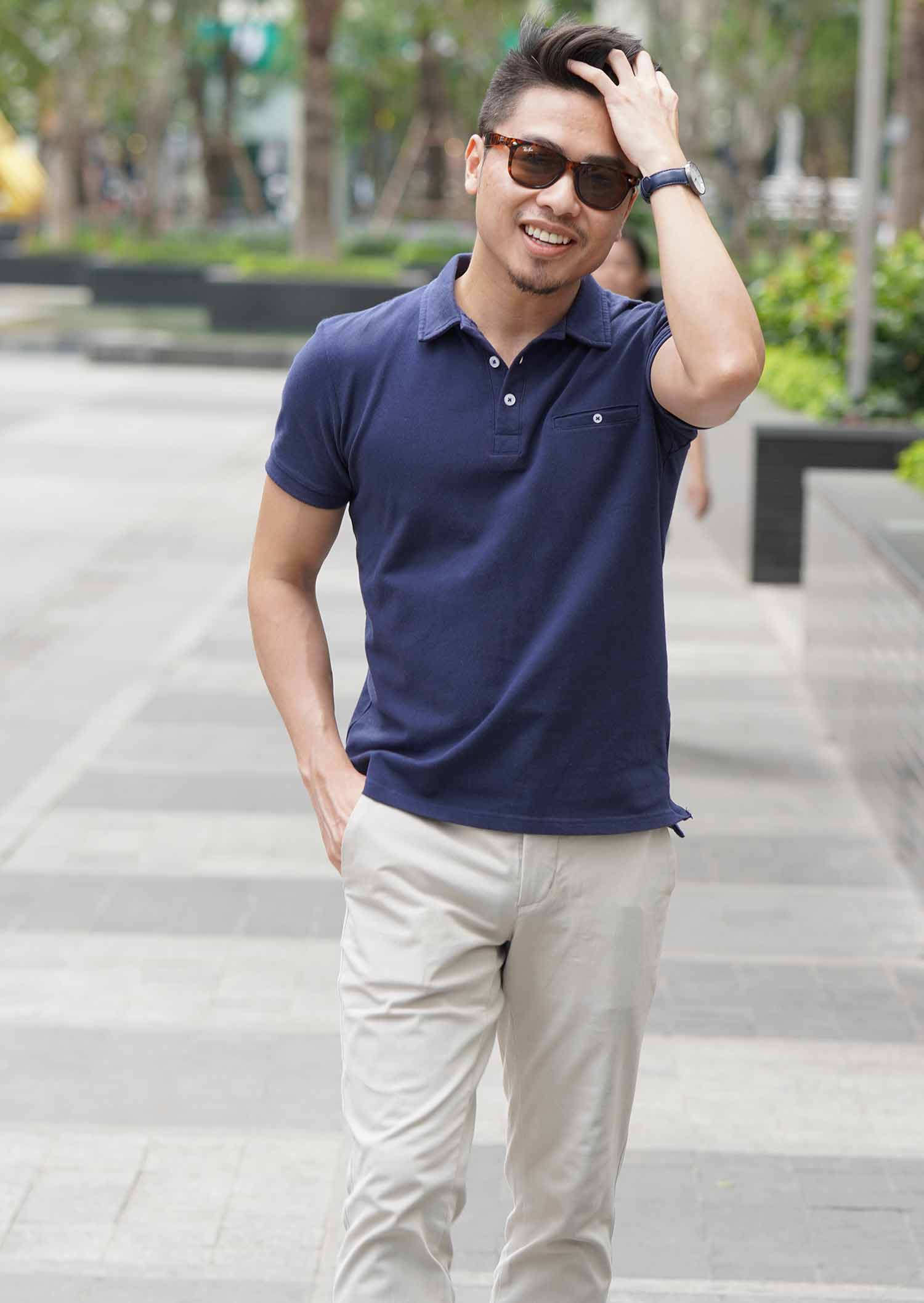
Polo shirts are acceptable in many business casual offices. They are less formal than button-downs but still polished.
- Colors: Navy, black, gray, white
- Fit: Not too tight or loose
Mistake to avoid: Do not wear athletic polos with large logos. Choose classic styles.
Sweaters
Sweaters add warmth and style. Wear them over a shirt or under a blazer.
- Types: Crew neck, V-neck, cardigan
- Materials: Merino wool, cotton, cashmere
Example: A gray V-neck sweater over a light blue shirt with navy chinos.
Blazers And Sport Coats
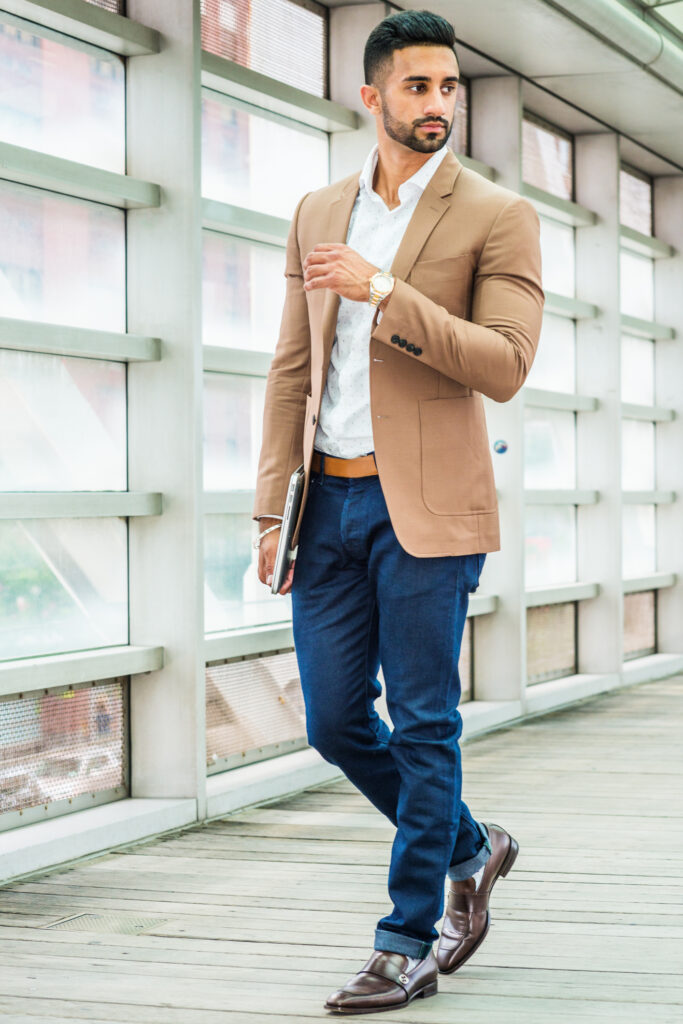
Blazers elevate any business casual look. They are not as formal as suit jackets but add structure.
- Colors: Navy, gray, brown
- Fit: Slim, tailored
- Fabric: Wool, cotton, linen
Tip: Choose unstructured blazers for a relaxed fit.
Shoes
Leather shoes complete your outfit. Avoid sneakers unless your office allows them.
- Types: Loafers, oxfords, brogues, derbies
- Colors: Black, brown, burgundy
Data point: According to a survey by GQ, nearly 70% of hiring managers say shoes are the first thing they notice about a candidate’s outfit.
Belts And Accessories
Belts should match your shoes. Simple accessories—like a watch or tie—add personality.
- Belts: Leather, clean buckle
- Watch: Metal or leather strap
- Tie: Optional, not flashy
Mistake: Avoid hats, flashy jewelry, or anything too casual.
Business Casual Vs. Formal And Casual
Many people confuse business casual with other dress codes. Let’s compare them in a simple table:
| Aspect | Business Casual | Formal | Casual |
|---|---|---|---|
| Pants | Chinos, dress pants | Suits, dress pants | Jeans, shorts |
| Shirt | Button-down, polo | Dress shirt, tie | T-shirt, casual shirt |
| Shoes | Leather loafers | Dress shoes | Sneakers, sandals |
| Jacket | Blazer (optional) | Suit jacket | No jacket |
| Accessories | Watch, belt | Tie, pocket square | None, casual |
Business casual sits between formal and casual. It’s less strict than formal wear, but more polished than everyday clothes.
Building A Business Casual Wardrobe: Step-by-step
If you’re starting from scratch, you don’t need to buy everything at once. Here’s a practical approach:
- Start with basics: Buy 2–3 pairs of dress pants or chinos, and 3–5 button-down shirts in neutral colors.
- Add shoes: Invest in one pair of brown or black leather shoes.
- Include a blazer: Choose navy or gray for versatility.
- Layer with sweaters: Buy 1–2 sweaters for colder months.
- Expand with polos: Add 2–3 polos for relaxed days.
- Accessorize: Buy a matching belt and a simple watch.
Non-obvious insight: Quality is more important than quantity. Spend more on well-made pants and shirts—they last longer and look better.
Credit: petersclothiers.com
Color Coordination And Patterns
Choosing the right colors and patterns is essential. You want to look professional, not flashy.
- Neutral colors: Navy, gray, black, beige, white
- Accent colors: Burgundy, olive, soft blue
- Patterns: Thin stripes, small checks, subtle prints
Tip: Avoid mixing too many patterns. If you wear a striped shirt, pair it with solid pants.
Example: Navy chinos, white shirt, gray sweater, brown shoes.
Fit And Tailoring
Fit is the most important factor in business casual. Even expensive clothes look bad if they don’t fit well.
- Pants: Should skim your hips and legs, not cling or hang loosely.
- Shirts: Should fit your shoulders, chest, and arms. Avoid excess fabric.
- Blazers: Should follow your body shape, not squeeze or sag.
- Sleeve length: Shirt sleeves should reach the base of your thumb.
Data point: A study by Harvard Business School found that people wearing well-fitted clothes are seen as more competent and trustworthy.
Mistake: Beginners often buy clothes that are too big, hoping for comfort. Proper tailoring can change your appearance dramatically.
Seasonal Business Casual
Business casual changes with the seasons. You’ll need to adapt your wardrobe to stay comfortable and stylish.
Spring And Summer
- Materials: Light cotton, linen, moisture-wicking blends
- Colors: Lighter shades (light blue, beige, soft pink)
- Shirts: Short-sleeve button-downs, polos
- Pants: Chinos, lightweight dress pants
- Shoes: Loafers, slip-ons
Tip: Avoid thick fabrics and dark colors—they can make you sweat and look heavy.
Fall And Winter
- Materials: Wool, cashmere, heavy cotton
- Colors: Deeper shades (navy, burgundy, dark green)
- Layering: Sweaters, cardigans, blazers
- Pants: Wool dress pants, heavier chinos
- Shoes: Oxfords, brogues, boots
Mistake: Many people skip layering in winter. Use sweaters and blazers for warmth and style.
Business Casual For Different Industries
Business casual isn’t the same everywhere. Your industry can affect what’s acceptable.
Tech And Startups
Most tech companies have relaxed rules. Jeans may be allowed, but you should still look neat.
- Acceptable: Dark jeans, polos, casual shirts, sneakers
- Tip: Always wear clean, well-fitted jeans. Avoid ripped or faded styles.
Finance And Law
These fields are more traditional. Stick to classic business casual.
- Acceptable: Dress pants, button-down shirts, blazers, leather shoes
- Mistake: Never wear jeans or sneakers in these settings.
Creative Agencies
Creative fields allow more personality. You can wear bold colors and unique accessories.
- Acceptable: Patterned shirts, colored chinos, stylish shoes
- Tip: Express yourself, but stay polished. Avoid anything sloppy.
Healthcare And Education
Comfort is important, but you should still look professional.
- Acceptable: Chinos, polos, sweaters, comfortable shoes
- Mistake: Avoid scrubs or athletic wear unless required.
Business Casual Outfit Examples
Let’s look at real outfit combinations for different situations.
- Office Meeting
- Navy dress pants
- White button-down shirt
- Gray blazer
- Brown leather loafers
- Casual Friday
- Beige chinos
- Light blue polo shirt
- Cardigan sweater
- Black loafers
- Networking Event
- Olive chinos
- White shirt with small checks
- Navy blazer
- Burgundy brogues
- Client Presentation
- Gray dress pants
- Pale pink shirt
- Navy sweater
- Black oxfords
- After-Work Dinner
- Dark jeans (if allowed)
- Charcoal button-down shirt
- Brown belt
- Chelsea boots
Insight: You can mix and match these pieces to create dozens of outfits.
Common Business Casual Mistakes And How To Avoid Them
Many men make mistakes with business casual. Here’s how to avoid them:
- Wearing athletic shoes: Stick to leather or suede shoes.
- Untucked shirts: Always tuck in button-downs.
- Wrinkled clothes: Iron or steam your outfits.
- Bright colors or patterns: Keep it subtle.
- Baggy or tight fits: Choose tailored, comfortable clothes.
- Ignoring accessories: A good belt and watch matter.
- Skipping grooming: Hair, beard, and nails should be neat.
Non-obvious tip: Check your outfit in a full-length mirror before leaving home. Small details (like sock color or shirt fit) can change your overall look.
How To Shop For Business Casual
Shopping for business casual can be overwhelming. Here are practical tips:
- Try on clothes before buying: Fit matters more than price.
- Invest in basics: Spend more on pants, shirts, and shoes.
- Avoid trends: Classic pieces last longer.
- Check return policies: Many stores allow returns for ill-fitting clothes.
- Shop at reputable brands: Look for stores known for quality men’s clothing.
Data point: According to Statista, the men's business casual market has grown over 20% in the past decade, driven by flexible office dress codes.
Business Casual For Travel
If you travel for work, you need versatile business casual pieces.
- Wrinkle-resistant shirts
- Lightweight pants
- Multi-purpose shoes
- Neutral colors
Tip: Roll clothes instead of folding—they wrinkle less. Bring a travel steamer for quick fixes.
Business Casual Accessories
Accessories can improve your outfit, but must be subtle.
- Belts: Simple, leather, matches shoes
- Watches: Classic, metal or leather band
- Bags: Leather briefcase or messenger bag
- Socks: Solid colors, match pants or shoes
Mistake: Avoid flashy rings, bracelets, or hats.
Business Casual For Plus Size And Tall Men
Finding business casual clothes that fit is a challenge for many men. Here are tips:
- Plus size: Look for brands with wider cuts. Avoid tight fits. Vertical stripes can slim your look.
- Tall men: Choose longer sleeves and pants. Avoid short jackets or shirts.
Non-obvious insight: Alterations are often affordable and make a big difference. Many men skip tailoring, but it’s the best way to get a perfect fit.

Credit: www.nilds.gov.ng
Sustainability And Business Casual
If you care about the environment, there are sustainable options.
- Materials: Organic cotton, recycled wool
- Brands: Choose those with ethical practices
- Care: Wash less often, air dry, repair clothes
Example: Brands like Patagonia and Everlane offer eco-friendly business casual clothes.
Business Casual In Remote Work
With more remote work, business casual has changed. You still need to look professional for video calls.
- Shirts: Solid button-downs, polos
- Pants: Chinos, comfortable dress pants
- Shoes: Not needed, but socks should be clean
Tip: Keep a blazer handy for video meetings. It instantly improves your look.
Business Casual Trends
Business casual evolves over time. Here are recent trends:
- Relaxed fits: More comfort, less formality
- Sustainable materials: Eco-friendly fabrics
- Bold colors: Subtle pops of color (burgundy, olive)
- Mixing textures: Cotton with wool, linen with denim
Data point: Retail studies show that business casual sales increase during spring and fall, when layering is popular.
Business Casual: Cost Comparison
Let’s compare the cost of building a basic business casual wardrobe from different types of stores.
| Item | Budget Store | Mid-Range Store | Premium Store |
|---|---|---|---|
| Pants | $40 | $80 | $180 |
| Shirt | $25 | $55 | $120 |
| Shoes | $60 | $140 | $350 |
| Blazer | $75 | $160 | $400 |
| Sweater | $30 | $70 | $180 |
Insight: You don’t need premium brands to look good. Well-chosen pieces from mid-range stores are often just as stylish.
Business Casual: Maintenance And Care
Taking care of your business casual clothes keeps them looking good.
- Wash shirts in cold water: Helps colors last longer.
- Hang pants and blazers: Prevents wrinkles.
- Use shoe trees: Keeps leather shoes in shape.
- Iron or steam regularly: Smooths out wrinkles.
Tip: Rotate your outfits so clothes last longer.
Business Casual For Job Interviews
Job interviews often call for business casual. Here’s how to impress:
- Wear neutral colors: Navy, gray, white
- Choose well-fitted clothes: Avoid anything sloppy
- Keep accessories simple: Watch, belt
- Grooming: Hair and nails neat
Mistake: Don’t overdress (no full suit) or underdress (no jeans).
Insight: Research the company dress code beforehand. If unsure, dress slightly more formal.
Business Casual For Special Events
Sometimes, you need business casual for events outside work.
- Networking events: Dress pants, smart shirt, blazer
- Business dinners: Chinos, button-down, sweater
- Conferences: Layer with a blazer, comfortable shoes
Tip: Bring a spare shirt or sweater for long events.
Business Casual And Confidence
The right clothes can boost your confidence. When you look good, you feel good.
- Fit matters: Well-fitted clothes improve posture.
- Colors: Neutral shades give calm and authority.
- Grooming: Neat appearance makes you feel ready.
Insight: Many men report higher confidence after updating their wardrobe. It’s a simple way to improve your professional image.
Credit: nilds.gov.ng
Business Casual: Quick Dos And Don’ts
Here’s a summary for easy reference.
Dos:
- Wear well-fitted clothes
- Choose neutral colors
- Keep shoes polished
- Accessorize simply
- Layer with blazers or sweaters
Don’ts:
- Wear sneakers or athletic shoes
- Use bright colors or patterns
- Ignore ironing and steaming
- Wear baggy or tight clothes
- Skip grooming
Additional Resources
For more details, visit guides like GQ Style for expert advice and inspiration.
Frequently Asked Questions
What Counts As Business Casual For Men?
Business casual means dress pants, chinos, button-down shirts, polo shirts, and leather shoes. Blazers, sweaters, and simple accessories are optional. Avoid jeans, shorts, sneakers, or anything too casual.
Can I Wear Jeans For Business Casual?
It depends on your workplace. Some offices allow dark, well-fitted jeans. Avoid ripped, faded, or baggy jeans. When in doubt, choose chinos or dress pants instead.
Are Sneakers Allowed In Business Casual?
Usually not. Stick to leather shoes (loafers, oxfords, brogues). Some creative or tech companies accept clean sneakers, but it’s best to check the dress code first.
How Can I Look Stylish In Business Casual?
Focus on fit, neutral colors, and layering. Choose classic pieces, accessorize simply, and keep clothes wrinkle-free. Tailoring makes a big difference.
What Is The Best Color For Business Casual?
Navy, gray, beige, and white are top choices. Accent colors like burgundy or olive are fine in moderation. Avoid bright, flashy colors for professional settings.
Business casual is about balance—looking professional but feeling comfortable. By following these tips, choosing the right pieces, and avoiding common mistakes, you’ll master business casual attire and stand out in any workplace.
