

Words of Affirmation What Not to Do: Common Mistakes to Avoid
Words Of Affirmation What Not To Do
Feeling loved and appreciated is a basic human need, but not everyone feels it in the same way. For many people, words of affirmation—simple words that express love, appreciation, or encouragement—are the key to their emotional well-being. You may already know that saying “I love you” or “I’m proud of you” can mean a lot. But did you know that saying the wrong thing, or even saying the right thing in the wrong way, can actually hurt more than help?
Understanding what not to do is just as important as learning what to say. Even with good intentions, some words or actions can backfire, making your partner or loved one feel less valued. This article will guide you through the mistakes to avoid, help you understand the subtle details, and show you how to use words of affirmation in a way that truly supports your relationships. Whether you’re a partner, parent, friend, or co-worker, these tips will help you connect more deeply—and avoid the common pitfalls that many people miss.
The Power Of Words Of Affirmation
Words of affirmation are more than just compliments or polite phrases. They are a primary love language for many people. When used correctly, they can build trust, inspire confidence, and create a sense of safety. But when misused, they can cause misunderstanding or emotional harm.
Studies show that positive verbal communication is linked to higher relationship satisfaction. According to relationship expert Gary Chapman, people whose main love language is words of affirmation need to hear supportive words regularly. For them, the right words can be as important as physical affection or acts of service.
But what happens when words are used carelessly? Even small mistakes in wording or tone can have a big impact. That's why understanding what not to do is essential for anyone who wants to use this love language effectively.
Common Mistakes To Avoid With Words Of Affirmation
Let’s explore the main pitfalls that people often fall into when using words of affirmation. Each of these mistakes can reduce the positive impact of your words—or even do the opposite.
1. Being Insincere Or Fake
One of the worst mistakes is giving insincere praise. If you don’t mean what you say, the other person will probably sense it. Insincerity can make your words feel empty or manipulative.
For example, if you say “You’re the best cook I know” but rarely eat what they cook, your compliment will sound hollow. People often remember how words made them feel more than the words themselves. So, only say what you truly believe.
Tip: Take a moment to think about what you appreciate. Be honest and specific. Sincerity is more powerful than grand words.
2. Using Generic Or Vague Praise
Saying “You’re great” or “Good job” is better than nothing, but it lacks impact. Generic praise feels impersonal and can seem like you’re not paying attention.
Instead, try to be specific. For example, instead of “You’re great,” say “I love how patient you were with the kids today.” Specificity shows that you notice and value their unique efforts.
Non-obvious insight: Many people think any compliment is enough. But for those who value words of affirmation, the details make all the difference.
3. Overusing Words Of Affirmation
It’s possible to give too many compliments. When words of affirmation are used too often, they can lose their meaning. If every action is praised, your words may start to feel routine or even suspicious.
Imagine hearing “You’re amazing!” every hour. After a while, it stops feeling special. It can even make the other person doubt your sincerity.
Tip: Save your words for genuine moments. Let them be a special sign of appreciation, not background noise.
4. Giving Praise Only When You Want Something
People can tell when you’re being nice just to get a favor. If you only use words of affirmation when you want something, your words will feel manipulative.
For example, saying “You’re so smart” right before asking for help with your work can make your compliment seem like a trick. This damages trust and can make the other person feel used.
Practical advice: Use affirming words regularly, not just when you need something. Make appreciation a habit, not a tool.
5. Ignoring Timing And Context
Words matter, but so does timing. If you give a compliment at the wrong moment, it can fall flat—or even upset the other person.
For example, praising someone’s cooking right after a big argument about housework might seem forced or dismissive. Or, giving public praise to someone who prefers privacy can make them uncomfortable.
Non-obvious insight: The same words can have very different effects depending on when and where you say them. Pay attention to the mood and situation.
6. Contradicting Your Words With Actions
If you say “I appreciate you” but act annoyed or impatient, your words lose their power. Actions and words must match for affirmation to be trusted.
People watch your tone, body language, and follow-through. Even a small eye-roll or sigh can make your words seem false.
Tip: Make sure your actions support your words. Consistency builds trust.
7. Using Words To Avoid Conflict
Sometimes, people use nice words to smooth over problems instead of addressing them. For example, saying “You’re wonderful” to avoid a difficult conversation can feel dismissive.
This can make the other person feel unheard, as if their concerns don’t matter. Words of affirmation should never replace real communication.
Practical example: If your partner is upset about something, listen and talk honestly. Don’t just use compliments to end the conversation.
8. Criticizing Or Correcting Immediately After Praise
This mistake is called the “but sandwich.” For example: “You did a great job, but you missed a spot.” Adding criticism right after praise cancels out the positive effect.
People remember the criticism more than the compliment. It can make them feel like your praise was just a setup for correction.
Better approach: Separate affirmation from feedback. Give praise when it’s deserved, and save suggestions for another time.
9. Making Comparisons
Comparing your loved one to others (“You’re better than my ex” or “You’re the smartest in the office”) may sound positive, but it’s risky.
Comparisons can create pressure, jealousy, or insecurity. They also shift the focus away from the person and onto others.
Tip: Focus on the individual. Celebrate their unique qualities without comparing them to anyone else.
10. Focusing Only On Achievements
Many people make the mistake of praising only results—like good grades or work success—while ignoring effort or character.
This can make the other person feel like they are only valued for what they do, not who they are. It may also cause stress or fear of failure.
Example: Instead of just saying “Great job on your promotion,” you might say, “I admire your dedication and how you handle challenges.”
11. Using Sarcasm Or Jokes
Sarcasm can be confusing, especially for people who value words of affirmation. Joking statements like “Nice job, genius!” can be hurtful, even if you mean well.
For some, sarcasm feels like criticism hidden in humor. This is especially true for children or people from cultures where sarcasm is less common.
Non-obvious insight: If you’re not sure how your words will be received, stick to direct, honest praise.
12. Ignoring Their Preferred Language
Not everyone responds to the same types of words. Some people like public praise, while others prefer private words. Some want daily reminders, others prefer rare but meaningful words.
If you ignore these preferences, your words may not have the desired effect. For example, shouting “You’re awesome!” across the office might embarrass someone who values privacy.
Tip: Learn how your loved one likes to receive affirmation. Ask if you’re not sure.
13. Failing To Adapt Over Time
People change, and so do their needs. What worked in the past may not work forever. If you keep using the same old phrases, they may lose their impact.
Life events, stress, or personal growth can shift how someone feels about affirmation. Stay attentive and open to change.
Example: After a big life change, like a new job or becoming a parent, ask if your affirmations still feel meaningful.
14. Assuming One Size Fits All
A common mistake is thinking that what works for you will work for everyone. Just because you appreciate certain words doesn’t mean others feel the same.
Some people prefer written notes, others like spoken words. Some want compliments on their looks, others on their efforts.
Practical advice: Personalize your words. Don’t assume—ask and observe.
15. Ignoring Cultural Or Personal Background
Culture shapes how people give and receive affirmation. In some cultures, direct praise is rare, while in others it’s common. Personal upbringing also matters.
If you’re not aware of these differences, your words can be misunderstood or even feel uncomfortable.
Non-obvious insight: Be sensitive to cultural and personal backgrounds. When in doubt, start small and adjust based on feedback.
16. Complimenting Out Of Obligation
Saying nice things because you feel you “have to” is easy to spot. Forced praise feels empty and can make the other person uncomfortable.
For example, saying “You look nice” every time you meet, just to follow a routine, can lose its meaning. It’s better to wait for genuine moments.
Tip: Authenticity matters more than frequency. Let affirmations come naturally.
17. Neglecting To Listen
Words of affirmation work best when paired with active listening. If you give compliments but never listen, your words may seem like empty gestures.
Taking time to hear what the other person says shows that you truly care. It also helps you choose more meaningful words.
Example: After listening to a friend talk about a tough week, you might say, “I admire your strength and patience.”
18. Not Following Up
Sometimes, people give a kind word and then disappear. For words of affirmation to really work, they should be part of an ongoing pattern.
If you praise someone’s hard work but never check in later, your affirmation may feel forgotten. Consistency and follow-up matter.
Tip: Show ongoing interest. After complimenting someone’s project, ask about it again in the future.
19. Relying Only On Words
Words are powerful, but for deep connection, they should be backed up by actions. Relying only on words can make affirmation feel shallow.
If you always say “I support you” but never show up when needed, your words will lose meaning.
Non-obvious insight: Words and actions together create trust. Don’t let words stand alone.
20. Making It About Yourself
Sometimes, people use affirmations to draw attention to themselves. For example: “I’m so proud of you because I raised you well.”
This shifts the focus away from the other person and turns affirmation into self-praise. It can make the recipient feel unimportant.
Tip: Keep the spotlight on the other person. Make your words about them, not about you.
Why These Mistakes Matter: Real-world Impact
Mistakes with words of affirmation can do real damage. In relationships, careless words can lead to misunderstandings, resentment, or even breakups. In the workplace, poorly chosen praise can lower morale or make people feel undervalued.
Recent surveys suggest that employees who receive specific, sincere recognition are twice as likely to feel satisfied at work. However, those who feel their contributions are ignored or praised in a routine way often become disengaged.
Parents who give only achievement-based praise may see their children develop perfectionism or anxiety. On the other hand, children who hear genuine, balanced affirmation tend to have higher self-esteem and resilience.
How To Give Words Of Affirmation The Right Way
Now that you know what not to do, let’s look at how to use words of affirmation effectively.
Be Sincere And Specific
Always speak from the heart. Focus on details that matter. Instead of saying “You’re awesome,” try “I appreciate how you always remember my favorite tea. ”
Match Words With Actions
Show your appreciation through both words and deeds. If you praise someone’s hard work, offer to help or celebrate their success in a small way.
Personalize Your Approach
Pay attention to what makes the other person feel loved. Ask about their preferences if you’re unsure.
Time It Well
Choose moments when your words will have the most meaning. Avoid times of conflict or distraction.
Keep It Consistent
Affirmation should be a regular part of your relationship, not just a rare event.
Comparing The Impact: Good Vs. Bad Affirmation
To help you understand the difference, here’s a comparison of good and bad uses of words of affirmation:
| Good Affirmation | Bad Affirmation |
|---|---|
| "I appreciate how you handled the meeting today." | "Nice meeting, but next time do better." |
| "Thank you for your patience with the kids." | "You're better than other parents I know." |
| "Your attention to detail really makes a difference." | "Good job, I guess." |
As you can see, specific, positive, and genuine words have a stronger, longer-lasting effect.
Practical Tips For Everyday Life
Words of affirmation are not just for romantic partners. They matter at work, in families, and among friends. Here are a few ways to use them wisely:
- Write a short note or message highlighting something specific you appreciate.
- Mention effort as well as results—“I noticed how hard you worked on this.”
- Give praise in private if the person is shy, or in public if they enjoy recognition.
- Repeat affirmations over time, but avoid using the same phrase too often.
- Listen for feedback and adjust your approach if needed.

Credit: www.drpsychmom.com
Common Myths About Words Of Affirmation
There are many misunderstandings about this love language. Let’s clear them up.
| Myth | Reality |
|---|---|
| All praise is good praise. | Praise must be sincere and specific to work. |
| More compliments are always better. | Too many can feel fake or overwhelming. |
| Words don’t matter as much as actions. | For some, words are the main way they feel loved. |
| Everyone likes public praise. | Some people prefer private affirmation. |
Understanding these myths can help you avoid common traps.
Recognizing When Affirmation Isn’t Working
Sometimes, even well-meant words fall flat. Watch for these signs:
- The other person seems uncomfortable or embarrassed
- Your words are ignored or met with silence
- You notice a lack of positive change in your relationship
If this happens, don’t give up. Ask for feedback: “Do my words of encouragement help, or is there another way you prefer to feel appreciated?” This shows you care about their needs, not just your own habits.
The Science Behind Words Of Affirmation
Research in psychology shows that verbal affirmation can boost self-esteem, motivate positive behavior, and strengthen bonds. According to a study highlighted by the Psychology Today, people who regularly hear positive feedback from loved ones are more likely to feel secure and satisfied in their relationships.
However, the same research warns that forced or insincere praise can have the opposite effect. This is especially true for children and teens, who quickly learn to spot fake encouragement.
Adapting To Different Relationships
Words of affirmation aren’t just for couples. Here’s how they look in different settings:
At Work
- Recognize colleagues for their unique contributions.
- Be specific: “I appreciate your attention to deadlines.”
- Avoid public praise if it embarrasses someone.
With Family
- Affirm children for their effort, not just achievements.
- Thank parents or siblings for help or support.
- Adjust your language as relationships grow.
Among Friends
- Express appreciation for friendship and shared experiences.
- Celebrate personal growth and milestones.
- Use humor carefully—avoid sarcasm if in doubt.
Real-world Examples: What Not To Do
Let’s look at some situations where words of affirmation go wrong, and how to fix them.
Scenario 1: You always say “Good job” to your child after every activity, no matter the outcome. Over time, your child stops paying attention to your words.
*What to do instead:* Focus on something specific they did: “I noticed you kept trying even when the puzzle was hard. That’s impressive!”
Scenario 2: You compliment a co-worker only when you need their help. They start to feel used and distant.
*What to do instead:* Give recognition regularly, even when you don’t need anything in return.
Scenario 3: You use sarcasm to praise your partner in front of friends: “Wow, look who actually remembered to take out the trash!”
*What to do instead:* Offer genuine words privately: “Thanks for helping with the chores. It means a lot to me.”
Words Of Affirmation Across Cultures
Cultural background shapes how people respond to praise. In some cultures, direct verbal affirmation is rare and can feel uncomfortable. In others, it’s expected and valued.
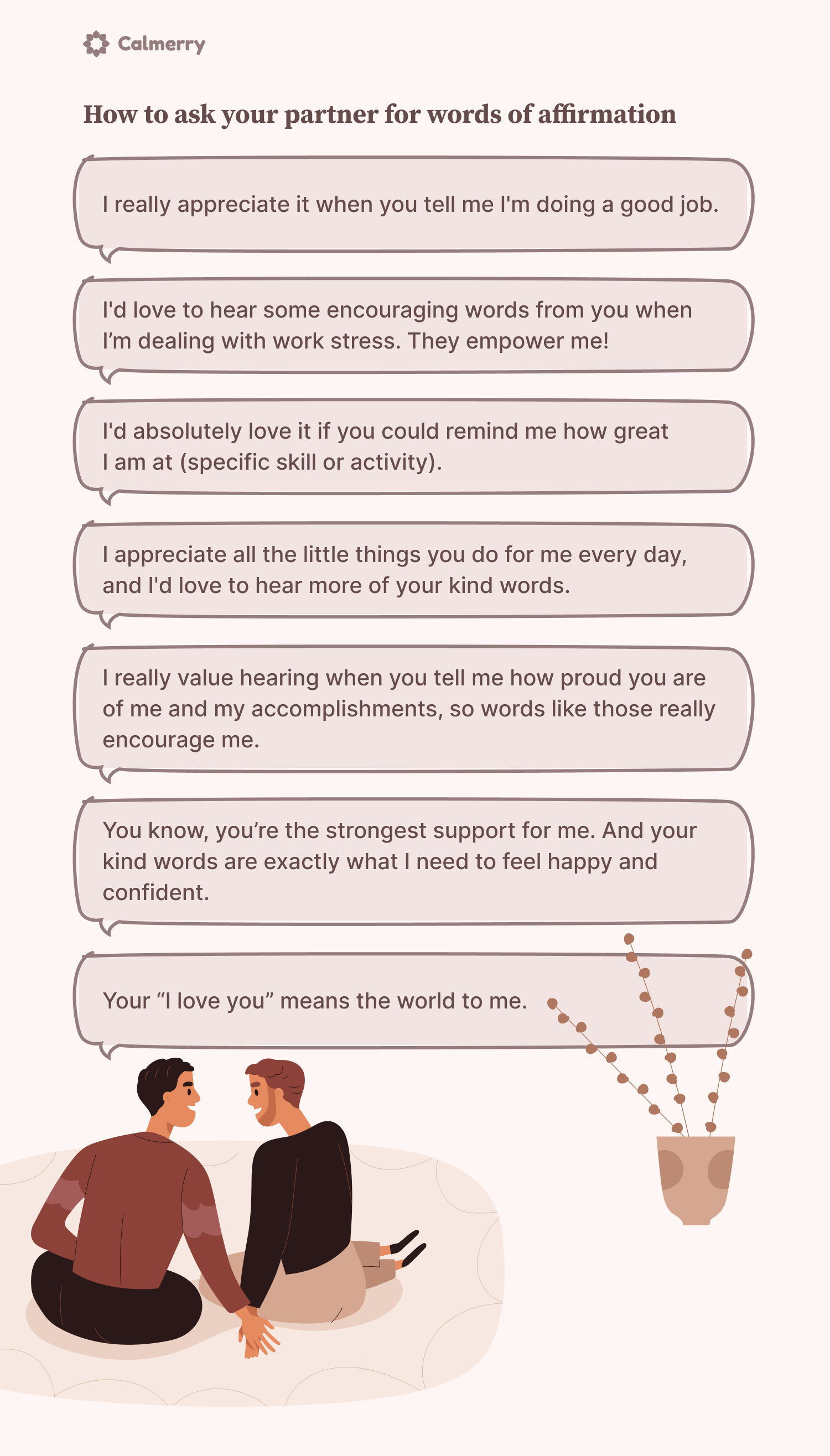
If you’re unsure, observe how people around you give and receive compliments. When in doubt, ask gently: “Do you like hearing feedback, or do you prefer other ways of support?”
Credit: calmerry.com
The Role Of Technology
Text messages, emails, and social media have changed how we use words of affirmation. While digital messages can be meaningful, they can also seem impersonal if overused.
Tip: Mix digital and face-to-face communication. A handwritten note or a spoken word can have a bigger impact.
Tracking Your Progress
If you want to improve your use of words of affirmation, keep a simple journal. Write down:
- What you said
- How the other person reacted
- Any changes you noticed
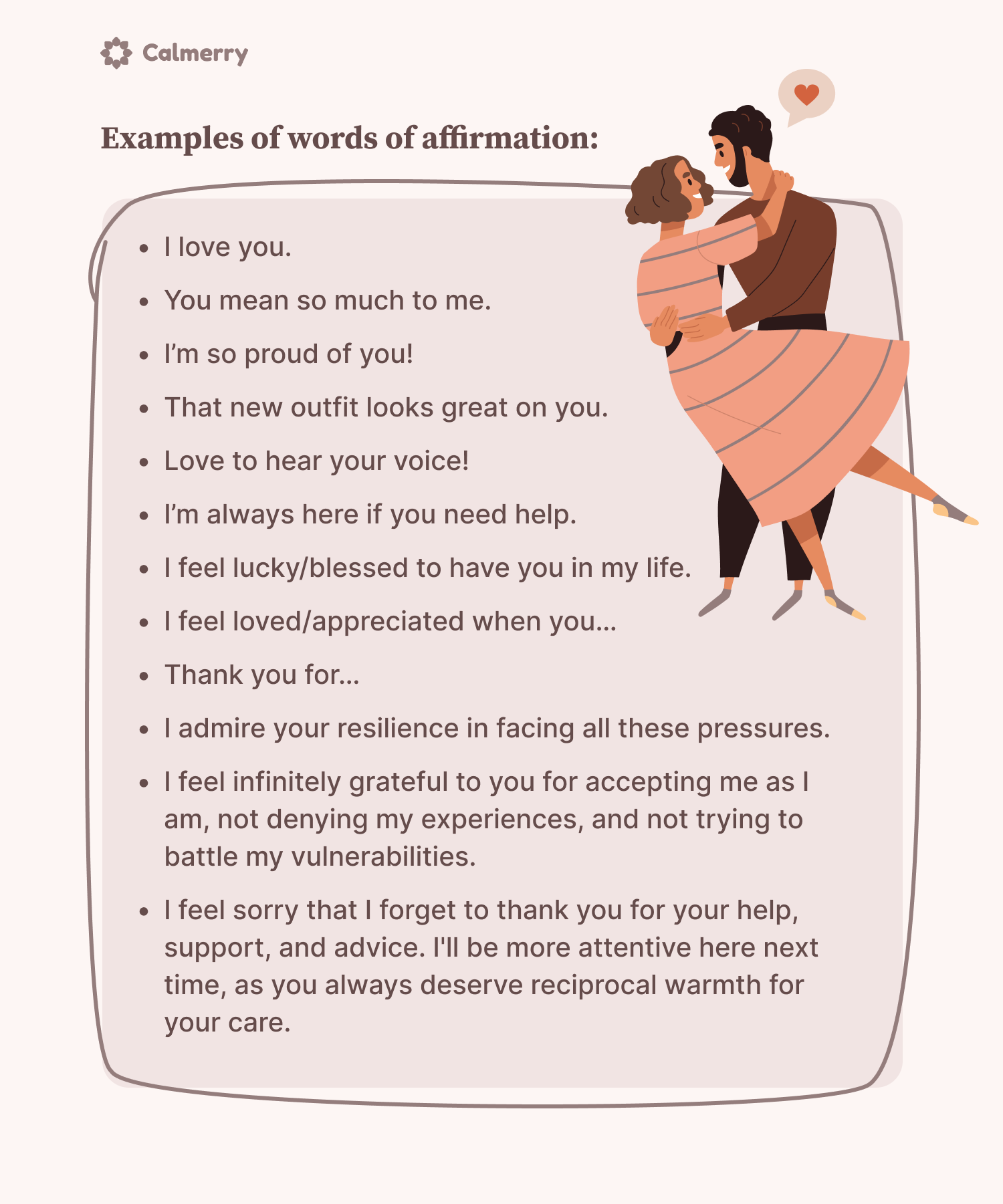
This helps you see what works and what needs adjustment.
Credit: calmerry.com
When To Seek Professional Help
If you notice that your words of affirmation are always misunderstood, or if your relationship feels strained despite your efforts, consider seeking guidance. Couples counselors or communication coaches can offer new tools and perspectives.
Frequently Asked Questions
What Are Words Of Affirmation?
Words of affirmation are positive, supportive, or loving words used to express appreciation, encouragement, or affection. For some people, hearing these words is the main way they feel loved and valued.
How Can I Know If Someone Values Words Of Affirmation?
Look for signs like joy after compliments, asking for feedback, or expressing feelings through words. You can also ask directly, “What makes you feel appreciated? ”
Can Too Many Words Of Affirmation Be Harmful?
Yes, if overused or given without sincerity, words of affirmation can lose their meaning or make the recipient feel uncomfortable.
What Should I Do If My Words Of Affirmation Are Not Working?
Ask the person what kind of support they prefer. Be willing to adapt and try other ways, such as acts of service or quality time.
Are Written Affirmations As Effective As Spoken Ones?
Both can be powerful. Some people love handwritten notes, while others prefer hearing kind words. The most important thing is to match your approach to the person’s preference.
Using words of affirmation can build stronger, more loving relationships—but only if you use them wisely. Avoid the common mistakes, listen to feedback, and focus on genuine, specific praise. With these steps, your words will have a lasting, positive impact.
