

Why Is Positive Affirmation Important for Personal Growth?
Why Is Positive Affirmation Important
Everyone wants to feel happy, confident, and in control of their life. But sometimes, negative thoughts or doubts can take over, making it hard to stay positive. Positive affirmation is a simple yet powerful tool that helps you change your mindset.
By using positive words and beliefs, you can boost your self-esteem, improve your mental health, and even change the way you react to daily challenges.
Many people think affirmations are just repeating nice words in front of the mirror. But there’s much more to it. Positive affirmation is a science-backed technique that can shape your brain, emotions, and behavior. It’s used by athletes, business leaders, and everyday people who want to reach their goals and feel better about themselves.
In this article, you’ll discover why positive affirmation is important, how it works, and how to use it effectively in your own life.
What Is Positive Affirmation?
Positive affirmation means saying or thinking positive statements about yourself. These are not just empty words; they are clear, strong messages that you want your mind to accept as true. For example, you might say, “I am confident” or “I can handle challenges.”
The goal is to train your brain to focus on your strengths and abilities instead of weaknesses. Over time, your mind starts to believe what you repeat, and this can change your feelings and actions. It’s a way to fight self-doubt and replace negative thoughts with helpful ones.
Positive affirmations are used by people of all ages and backgrounds. They can be about any part of your life—work, school, health, relationships, or personal growth.
The Science Behind Positive Affirmation
Many people wonder if positive affirmations really work or if they’re just wishful thinking. In fact, there is real science that explains why positive affirmation is important.
How Affirmations Affect The Brain
When you repeat a positive affirmation, you activate the reward centers in your brain. This is the same area that lights up when you experience something pleasant, like eating your favorite food. This brain activity can make you feel good and reduce stress.
Studies using brain scans show that affirmations can help you handle threats or negative events better. Instead of feeling defeated, your brain learns to stay calm and find solutions.
Self-affirmation Theory
Self-affirmation theory explains that when people focus on their values and strengths, they protect their sense of self-worth. This means you are less likely to get upset by criticism or failure. You become more open to learning from mistakes instead of feeling ashamed.
Research And Statistics
- A study published in the journal “Social Cognitive and Affective Neuroscience” found that people who practiced positive affirmation showed more activity in the parts of the brain linked to self-processing and reward.
- Research also shows that students who use positive affirmations before exams have less test anxiety and perform better.
- Another study found that people who used affirmations had lower levels of the stress hormone cortisol.
Non-obvious Insight: The “backfire” Effect
Beginners often miss that affirmations must feel believable. If you say something too far from your current belief (“I am a billionaire” when you struggle to pay bills), your mind may reject it, or you may feel worse. It’s important to choose affirmations that stretch you but still feel possible.
Benefits Of Positive Affirmation
There are many reasons why positive affirmation is important. Here are some key benefits, supported by research and real-life examples.
1. Builds Self-esteem
When you tell yourself positive things every day, you start to see yourself in a better light. This helps you build self-esteem. People with higher self-esteem are more confident, try new things, and recover from setbacks faster.
2. Reduces Stress And Anxiety
Repeating affirmations can calm your mind. When you focus on positive statements, you worry less about problems. This lowers your stress and anxiety levels. In many cases, people who use affirmations regularly have better emotional control.
3. Improves Performance
Top athletes and performers use affirmations to stay focused and motivated. Saying, “I am prepared” or “I will do my best” boosts confidence before a big event. This is especially useful before tests, job interviews, or public speaking.
4. Helps Change Bad Habits
Affirmations make it easier to break bad habits. For example, saying, “I make healthy choices” helps you eat better or quit smoking. The mind starts to accept new behaviors as part of who you are.
5. Supports Better Relationships
When you feel good about yourself, you treat others better. Positive affirmation can help you become more patient, understanding, and loving. This strengthens friendships and family bonds.
6. Encourages A Growth Mindset
A growth mindset means believing you can improve with effort. Affirmations like “I can learn new things” help you stay motivated, even when tasks are hard.
7. Promotes Physical Health
Positive thoughts are linked to better health. People who use affirmations have lower blood pressure, stronger immune systems, and recover faster from illness.
8. Increases Resilience
Resilience is the ability to bounce back from difficulties. Affirmations remind you of your strengths and help you face challenges with courage.
9. Boosts Motivation
When you affirm your goals every day, you’re more likely to take action. Motivation grows as you see yourself moving forward.
10. Supports Mental Health
People with depression or low mood often have negative self-talk. Affirmations can shift these thoughts, bringing hope and a sense of control.
How To Practice Positive Affirmation Effectively
Just saying positive words is not enough. To get real results, you need the right approach. Here’s how to make positive affirmation work for you.
Choose The Right Affirmations
Pick statements that matter to you. They should be:
- Personal: “I am improving every day.”
- Positive: Avoid negatives like “I am not afraid.” Instead, use “I am brave.”
- Present tense: Say “I am” not “I will be.”
- Believable: Slightly challenging, but not unrealistic.
Repeat Them Regularly
Consistency is key. Say your affirmations every morning, before bed, or whenever you need a boost. Write them down, say them out loud, or think them in your head.
Visualize Success
Imagine yourself living out the affirmation. If you say, “I am confident,” picture yourself acting confident in real-life situations.
Use Emotion
Feel the meaning behind the words. The more emotion you use, the more your brain believes the affirmation.
Write Them Down
Writing helps you remember and feel the affirmation. Keep a journal or sticky notes in places you see often—on your mirror, desk, or phone.
Combine With Action
Affirmations are most powerful when you also take steps toward your goals. If your affirmation is “I am healthy,” also choose healthy foods and exercise.
Non-obvious Insight: Affirmations Can Reveal Hidden Beliefs
When you struggle to say an affirmation, notice what thoughts come up. This shows you areas where you lack confidence. It’s a chance to work on those beliefs.
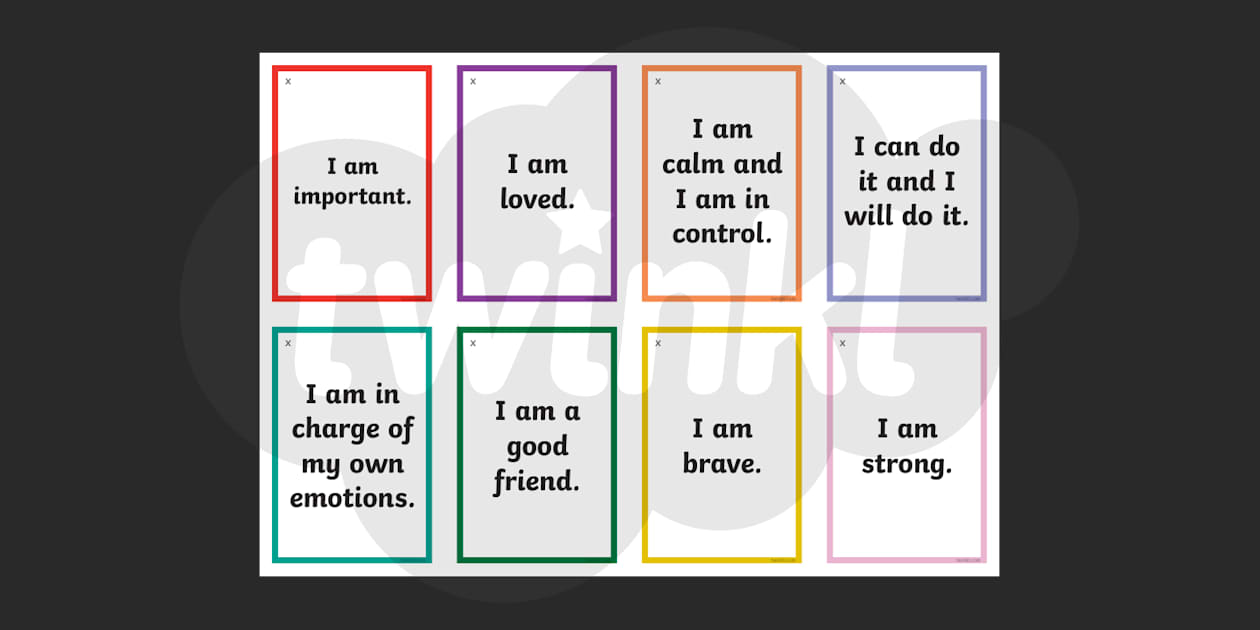
Credit: www.twinkl.com.sg
Common Mistakes To Avoid With Positive Affirmation
Many people give up on affirmations because they don’t see results. Often, this is due to common mistakes:
- Choosing unrealistic statements: If you don’t believe what you say, it won’t work.
- Lack of emotion: Saying words without feeling makes them empty.
- Not being consistent: Practicing only once in a while brings little change.
- Using negative language: Focus on what you want, not what you’re avoiding.
- Ignoring deeper issues: Sometimes, affirmations alone are not enough. If you have deep sadness or trauma, it’s good to seek professional help.
Examples Of Positive Affirmations For Different Situations
Affirmations can help in many parts of life. Here are some examples for different situations:
For Confidence
- “I believe in myself.”
- “I am enough.”
- “I trust my decisions.”
For Anxiety
- “I am calm and relaxed.”
- “I can handle anything that comes my way.”
- “I let go of what I cannot control.”
For Success
- “I am successful in what I do.”
- “I attract opportunities.”
- “I am focused and persistent.”
For Health
- “My body is strong and healthy.”
- “I take care of myself every day.”
- “I am full of energy.”
For Relationships
- “I am worthy of love and respect.”
- “I communicate with kindness.”
- “I bring joy to others.”
You can create your own affirmations based on your needs and dreams.
Comparing Positive Affirmation With Other Self-help Techniques
Many self-help methods exist. How does positive affirmation compare with others? Here’s a look:
| Method | Main Focus | Ease of Use | Time Needed | Best For |
|---|---|---|---|---|
| Positive Affirmation | Changing self-talk | Very easy | 1-5 min/day | Building confidence |
| Meditation | Calming mind | Moderate | 10-30 min/day | Reducing stress |
| Journaling | Self-reflection | Easy | 10-20 min/day | Understanding emotions |
| Visualization | Imagining success | Moderate | 5-10 min/day | Achieving goals |
As you can see, affirmations are quick and simple, making them easy to add to your daily routine.
Positive Affirmation And The Subconscious Mind
Your subconscious mind controls many habits, feelings, and reactions. Often, you act from beliefs you learned as a child or from past experiences. Some of these beliefs can be negative, such as “I’m not smart enough” or “I always fail.”
Positive affirmation helps rewrite these old beliefs. When you repeat positive statements, your subconscious starts to accept them as true. This changes your automatic reactions and feelings.
Example
If you grew up hearing, “You’re always making mistakes,” you might feel anxious about trying new things. By saying, “I learn from every experience,” you teach your subconscious to see mistakes as lessons, not failures.
How Long Does It Take To See Results?
Changing subconscious beliefs takes time. Some people notice small changes in a few days. For deeper beliefs, it can take weeks or months of regular practice. The key is patience and consistency.
Data: The Impact Of Positive Affirmation
Let’s look at some numbers that show the power of affirmations.
| Study Group | With Affirmation | Without Affirmation |
|---|---|---|
| Students (exam performance) | 17% higher scores | - |
| People under stress (cortisol level drop) | 30% reduction | - |
| Individuals with low self-esteem | Significant mood improvement | No change |
These results come from different studies and show that positive affirmation can make a real difference in both mental and physical well-being.
Who Can Benefit From Positive Affirmation?
Positive affirmation is for everyone, but some groups may find it especially helpful:
- Students: For better focus, confidence, and test performance.
- Athletes: To stay motivated and overcome setbacks.
- Workers and leaders: For handling pressure and improving teamwork.
- Parents: To model positive thinking for children.
- People facing illness: To support healing and stay hopeful.
- Anyone with low self-esteem: To build self-worth.
Even children can use affirmations to feel braver, kinder, or more patient.

Credit: www.etsy.com
Real-life Success Stories
Case 1: The Shy Student
Maria was always nervous to speak in class. She started saying, “My voice is valuable” every morning. After a few weeks, she noticed she was less afraid to raise her hand. Her teachers saw her confidence grow.
Case 2: The Athlete’s Comeback
After an injury, a runner named James felt hopeless. He repeated, “I am strong and healing every day. ” This helped him stay positive during recovery and return to training with renewed energy.
Case 3: The Stressed Manager
Lisa, a manager, used to feel overwhelmed by work. She used the affirmation, “I manage my tasks with ease. ” Over time, she found herself handling stress better and leading her team calmly.
These stories show that with regular practice, affirmations can help people overcome fears, recover from setbacks, and reach their goals.
Tips To Get The Most From Positive Affirmation
- Start small: Begin with one or two affirmations. Once they feel natural, add more.
- Make it a habit: Tie affirmations to daily routines, like brushing your teeth or commuting.
- Share with others: Practice affirmations with friends or family for extra support.
- Record yourself: Listening to your own voice can make affirmations more powerful.
- Stay patient: Results build up over time, not overnight.
The Role Of Positive Affirmation In The Workplace
Using affirmations at work can improve performance, relationships, and job satisfaction. Here’s how:
Building Team Spirit
Affirmations like “We work well together” help teams focus on strengths. This creates trust and better cooperation.
Handling Pressure
Saying “I handle challenges calmly” before a stressful meeting can reduce nerves and improve results.
Supporting Leadership
Leaders who use affirmations such as “I inspire my team” are more confident and positive, which spreads to others.
Example Affirmations For Work
- “I am capable of solving problems.”
- “I am a valuable team member.”
- “I learn from feedback.”
Positive Affirmation For Children And Teens
Young people can struggle with self-doubt, bullying, or pressure to fit in. Teaching children and teens to use positive affirmations builds resilience and self-worth from an early age.
Simple Affirmations For Kids
- “I am kind and helpful.”
- “I can try new things.”
- “I am proud of who I am.”
How Parents Can Help
- Say affirmations together.
- Write them on notes for lunchboxes or bedrooms.
- Praise effort, not just results.
This helps children develop a healthy self-image.
Using Technology To Support Positive Affirmation
Today, many apps and online tools can remind you to use affirmations. Some apps send daily notifications, offer recorded affirmations, or let you create your own.
Examples include:
- Mobile apps with reminders and motivational messages
- YouTube channels with affirmation playlists
- Digital journals for tracking progress
Technology makes it easier to practice affirmations even on busy days.
Myths And Misunderstandings About Positive Affirmation
Some people believe that affirmations are just “wishful thinking” or that they only work for certain people. Let’s clear up some common myths:
Myth 1: Affirmations Are Magic
Affirmations are not magic spells. They work best when combined with real effort and action.
Myth 2: You Have To Be Positive All The Time
It’s normal to have bad days. Affirmations help you handle tough times better, but they do not erase all problems.
Myth 3: Affirmations Don’t Work For Everyone
While some people see faster results, almost anyone can benefit with the right approach and patience.
Myth 4: Affirmations Replace Medical Care
If you have serious mental health issues, affirmations can support healing but should not replace professional help.
Non-obvious Insight: Affirmations Can Be Silent
You don’t always have to say affirmations out loud. Thinking them quietly or writing them down can be just as effective, especially in public places.

Credit: www.walmart.com
How To Measure Your Progress With Affirmations
You may wonder how to know if affirmations are working for you. Here are some ways to track your progress:
- Mood journal: Write down your feelings before and after using affirmations.
- Goal check-ins: See if you are moving closer to your goals.
- Feedback from others: Notice if friends or coworkers comment on your attitude or confidence.
- Physical changes: Watch for lower stress, better sleep, or more energy.
The Future Of Positive Affirmation
As more research is done, positive affirmation is becoming a trusted tool in psychology, sports, education, and business. Experts agree it’s not just a trend, but a valuable skill for mental health and success.
For further reading, you can check the Psychology Today Self-Affirmation page for more scientific insights.
Frequently Asked Questions
What Is The Best Time To Practice Positive Affirmations?
The best times are right after you wake up and just before you go to sleep. Your mind is more open to suggestions during these moments. However, you can use affirmations any time you need a confidence boost or feel stressed.
How Long Does It Take To See Results From Affirmations?
Some people notice changes within a few days, especially in mood or attitude. For deeper changes, like building self-esteem, it may take several weeks or months of regular practice.
Can Affirmations Help With Anxiety Or Depression?
Affirmations can support mental health by reducing negative self-talk and increasing hope. However, if you have severe anxiety or depression, it’s important to use affirmations along with professional support, not as a replacement.
Do I Have To Say Affirmations Out Loud?
No, you can repeat affirmations silently in your mind, write them down, or even listen to recordings. What matters most is that you believe and feel the words.
Can Children Use Positive Affirmations?
Yes, affirmations are helpful for children and teens. They build confidence, help handle stress, and encourage positive behavior. Make sure the affirmations are simple and easy to understand.
Positive affirmation is more than just repeating nice words. It’s a tool for changing your thoughts, feelings, and even your life. By understanding how and why it works, and using it with patience and belief, anyone can unlock its full power.
Whether you want to boost your confidence, handle stress, or reach new goals, positive affirmation can guide you to a better, happier self.
