

Why Do People Do Affirmations? Uncover the Science and Benefits
Why Do People Do Affirmations
Imagine waking up in the morning, standing in front of the mirror, and saying, “I am capable. I am strong. I can handle today.” This might sound simple, but for millions, this practice called affirmations is a daily habit. Why do people keep repeating positive phrases to themselves? Is there real power behind these words, or is it just wishful thinking? Let’s explore the reasons, science, and stories behind affirmations, and discover why so many people use them to shape their lives.
What Are Affirmations?
Affirmations are positive statements that people repeat to themselves. The goal is to change thoughts, feelings, and behaviors. These statements usually focus on strengths, goals, or qualities people want to develop. For example, someone feeling nervous about public speaking might say, “I am confident and clear when I speak.” Over time, repeating these phrases is believed to help change negative thought patterns and encourage a more positive mindset.
Affirmations are not magic words. They are tools to help guide thoughts in a positive direction. Some use them to boost self-esteem, while others turn to affirmations for overcoming anxiety, improving performance, or building new habits. The key is consistency and belief in the process.
The Psychology Behind Affirmations
Why do words matter so much? Human brains are wired to respond to self-talk, whether positive or negative. When you repeat something often, your brain starts to accept it as true. This is called the self-affirmation theory. It suggests that people want to keep a positive view of themselves, and affirmations can help protect this view.
Research shows that positive self-talk can lower stress, improve problem-solving, and even reduce the impact of negative experiences. For example, when facing a tough situation, repeating affirmations can help a person feel more in control and less anxious. Over time, these changes in thinking can lead to real changes in behavior and attitude.
A non-obvious insight is that affirmations work best when they are specific and personal. Vague statements like “I am happy” are less effective than “I handle challenges with a positive attitude.” The more closely an affirmation matches your goals or struggles, the more likely it will help.
Main Reasons People Use Affirmations
People turn to affirmations for many reasons. Here are some of the main motivations:
1. Boosting Self-esteem
Many people struggle with self-doubt or low confidence. Affirmations like “I am worthy of respect” or “I believe in my abilities” can help counter negative self-talk. By repeating these phrases, people begin to replace old, harmful thoughts with new, empowering ones.
It’s important to note that affirmations are not a cure-all. They work best when combined with real effort, such as setting goals and working toward them. But for many, affirmations are a useful step toward a healthier self-image.
2. Managing Stress And Anxiety
Stressful situations can trigger negative thoughts and feelings. Affirmations such as “I am calm and in control” or “I can handle this challenge” help people focus on their strengths instead of their fears. Over time, this can lower anxiety and help people respond more effectively to stress.
One common mistake is using affirmations only during tough times. In reality, regular practice, even when life is going smoothly, builds resilience for when challenges do arise.
3. Achieving Goals
Athletes, students, and professionals often use affirmations to keep their focus on their goals. By repeating statements like “I will finish this project” or “I am making progress every day,” they remind themselves of their abilities and commitment.
Affirmations can also help with motivation. When you’re tempted to give up, a strong statement can keep you moving forward. They are often combined with visualization, where people imagine themselves reaching their goals while repeating positive phrases.
4. Breaking Negative Habits
Habits are hard to change, especially when negative thinking gets in the way. Affirmations like “I make healthy choices every day” or “I am free from old habits” support new behaviors. They help shift focus from past failures to future possibilities.
An important insight is that affirmations alone do not break habits, but they can make it easier to stick to new routines by changing the way you see yourself.
5. Improving Relationships
The way people think about themselves affects how they relate to others. Affirmations such as “I communicate with kindness” or “I am a good listener” encourage positive interactions and better relationships.
People who use affirmations often report feeling less defensive and more open in their relationships. This change in attitude can lead to deeper connections and fewer misunderstandings.
6. Supporting Mental Health
Affirmations are sometimes used alongside therapy or other mental health treatments. They can help people cope with depression, anxiety, or trauma by building a stronger sense of self-worth and hope.
It’s important to understand that affirmations are not a replacement for professional help. However, they can be a helpful tool for maintaining a positive mindset during tough times.
7. Encouraging Personal Growth
Personal development is about learning, growing, and becoming the best version of yourself. Affirmations like “I am always learning” or “I am open to new ideas” support this process. They remind people to stay curious and keep improving.
People who practice regular affirmations often find it easier to try new things and step out of their comfort zones.
8. Spiritual Or Religious Practice
For some, affirmations are part of a spiritual or religious routine. They may use phrases from sacred texts or prayers as daily reminders of faith, hope, or gratitude.
Affirmations in this context help people feel connected to something bigger than themselves. They can bring comfort, peace, and a sense of purpose.
How Affirmations Work In The Brain
Understanding how affirmations work in the mind can make them even more powerful. When you repeat a phrase, your brain forms connections, much like practicing a musical instrument or sport. Over time, these connections become stronger, making positive thoughts more automatic.
Studies using brain scans have found that people who use affirmations show more activity in areas related to self-processing and reward. This means that positive self-talk can actually change the way the brain works, making it easier to handle stress and stay motivated.
A surprising insight is that affirmations can even impact physical health. Reduced stress levels and improved mood can lead to better sleep, lower blood pressure, and a stronger immune system.
Types Of Affirmations
There is no one-size-fits-all approach to affirmations. People choose or create statements based on their needs. Here are some common types:
- Self-Worth: “I am enough just as I am.”
- Achievement: “I can reach my goals.”
- Health: “I care for my body with love.”
- Relationships: “I am loved and loving.”
- Calmness: “I am at peace with myself.”
- Abundance: “Opportunities come to me easily.”
Some people prefer short, simple statements. Others write longer phrases or even full paragraphs. The most important thing is that the affirmation feels authentic and meaningful.
Practical Examples: Real-life Use Of Affirmations
Let’s look at how different people use affirmations in daily life:
- Athletes: A runner might repeat, “I am fast and strong,” before a race.
- Students: Someone preparing for an exam might say, “I am prepared and focused.”
- Professionals: Before a big presentation, a worker could use, “I speak clearly and confidently.”
- Parents: To manage stress, a parent might repeat, “I am patient and caring.”
These examples show that affirmations are flexible and can be adapted to any situation.

Credit: www.shellypjohnson.com
Comparison: Affirmations Vs. Other Self-help Methods
It’s helpful to see how affirmations compare to other ways of improving mindset or changing behavior.
| Method | Focus | Tools Needed | Time Required | Best For |
|---|---|---|---|---|
| Affirmations | Changing self-talk | None (just words) | 1-5 minutes/day | Daily mindset shifts |
| Meditation | Calming the mind | Quiet space | 10+ minutes/day | Stress relief |
| Journaling | Reflecting on thoughts | Pen and paper | 5-20 minutes/day | Self-discovery |
| Therapy | Deep emotional work | Professional help | Varies | Serious issues |
Affirmations are unique because they are quick, free, and can be used almost anywhere. However, they are often most effective when used alongside other methods, not as a replacement.
How To Create Effective Affirmations
Not all affirmations work equally well. Here’s how to make yours stronger:
1. Be Positive
Focus on what you want, not what you want to avoid. For example, say “I am healthy” instead of “I am not sick. ”
2. Use Present Tense
Phrase affirmations as if they are true now. For example, “I am confident,” not “I will be confident. ”
3. Make It Personal
Use “I” statements. Speak directly to yourself.
4. Keep It Short
Short statements are easier to remember and repeat.
5. Be Specific
Tailor affirmations to your unique goals or challenges.
6. Add Emotion
Feel the meaning of the words as you say them. For example, “I am grateful for my strong body. ”
7. Repeat Consistently
Consistency builds new habits in the mind. Repeat affirmations daily, ideally at the same time each day.
Common Mistakes When Using Affirmations
While affirmations are simple, some common errors can reduce their impact:
1. Using Unrealistic Statements
Telling yourself something you don’t believe at all may lead to more frustration. Start with phrases that feel possible.
2. Lack Of Emotion
Simply repeating words without meaning won’t change your thinking. Connect emotionally to your affirmation.
3. Inconsistency
Skipping days or only using affirmations during stress makes them less effective. Make them part of your daily routine.
4. Ignoring Action
Affirmations work best with real action. Use them as motivation, but also take steps toward your goals.
5. Repeating Too Many Affirmations
Focusing on one or two main statements is usually better than trying to cover every area at once.
Data: Do Affirmations Really Work?
Some people are skeptical about the power of affirmations. What does the data say?
Research suggests that affirmations can:
- Reduce stress: People who practice affirmations show lower levels of stress hormones.
- Boost academic performance: Students who use self-affirmation strategies perform better on tests.
- Improve health: Individuals using affirmations may recover faster from illness and have healthier habits.
- Increase resilience: People handle setbacks better and bounce back more quickly.
However, results are strongest when affirmations are realistic, regularly practiced, and combined with action. They are not a quick fix, but many find them a valuable tool.
The Role Of Affirmations In Different Cultures
Affirmations are not just a modern trend. Many cultures have used positive statements or mantras for centuries. For example:
- In Buddhism, repeating mantras is a form of meditation.
- In Christianity, speaking words of faith is common in prayer.
- In African traditions, proverbs and wise sayings are repeated for guidance.
Each culture adapts affirmations to fit its beliefs and values. This shows the universal power of words in shaping how people think and feel.
Scientific Studies On Affirmations
Let’s look at some scientific findings about affirmations:
| Study | Focus | Main Finding |
|---|---|---|
| Self-Affirmation and Stress | How affirmations affect cortisol (stress hormone) | Lower stress levels after practicing affirmations |
| Academic Performance | Impact of self-affirmation on grades | Improved test scores in students who used affirmations |
| Health Behaviors | Connection between affirmations and healthy habits | Increased exercise and healthy eating after affirmation practice |
| Resilience | Ability to handle setbacks | Faster recovery from failures and disappointments |
These studies suggest that affirmations are more than just positive thinking—they can have real, measurable effects.
When Affirmations May Not Be Helpful
While affirmations help many people, they are not for everyone. Some situations where affirmations may not work include:
- Severe mental health issues: People with deep depression or trauma may need professional help, not just affirmations.
- Unrealistic expectations: Believing affirmations will solve all problems can lead to disappointment.
- Lack of belief: If a person does not believe in their affirmation, it may not have any effect.
It’s always wise to use affirmations as one tool among many, not as the only solution.
How To Start A Daily Affirmation Practice
If you want to try affirmations, here is a simple way to begin:
- Choose one or two affirmations that fit your current needs.
- Write them down on paper or in your phone.
- Repeat them out loud every morning and evening.
- Look in the mirror as you say your affirmation to build self-connection.
- Take a few deep breaths and focus on the meaning of the words.
- Keep a journal to track your feelings and any changes you notice.
A non-obvious tip is to record your affirmation in your own voice and listen to it during the day. Hearing your own words can make the message even stronger.

Credit: www.rebelle-beauty.com
Stories Of Affirmation Success
Many well-known people have shared how affirmations helped them:
- Muhammad Ali, the famous boxer, often repeated, “I am the greatest,” long before he became a champion.
- Oprah Winfrey credits positive self-talk for helping her overcome difficult times.
- Jim Carrey, the actor, wrote himself a check for a large sum and used affirmations to visualize success.
Ordinary people also benefit. For example, a teacher used affirmations to conquer public speaking fears. A student used them to stay motivated during exams. These stories show that affirmations can help anyone, not just celebrities.
Combining Affirmations With Other Practices
Affirmations are powerful alone, but even stronger when combined with:
- Visualization: Imagine your success as you repeat your affirmation.
- Meditation: Use affirmations as a mantra during quiet time.
- Goal-setting: Write your affirmation next to your goals to stay motivated.
- Gratitude practice: Add an affirmation of thanks each day.
This combination helps reinforce positive changes from different angles.
Why People Keep Using Affirmations
People stick with affirmations because they notice real benefits:
- More confidence in daily life
- Better stress management
- Improved focus on goals
- Greater sense of control
- Stronger relationships
The process is simple and free, making it easy to fit into any lifestyle. Even if results are slow at first, consistent practice often leads to lasting change.
Frequently Asked Questions
What Is The Best Time Of Day To Do Affirmations?
There is no single best time. Many people prefer mornings to start the day positively. Others use affirmations before bed to end the day well. The key is consistency—choose a time you can stick with every day.
Can Affirmations Help With Anxiety Or Depression?
Affirmations can support mental health, but they are not a replacement for professional treatment. They may help reduce mild anxiety or negative thinking. For serious depression or anxiety, always seek help from a mental health professional. For more on mental health strategies, see this Mind UK resource.
Do Affirmations Really Change Your Life?
Affirmations alone rarely create major change overnight. However, when practiced regularly and combined with action, they can shift mindset, reduce stress, and support personal growth. Many people find them helpful for building confidence and staying motivated.
How Long Does It Take For Affirmations To Work?
This varies for each person. Some notice changes in days, others in weeks or months. The most important thing is to be patient and keep practicing, even if results are slow at first.
Should I Write My Own Affirmations Or Use Examples?
Personal affirmations are often more powerful because they match your unique needs and goals. Feel free to use examples, but adapt them so they feel true and meaningful to you.
People use affirmations for many reasons: to build confidence, reduce stress, achieve goals, and create a better mindset. While affirmations are not magic, science and experience show they can help people live happier, more successful lives. By understanding how and why affirmations work, anyone can start using this simple tool for positive change.
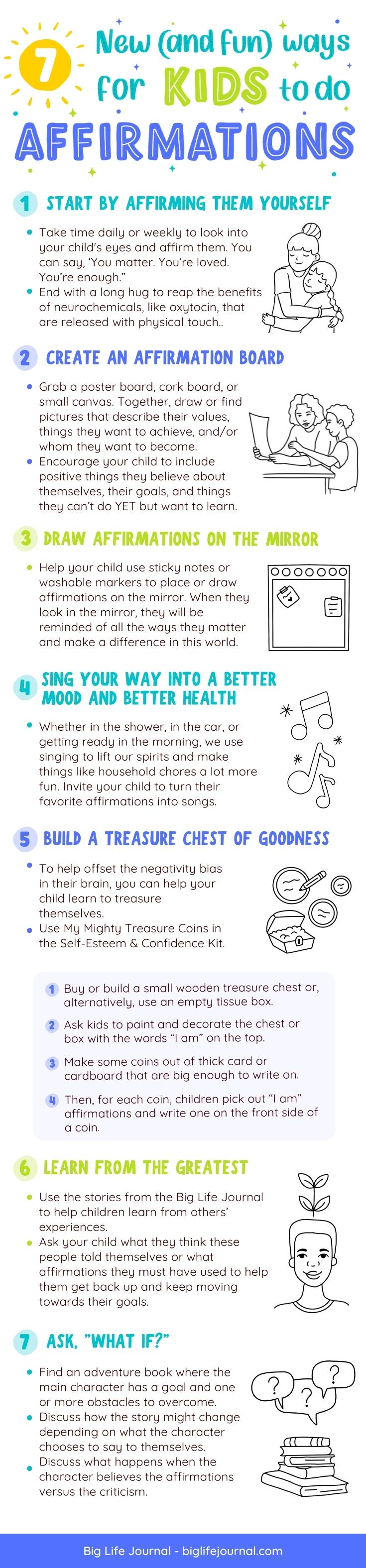
Credit: biglifejournal.com
