

Why Do Affirmations Work: Unlocking the Science Behind Success
Why Do Affirmations Work
If you’ve ever repeated a positive statement to yourself, hoping it might change your thinking or your life, you’ve practiced affirmations. For many, the idea sounds almost too simple: say something good, and good things happen. But why do affirmations work? This question goes deeper than just feel-good language. It touches on psychology, neuroscience, and even how we see ourselves in the world. Understanding why affirmations work can help you use them more effectively and avoid common mistakes. Let’s explore how something as simple as words can change beliefs, behavior, and even results in your life.
What Are Affirmations?
Affirmations are short, positive sentences you repeat to yourself. They are designed to help you change your mindset, boost your confidence, and encourage positive change. People use affirmations for many reasons, such as overcoming self-doubt, building new habits, or improving performance.
The key is that affirmations are stated in the present tense and focus on what you want to believe or achieve.
For example:
- “I am confident in social situations.”
- “I can handle challenges calmly.”
- “My work has value.”
Affirmations are not magic spells. They do not instantly change your life. Instead, they work slowly by influencing your thoughts and, over time, your actions.
The Psychology Behind Affirmations
To understand why affirmations work, we need to look at how the human mind deals with thoughts and beliefs. Our brains are constantly filtering information and looking for patterns that fit what we already believe. This is called confirmation bias. If you believe you are bad at public speaking, for example, your brain will notice evidence that supports this belief and ignore evidence that contradicts it.
Affirmations challenge these old, negative beliefs. When you repeat a positive statement, you are giving your brain new information to consider. Over time, your mind can start to accept these new ideas, especially if you also act in ways that support them.
Cognitive Dissonance
Another important idea is cognitive dissonance. This is the uncomfortable feeling you get when your thoughts and actions do not match. For example, if you say, “I am organized,” but your desk is a mess, you feel a gap between your words and reality. This discomfort can push you to change your behavior so it matches your new belief. That’s one way affirmations can motivate real action.
Self-affirmation Theory
Researchers have studied how affirmations protect our sense of self-worth. Self-affirmation theory explains that when we repeat positive truths about ourselves, we build inner strength. This helps us handle stress, criticism, or failure without losing confidence.
One study found that people who practiced affirmations before a stressful event (like a test or public speaking) felt less anxious and performed better. The effect was not just emotional. Their bodies released fewer stress hormones, showing that affirmations can change both mind and body.
How Affirmations Change The Brain
Repeating affirmations is not just positive thinking. There’s real science behind how our brains respond to repeated ideas.
Neuroplasticity
The brain is always changing. This ability to form new pathways is called neuroplasticity. When you say an affirmation, you activate certain parts of your brain. If you repeat the statement often, your brain strengthens the connections related to that thought. Over time, this makes the new belief feel more natural and automatic.
For example, if you often say, “I am calm under pressure,” your brain gets better at triggering calm responses in stressful moments. This is similar to how practicing a physical skill, like playing piano, builds muscle memory.
The Reticular Activating System (ras)
Another part of the brain involved is the reticular activating system. This is a network of nerves that helps filter information. It decides what you notice and pay attention to. When you focus on an affirmation, your RAS helps you spot opportunities, evidence, and resources that match your new belief.
If you affirm, “I am creative,” you might start noticing creative solutions or ideas more often. This is not magic; it’s your brain working to confirm your focus.
Emotional Impact Of Affirmations
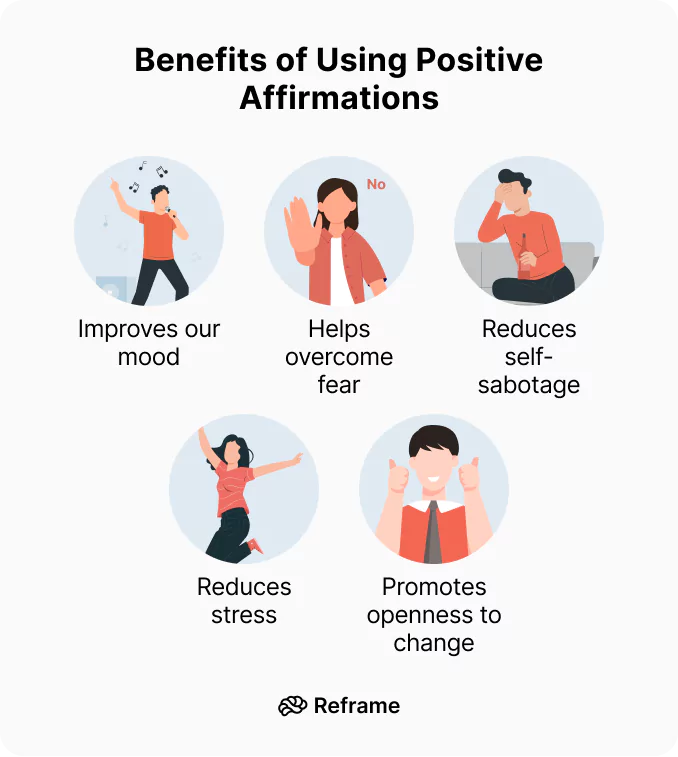
Affirmations are not just about thoughts; they can also change how you feel. Emotions and thoughts work together. If you say positive things to yourself, you start to feel more hopeful, motivated, and secure.
Reducing Negative Self-talk
Many people struggle with a strong inner critic. This is the voice in your mind that tells you you’re not good enough. Affirmations can help quiet this voice. When you replace negative self-talk with positive statements, you create space for new emotions like confidence and calm.
Boosting Resilience
Affirmations can also make you more resilient. When life gets tough, having a set of positive beliefs makes it easier to bounce back. This is why athletes, performers, and even business leaders often use affirmations before big moments.

Credit: sproutingzen.com
Evidence: What Studies Show
Some people are skeptical about affirmations. “Do they really work, or is it just wishful thinking? ” Scientific research offers some answers.
- A study published in Social Cognitive and Affective Neuroscience found that self-affirmation activates areas of the brain linked to reward and positive feelings.
- Another study showed that students who used affirmations before exams had lower stress and performed better than those who did not.
- Research on people making lifestyle changes (like quitting smoking or losing weight) found that those who used affirmations were more likely to stick to their goals.
However, results are not always the same for everyone. Affirmations work best when you already believe change is possible, and when your statements are realistic.
How To Create Effective Affirmations
Not all affirmations are equal. Some work better than others. Here are important tips for creating affirmations that really help:
- Be specific: Vague statements like “I am happy” are less effective than “I find joy in small moments each day.”
- Use present tense: Say “I am” or “I have” instead of “I will be.” This helps your brain accept the idea now.
- Keep it positive: Focus on what you want, not what you don’t want. For example, say “I am confident” rather than “I am not nervous.”
- Make it believable: If your affirmation feels fake, your brain will resist. Start with a statement you can almost believe, then build up.
- Repeat regularly: Consistency is key. Say your affirmations daily, especially in the morning or before challenging moments.
Common Mistakes With Affirmations
Many people try affirmations and give up when they don’t see instant results. Here are some mistakes to avoid:
- Choosing unrealistic statements: If your affirmation is too far from your current reality, it can backfire. For example, saying “I am a millionaire” when you are struggling financially may just remind you of the gap.
- Forgetting action: Affirmations alone are not enough. They should inspire you to take real steps toward your goals.
- Using negative words: Avoid phrases like “I am not afraid.” The brain tends to focus on the negative part. Instead, try “I am courageous.”
- Lack of emotion: If you just repeat words without feeling, they lose power. Try to connect emotionally with your affirmation.
- Inconsistency: Results take time. Skipping days or giving up too soon can stop the process before it starts to work.
Examples Of Affirmations For Different Goals
People use affirmations for many reasons. Here are examples you can adapt for your own needs:
Confidence
- “I trust myself to make good decisions.”
- “I am comfortable speaking in groups.”
- “My opinions have value.”
Stress Management
- “I can handle whatever comes my way.”
- “I breathe in calm and breathe out tension.”
- “Peace is within my reach.”
Health And Fitness
- “I treat my body with respect.”
- “I enjoy making healthy choices.”
- “I am getting stronger every day.”
Success And Work
- “I am focused and productive.”
- “I learn from every experience.”
- “Opportunities come to me.”
Relationships
- “I am open to love and kindness.”
- “I communicate clearly and honestly.”
- “I attract positive people into my life.”
When Affirmations Don’t Work
It’s important to be honest: affirmations are not a solution for everything. Sometimes, they simply don’t work. Here’s why:
Deep-rooted Beliefs
If you have strong, negative beliefs about yourself (from past trauma or years of criticism), repeating a positive statement may feel impossible. In these cases, affirmations alone are not enough. You may need therapy or deeper self-work to change old beliefs.
Lack Of Action
Affirmations should inspire action. If you say “I am healthy” but continue unhealthy habits, there’s a disconnect. Real change happens when words and actions match.
Not Personal Enough
Generic affirmations are less effective than statements that speak to your unique situation. Take time to create affirmations that really matter to you.
Not Backed By Evidence
Your mind likes proof. If you only repeat words without looking for real signs of change, your brain may not believe you. Celebrate small wins and notice when your affirmation starts to become true.
Affirmations Vs. Positive Thinking
Some people confuse affirmations with general positive thinking. While both are helpful, there are key differences:
| Affirmations | Positive Thinking |
|---|---|
| Specific statements | General attitude |
| Repeated regularly | Used as needed |
| Focus on beliefs and identity | Focus on outlook and mood |
| Can trigger action | May not lead to action |
Affirmations are more focused and intentional. They are meant to shift your self-identity, not just your daily mood.
How To Practice Affirmations In Daily Life
Putting affirmations into practice can be simple but powerful. Here are ways to add them to your routine:
Morning Routine
Start your day with affirmations. This sets a positive tone and helps you focus on your goals. You can say them out loud, write them in a journal, or even post them on your mirror.
Before Challenges
Use affirmations before a stressful event, like a meeting or exam. This can calm nerves and boost confidence.
Visualization
Combine affirmations with visualization. As you say your affirmation, picture yourself living it. This makes the statement more real and engaging for your mind.
Use Technology
Set reminders on your phone, or use an app that sends you affirmation prompts. This keeps you consistent, even on busy days.
Reflect At Night
End your day by repeating affirmations that support relaxation and gratitude. This can improve your sleep and mood.
Data: How People Use Affirmations
Let’s look at some data from surveys and studies about how people use affirmations:
| Method | Percentage of Users | Reported Effectiveness |
|---|---|---|
| Speaking aloud | 60% | High |
| Writing in journals | 25% | Moderate |
| Using apps/reminders | 10% | Varied |
| Listening to recordings | 5% | Low to moderate |
Saying affirmations out loud seems to have the strongest effect for most people. This may be because it engages both speech and hearing.
Comparing Affirmations To Other Self-help Techniques
Affirmations are just one tool among many for personal growth. How do they compare to other popular methods?
| Technique | Main Focus | How It Works | Best For |
|---|---|---|---|
| Affirmations | Beliefs and self-image | Repeat positive statements | Changing mindset |
| Visualization | Goals and outcomes | Picture success in your mind | Motivation, sports |
| Gratitude Practice | Appreciation | List things you are grateful for | Improving mood |
| Journaling | Reflection | Write thoughts and feelings | Understanding emotions |
Affirmations pair well with these other techniques. For example, you can visualize your affirmation coming true, or write about it in a journal.
Two Insights Most People Miss
- Affirmations shape identity, not just feelings. Many believe affirmations are about feeling better in the moment. In fact, the real power is in shaping how you see yourself long-term. When you repeat, “I am a leader,” you start to make choices like a leader, even when you’re not feeling confident.
- Small changes matter more than big leaps. People often try huge, bold affirmations and feel frustrated. But research shows that small, believable steps work better. For example, moving from “I am worthless” to “I am learning to value myself” is more effective than trying to jump to “I am amazing” right away.
Credit: www.boldtuesday.com
Using Affirmations For Different Personalities
Not everyone responds to affirmations the same way. Here’s how to adapt them for different types:
- Logical thinkers: Prefer affirmations backed by evidence. Try: “I am improving at public speaking each time I practice.”
- Creative types: Enjoy visualizing while repeating affirmations.
- Sensitive personalities: May benefit from gentle, self-compassionate statements like “I am doing my best.”
- Skeptics: Can start with “I am open to the possibility that I can change.”
The Role Of Affirmations In Mental Health
Affirmations are not a replacement for professional help, but they can support mental health in several ways:
- Reducing anxiety before stressful events
- Building self-worth for those with low confidence
- Supporting recovery from setbacks
Some therapists use affirmations as part of cognitive-behavioral therapy. They help clients catch negative thoughts and replace them with more helpful ones. If you struggle with serious mental health issues, it’s best to use affirmations along with therapy, not as a substitute.
For more about the science behind affirmations, you can read this summary on Wikipedia.
Frequently Asked Questions
How Long Does It Take For Affirmations To Work?
It depends on the person and the belief you want to change. Some people notice a shift in days, while for others, it may take weeks or longer. Consistency is important. Repeating affirmations daily, with emotion, speeds up the process.
Can Affirmations Help With Anxiety And Stress?
Yes, affirmations can reduce stress and anxiety, especially if you use calming statements before stressful events. They work best when combined with deep breathing or relaxation techniques. However, for severe anxiety, seek professional support.
What If I Don’t Believe My Affirmation?
If your affirmation feels untrue, start with a milder statement. For example, instead of “I am confident,” try “I am learning to be more confident. ” Over time, as you see small changes, you can adjust the affirmation to be stronger.
How Often Should I Repeat Affirmations?
Most experts suggest repeating affirmations at least twice a day—once in the morning and once at night. You can also use them before challenges or when negative thoughts appear. The key is regular, focused repetition.
Are There Risks To Using Affirmations?
Affirmations are safe for most people. The main risk is using them as a substitute for needed action or therapy. If affirmations make you feel worse, or if you avoid real problems, it’s important to talk to a mental health professional.
Final Thoughts
Affirmations are more than just positive words; they are tools for changing your thoughts, emotions, and actions. When used correctly, they can shape your identity, boost your resilience, and help you move toward your goals. Remember, affirmations work best when they are specific, believable, and repeated with emotion.
Combine them with real action, and you’ll see results over time. Whether you want more confidence, better health, or a calmer mind, the right affirmations can help you get there—one thought at a time.
Credit: www.joinreframeapp.com
