

Why Do Affirmations Work? Unlock the Power of Positive Thinking
Why Do Affirmations Work? The Science, Strategies, And Real-life Impact
Imagine waking up each morning, looking in the mirror, and telling yourself, “I am capable, I am strong, I will succeed.” At first, it might feel awkward or even silly. But millions of people around the world use affirmations—simple, positive statements—to boost their confidence and shape their mindset. Why do affirmations seem to have such a strong effect on our thoughts, feelings, and actions? Is there real science behind repeating these phrases, or is it just wishful thinking?
This article explores why affirmations work, how to use them effectively, and what the latest research reveals. We’ll dig into the psychology, the practical strategies, and the common mistakes people make. By the end, you’ll know not just how to create affirmations, but how to make them truly work for you.
What Are Affirmations?
Affirmations are short, positive statements you say to yourself, often out loud or in writing. The goal is to encourage a supportive and empowering mindset. For example, “I am confident in my abilities,” or “I attract opportunities for growth.”
Affirmations can focus on self-worth, motivation, health, relationships, or any area where you want to see change. They’re not magic spells, but tools to help reshape your self-talk and, over time, your beliefs.
Many people use affirmations:
- In the morning, to start the day with purpose
- Before a stressful event, to calm nerves
- When feeling discouraged, to regain hope
The core idea is this: what you say to yourself, over time, shapes how you see yourself.
The Science Behind Affirmations
Skeptics might ask, “How can a few positive words really change anything? ” It turns out, there’s a growing body of psychology and neuroscience that supports the power of self-affirmation.
How The Brain Responds
Our brains are constantly processing information and making sense of the world. When we repeat positive statements, we are actually training our brains to focus on strengths rather than weaknesses. This process is known as neuroplasticity—the brain’s ability to reorganize itself by forming new connections.
Studies using brain imaging show that self-affirmation can activate areas of the brain linked to self-processing and reward. For example, research published in the journal Social Cognitive and Affective Neuroscience found that people who practiced affirmations had increased activity in the ventromedial prefrontal cortex, a region connected to self-value and emotional regulation.
The Power Of Self-affirmation Theory
Psychologist Claude Steele first introduced Self-Affirmation Theory. The key idea is that we all have a need to see ourselves as good, capable, and worthy. When something threatens this self-image—like failure or criticism—affirmations can help restore our sense of self-worth. They act as a buffer, allowing us to handle challenges with greater resilience.
Evidence From Real Studies
- People who used affirmations before stressful tasks showed lower levels of cortisol (a stress hormone).
- Students who wrote about their values and strengths before exams performed better academically.
- Patients recovering from illnesses who practiced affirmations experienced better health outcomes and faster recovery.
The evidence points in one direction: affirmations help us stay positive, focused, and resilient, especially in difficult times.
Credit: www.boldtuesday.com
How Affirmations Shape Your Mindset
The words you choose matter. If you constantly tell yourself, “I’m not good enough,” your mind believes it. If you repeat, “I am learning and growing every day,” you start to notice your progress.
Challenging Negative Self-talk
We all have an inner critic—a voice that points out our flaws and mistakes. Affirmations give you a tool to answer that critic with kindness and encouragement. Over time, this can break the cycle of negative thinking and build a habit of self-compassion.
Building Confidence And Motivation
When you affirm your strengths and goals, you’re more likely to take action. For example, athletes often use affirmations to boost performance: “I am focused and ready,” or “I trust my training.” These statements don’t guarantee success, but they create a mindset where success is possible.
Creating New Habits
Affirmations work best when tied to action. For instance, if you want to exercise more, repeat, “I enjoy moving my body and feeling strong. ” This can make it easier to stick to your routine, because your mind is already looking for positive reasons to act.
Types Of Affirmations And When To Use Them
Not all affirmations are the same. Here are some common types and how they help:
- Self-Worth Affirmations: “I am enough just as I am.”
- Achievement Affirmations: “I am capable of reaching my goals.”
- Health Affirmations: “I treat my body with respect and care.”
- Relationship Affirmations: “I attract healthy, supportive relationships.”
- Resilience Affirmations: “I handle challenges with courage and patience.”
Some people use a mix, while others focus on a single area. The best affirmations are:
- Personal (they matter to you)
- Positive (focus on what you want, not what you lack)
- Present tense (“I am,” not “I will be”)
How To Create Effective Affirmations
Anyone can write an affirmation, but making it work takes a little skill. Here’s how to craft statements that really make a difference.
1. Be Specific
Vague statements don’t move your mind. Instead of “I am successful,” try, “I am confident in my ability to handle new challenges at work. ”
2. Use Present Tense
Your brain responds best to statements that feel true now, not in the distant future. “I am becoming healthier every day,” works better than “I will be healthy. ”
3. Keep It Positive
Focus on what you want to move toward, not away from. Instead of “I am not afraid,” say, “I am calm and in control. ”
4. Make It Believable
If your affirmation feels fake, your mind will reject it. If “I am a millionaire” doesn’t fit, try, “I am learning to manage money wisely. ”
5. Repeat And Visualize
Repetition is key. Say your affirmations daily, out loud, and picture them as real. This helps your brain create new mental pathways.
Best Practices For Using Affirmations
Let’s look at how to use affirmations in daily life for the best results.
Morning And Evening Routines
Start and end your day by repeating your affirmations. This sets the tone for your mindset and helps reinforce positive beliefs.
Write Them Down
Writing by hand connects your mind and body. Keep a journal of your affirmations and update it as your goals change.
Say Them Out Loud
Hearing your own voice makes the message stronger. Find a quiet place and speak with conviction, even if it feels awkward at first.
Use Visual Reminders
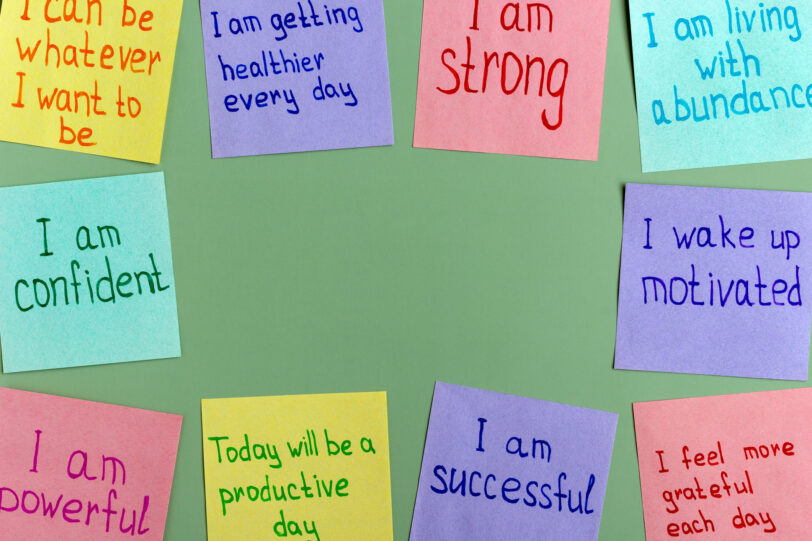
Stick notes on your mirror, desk, or phone. Seeing your affirmations often keeps them fresh in your mind.
Combine With Action
Affirmations work best when paired with steps toward your goal. If you say, “I am becoming healthier,” also choose a healthy meal or go for a walk.
Common Mistakes And How To Avoid Them
Affirmations are powerful, but only if used correctly. Here are mistakes many beginners make—and how to fix them.
1. Choosing Unrealistic Statements
If your affirmation feels impossible, it can backfire. Instead of “I am never anxious,” say, “I am learning to manage my anxiety. ”
2. Ignoring Negative Feelings
Affirmations are not about denying reality. If you feel sad or angry, acknowledge those feelings first. Then, use affirmations to support yourself.
3. Forgetting To Repeat
Occasional use doesn’t change much. Make affirmations a daily habit, like brushing your teeth.
4. Expecting Instant Results
Change takes time. Affirmations work best when used patiently, along with real effort.
5. Not Believing What You Say
If you don’t believe your affirmation, adjust it until it feels honest. “I am trying my best today,” is more powerful than “I am perfect. ”
Real-life Examples: Affirmations In Action
Many successful people—from athletes to entrepreneurs—credit affirmations for their achievements. Here’s how affirmations have made a difference in real lives.
Example 1: Overcoming Stage Fright
Maria, a teacher, struggled with public speaking. She started each day repeating, “I am calm and clear when I speak. ” Over time, she noticed less anxiety and more confidence in front of her class.
Example 2: Building A Healthy Habit
James wanted to exercise regularly but felt unmotivated. He used the affirmation, “I love feeling strong and active. ” By focusing on the feeling, not the task, he found it easier to stick with his routine.
Example 3: Finding A New Job
After losing his job, Ali felt discouraged. He wrote, “I have valuable skills to offer,” and repeated it daily. This shift in mindset helped him keep applying and, eventually, land a new position.
These stories show that affirmations help you keep moving forward, even when things are tough.
What The Data Says: Affirmations And Performance
Let’s look at some real data that shows how affirmations make a difference.
| Group | Used Affirmations | Performance Improvement |
|---|---|---|
| Students (Exam) | Yes | +15% average |
| Students (Exam) | No | +3% average |
| Employees (Project) | Yes | +12% productivity |
| Employees (Project) | No | No change |
This simple comparison shows that groups using affirmations often see better results. The difference is not just in attitude, but in actual performance.
Affirmations Vs. Other Self-help Tools
How do affirmations compare to other tools like visualization, meditation, or journaling? Each approach has unique benefits.
| Tool | Main Benefit | Best For |
|---|---|---|
| Affirmations | Positive self-talk | Building confidence |
| Visualization | Imagining success | Goal achievement |
| Meditation | Calm and focus | Reducing stress |
| Journaling | Self-reflection | Understanding thoughts |
Many people combine affirmations with these other tools for greater impact. For example, repeat your affirmation while meditating or write it in your journal.
Practical Tips For Making Affirmations Work
Here are some practical, experience-based tips to get the most from your affirmations:
- Start Small: Begin with 2-3 affirmations that matter most to you.
- Use “I am” Statements: These are most powerful for self-identity.
- Pair with Deep Breathing: Breathe in as you say your affirmation; breathe out slowly.
- Track Progress: Notice small changes in mood, behavior, or results.
- Change as Needed: Update your affirmations as your goals change.
- Record Your Voice: Listen to your affirmations in your own voice during the day.
- Practice Patience: Results often come slowly but steadily.
A non-obvious insight: Sometimes, the act of crafting your affirmation is as important as repeating it. When you spend time choosing the right words, you clarify what you truly want.
Another insight: Negative affirmations (“I am not lazy”) can actually reinforce the negative idea. Always focus on the positive (“I am motivated and productive”).
When Affirmations Don’t Work (and What To Do)
Not everyone gets results right away. Here’s why affirmations might fail—and how to adjust your approach.
Possible Reasons
- Too Generic: “I am successful” may not connect with your real situation.
- Lack of Repetition: Without daily practice, affirmations fade from your mind.
- Deeply Held Beliefs: If you have strong negative beliefs, affirmations alone may not be enough.
- No Action: Words need action to create real change.
What To Do
- Make your affirmations more specific and personal.
- Pair affirmations with small steps toward your goal.
- If you struggle with deep negative beliefs, consider support from a coach or counselor.
- Give it time—change takes longer than most people expect.
Affirmations For Different Life Areas
Affirmations are flexible. Here’s how you might use them in different parts of life:
Work And Career
- “I am skilled and bring value to my team.”
- “I handle challenges at work with confidence.”
Health And Wellness
- “I am making healthy choices today.”
- “My body grows stronger and healthier.”
Relationships
- “I give and receive love with ease.”
- “I communicate clearly and kindly.”
Stress And Anxiety
- “I am calm and centered, even in stressful moments.”
- “I can handle whatever comes my way.”
Personal Growth
- “I am open to learning and new experiences.”
- “Every day, I become a better version of myself.”
You can adapt these to fit your own needs and personality.
The Role Of Affirmations In Healing And Recovery
Affirmations are not just for success—they can also help with healing from emotional pain or trauma. For example, people recovering from illness or loss often use statements like, “I am worthy of love and care,” or “I am allowed to heal at my own pace.
”
Research shows that positive self-talk can reduce feelings of hopelessness and increase motivation for recovery. In therapy, affirmations are often used to support clients as they rebuild their sense of identity and self-worth.
A key point: Affirmations are not a replacement for professional help when needed, but they can be a valuable part of the healing journey.
Credit: www.cheservices.com
How To Measure Progress With Affirmations
Many people ask, “How do I know if affirmations are working?” Here are some practical ways to measure progress:
- Mood Tracking: Notice changes in your daily mood after using affirmations for a few weeks.
- Journaling: Write about any shifts in your thoughts or actions.
- Feedback from Others: Sometimes, friends or colleagues notice changes before you do.
- Achievement of Goals: Are you closer to the goals you set when you started?
Here’s a comparison of progress before and after using affirmations:
| Before Affirmations | After 2 Months of Affirmations |
|---|---|
| Frequent negative self-talk | More positive self-talk |
| Low motivation | Increased motivation |
| Difficulty handling setbacks | Better resilience and coping |
| Unclear goals | Clearer direction and purpose |
The Limits Of Affirmations
While affirmations are powerful, they’re not the answer to everything. They work best as part of a bigger picture—combined with action, self-reflection, and sometimes support from others.
- They won’t solve problems overnight.
- They can’t replace medical or psychological treatment if needed.
- They don’t work if you don’t believe (or act on) them.
Think of affirmations as one tool in your toolbox. When used wisely, they can help you build a stronger, healthier mindset.

Credit: www.amazon.com
Where To Find More Resources
If you want to learn more, many psychologists and self-help experts offer free resources online. For example, the American Psychological Association has helpful articles on positive thinking and mental health. You might also find guided affirmation exercises on apps and websites. For a deep dive into the science behind affirmations, read this Wikipedia entry on self-affirmation.
Frequently Asked Questions
What If I Feel Silly Saying Affirmations?
It’s normal to feel awkward at first. Start by saying affirmations quietly or writing them down. Over time, as you see small changes, it will feel more natural. Remember, the goal is to support yourself, not to impress anyone.
Can Affirmations Help With Anxiety Or Depression?
Affirmations can be a helpful tool for managing anxiety or mild depression, but they are not a cure. If you struggle with severe anxiety or depression, it’s important to also seek professional support. Use affirmations as one part of your self-care routine.
How Long Does It Take For Affirmations To Work?
Results vary from person to person. Some people notice changes in a few days, while for others it takes weeks or months. Consistency is key—stick with your affirmations daily for the best results.
Do I Need To Say My Affirmations Out Loud?
Saying affirmations out loud is powerful, but not required. You can also write them, think them, or listen to recordings. The important thing is repetition and intention.
Can Affirmations Change My Life Completely?
Affirmations are a strong tool for changing your mindset and habits, but real change also requires action. Use affirmations to support your goals, but remember to take steps toward them as well.
Affirmations can seem simple, but their impact is real and lasting when used with care and intention. By understanding the science, practicing daily, and avoiding common mistakes, you can use affirmations to unlock greater confidence, resilience, and self-belief in every part of your life.
