

When Do Affirmations Work: Unlocking Their True Power
When Do Affirmations Work
Many people talk about affirmations as a way to change their mindset and improve their lives. But do they really work? And if they do, when do affirmations actually start to make a difference? For anyone trying to use positive statements to change old habits or beliefs, these questions are important.
If you have ever repeated phrases like "I am confident" or "I can succeed" but didn't see changes, you are not alone. Understanding how, why, and when affirmations work can help you use them more effectively.
Affirmations can be a helpful tool for self-improvement, but only when used the right way, at the right time, and with the right expectations. This article explores the science, psychology, and practical use of affirmations. You will learn what makes affirmations effective, when they are most likely to work, and how to avoid common mistakes.
By the end, you’ll know how to get the real benefits from this simple but powerful practice.
What Are Affirmations?
Affirmations are positive statements that people repeat to themselves to influence their thoughts, feelings, or behaviors. The idea is simple: by repeating certain phrases, you can change your beliefs or your mindset. Some common examples include:
- "I am worthy of love."
- "I am strong and capable."
- "I can handle any challenge."
These statements are usually said out loud, written in a journal, or repeated silently. Many people use affirmations daily, hoping to boost their confidence, improve their mood, or reach a specific goal.
The Science Behind Affirmations
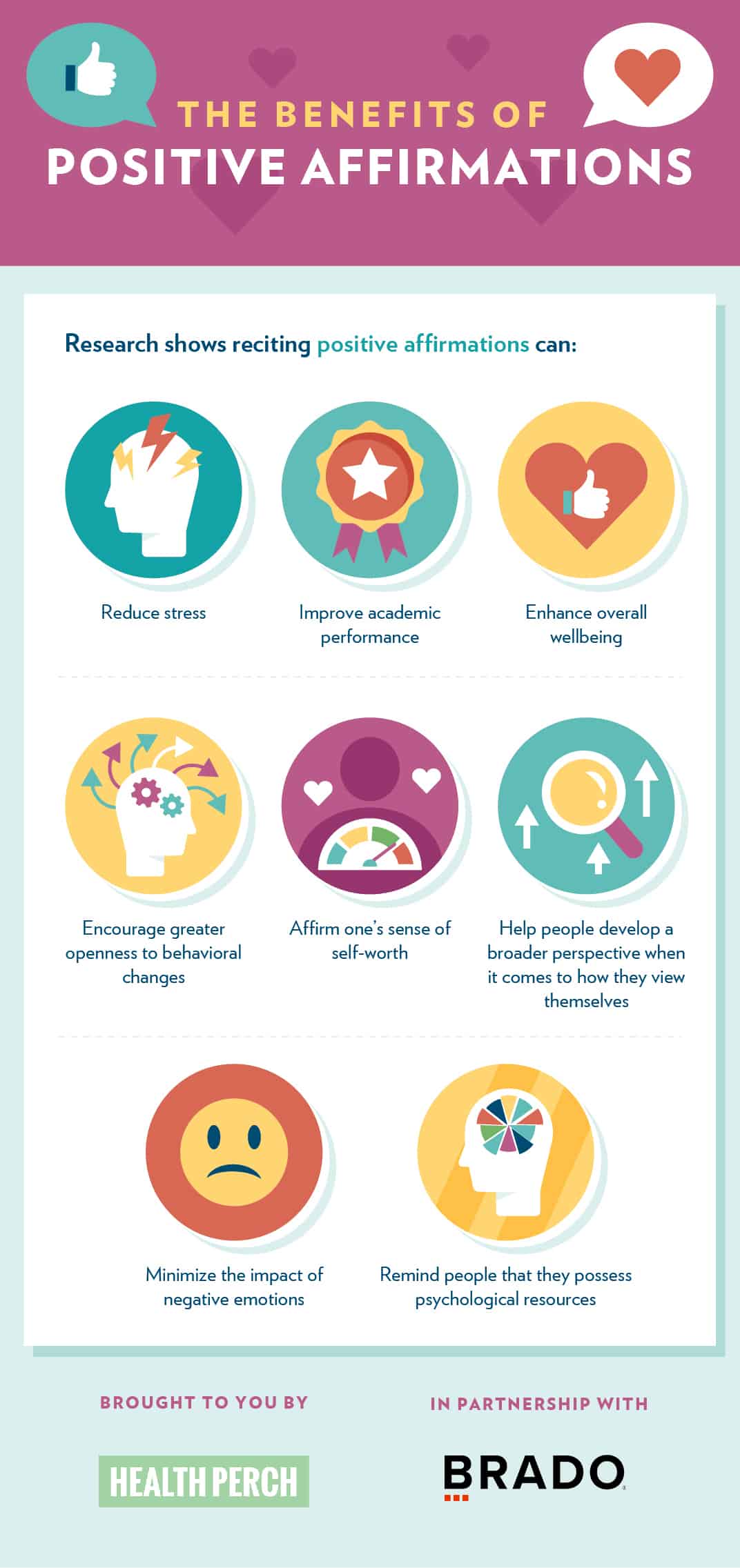
Affirmations are more than just "feel good" phrases. Research shows that they can have real effects on the brain and behavior. When you repeat an affirmation, your brain starts to form new neural pathways, making it easier to believe the statement over time.
Self-affirmation Theory
Psychologists call this self-affirmation theory. According to this idea, when people focus on their core values and repeat positive statements, they build a stronger sense of self-worth. This makes them more resilient to stress and more open to personal growth.
Brain Imaging Studies
Brain scans support this idea. In one study, people who practiced self-affirmations showed increased activity in areas of the brain linked to self-processing and reward. This suggests that affirmations can help people see themselves in a more positive light.
Effects On Stress And Problem-solving
Research also shows that affirmations can lower stress. For example, students who used affirmations before exams felt less anxious and performed better. In the workplace, employees who practiced affirmations were more open to feedback and new challenges.
But it’s important to remember: affirmations are not magic. They work best when used with other strategies, like goal-setting and action steps.
When Are Affirmations Most Effective?
Affirmations do not work all the time or for everyone. Their effectiveness depends on several factors. Let’s look at the main conditions that make affirmations work best.
1. The Affirmation Feels Believable
If you say something you do not believe at all, your mind may reject it. For example, if you feel shy and keep saying "I am the most confident person," your brain might argue back. But if you choose a statement like "I am becoming more confident each day," it feels more believable.
Insight: Start with affirmations that are a small stretch from your current belief, not a huge leap.
2. You Repeat Them Regularly
Like building a muscle, affirmations need repetition. Saying them once or twice will not change your thinking. Most people see results when they use affirmations daily for several weeks.
Tip: Link affirmations to daily habits, such as brushing your teeth or making coffee.
3. You Combine Them With Action
Repeating phrases alone will not bring change. Affirmations work best when you pair them with small steps toward your goal. For example, if your affirmation is "I am healthy," you also need to eat well or exercise.
Non-obvious insight: Even small actions, like standing up straight while saying your affirmation, can boost its power.
4. You Use Emotion And Visualization
Affirmations are more effective when you feel the words, not just say them. Try to connect with the emotion behind the statement. Imagine yourself living the truth of your affirmation.
Example: If you say "I am successful," picture yourself finishing a big project or receiving praise.
5. You Practice Self-compassion
If you are too hard on yourself or feel shame, affirmations may backfire. Research shows that self-compassion—being kind to yourself—makes affirmations more effective. It helps you accept your current self while working toward change.
6. Your Goals Are Aligned With Your Values
Affirmations work best when they reflect what truly matters to you. If your affirmation is about a goal you do not really care about, you will not feel motivated to repeat it.
Practical tip: Write down your core values and create affirmations that support them.
7. Your Mindset Is Open To Change
If you are very skeptical or closed-minded, affirmations may not help much. Being open to new ideas and willing to try is a key part of making affirmations work.
When Do Affirmations Not Work?
Affirmations do not always bring results. Sometimes, they can even make you feel worse. Here are some situations where affirmations may fail:
1. The Statement Feels Like A Lie
If your affirmation is too far from reality, your mind may reject it. For example, saying "I am rich" when you are struggling financially may trigger negative thoughts instead of positive ones.
2. You Use Affirmations To Avoid Problems
Affirmations should not replace real solutions or professional help. If you use them to avoid facing a serious issue, like depression or trauma, they may do more harm than good.
3. You Expect Instant Results
Change takes time. If you expect affirmations to work overnight, you may get disappointed and give up.
4. You Repeat Them Without Emotion
Repeating words without meaning or feeling will not change your beliefs. Your brain needs to feel the truth behind the words.
Non-obvious insight: The brain pays more attention to statements that feel personally meaningful.
5. Your Surroundings Are Negative
If you are in a toxic environment—at home, work, or school—affirmations alone may not be strong enough to overcome outside negativity.
How Long Does It Take For Affirmations To Work?
There is no universal answer, but most people notice small changes after several weeks of daily practice. For deeper changes in beliefs or habits, it may take a few months.
Factors That Affect The Timeline
- Consistency: Daily practice leads to faster results.
- Belief: The more you believe the affirmation, the quicker it works.
- Complexity of the Change: Changing a small habit takes less time than changing a deep-rooted belief.
Typical Experiences
Some people feel a boost in mood after a few days. Others notice bigger changes, like increased confidence or better relationships, after several weeks or months. The key is patience and persistence.
Best Practices For Making Affirmations Work
To get the most out of affirmations, follow these proven guidelines:
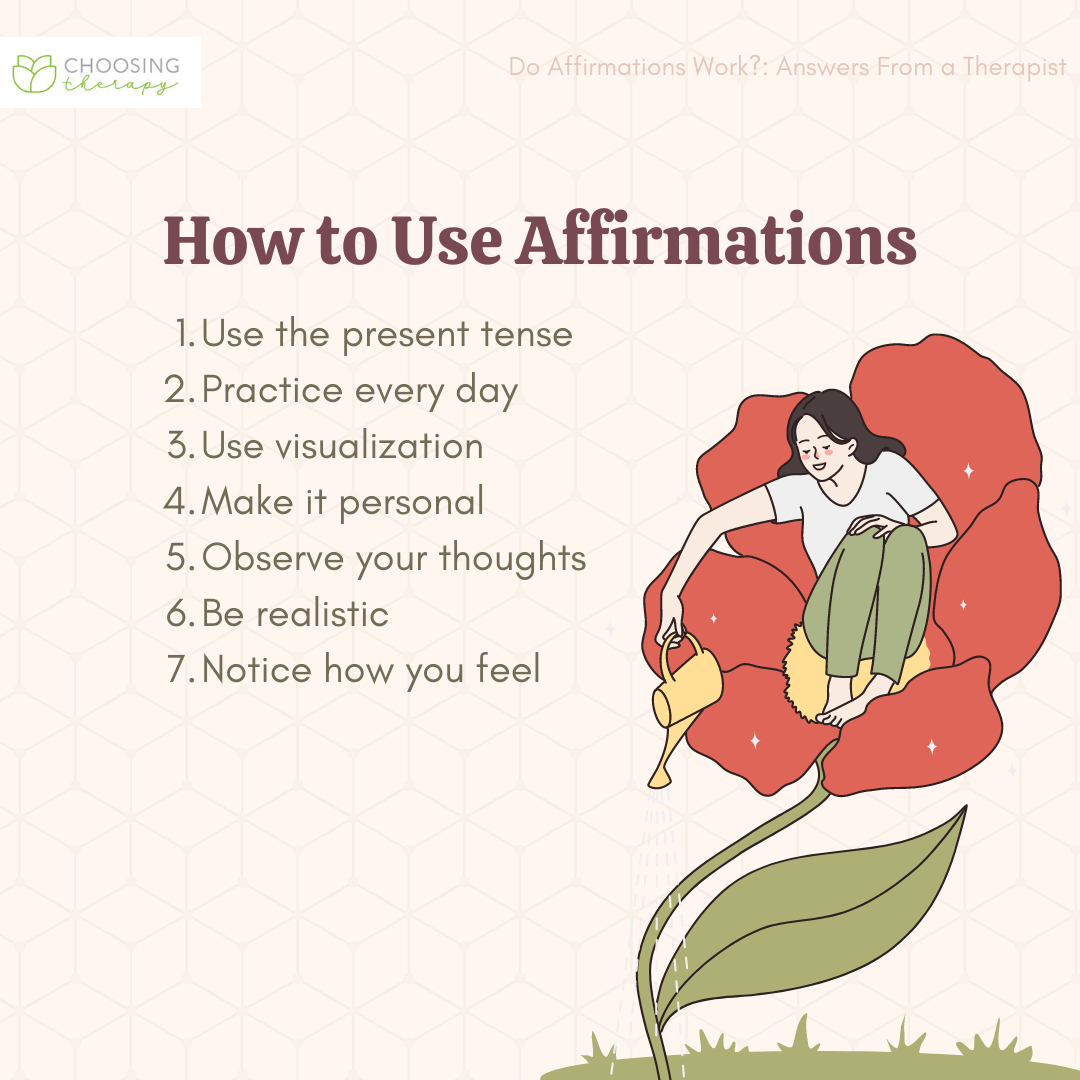
1. Make Affirmations Specific
Vague statements are less effective. Instead of "I am happy," try "I find joy in small things every day. "
2. Use Present Tense
Affirmations work best when stated as if they are already true. For example: "I am learning new skills," not "I will learn new skills."
3. Keep Them Positive
Focus on what you want, not what you want to avoid. Say "I am calm" instead of "I am not stressed. "
4. Personalize Your Statements
Use words and phrases that feel natural to you. Your affirmation should sound like something you would actually say.
5. Write Them Down
Writing helps your brain remember and believe the statement. You can use sticky notes, a journal, or your phone.
6. Repeat Them Aloud
Speaking affirmations out loud adds power. Hearing your own voice helps your brain pay more attention.
7. Pair With Visualization
Picture yourself living the truth of the affirmation. This makes the statement feel more real.
How Affirmations Work For Different Goals
Affirmations are flexible and can be used in many areas of life. Here are some common goals and how affirmations help:
Self-confidence
People with low self-esteem often use affirmations like "I am worthy of respect. " Over time, this can help them feel more confident in social or work situations.
Health And Wellness
Affirmations such as "I take care of my body" encourage healthy habits. When combined with actions like exercise, the effect is stronger.
Stress Reduction
Repeating "I am calm and centered" during stressful moments can lower anxiety and help you respond better to challenges.
Success And Achievement
Many people use affirmations like "I achieve my goals" to stay motivated. When paired with a clear plan, this can improve focus and drive.
Relationships
Affirmations such as "I communicate openly and honestly" can improve the way you relate to others.
Data And Studies On Affirmations
Researchers have studied affirmations in different settings, including schools, workplaces, and health care. Here’s a summary of what they found:
| Setting | Outcome | Notes |
|---|---|---|
| School | Improved test scores and reduced stress | Especially for students under pressure |
| Workplace | Higher motivation and openness to feedback | When affirmations matched personal values |
| Health Care | Better coping with illness and pain | Paired with support and treatment |
In one well-known experiment, students who practiced self-affirmation exercises before tests had lower cortisol (stress hormone) levels. This effect was especially strong for students who usually felt anxious about exams.
Credit: www.choosingtherapy.com
Common Myths About Affirmations
There are many misunderstandings about affirmations. Let’s clear up a few of them.
Myth 1: Affirmations Are Just Wishful Thinking
Some people believe affirmations are the same as dreaming or daydreaming. But research shows that, when used correctly, affirmations can lead to real changes in thinking and behavior.
Myth 2: You Must Believe The Affirmation 100% For It To Work
You do not have to fully believe your affirmation at first. Even if it feels a little uncomfortable, repeating it can help your mind accept the new idea over time.
Myth 3: Affirmations Replace Hard Work
Affirmations support action, but they do not replace it. If you want to lose weight, affirmations help with motivation, but you still need to eat well and exercise.
Myth 4: One Affirmation Works For Everyone
Each person is unique. An affirmation that works for your friend may not work for you. Personalize your affirmations to fit your own goals and values.
How To Write Effective Affirmations
Creating your own affirmations is simple, but following a few rules makes them stronger:
- Start with "I am" or "I" – This makes it personal.
- Use present tense – Act as if it is true now.
- Be positive – Focus on what you want, not what you don’t want.
- Keep it short and clear – Simple statements are easier to remember.
- Make it specific – Add details that matter to you.
- Add emotion – Use words that make you feel good.
- Test and adjust – If an affirmation does not feel right, change it until it does.
Example: Instead of "I am not afraid to speak in public," say "I speak clearly and confidently in public."
Affirmations Vs. Other Mindset Tools
Affirmations are not the only way to change your thoughts or habits. Here is a comparison with other common methods:
| Tool | Main Focus | Strengths | Limitations |
|---|---|---|---|
| Affirmations | Positive self-talk | Easy, flexible, good for daily use | May fail if not believable |
| Visualization | Imagining success | Boosts motivation, adds emotion | Needs time and focus |
| Journaling | Reflection and tracking | Helps notice patterns, track progress | Can feel slow for some people |
| Meditation | Calming and awareness | Reduces stress, builds focus | Needs practice and patience |
Many people combine affirmations with other tools for even better results.
Mistakes To Avoid With Affirmations
Even experienced users make mistakes with affirmations. Here are a few to watch out for:
- Being too vague: "I want to be happy" is not as helpful as "I find happiness in everyday moments."
- Ignoring emotions: If you feel nothing when you say your affirmation, it needs adjustment.
- Not updating affirmations: As you grow, your goals change. Update your affirmations to match your current needs.
- Relying only on words: Remember, actions are as important as statements.
- Comparing yourself to others: Your journey is unique. Avoid using affirmations that do not feel personal.

Credit: blog.innertune.com
Real-life Examples Of Affirmations Working
Many people have shared stories about how affirmations helped them:
- A student who was afraid of public speaking started using the affirmation "I speak with confidence." She practiced daily and joined a debate club. After a month, she noticed less fear and more enjoyment.
- An athlete recovering from injury repeated "My body is healing and getting stronger." He combined this with physical therapy. Over time, his mindset improved, and so did his recovery.
- A manager facing a tough project used "I handle challenges with calm and clarity." He paired this with deep breathing and planning. The project was a success, and he felt more in control.
These stories show that affirmations, when used with action and belief, can create real change.
When To Use Affirmations In Your Day
You can use affirmations any time, but some moments are especially powerful:
- Morning: Start your day with a positive mindset.
- Before a challenge: Use affirmations before a test, meeting, or interview.
- During stress: Repeat calming affirmations to lower anxiety.
- Before sleep: End your day with gratitude or hope.
Some people even set reminders on their phones to repeat affirmations throughout the day.
Credit: www.northwestpharmacy.com
Non-obvious Ways To Boost Affirmation Power
Most people repeat affirmations in their head or out loud. Here are some less common but powerful methods:
- Record your affirmations and listen to them daily.
- Pair affirmations with music that uplifts you.
- Use movement, like walking or stretching, while repeating affirmations.
- Create visual reminders, like art or vision boards, to anchor your statements.
- Share your affirmations with a trusted friend for support and accountability.
These methods make affirmations more engaging and memorable.
The Role Of Affirmations In Personal Growth
Affirmations are not a cure-all, but they are a useful tool for growth. They help you shape your thinking, face challenges, and stay motivated. Over time, affirmations can change the way you see yourself and the world.
But remember: affirmations are part of a bigger picture. Combine them with action, support, and self-care for the best results. If you ever feel stuck or discouraged, it’s okay to ask for help—from friends, family, or professionals.
If you want to learn more about the science of affirmations, you can visit Wikipedia's page on Self-Affirmation.
Frequently Asked Questions
How Many Times A Day Should I Repeat Affirmations?
There is no strict rule, but most experts suggest repeating your affirmations at least once in the morning and once in the evening. Some people repeat them throughout the day, especially before stressful events. The key is consistency—daily practice brings the best results.
Can Affirmations Help With Anxiety Or Depression?
Affirmations can support mental health by encouraging positive thinking and self-compassion. However, they are not a replacement for professional treatment. If you struggle with anxiety or depression, use affirmations alongside therapy or medical advice.
Do Affirmations Work While Sleeping Or Listening Subconsciously?
Some people play recordings of affirmations while sleeping. While there is limited evidence that this works, it may help reinforce positive thoughts. However, awake and conscious repetition, especially with emotion, is generally more effective.
Is It Better To Write Or Say Affirmations?
Both methods are helpful. Writing affirmations can make them feel more real and personal. Saying them out loud adds power through hearing your own voice. Many people use both for the strongest effect.
Can Affirmations Change Deep-rooted Beliefs?
Affirmations can help shift deep beliefs, but it takes time and consistent effort. Combine affirmations with action, reflection, and support from others. For very old or painful beliefs, working with a professional can be helpful.
Affirmations are a simple but powerful tool. Used correctly, they can help you grow, change, and live a more positive life. The key is to be patient, believe in the process, and combine affirmations with real action. If you approach them with an open mind and heart, you may be surprised by the changes you see.
