

What'S Affirmation Examples: Transform Your Mindset Today
What’s Affirmation Examples: How To Use Them For Real Change
Everyone has moments of doubt or stress. Sometimes, we all feel stuck or lost. But what if a few simple words could help you feel stronger, happier, or more confident? That’s where affirmations come in. These are short, positive phrases you say to yourself to shape your mindset, boost your mood, and guide your actions. Many people, from athletes to business leaders, use affirmations every day to reach their goals. But how do these phrases actually work? And what are the best examples to use for different situations?
In this guide, you’ll learn what affirmations really are, why they matter, and how to create and use them. You’ll also find hundreds of powerful affirmation examples for confidence, health, work, relationships, and more. You’ll get tips on making affirmations part of your life—plus, you’ll discover common mistakes and how to avoid them. Whether you want to feel calmer, achieve more, or just improve your daily mindset, this article will help you unlock the true power of affirmations.
What Are Affirmations?
Affirmations are positive statements you repeat to yourself. They are designed to help you focus on your strengths, build self-belief, and change negative thoughts into positive ones. Instead of letting doubts control your mind, you use affirmations to guide your thinking in a helpful direction.
Most affirmations start with “I am,” “I can,” or “I will.” For example: “I am strong,” “I can learn new things,” or “I will achieve my goals.” These statements can seem simple, but when you repeat them often, they can change the way you see yourself and the world.
Why Affirmations Work
The science behind affirmations is called self-affirmation theory. When you say positive things about yourself, your brain starts to believe them. Over time, this can help you:
- Feel more confident
- Reduce stress
- Handle challenges better
- Improve your mood
- Reach your goals
One study found that people who used affirmations showed lower levels of stress and made better decisions, especially under pressure. Another research in health psychology suggested that affirmations can help people stick to healthy habits, like exercising or eating better.
How To Use Affirmations Effectively
Affirmations are most effective when you:
- Repeat them daily: Say your affirmations every morning, before bed, or during stressful moments.
- Say them out loud: Speaking makes them more real to your mind.
- Write them down: Journaling helps reinforce the message.
- Believe in them: It’s important to feel the truth in the words, not just say them.
- Visualize success: Picture yourself living the affirmation.
Many beginners forget to connect emotions to their affirmations. If you just say the words without feeling them, they may not work as well. Another mistake is choosing affirmations that don’t feel true or possible, which can cause frustration. Start with statements that feel believable and stretch your confidence over time.
Types Of Affirmations
Affirmations can be used in many areas of life. Here are the most common types:
- Self-esteem affirmations
- Confidence affirmations
- Health and healing affirmations
- Work and success affirmations
- Love and relationship affirmations
- Stress and anxiety affirmations
- Financial affirmations
- Motivation and productivity affirmations
- Spiritual affirmations
- Daily gratitude affirmations
Each type has its own focus and unique examples. Choosing the right type for your needs makes your affirmation practice more powerful.
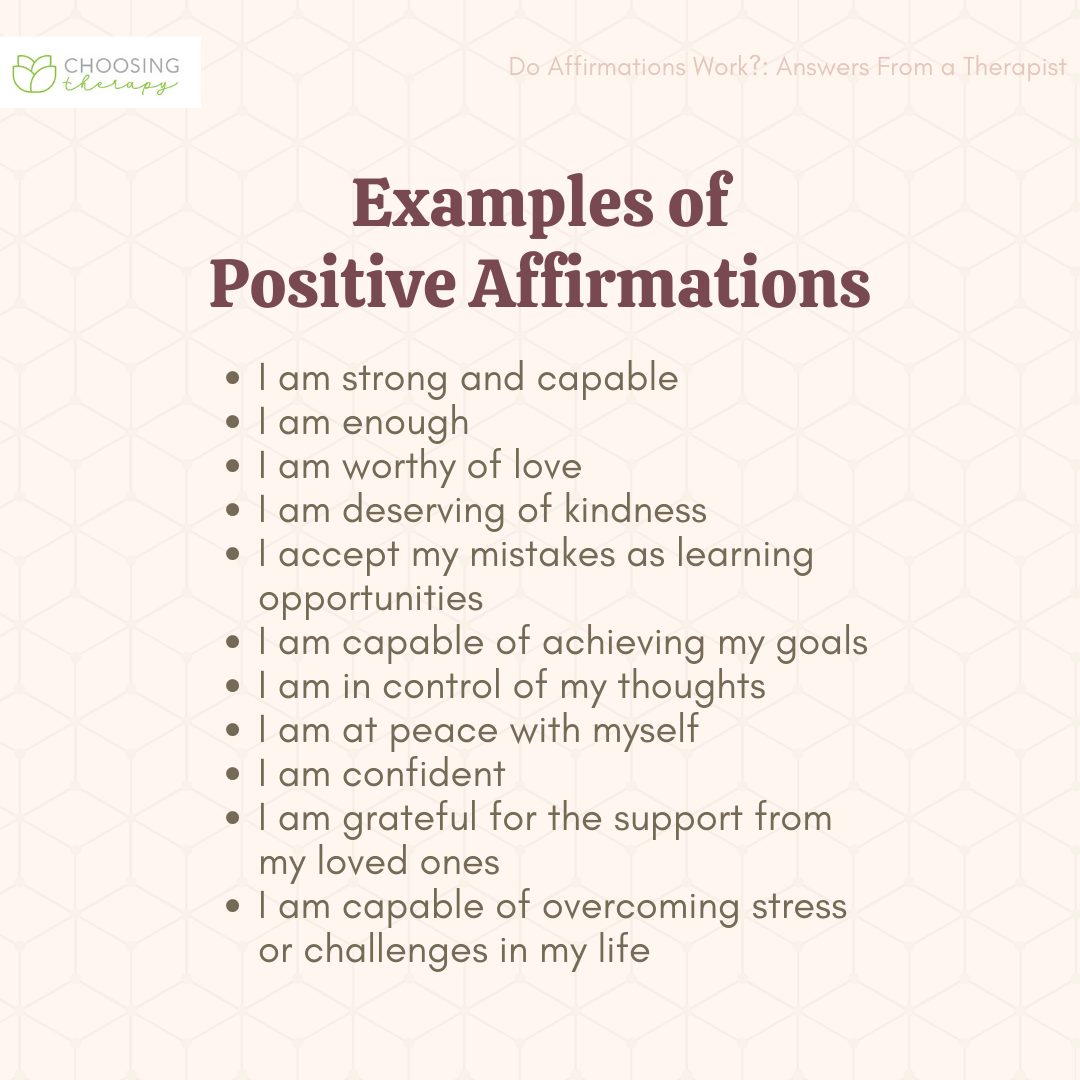
Credit: www.choosingtherapy.com
Self-esteem Affirmation Examples
Low self-esteem can make life harder. Positive affirmations can help you see your own value and build a better self-image. Here are some examples:
- I am worthy of respect and love.
- I accept myself unconditionally.
- I trust myself to make good choices.
- I am proud of who I am becoming.
- I deserve happiness and success.
- My opinions and feelings matter.
- I let go of self-doubt and welcome confidence.
- I am enough just as I am.
A non-obvious tip: Personalize your affirmations to address your own struggles. For example, if you often feel ignored, say “My voice is important and people listen to me.”
Confidence Affirmation Examples
Confidence is not something you are born with—it can be built with practice. Use these affirmations to boost your self-assurance:
- I believe in my abilities.
- I handle new situations with courage.
- I learn and grow from challenges.
- I speak my truth with confidence.
- I am fearless in the face of change.
- I trust my intuition.
- I am calm and confident under pressure.
- I can achieve anything I set my mind to.
It’s helpful to repeat confidence affirmations before important events, like interviews or presentations. Visualization helps here: imagine yourself succeeding as you say each phrase.
Health And Healing Affirmation Examples
Good health starts with a positive mindset. Research shows that positive thinking can speed up recovery and support physical well-being. Here are some health-focused affirmations:
- My body is healthy and strong.
- I care for myself with love and respect.
- Every cell in my body is full of energy.
- I heal more each day.
- I am grateful for my healthy body.
- I choose nourishing foods and exercise.
- My mind and body are in balance.
- I trust my body’s wisdom.
One insight beginners miss: Affirmations for health work best when paired with real actions, like healthy eating and exercise. Words alone can’t replace self-care.
Work And Success Affirmation Examples
Many people struggle with self-doubt at work. Affirmations can help you feel more capable and motivated in your career. Try these:
- I am skilled and valuable at my job.
- I am open to new opportunities for growth.
- I solve problems with creativity and focus.
- I am a leader and inspire others.
- I attract success and abundance.
- I am focused, efficient, and productive.
- I handle challenges with a clear mind.
- My work makes a positive difference.
Comparing the impact of different work affirmations:
| Affirmation Focus | Best Used For | Common Mistake |
|---|---|---|
| “I am skilled and valuable” | Building daily confidence | Forgetting to review real achievements |
| “I attract success and abundance” | Focusing on goals and growth | Skipping the action steps needed |
| “I am a leader and inspire others” | Preparing for presentations or team meetings | Not aligning words with actions |
Remember, using affirmations at work is not about ignoring problems but about facing them with a positive mindset.
Love And Relationship Affirmation Examples
Strong relationships start with self-love and positive expectations. Here are some affirmations for love and connection:
- I am worthy of love and affection.
- I attract healthy and loving relationships.
- I give and receive love freely.
- I communicate openly and honestly.
- I am patient and understanding with others.
- I am surrounded by people who care about me.
- My relationships are built on trust and respect.
- I am grateful for the love in my life.
Many people forget to use affirmations to heal past relationship wounds. For example, “I release past hurts and am open to new love” can be powerful for moving forward.
Stress And Anxiety Affirmation Examples
Stressful situations are part of life, but your response can change everything. Affirmations help calm the mind and reduce anxiety:
- I am safe and in control.
- I breathe deeply and let go of tension.
- I trust myself to handle any situation.
- I choose peace over worry.
- I am calm, centered, and relaxed.
- I release what I cannot control.
- My mind is clear and focused.
- I find calm in the present moment.
Pairing these affirmations with slow, deep breaths makes them even more effective. Many beginners miss this step.
Financial Affirmation Examples
Money worries are common, but positive affirmations can help you develop a healthier relationship with finances:
- I am open to wealth and abundance.
- Money flows to me easily and freely.
- I am responsible with my finances.
- I attract opportunities to grow my income.
- I have the power to create financial security.
- My skills and talents bring me prosperity.
- I deserve to be successful and wealthy.
- I am grateful for what I have and what is coming.
Here’s a quick comparison of common financial affirmations and their main benefits:
| Affirmation | Main Benefit |
|---|---|
| “Money flows to me easily and freely.” | Encourages openness to new financial opportunities |
| “I am responsible with my finances.” | Builds trust in your money management |
| “I deserve to be successful and wealthy.” | Boosts self-worth related to money |
Financial affirmations are most useful when paired with practical budgeting and goal setting.
Motivation And Productivity Affirmation Examples
If you struggle to stay motivated or get things done, try these affirmations:
- I am focused and productive.
- I take action towards my goals every day.
- I am committed to achieving my dreams.
- I finish what I start.
- I overcome procrastination with ease.
- I am energized and ready to work.
- I turn challenges into opportunities.
- I celebrate my progress, big and small.
Non-obvious insight: Use productivity affirmations in the morning to set the tone for the day, and again after breaks to restart your momentum.
Spiritual Affirmation Examples
For many people, affirmations are part of their spiritual or personal growth journey. Here are some examples:
- I am connected to something greater than myself.
- I trust the journey of my life.
- I am guided by wisdom and intuition.
- I am at peace with myself and the world.
- I am grateful for each moment.
- I am open to spiritual growth.
- I release fear and welcome faith.
- I trust that everything happens for my highest good.
People often overlook the power of spiritual affirmations during hard times. Using them can help you find meaning and calm.
Daily Gratitude Affirmation Examples
Gratitude is one of the fastest ways to feel happier. Research shows that people who practice gratitude are less stressed and more satisfied with life. Try these gratitude affirmations:
- I am grateful for this new day.
- I appreciate the small joys in my life.
- I am thankful for my health and well-being.
- I am surrounded by blessings.
- I welcome abundance with gratitude.
- I am thankful for the love I give and receive.
- I recognize the good in every situation.
- My heart is full of gratitude.
A tip many miss: Expressing gratitude for things you want (as if you already have them) can help attract them into your life.

Credit: 7esl.com
How To Write Your Own Affirmations
While ready-made affirmations are helpful, creating your own can make them even more powerful. Here’s how to write affirmations that work for you:
- Start positive: Use words like “I am,” “I can,” or “I will.”
- Keep it present: Write as if it’s happening now, not in the future.
- Be specific: “I am confident speaking in meetings” is stronger than “I am confident.”
- Make it personal: Use words and phrases that matter to you.
- Use strong language: Avoid weak words like “maybe” or “try.”
For example, if you want to improve your study habits, you might write, “I am focused and enjoy learning new things every day. ”
Mistakes To Avoid With Affirmations
Affirmations can be powerful, but some common mistakes can make them less effective:
- Being too vague: “I am happy” is not as helpful as “I am finding joy in my daily life.”
- Choosing unrealistic statements: If you don’t believe the affirmation, it may backfire. Start with statements you can accept.
- Repeating without emotion: Saying words without feeling won’t create change.
- Ignoring actions: Affirmations work best when you also take steps toward your goals.
- Giving up too soon: Change takes time. Stick with your affirmations for at least a few weeks.
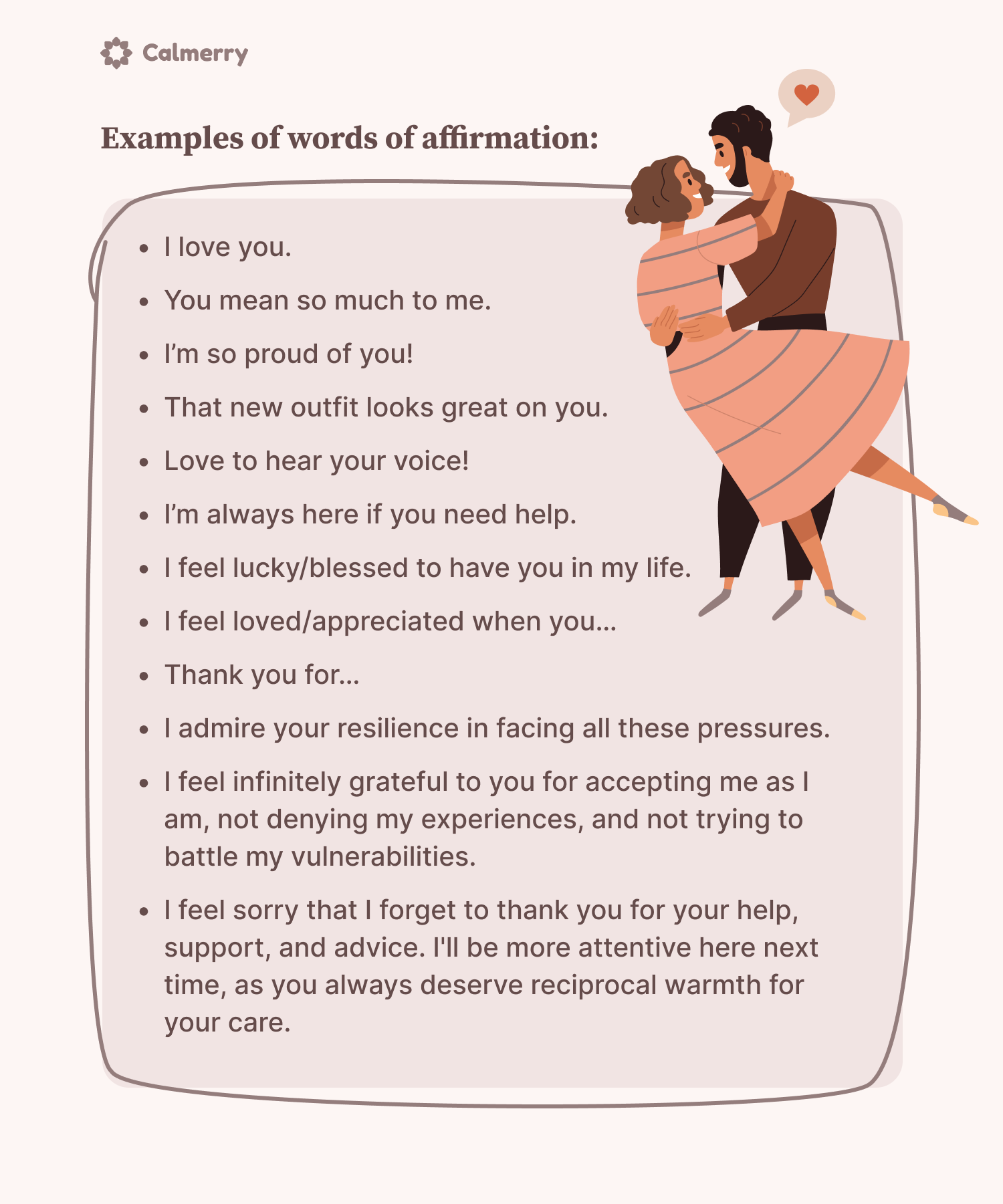
Credit: calmerry.com
When And How Often To Use Affirmations
There is no perfect time for affirmations, but common choices include:
- Morning: Set a positive tone for the day.
- Before bed: End your day with positive thoughts.
- Before stressful events: Calm your nerves and boost confidence.
- Any time you feel doubt or stress: Use affirmations as a reset.
Most experts suggest repeating each affirmation at least 5-10 times per session. Writing them down or saying them in front of a mirror can increase their effect.
Real-life Success Stories
Many people have changed their lives using affirmations. For example, athletes often use affirmations to visualize winning. Some business leaders credit affirmations with helping them stay focused and positive during tough times.
One non-obvious insight: People who combine affirmations with other self-care habits (like exercise or meditation) often see faster results. Another overlooked idea: Tracking your mood or progress in a journal can help you notice subtle changes over time.
Comparing Affirmation Methods
There are different ways to practice affirmations. Here’s a comparison of the most popular methods:
| Method | How It Works | Best For |
|---|---|---|
| Speaking out loud | Say affirmations with emotion and energy | Building confidence and presence |
| Writing in a journal | Write affirmations daily by hand | Deepening belief and reflection |
| Recording and listening | Play recordings of your own voice | Subconscious learning and repetition |
| Mirror work | Say affirmations while looking at yourself | Boosting self-love and self-image |
Try different methods to see which one feels best for you. Sometimes, mixing them creates the strongest impact.
The Science And Skepticism Behind Affirmations
Some people wonder if affirmations are just wishful thinking. While affirmations cannot change reality by themselves, research suggests they can help change your mindset and actions. For example, a study in the journal Social Cognitive and Affective Neuroscience found that self-affirmations can activate brain regions linked to self-worth and positive change.
However, affirmations are not magic. They work best as part of a bigger plan. If you say “I am fit and healthy” but never exercise or eat well, you will not see results. The key is to use affirmations as one tool among many for growth.
Frequently Asked Questions
What Are The Best Affirmations To Start With?
Start with simple, believable affirmations like “I am enough,” “I am learning every day,” or “I am worthy of good things. ” Choose statements that feel true or almost true to you. As you build confidence, you can use more challenging affirmations.
How Long Does It Take For Affirmations To Work?
It depends on the person and the affirmation. Some people notice small changes in a few days, while others need weeks or months. Consistency is key—use your affirmations daily and give them time to influence your mindset.
Can Affirmations Help With Anxiety Or Depression?
Affirmations can support mental health by changing negative thought patterns. However, they are not a replacement for therapy or medical treatment. If you struggle with anxiety or depression, use affirmations alongside professional help for the best results.
Should I Write, Speak, Or Think My Affirmations?
All methods can work, but speaking and writing are usually more powerful because they engage more senses. Try saying your affirmations out loud, writing them in a journal, or even recording and listening to them. Use the method that feels most natural to you.
Can Affirmations Help Me Reach Big Goals?
Yes, affirmations can support goal achievement by keeping you focused and motivated. However, they work best when you combine them with clear plans and regular action. Think of affirmations as fuel for your efforts, not a shortcut to success.
Affirmations are more than just words—they are a tool for self-growth, change, and empowerment. When used with belief and action, they can help you build a life filled with confidence, joy, and success. Start today with a few simple affirmations, and watch as small changes grow into big results.
