

What is the Meaning of Daily Affirmation? Unlock Its True Power
What Is The Meaning Of Daily Affirmation
Feeling stuck or unmotivated can make each day a struggle. Many people search for simple ways to boost their confidence, improve their mood, or change negative thinking. This is where daily affirmation comes in. You might have seen affirmations shared on social media, written on sticky notes, or recommended by self-help experts. But what exactly are daily affirmations? Do they really work, or are they just positive words with no effect? In this article, you’ll discover what daily affirmation truly means, how it works, its science, practical examples, and tips for making affirmations part of your daily life.
Understanding The Concept Of Daily Affirmation
A daily affirmation is a short, positive statement that you repeat to yourself, usually each day, to help shape your thoughts and beliefs. The goal is to encourage positive self-talk, reduce negative thinking, and support personal growth. By focusing on these uplifting messages, you can slowly change how you see yourself and the world.
At its core, an affirmation is a declaration. It’s not just wishful thinking; it’s a way to remind yourself of your strengths, goals, or the kind of person you want to be. For example, saying “I am capable and strong” every morning can help you start your day with confidence.
Affirmations are often used in self-improvement, therapy, sports, and even in classrooms. They can be spoken aloud, written down, or simply repeated quietly in your mind. The key is consistency—using them daily to make a real difference.
How Daily Affirmations Work
The power of daily affirmations comes from the way they interact with your thoughts and beliefs. Everyone has an internal dialogue, sometimes called “self-talk. ” This self-talk can be positive, supporting your goals, or negative, holding you back. Daily affirmations help replace negative self-talk with positive messages.
When you repeat an affirmation, you’re training your brain to focus on what’s possible, not on your doubts or fears. Over time, this can help change your mindset. Psychologists call this cognitive restructuring—changing the patterns of your thinking.
Here’s how the process often works:
- Awareness: You notice negative thoughts or self-doubt.
- Replacement: You use a positive affirmation to counter the negativity.
- Repetition: By repeating the affirmation daily, your brain starts to accept it as true.
- Behavior Change: Your actions and feelings begin to reflect your new beliefs.
For example, if you often think “I’m not good enough,” you might replace it with “I am worthy of success. ” With daily practice, you start to believe in your worth, and your actions follow.
The Science Behind Daily Affirmations
Skeptics often wonder if daily affirmations are just empty words. However, research has explored their effects on the mind and behavior.
Self-affirmation Theory
One of the main ideas behind affirmations is self-affirmation theory. This psychological theory suggests that people can maintain their self-worth by focusing on their values and strengths, especially during stressful times.
Studies show that affirmations can reduce stress, improve academic performance, and even help people make healthier choices. For example, students who used affirmations before tests performed better than those who did not.
Brain And Neuroplasticity
Affirmations also take advantage of neuroplasticity—the brain’s ability to change and adapt. When you repeat positive statements, you strengthen certain neural pathways, making those beliefs stronger and more automatic.
Functional MRI scans have shown that affirmations can activate parts of the brain linked to self-processing and reward. This means your brain responds to affirmations as if they are real experiences, not just words.
Data And Statistics
- In one study, people who practiced self-affirmation had lower levels of the stress hormone cortisol.
- Another experiment found that using affirmations for 2 weeks increased participants’ sense of well-being by about 20%.
- A survey of people using daily affirmations found that over 60% reported improved self-confidence after one month.
Types Of Daily Affirmations
Daily affirmations are not all the same. They can be tailored to different needs, goals, and life areas. Here are some common types:
Self-esteem Affirmations
These focus on building confidence and self-worth.
- “I am enough.”
- “I love and accept myself.”
- “I am proud of who I am.”
Success And Achievement Affirmations
For reaching goals and motivating yourself.
- “I achieve my goals with ease.”
- “Success comes naturally to me.”
- “I am focused and determined.”
Health And Wellness Affirmations
Promote physical and mental well-being.
- “I choose healthy habits.”
- “My body is strong and healthy.”
- “I am calm and relaxed.”
Relationship Affirmations
Improve your connections with others.
- “I am surrounded by love.”
- “I attract positive people.”
- “I communicate with kindness.”
Stress And Anxiety Affirmations
Help manage difficult emotions.
- “I am in control of my feelings.”
- “I release worry and embrace peace.”
- “I can handle whatever comes my way.”
Common Myths About Daily Affirmations
Daily affirmations are popular, but there are also many myths and misunderstandings. It’s important to clear these up.
Myth 1: Affirmations Are Just Positive Thinking
Many people believe affirmations are simply about thinking happy thoughts. However, affirmations are more than that. They involve focusing on your core values and what you truly want to change. Just repeating “I’m happy” won’t help if you don’t believe it or connect it to your real goals.
Myth 2: Affirmations Work Instantly
Some expect immediate results, but change takes time. Consistency is key. You need to repeat affirmations daily for weeks or even months to see real change. Like building a muscle, it requires regular practice.
Myth 3: Affirmations Are Only For People With Problems
Affirmations are for everyone, not just those struggling. Successful athletes, leaders, and students use them to stay focused and motivated. Anyone can benefit from a more positive mindset.
Myth 4: You Can Lie To Yourself With Affirmations
For affirmations to work, they must feel believable. If you repeat something that feels false, your mind will resist. Instead, choose statements that are positive but realistic for your situation.
Writing Effective Daily Affirmations
Crafting your own affirmations makes them more powerful. Here are some tips for writing affirmations that work:
- Keep Them Positive: Focus on what you want, not what you want to avoid. Use words like “I am” or “I choose.”
- Make Them Personal: Use words that resonate with you. Speak in the first person.
- Be Specific: The more detailed, the better. Instead of “I am successful,” try “I am confident in my abilities at work.”
- Use the Present Tense: Say your affirmation as if it’s true right now, not in the future.
- Keep It Short: Simple statements are easier to remember and repeat.
- Believe in the Message: The statement should feel possible for you, even if it’s a stretch.
Examples Of Well-written Affirmations
- “I am becoming more confident every day.”
- “I trust myself to make good decisions.”
- “I am grateful for my body’s strength.”
- “I choose to focus on what I can control.”
Common Mistakes To Avoid
- Making affirmations too vague (“I want to be happy.”)
- Using negative words (“I am not afraid.”)
- Writing in the future tense (“I will be successful.”)
- Choosing statements you don’t believe at all
Integrating Daily Affirmations Into Your Routine
Knowing about affirmations is not enough. You need to use them regularly to see results. Here’s how you can make them part of your daily life:
1. Morning Ritual
Start your day with affirmations. Say them aloud while looking in the mirror. This boosts your confidence for the day ahead.
2. Journaling
Write your affirmations in a journal each morning or night. This helps you focus and reflect on their meaning.
3. Sticky Notes
Place notes with your affirmations around your home—on the bathroom mirror, fridge, or desk. Seeing them often keeps them in your mind.
4. Meditation
Combine affirmations with deep breathing or meditation. Repeat your affirmation quietly as you relax.
5. Digital Reminders
Set reminders on your phone or computer. A short message during your day can help you refocus.
Daily Affirmation Integration Comparison
Here’s a comparison of different methods to include affirmations in your routine:
| Method | Effort Required | Best For | Frequency |
|---|---|---|---|
| Mirror Speaking | Low | Building confidence | Daily |
| Journaling | Medium | Reflection and focus | Daily/Weekly |
| Sticky Notes | Very low | Visual reminders | Ongoing |
| Meditation | Medium | Stress relief | Daily |
| Digital Reminders | Very low | Busy schedules | As needed |
Real-life Examples And Success Stories
Many people have found daily affirmations helpful in different situations. Here are some real-life examples to illustrate their power.
Professional Growth
A young professional named Maria struggled with self-doubt at her job. She started each day by telling herself, “I am skilled and valued at work. ” After a few weeks, she noticed she spoke up more in meetings and felt less nervous when facing new tasks.
Academic Achievement
A student facing exam anxiety used the affirmation, “I prepare well and remember what I learn. ” By repeating this daily, she felt calmer before tests and her scores improved.
Health And Recovery
Someone recovering from illness used, “My body is healing and getting stronger every day. ” This helped them stay positive through difficult treatments and focus on small improvements.
Athletic Performance
A basketball player used, “I perform my best when I trust myself. ” Before games, repeating this affirmation helped quiet nerves and improve focus, leading to better performance.
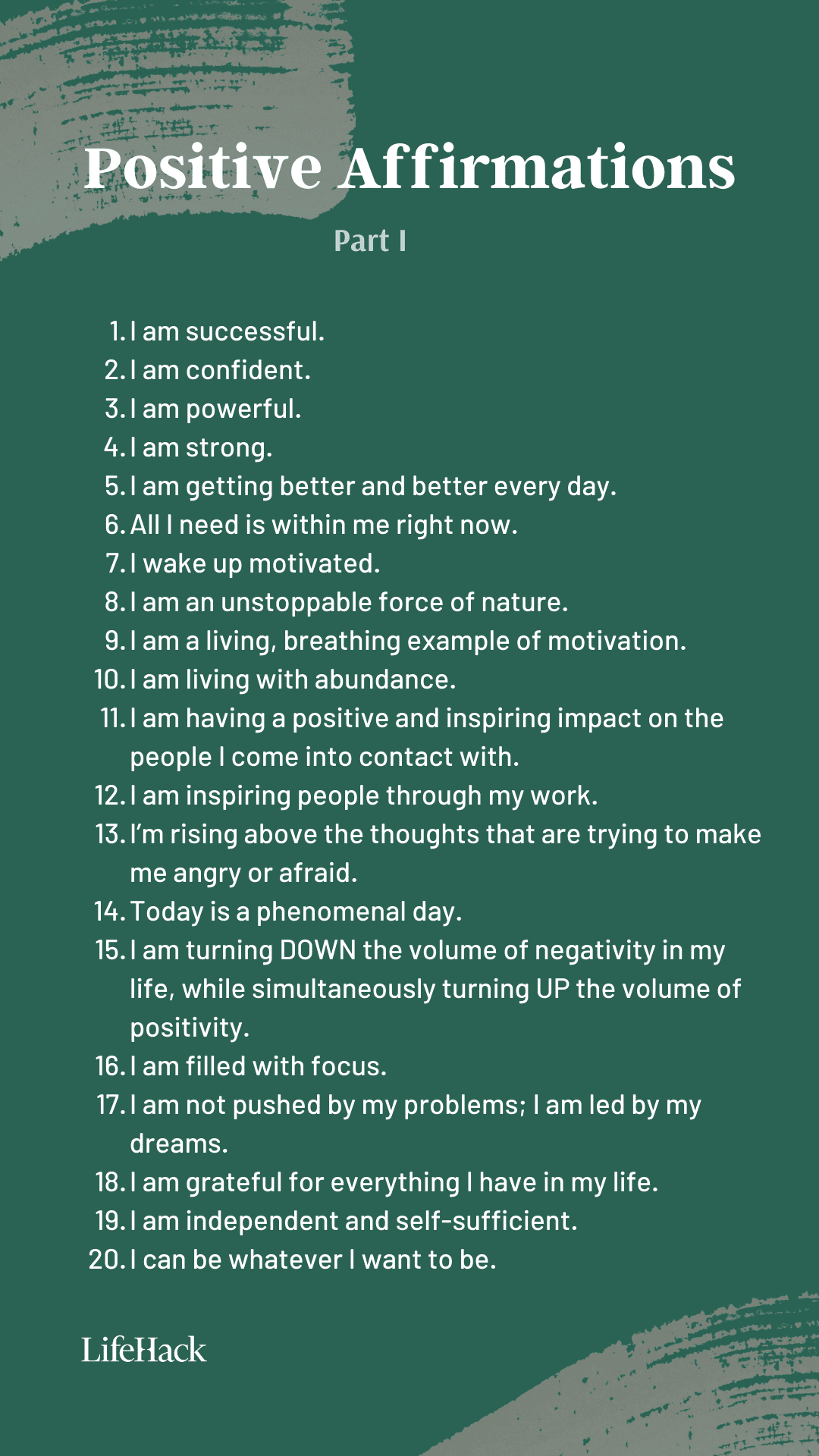
Credit: www.lifehack.org
Challenges And Limitations Of Daily Affirmations
While daily affirmations can be powerful, they are not magic. It’s important to know their limits and common challenges.
Belief Gap
If you choose an affirmation that feels too far from your current reality, your mind may reject it. For example, saying “I am rich” when you are struggling financially can feel false. It’s better to use “I am open to new opportunities for abundance.
”
Passive Use
Affirmations work best when combined with action. Simply repeating words without effort or change in behavior is unlikely to bring results.
Emotional Triggers
Sometimes, affirmations can bring up uncomfortable feelings, especially if you’re struggling with low self-esteem. This is normal. It can be helpful to talk to a therapist or counselor if this happens.
Overuse And Neglect
Repeating too many affirmations at once can make them lose meaning. Focus on one or two key affirmations at a time for best results.
The Difference Between Affirmations And Other Self-help Tools
It’s easy to confuse affirmations with other tools like mantras, goals, or visualizations. Here’s how they compare:
| Tool | Main Purpose | How It's Used | Key Difference |
|---|---|---|---|
| Affirmation | Change self-talk | Repeat positive statements | Focus on beliefs and mindset |
| Mantra | Focus in meditation | Chant or repeat a word/phrase | Often spiritual, not always personal |
| Goal | Achieve specific result | Set, plan, and track progress | Targets action, not just belief |
| Visualization | Imagine desired outcome | Picture success in mind | Uses mental imagery, not words |
Practical Tips For Success With Daily Affirmations
Using affirmations effectively involves more than just repetition. Here are some practical tips to maximize their power:
- Make It a Habit: Attach your affirmation practice to something you already do—like brushing your teeth or making coffee. This makes it easier to remember.
- Speak With Emotion: Say your affirmations with feeling. Emotion helps your brain remember and believe the message.
- Visualize Success: While repeating your affirmation, picture yourself living it. See yourself confident, healthy, or successful.
- Track Your Progress: Notice any changes in your mood, confidence, or actions. Keep a journal of your experiences.
- Adjust as Needed: If an affirmation stops feeling helpful, change it. Your needs and goals may shift over time.
- Combine With Other Tools: Use affirmations alongside goal-setting, meditation, or therapy for deeper results.
Insight: The Power Of Consistency
Beginners often give up too soon, expecting fast change. The real secret is consistency. Even five minutes a day, every day, can create big shifts over time.
Insight: Quality Over Quantity
Many people try to use too many affirmations at once. Focusing deeply on one or two messages is more effective than skimming through a long list.
When Daily Affirmations Might Not Work
There are times when affirmations may not bring the results you expect. It’s important to recognize these situations and know what to do.
Deep-seated Issues
If you have long-term emotional pain, trauma, or mental health struggles, affirmations alone may not be enough. Professional support from a therapist can help address deeper issues.
Lack Of Action
Affirmations should inspire action. If you only repeat words but don’t take steps toward your goals, progress will be limited.
Negative Environment
If you are in a toxic situation—at work, home, or school—affirmations can help, but they cannot replace real change. Seek support to improve your environment as well.

Credit: www.affirmations.online
Daily Affirmations In Different Cultures And Contexts
Affirmations are not new or limited to one culture. Many traditions have used similar practices for centuries.
- In Eastern philosophies, mantras and positive chants are used for focus and healing.
- In Western self-help, affirmations are part of programs like cognitive behavioral therapy.
- Some schools now teach children to use affirmations for confidence and stress management.
- Athletes and performers often use affirmations to prepare for competition.
This wide use shows that self-affirmation is a universal idea, adapted for different needs and settings.
Examples Of Affirmations For Different Life Situations
Choosing the right affirmation depends on your current situation and goals. Here are some examples for different needs:
For Job Interviews
- “I am prepared and confident.”
- “My skills and talents are valuable.”
- “I welcome new opportunities.”
For Anxiety
- “I am safe and in control.”
- “I can handle this moment.”
- “I breathe in calm, I breathe out stress.”
For Fitness Goals
- “I enjoy taking care of my body.”
- “Every workout makes me stronger.”
- “I am dedicated to my health.”
For Relationships
- “I am worthy of love and respect.”
- “I listen and communicate with empathy.”
- “I attract healthy, positive connections.”
For Daily Motivation
- “Today is full of possibilities.”
- “I create my own happiness.”
- “I take steps forward, no matter how small.”
How To Measure The Impact Of Daily Affirmations
It can be hard to know if affirmations are working. Here are some ways to track their impact:
- Mood Tracking: Use a journal or app to note your mood before and after using affirmations.
- Behavioral Changes: Look for shifts in your actions—do you take more risks, speak up, or handle stress better?
- Goal Progress: Notice if you’re getting closer to your goals since starting affirmations.
- Feedback from Others: Sometimes friends or family notice changes before you do. Listen to their feedback.
- Self-Reflection: Regularly check in with yourself about how you feel and think.
Sample Mood Tracking Table
Here’s an example of how you might track your mood with affirmations:
| Date | Affirmation Used | Starting Mood | Ending Mood | Notes |
|---|---|---|---|---|
| Monday | I am confident | Worried | Calmer | Felt more relaxed after repeating |
| Tuesday | I am focused | Tired | Motivated | Got more work done |
| Wednesday | I am worthy | Low | Hopeful | Helped with negative thoughts |
Combining Daily Affirmations With Other Self-improvement Strategies
Affirmations are even more powerful when used alongside other self-improvement tools. Here are some ideas:
- Goal Setting: Write affirmations that support your goals.
- Visualization: Picture yourself living the affirmation.
- Gratitude Practice: Combine affirmations with gratitude to boost positivity.
- Mindfulness: Use affirmations to stay present and aware.
- Therapy: Share your affirmations with a counselor for deeper work.
According to Psychology Today, combining multiple positive psychology tools increases your chance of lasting change.

Credit: writtenbycharlotte.com
Frequently Asked Questions
What Is The Main Purpose Of Daily Affirmation?
The main purpose of daily affirmation is to create positive self-talk that supports your confidence, motivation, and mental well-being. By repeating uplifting statements, you can change negative thought patterns and build a stronger, more optimistic mindset.
How Long Does It Take For Daily Affirmations To Work?
Most people need several weeks of regular practice to notice changes. The key is consistency. Some feel a shift in mood quickly, while deeper changes in belief and behavior may take longer. Stick with your affirmations daily for best results.
Can Daily Affirmations Help With Anxiety Or Depression?
Affirmations can be a helpful tool for managing mild anxiety or low mood by promoting positive thinking. However, for serious depression or anxiety, they should be used alongside professional help, not as a replacement. Always seek support if you’re struggling.
Are Daily Affirmations Based On Science?
Yes, there is scientific support for the benefits of affirmations. Research shows they can reduce stress, improve performance, and increase well-being by changing the way you think and feel about yourself.
Can Children Use Daily Affirmations?
Absolutely. Children can benefit from affirmations, especially for building confidence, managing school stress, and learning self-kindness. Use simple, age-appropriate phrases and encourage repetition in a fun, supportive way.
Every day offers a new chance to improve your mindset. Daily affirmations are a simple yet effective tool you can use to shape your thoughts, build confidence, and move closer to your goals. With patience and regular practice, you’ll find that these small statements can make a big difference.
Whether you’re facing challenges or looking to grow, affirmations help you become your best self—one positive word at a time.
