

What is the Meaning of Affirmation: Unlocking Positive Change
What Is The Meaning Of Affirmation
The word affirmation is more than just a trendy term you see on social media or hear in motivational talks. It carries deep meaning, both in language and in our daily lives. Many people use affirmations to boost their confidence, change their mindset, and build positive habits. But what exactly is an affirmation? Why do people believe it can have such a strong effect on our thoughts and actions? Understanding the true meaning of affirmation can help you use it in your life with more intention and success.
In this article, you'll discover what affirmation really means, how it works in psychology and personal development, and how you can use it in practical ways. We'll clear up common misunderstandings, show you the science behind affirmations, and share examples for real situations.
Whether you are new to the idea or have already tried using affirmations, this guide will give you a full and clear understanding. Let’s start with the basics and then go deeper into why affirmations matter.
Understanding The Core Meaning Of Affirmation
The term affirmation comes from the verb "to affirm," which means to state something confidently as a fact. In its simplest form, an affirmation is a positive statement that you repeat to yourself, usually to influence your beliefs or emotions. But the meaning goes beyond this.
Affirmation in language means confirming something is true, valid, or real. For example, when someone says, “I am capable,” they are affirming their own ability. This act of stating or confirming something — especially something positive about yourself — is at the heart of what affirmations are.
In daily conversation, affirmation can also mean showing support or approval. For example, when a parent tells a child, “You did a great job,” the parent is giving an affirmation of the child’s effort. So, affirmation is not only about what we say to ourselves but also about what we say to others to encourage and support them.
Key insight: Many people think affirmations are only for self-help, but the real meaning is much wider. It covers both self-talk and the support we give to others.
Types Of Affirmations
Affirmations come in different forms, each serving a unique purpose. Understanding these types helps you use them more effectively.
1. Self-affirmations
These are personal statements you repeat to yourself, often to boost self-esteem or change a negative mindset. Examples include:
- “I am confident in my abilities.”
- “I deserve happiness.”
2. Supportive Affirmations
Supportive affirmations are words you give to others to recognize their strengths or achievements. For example:
- “You handled that situation very well.”
- “I believe in you.”
3. Goal-oriented Affirmations
These focus on a specific goal you want to achieve. They help keep your mind set on success. Examples:
- “I am getting better every day at my job.”
- “I am moving closer to my fitness goals.”
4. Emotional Affirmations
These help you manage your feelings and emotions, especially during stressful times. For example:
- “It’s okay to feel anxious; I am learning to stay calm.”
- “I can handle difficult emotions.”
5. Spiritual Affirmations
These often relate to a person’s beliefs, faith, or values. For example:
- “I trust the journey of life.”
- “I am connected to something greater than myself.”
Non-obvious insight: Not all affirmations are positive. Sometimes people repeat negative beliefs (“I’m not good enough”), which are known as negative affirmations. These can harm self-esteem and confidence. Being aware of them is the first step to changing them.
The Psychology Behind Affirmations
Affirmations are not magic words, but they do have a real effect on the mind. When you repeat a statement, your brain can start to accept it as true, especially if you do it with intention and emotion. This idea is backed by psychological research.
How Affirmations Affect The Brain
Research shows that repetition is a powerful tool for learning. When you repeat a positive statement, your brain creates new pathways. Over time, these positive thoughts can replace old, negative beliefs. This process is called neuroplasticity.
A study published in the journal *Social Cognitive and Affective Neuroscience* found that self-affirmation activates the brain’s reward centers. These areas are linked to positive feelings and motivation. That’s why affirmations can actually make you feel better and help you take positive action.
Self-affirmation Theory
Psychologists have developed the self-affirmation theory, which explains how people protect their sense of self-worth when they face challenges. According to this theory, affirming your values and strengths helps you cope with threats and stress. For example, if you fail a test, reminding yourself of your hard work or other successes can help you handle the disappointment.
Practical tip: The most effective affirmations are specific and meaningful to you. Generic phrases don’t work as well as statements that connect to your real experiences and goals.
Common Myths And Misunderstandings About Affirmation
Many people think affirmations are just wishful thinking or that they only work for certain personalities. Let’s clear up some common myths:
- Affirmations are not magic spells. They don’t make things happen instantly. Instead, they help change your mindset, which leads to new actions and outcomes over time.
- You don’t have to believe an affirmation at first. The act of repeating a positive statement can help you start to believe it.
- Affirmations are not just for optimists. Anyone can use them, even if you feel skeptical. In fact, some research suggests skeptics see good results when they use affirmations consistently.
- Repeating affirmations is not enough by itself. To see real change, you also need to take action. Affirmations prepare your mind; your choices and behaviors make the difference.
- Affirmations do not ignore problems. They help you focus on solutions and strengths instead of getting stuck in negative thinking.
Non-obvious insight: Using affirmations for things you cannot control (like “Everyone will like me”) can lead to frustration. It’s better to focus on what you can influence (“I will be kind to others”).
Benefits Of Using Affirmations
People use affirmations for many reasons, and studies have found several key benefits:
Improved Self-esteem
Affirmations help you build a more positive self-image. When you tell yourself, “I am worthy,” you start to see your own value. This can be especially helpful if you struggle with self-doubt.
Reduced Stress
Repeating calming affirmations can lower feelings of anxiety. When you focus on your strengths or remind yourself you can handle challenges, your stress level often drops.
Increased Motivation
Affirmations can boost your drive to achieve goals. Positive statements help you believe in your ability to succeed, making it easier to take action.
Better Resilience
When you face setbacks, affirmations help you bounce back. They remind you of your abilities and encourage you to keep going.
Healthier Relationships
Giving and receiving affirmations can improve your connections with others. People feel seen and appreciated when you affirm their efforts and qualities.
Improved Academic And Work Performance
Affirmations can help students and professionals overcome fear of failure. Reminding yourself of past successes or your ability to learn new things increases confidence and focus.
Here’s a comparison of how affirmations impact different areas of life:
| Area of Life | How Affirmations Help | Example Affirmation |
|---|---|---|
| Self-Esteem | Builds confidence and self-worth | I am enough as I am |
| Stress Management | Reduces anxiety, calms the mind | I can handle whatever comes |
| Goal Achievement | Boosts motivation to take action | I am moving closer to my goals |
| Relationships | Strengthens trust and connection | I appreciate your support |
Practical tip: Tracking your progress with affirmations can help you see results. Keep a journal where you write your affirmations and note any changes in your feelings or actions.
How To Create Effective Affirmations
Writing your own affirmations is simple, but a few tips can help you make them truly powerful.
1. Use Positive Language
Always state your affirmation in a positive way. Focus on what you want, not what you want to avoid. For example, say, “I am calm,” instead of “I am not stressed. ”
2. Keep It Present Tense
Affirmations work best when you use the present tense, as if your statement is already true. For example, “I am successful,” instead of “I will be successful. ”
3. Make It Personal
Use “I” statements to make the affirmation about you. This helps your brain accept the message as your own.
4. Be Specific
The more detailed your affirmation, the more powerful it is. For example, “I am confident when speaking in meetings,” is stronger than “I am confident. ”
5. Keep It Short And Simple
A short, clear affirmation is easier to remember and repeat. Don’t use complicated words or long sentences.
6. Add Emotion
Feel the meaning of your affirmation as you say it. Emotion makes the message stronger and helps it stick.
7. Repeat Regularly
Consistency is key. Say your affirmations daily — in the morning, before bed, or whenever you need a boost.
Here’s a side-by-side comparison of weak and strong affirmations:
| Weak Affirmation | Strong Affirmation |
|---|---|
| I want to be happy | I am finding joy in my life every day |
| I will try to be confident | I am confident and sure of myself |
| I hope things get better | I am making positive changes in my life |
Non-obvious insight: If you struggle to believe your affirmation, try making it more believable by adding “I am learning to…” or “I am open to…” For example, “I am learning to trust myself.”

Credit: 7esl.com
The Science And Research On Affirmations
Affirmations have been studied in psychology and neuroscience. While they are not a cure-all, research shows they can lead to real changes in attitude and behavior.
Key Research Findings
- Studies show that self-affirmation can reduce stress and improve academic performance, especially in situations where people feel threatened or judged.
- Brain imaging research reveals that affirmations activate the parts of the brain involved in self-related processing and reward.
- A study in the Proceedings of the National Academy of Sciences found that people who practiced affirmations were more open to health advice and less defensive.
Practical Applications
- People recovering from illness use affirmations to stay hopeful.
- Athletes use affirmations to improve focus and performance.
- Students use them to overcome test anxiety.
- Therapists use affirmations to help clients build self-worth.
For more about the science of affirmations, you can visit this Wikipedia page on affirmations.
Non-obvious insight: Research suggests that affirmations are most effective when they are connected to your core values. This means the statement must matter to you personally, not just sound positive.
When Affirmations Don’t Work
Sometimes, people try affirmations and feel no change. There are several reasons why this can happen:
1. Lack Of Repetition
If you only use an affirmation once or twice, it’s unlikely to make a big difference. Affirmations need to be repeated often to become a habit.
2. Not Believing The Statement
If the affirmation feels completely untrue, your mind may reject it. In this case, start with a gentler statement, such as “I am open to believing I am worthy. ”
3. Using Vague Or Generic Phrases
Affirmations that are too broad or not connected to your real life can feel empty. Make your statements specific and personal.
4. Ignoring Real Problems
Affirmations are not a replacement for action. If you have a problem, you still need to face it and take steps to solve it.
5. Negative Self-talk
If you use negative affirmations (“I always fail”), they can reinforce bad habits. Pay attention to your inner dialogue and try to change negative phrases into positive ones.
Practical tip: Combine affirmations with visualization. Imagine yourself living your affirmation — this makes it more real and powerful.

Credit: artpchs.weebly.com
Real-life Examples Of Affirmations
To help you see how affirmations work in practice, here are some examples for different situations.
For Self-confidence
- “I trust my judgment.”
- “I am proud of what I have achieved.”
For Stress Relief
- “I am calm and in control.”
- “I release tension with every breath.”
For Work Or Study
- “I am focused and productive.”
- “I learn quickly and remember easily.”
For Relationships
- “I communicate clearly and kindly.”
- “I deserve respect and give it to others.”
For Health And Fitness
- “I care for my body with healthy choices.”
- “I have the energy to do the things I love.”
For Personal Growth
- “I am always learning and improving.”
- “I am open to new ideas and experiences.”
Non-obvious insight: Saying your affirmations out loud in front of a mirror can make them even more effective. The combination of speaking, hearing, and seeing yourself makes the message stronger.
How To Make Affirmations A Daily Habit
It’s easy to forget about affirmations if you don’t have a routine. Here are some practical ways to include them in your day:
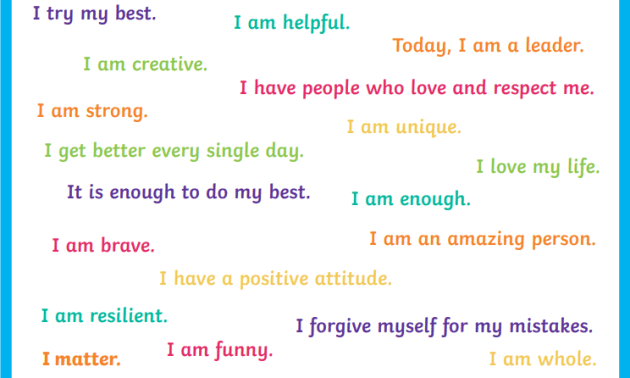
- Morning Routine: Start your day by saying your affirmations while getting ready or during breakfast.
- Sticky Notes: Write your favorite affirmations on sticky notes and place them where you’ll see them often — like on your mirror, fridge, or computer.
- Phone Reminders: Set reminders on your phone to repeat your affirmations at certain times.
- Journaling: Write your affirmations in a journal every day.
- Pair with Meditation: Use affirmations as part of your meditation or mindfulness practice.
Here’s a comparison of different ways to practice affirmations and how easy they are to stick with:
| Method | Effort Required | Best For |
|---|---|---|
| Morning routine | Low | Starting the day strong |
| Sticky notes | Very low | Visual reminders |
| Phone reminders | Low | Busy people |
| Journaling | Medium | Deep reflection |
| Meditation | Medium | Stress relief |
Non-obvious insight: Changing your affirmation regularly can keep your practice fresh and motivating. As your goals change, update your affirmations to match your new focus.
Credit: www.twinkl.com
Cultural And Historical Perspectives On Affirmation
The idea of affirmation is not new. Many cultures and traditions have used similar practices for centuries.
- Ancient India: Mantras, which are repeated words or phrases, have been used in meditation and prayer for thousands of years.
- Christian traditions: Positive declarations or prayers are used to build faith and hope.
- Modern psychology: Cognitive Behavioral Therapy (CBT) uses positive self-talk and reframing, which are similar to affirmations.
Different cultures use their own words and rituals, but the core idea is the same: what we say to ourselves shapes how we think and act.
Non-obvious insight: In some cultures, group affirmations or public declarations are common. These can be even more powerful because of the support and energy of a community.
The Limits And Ethical Use Of Affirmation
While affirmations are useful, it’s important to know their limits.
- Affirmations can’t replace therapy if you have serious mental health issues.
- They are not a substitute for action. You still need to work toward your goals.
- Affirmations should not be used to deny reality. If you have a problem, acknowledge it and look for solutions.
Ethically, it’s important to use affirmations to support growth, not to pressure yourself or others to be perfect.
Non-obvious insight: Sometimes, the push to “always be positive” can make people feel guilty for having normal, difficult feelings. It’s okay to use affirmations and still experience sadness or frustration.
Frequently Asked Questions
What Is The Difference Between An Affirmation And A Mantra?
An affirmation is a positive statement you say to yourself to change your mindset or beliefs. A mantra is often a word or sound repeated during meditation, sometimes with spiritual meaning. Affirmations focus on a specific goal or feeling, while mantras are more about creating focus and calm.
How Long Does It Take For Affirmations To Work?
There is no set time. Some people notice changes in a few days, while others may need weeks or months. The key is consistent practice and choosing affirmations that feel meaningful and believable.
Can Affirmations Help With Anxiety Or Depression?
Affirmations can be a helpful tool for managing anxiety or depression, but they are not a cure. They work best when combined with other methods, such as therapy, exercise, or medication if needed. Always seek professional help for serious mental health issues.
Do You Have To Say Affirmations Out Loud?
Saying affirmations out loud can make them more powerful because you hear your own voice. But you can also write them, think them silently, or repeat them during meditation. Choose the method that feels most comfortable for you.
What Should I Do If I Don’t Believe My Affirmation?
If your affirmation feels untrue, try adjusting it. Use phrases like “I am learning to…” or “I am open to…” This makes it easier for your mind to accept and believe the statement over time.
Affirmations are simple, but their impact can be deep and lasting. When you use them wisely, they help you shape your thoughts, your habits, and even your life. Whether you’re looking to boost your confidence, achieve a goal, or support someone else, understanding the true meaning of affirmation is a powerful first step.
