

What is the Difference Between Affirmation and Gratitude Explained
What Is The Difference Between Affirmation And Gratitude
People often talk about affirmation and gratitude when discussing personal growth or mental well-being. Both are popular in self-help, therapy, and even in daily routines. But while they may sound similar, affirmation and gratitude are actually two different tools. They help us in unique ways, and understanding the difference can make your journey to a happier, stronger mind much more effective.
Let’s dig deep into what makes affirmation and gratitude stand apart. You’ll see how each works, their benefits, examples, and how you can use both together for the best results. This guide will also address common questions, and even share insights many beginners miss.
Whether you’re new to these ideas or looking to sharpen your daily practice, you’ll find clear, practical answers here.
Understanding Affirmation
Affirmation is a simple but powerful idea. It means using positive statements about yourself or your life, spoken or written, to build self-belief. The goal is to repeat these statements often, so your mind starts to accept them as true.
For example, someone might say: “I am capable and strong.” This is an affirmation. The idea is that over time, by repeating this phrase, you start to believe it. You might use affirmations to boost confidence, change bad habits, or reduce negative thinking.
Affirmations work best when:
- They are stated in the present tense (“I am…” instead of “I will be…”).
- They are positive (“I am healthy” instead of “I am not sick”).
- They feel believable, or at least possible, to you.
Research has shown that affirmations can help reduce stress, improve problem-solving, and support better mental health. For example, studies in psychology found that people who used self-affirmation before stressful tasks performed better and felt less anxious.
But affirmations do not magically change reality. They are tools for shaping beliefs and attitudes, not instant solutions.
Understanding Gratitude
Gratitude is the act of noticing and appreciating the good things in your life. Instead of focusing on what you lack, you pay attention to what you already have. This can be as simple as feeling thankful for a warm meal, a friend’s support, or a sunny day.
Practicing gratitude often means:
- Keeping a gratitude journal, writing down things you are thankful for.
- Saying “thank you” more often, even for small acts.
- Reflecting on the positive parts of your day before going to bed.
The effects of gratitude are well-studied. People who regularly practice gratitude are usually happier, less depressed, and physically healthier. One study found that people who wrote down three things they were grateful for every day felt more optimistic and had better sleep after just a few weeks.
Gratitude shifts your attention from what’s wrong to what’s right, building a mindset of abundance, not scarcity.
Key Differences Between Affirmation And Gratitude
At first, affirmation and gratitude might seem alike. Both are positive, and both can improve your life. But their focus, methods, and outcomes are quite different. Let’s break down the main differences:
| Aspect | Affirmation | Gratitude |
|---|---|---|
| Definition | Positive statements about oneself or life | Recognizing and appreciating what you have |
| Focus | Building self-belief, changing mindset | Appreciating existing positives |
| Method | Repeating phrases, self-talk, writing | Journaling, reflection, expressing thanks |
| Emotional Impact | Boosts confidence, reduces self-doubt | Increases happiness, reduces envy and stress |
| Time Orientation | Often future-focused (“I am becoming…”) or present (“I am…”) | Always present or past-focused (“I am grateful for…”) |
A Closer Look At The Differences
- Focus on Self vs. Focus on Life
- Affirmation is usually about your own qualities, goals, or abilities.
- Gratitude is about the world around you and what it gives you.
- Building vs. Noticing
- Affirmation is about building new beliefs or strengths.
- Gratitude is about noticing what is already good.
- Emotional Source
- Affirmation often comes from a place of wanting to change or improve.
- Gratitude comes from a place of acceptance and appreciation.
- How They Influence Mindset
- Affirmation helps replace negative self-talk with positive beliefs.
- Gratitude helps shift focus from problems to blessings.
- When to Use Each
- Use affirmation when you need confidence or want to change old habits.
- Use gratitude when you feel negative, jealous, or want to feel more content.
How Affirmation Works In Daily Life
Affirmation sounds simple, but using it well takes practice. The core idea is to train your brain to accept positive beliefs, even if you don’t fully believe them yet. Here’s how you can use affirmation every day:
- Start the morning by saying three positive things about yourself.
- Write your favorite affirmation on sticky notes and place them where you’ll see them—like your mirror or computer.
- Repeat your affirmations out loud with emotion, not just as empty words.
- Use affirmations before stressful events, like meetings or exams.
Example affirmations:
- “I am worthy of love and respect.”
- “I can handle whatever comes my way.”
- “I am becoming more confident each day.”
A key insight many miss: Affirmations are not about ignoring problems. They are about choosing helpful beliefs to support action. If you just repeat them without action, their effect is weak.
How Gratitude Works In Daily Life
Practicing gratitude is also a habit you can build. Unlike affirmation, gratitude focuses on what’s already good.
Practical ways to add gratitude to your day:
- Keep a gratitude journal and write down three things you’re thankful for each night.
- Share your gratitude with others—send a thank you message or simply tell someone you appreciate them.
- When feeling stressed, pause and mentally list things you are grateful for, even small ones.
Example gratitude entries:
- “I am grateful for my friend’s support today.”
- “Thankful for the tasty breakfast I enjoyed.”
- “Appreciate the cool breeze on my walk home.”
A common mistake is thinking gratitude is only for big things. In reality, noticing small, everyday moments builds a more positive mood over time.
The Science Behind Affirmation And Gratitude
Both affirmation and gratitude are backed by scientific research, but they work in different ways.
Affirmation: Changing Self-talk, Changing The Brain
Studies in psychology show that affirmations can reduce stress and improve performance. When people practice self-affirmation, areas of the brain linked to self-processing and reward become more active. This can help:
- Lower stress reactions during challenges
- Reduce defensive thinking
- Improve openness to feedback
One experiment found that students who wrote affirmations before exams performed better and felt less anxious.
Gratitude: Boosting Well-being And Relationships
Gratitude activates areas of the brain related to social bonding and positive emotion. Research shows that gratitude practices:
- Increase overall happiness and life satisfaction
- Improve sleep quality
- Strengthen relationships
A study found that people who wrote weekly gratitude letters for several weeks felt happier and less depressed, even months later.
Interesting insight: Gratitude can make you more generous and empathetic, while affirmation often sharpens self-focus.
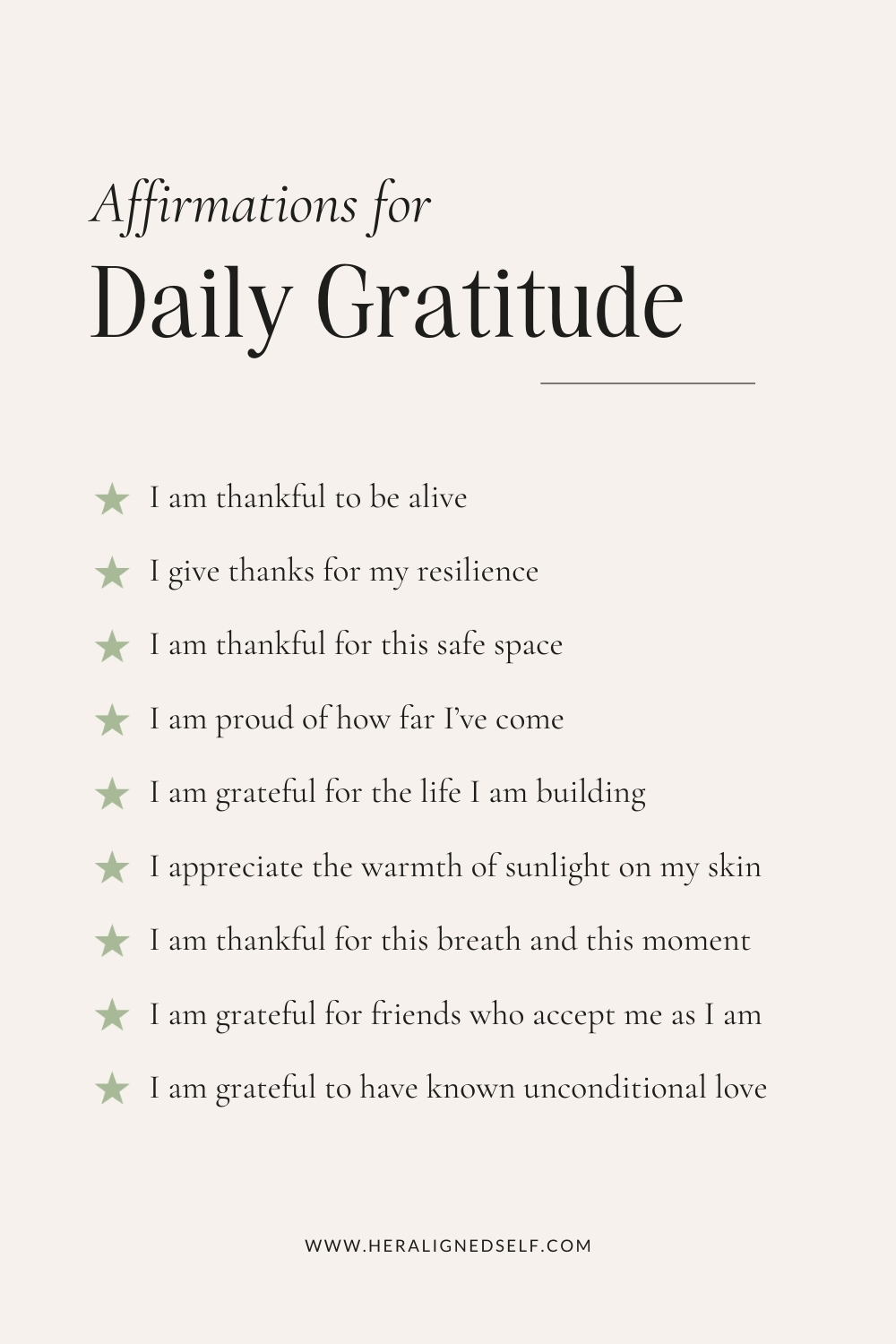
Credit: heralignedself.com
Common Myths And Misunderstandings
Many people mix up affirmation and gratitude, or expect too much from them. Here are some common myths:
1. “affirmations Are Just Wishful Thinking.”
Not true. Affirmations work best when combined with real effort and action. They support, not replace, change.
2. “gratitude Means Ignoring Problems.”
Practicing gratitude does not mean you deny difficulties. It means you balance your view by noticing the good along with the bad.
3. “you Have To Feel Grateful All The Time.”
No one feels grateful constantly. The practice is about small, regular moments of appreciation, not perfection.
4. “affirmations Work For Everyone, In Every Situation.”
Some people find affirmations uncomfortable or unhelpful, especially if the statements feel untrue. Adjusting the wording to fit your beliefs helps.
5. “you Must Choose One Or The Other.”
In fact, many people use both affirmation and gratitude for a more balanced mental approach.
Benefits Of Affirmation And Gratitude
Both tools have unique benefits, but they can also work together to create a powerful impact on your well-being.
Benefits Of Affirmation
- Builds self-confidence
- Helps change negative beliefs
- Supports motivation for goals
- Reduces anxiety before challenges
- Improves focus on strengths
Benefits Of Gratitude
- Increases happiness
- Reduces stress and negative emotions
- Improves sleep
- Deepens relationships
- Boosts physical health
Combined Benefits
When used together, affirmation and gratitude can:
- Balance self-focus with appreciation for others
- Improve both internal belief and external awareness
- Create a more positive, resilient mindset
When To Use Affirmation, When To Use Gratitude
You might wonder: which is best for you? The answer depends on your needs and situation.
| Situation | Affirmation | Gratitude |
|---|---|---|
| Lack of confidence | Very useful | Helps, but less direct |
| Feeling envy or jealousy | Some help | Most effective |
| Before a big challenge | Strongly recommended | Can add calmness |
| Wanting better relationships | Helps self-acceptance | Strengthens connections |
| Overcoming negative self-talk | Best tool | Supportive |
How To Combine Affirmation And Gratitude
You don’t have to choose just one. In fact, using both can give you the best results. Here’s how you can mix affirmation and gratitude in your daily routine:
1. Start Your Day With An Affirmation.
Say or write a positive statement about yourself or your goals.
2. End Your Day With Gratitude.
List three things you’re thankful for that happened today.
3. Pair Them Together.
For example: “I am grateful for my supportive friends, and I am becoming more open to new friendships.”
4. Use Them During Stressful Times.
When facing a challenge, affirm your strength, then notice what support you already have.
Extra tip: Some people find that starting with gratitude helps their affirmations feel more genuine, because they’re already in a positive state of mind.
Practical Mistakes To Avoid
Even with the best intentions, many people make mistakes when practicing affirmation or gratitude. Being aware of these can save you frustration.
Common Affirmation Mistakes
- Choosing unrealistic statements: If you say “I am a millionaire” but your mind rejects it, affirmations lose power. Use statements that stretch you but still feel possible.
- Repeating without emotion: Simply reciting words doesn’t work. Feel the meaning as you say or write them.
- Forgetting about action: Affirmations support change, but you must still take steps toward your goals.
Common Gratitude Mistakes
- Listing the same things every day: Repeating “I am grateful for my family” daily becomes empty. Look for new details or small moments each time.
- Using gratitude to avoid problems: Gratitude is not a way to deny challenges. It’s about balance, not blindness.
- Comparing yourself to others: Gratitude is personal. Don’t measure your life against someone else’s list of blessings.
Examples Of Affirmation And Gratitude Practices
Let’s look at how people use affirmation and gratitude in real life.
Example: Affirmation In Sports
Athletes often use affirmations to boost performance. Before a game, a player might repeat: “I am fast and focused.” This helps calm nerves and sharpen attention.
Example: Gratitude In Difficult Times
Someone going through a tough period might keep a daily gratitude journal. Even on hard days, they find small things to appreciate—like a kind word from a stranger or a peaceful moment in nature. This helps reduce the weight of stress and brings hope.
Combining Both: Morning And Night Routine
A person might start their day with the affirmation: “I am ready for any challenge today.” At night, they reflect and write: “I am grateful for the nice conversation I had with my coworker.”
Who Should Use Affirmation And Gratitude?
Almost anyone can benefit from these practices, but the effects can be stronger for certain people.
- People with low self-esteem often find affirmations helpful for building confidence.
- People feeling stressed or overwhelmed may benefit more from gratitude.
- Those facing big changes (like a new job or move) can use both to handle uncertainty and appreciate new experiences.
- Young people and students can use affirmation to fight self-doubt and gratitude to stay grounded.
However, if you have serious mental health issues, these practices should be part of a larger support plan, not the only solution. If you need more help, talk to a professional.
What Science Says: Research And Results
The benefits of affirmation and gratitude are not just ideas—they are supported by real studies. Here are some findings from the field of psychology:
- Self-affirmation can lower the body’s stress response, making people more open to growth and learning.
- Gratitude journaling for just a few weeks can lead to better sleep, higher happiness, and lower depression.
- Combining both practices can help people recover faster from setbacks and build resilience.
For more on the science, the Positive Psychology website shares detailed studies on the topic.

Credit: solopreneurmovement.com
Cultural And Personal Differences
It’s important to remember that affirmation and gratitude can look different in various cultures. In some places, talking about yourself in a positive way may feel strange or even rude. Gratitude may also be expressed more through actions than words.
Personal style matters too. Some people prefer writing, others like speaking their affirmations or gratitude. The key is to find what feels natural and meaningful to you.
Non-obvious insight: If a method feels forced, adjust it. You can use art, music, or movement to express affirmation or gratitude if words aren’t your thing.
Real-world Challenges And How To Overcome Them
Building any new habit can be tough. Here are some obstacles you might face with affirmation and gratitude—and how to handle them:
- Feeling awkward or fake: This is normal at first. The more you practice, the more natural it feels.
- Forgetting to practice: Tie your habit to something you already do, like brushing your teeth or making coffee.
- Doubt or resistance: If you notice negative thoughts, don’t fight them. Just observe, then return to your affirmation or gratitude.
Tip: Progress is slow at first but builds over time. Keep going even if you don’t see big changes right away.
Affirmation Vs. Gratitude: Quick Reference
Here’s a fast way to remember the main difference:
- Affirmation: “I am…” or “I can…”
- Gratitude: “I am grateful for…”
Both are about positivity, but one is about building up, the other about noticing.
Frequently Asked Questions

Credit: littleyellowstarteaches.com
What Is The Main Difference Between Affirmation And Gratitude?
The main difference is their focus. Affirmation is about creating and reinforcing positive beliefs about yourself or your abilities. Gratitude is about noticing and appreciating what is already good in your life. Affirmation builds; gratitude recognizes.
Can I Practice Affirmation And Gratitude Together?
Yes, and many people do. Using both can help you balance self-improvement with appreciation. For example, you might affirm your strengths in the morning and reflect on things you are grateful for at night.
Do Affirmations And Gratitude Actually Work?
Research shows that both can improve mood, reduce stress, and support mental health. However, they work best when practiced regularly and combined with real-life actions. They are tools for change, not magic solutions.
What Are Examples Of Affirmation And Gratitude Statements?
Affirmation example: “I am confident in my decisions.”
Gratitude example: “I am grateful for my supportive friends.”
The key is to make them personal and meaningful to you.
What If I Don’t Feel Anything When I Practice Affirmation Or Gratitude?
This is common, especially in the beginning. Keep practicing. Sometimes, it takes time for your mind to accept new beliefs or for gratitude to feel genuine. Adjust your statements or focus on smaller, more believable things if needed.
---
Understanding the difference between affirmation and gratitude can unlock new levels of growth and happiness in your life. While affirmation helps you build confidence and new beliefs, gratitude teaches you to appreciate the good you already have. You don’t have to choose—using both, with patience and honesty, can help you handle challenges, build stronger habits, and enjoy more of the present moment. Remember, it’s not about perfection, but about small steps toward a healthier, more positive mind.
