

What is the Difference Between Affirmation and Affidavit Explained
What Is The Difference Between Affirmation And Affidavit
Understanding legal terms can be difficult, especially when words sound similar but mean different things. Affirmation and affidavit are two such terms. Many people confuse them, but each has its own special use and meaning in law. This article will help you clearly understand the difference between affirmation and affidavit, how they are used, and why they matter. You will also see practical examples and learn some useful facts that most beginners miss. By the end, you’ll know exactly when to use each term and what makes them unique.
What Is An Affirmation?
An affirmation is a formal, spoken declaration that a statement is true. In legal settings, people make affirmations when they do not want to swear an oath. This might be for personal, cultural, or religious reasons. An affirmation carries the same legal weight as an oath, but it avoids religious language.
For example, if you are called to testify in court, you may be asked to swear an oath on a holy book. If you do not wish to do so, you can choose to make an affirmation instead. You simply state that what you are about to say is true, without referencing any religious belief.
Key Features Of An Affirmation
- Non-religious: No mention of God or sacred texts.
- Binding: Breaking an affirmation is legally the same as breaking an oath.
- Voluntary: You can choose affirmation instead of an oath for personal reasons.
- Spoken: Usually said aloud in court or before an official.
Practical Example
Imagine you are a witness in a court case. The judge asks if you wish to swear an oath or make an affirmation. If you do not have religious beliefs, you choose affirmation and say, “I solemnly affirm that the evidence I shall give shall be the truth, the whole truth, and nothing but the truth.
”
Common Misunderstandings
Many people think affirmation is less powerful than an oath. This is not true. Both are legally binding, and lying after either can result in perjury charges.
What Is An Affidavit?
An affidavit is a written statement that someone swears or affirms is true. It is signed in front of an authorized person, such as a notary public or a commissioner of oaths. Affidavits are used in many legal situations, such as in court cases, business deals, or government paperwork.
When you sign an affidavit, you are declaring that the information in the document is accurate. If you lie in an affidavit, you can be charged with perjury, just as if you lied under oath in court.
Key Features Of An Affidavit
- Written document: Affidavits are always in writing.
- Sworn or affirmed: You can swear (with religious oath) or affirm (non-religious) that the statement is true.
- Signed: You must sign it in front of an authorized official.
- Used as evidence: Courts and authorities rely on affidavits as formal evidence.
Practical Example
Suppose you witnessed a car accident but cannot attend court. You may write an affidavit describing what you saw. You take this document to a notary, swear or affirm it is true, and sign it. Your affidavit is then used in the court case as your official statement.
Common Misunderstandings
Some people think affidavits are only for court. In reality, they are used in many areas: real estate, immigration, banking, and even in business deals.
The Core Differences Between Affirmation And Affidavit
Now that you understand both terms, let’s look at how affirmation and affidavit are different. The table below summarizes the main differences:
| Aspect | Affirmation | Affidavit |
|---|---|---|
| Type | Spoken declaration | Written statement |
| Setting | Usually in court or official hearings | Legal documents, court cases, business, government |
| Form | Oral (verbal) | Written and signed |
| Religious content | Non-religious | Can be sworn (religious) or affirmed (non-religious) |
| Legal effect | Legally binding; perjury applies | Legally binding; perjury applies |
More Detailed Comparison
- Medium: Affirmation is spoken; affidavit is written.
- Use: Affirmation is mainly for giving oral evidence; affidavit is for presenting written evidence.
- Flexibility: Affidavits can use either an oath or affirmation. Affirmation is only non-religious.
- Official Involvement: Affidavits always require an authorized official to witness the signature; affirmations are usually before a judge or officer in a courtroom.
When And Why Affirmation Is Used
Affirmation is chosen by people who do not want to swear a religious oath. This can be for many reasons:
- Personal beliefs: Some people do not believe in God or religion.
- Cultural differences: Different cultures may have different practices about swearing oaths.
- Legal rights: In many countries, the law protects your right to affirm rather than swear.
If you are ever unsure, you can ask the court or official if affirmation is possible. It cannot be refused if you prefer it over an oath.
Example Situations
- Testifying as a witness in court
- Taking office as a public official
- Making a formal statement without religious reference
When And Why Affidavit Is Used
An affidavit is used when a written, sworn statement is needed. It is common in:
- Legal cases: When a person cannot appear in court, their affidavit may be accepted instead.
- Property transactions: Proving ownership, financial status, or identity.
- Immigration: Providing evidence for visas, citizenship, or asylum.
- Banking: Verifying income or identity.
- Business: Confirming facts in contracts or negotiations.
Affidavits are valued because they are formal, signed, and legally binding. This makes them strong evidence.
Example Situations
- A person living abroad gives an affidavit to confirm their relationship for immigration.
- Someone provides an affidavit about their income when applying for a loan.
- An affidavit of loss is used when important documents are lost.
Legal Importance Of Affirmations And Affidavits
Both affirmation and affidavit serve as truth declarations in the eyes of the law. This is important for:
- Establishing trust: Courts and authorities rely on honest statements.
- Preventing fraud: Lying under affirmation or in an affidavit is a serious crime.
- Supporting justice: These tools help uncover facts and solve disputes.
If you lie in either, you risk perjury charges. This can mean heavy fines or even jail. The law takes truthfulness very seriously.

Credit: www.nycomdiv.com
Who Can Make An Affirmation Or Affidavit?
Almost anyone can make an affirmation or affidavit, but there are some rules:
- Legal age: Usually adults, but sometimes minors with special permission.
- Mental capacity: You must understand what you are declaring.
- Voluntary: No one can force you; it must be your choice.
For affidavits, you also need an authorized official. These include:
- Notary public
- Commissioner of oaths
- Some court officials
- Lawyers (in some places)
Affirmations are usually made in court, but can also be made before other officials if the law allows.
Steps To Making An Affirmation
If you need to make an affirmation, here’s what usually happens:
- Official asks: You are asked if you want to swear or affirm.
- You respond: You choose affirmation.
- Statement: You say a set phrase, such as “I solemnly affirm that the evidence I shall give shall be the truth, the whole truth, and nothing but the truth.”
- Proceed: You then give your evidence or statement.
Some courts may have slightly different wording, but the meaning is the same.
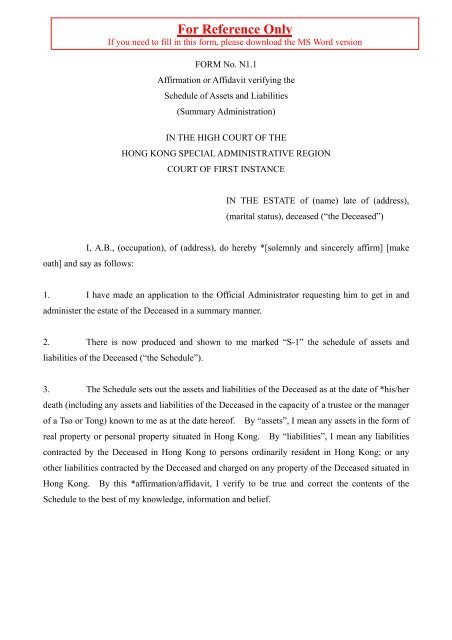
Credit: www.yumpu.com
Steps To Making An Affidavit
To make an affidavit, follow these steps:
- Write the statement: Clearly state the facts you want to declare.
- Go to an authorized official: Bring your ID and the document.
- Read the document: Make sure everything is true and correct.
- Swear or affirm: You state that the information is true, by oath or affirmation.
- Sign: Both you and the official sign the document.
- Official stamps/seals: The official adds their seal or stamp to make it official.
- Keep a copy: You and the receiving party keep a copy for records.
Sample Affidavit Structure
Most affidavits include:
- Title (e.g., “Affidavit of John Doe”)
- Personal details (name, address, occupation)
- Statement of truth (“I swear/affirm that the following is true”)
- Numbered paragraphs with facts
- Date and place
- Signature of declarant and official
Legal Consequences Of Lying
Both affirmation and affidavit are legally binding. If you lie, you commit perjury. Penalties can include:
- Heavy fines
- Jail time
- Criminal record
This is true even if you did not “mean” to lie. You are responsible for knowing that your statement is true before making it.
Non-obvious Insight
Many beginners think that small lies or “half-truths” in affidavits will not be noticed. However, courts often check affidavits carefully, and even minor falsehoods can cause big problems.
Another common mistake is forgetting that an affirmation is just as serious as an oath. Some people treat it less seriously, but the law does not.

Credit: www.scribd.com
How Different Countries Treat Affirmations And Affidavits
Around the world, the concepts of affirmation and affidavit are similar, but there are differences in practice.
| Country | Affirmation | Affidavit |
|---|---|---|
| United States | Common in courts as alternative to oath | Widely used for legal, business, and immigration purposes |
| United Kingdom | Protected right, equal to oath in court | Common in civil and family law, property matters |
| India | Used in courts and legal declarations | Required for government, banking, and legal procedures |
| Australia | Right to affirm instead of swearing | Needed for statutory declarations and court evidence |
While the process may vary, the main idea is the same everywhere: you are making a formal promise to tell the truth.
Affidavit Vs. Statutory Declaration
Some people confuse affidavits with statutory declarations. Both are written statements of fact, but there are differences:
- Affidavit: Sworn or affirmed before a notary or authorized official; used in court and legal matters.
- Statutory declaration: Usually not used in court; made before a justice of the peace or similar authority.
Affidavits are usually seen as stronger legal evidence because of the oath/affirmation and the involvement of a notary or similar official.
Special Types Of Affidavits
There are many types of affidavits, each used for specific situations:
- Affidavit of support: Used in immigration, to show financial backing.
- Affidavit of identity: Confirms who you are.
- Affidavit of residence: Proves where you live.
- Affidavit of service: Shows that legal documents were delivered to the right person.
- Affidavit of heirship: Proves family relationship in inheritance matters.
- Affidavit of loss: Declares that you lost a document or item.
Each must be truthful and signed in front of an official.
Common Mistakes And How To Avoid Them
Many beginners make errors with affirmations and affidavits. Here are some tips:
- Never sign an affidavit you do not fully understand.
- Do not let anyone fill out your affidavit without your review.
- Make sure your affirmation uses the correct legal wording.
- Always check the facts before declaring them as true.
- Keep copies of everything you submit.
Non-obvious Insight
Sometimes, people think they can “update” an affidavit later if facts change. This is not allowed. Each affidavit is a record of what you knew at the time. If things change, you must make a new affidavit.
Role Of Notary Public And Other Officials
Notaries and commissioners of oaths play a crucial part in affidavits. Their job is to:
- Check your identity.
- Make sure you understand the document.
- Witness your signature.
- Add their seal or stamp.
This process makes affidavits harder to fake. Always use an official who is properly licensed.
For affirmations in court, the judge or court clerk usually oversees the process.
Digital Affirmations And E-affidavits
With technology, some places now allow digital affirmations and e-affidavits. This means you can:
- Sign affidavits online using secure platforms.
- Appear by video before an official.
- Send documents electronically to courts or offices.
These options save time and are especially useful when travel is difficult. Always check local laws before using digital options, as rules vary.
Why Does This Distinction Matter?
Knowing the difference between affirmation and affidavit is important for many reasons:
- Legal accuracy: Using the wrong term can cause confusion or make your document invalid.
- Respect for rights: You have the right to choose affirmation over oath.
- Strong evidence: Proper affidavits are powerful in legal cases.
- Avoiding trouble: Mistakes can lead to delays, rejection, or even legal penalties.
If you ever feel unsure, ask a lawyer or court official for advice.
Useful Resources
For more details on legal procedures and official documents, you can visit the Wikipedia page on Affidavits.
Frequently Asked Questions
What Happens If I Lie In An Affirmation Or Affidavit?
Lying in either is perjury, which is a crime. You could face fines, jail, or both. Courts take truthfulness very seriously, even for small or accidental lies.
Can I Use An Affirmation Instead Of An Oath In Any Legal Situation?
In most places, yes. The law protects your right to choose affirmation over an oath if you prefer. This is true for court testimony, affidavits, and some official statements.
Is An Affidavit Stronger Than Just Giving Evidence In Court?
An affidavit is strong because it is written, sworn or affirmed, and signed before an official. However, courts may still require you to answer questions in person if needed.
Can I Write My Own Affidavit Without A Lawyer?
You can write your own affidavit, but it must be clear, truthful, and signed before an authorized official. For complicated matters, it’s smart to ask a lawyer for help.
What Is The Main Difference Between An Affidavit And A Statutory Declaration?
Both are written statements, but an affidavit is sworn or affirmed before a notary or similar official, and is mainly for court or legal use. A statutory declaration is for non-court matters and usually made before a justice of the peace.
Understanding the difference between affirmation and affidavit helps you navigate legal situations confidently. These tools are key to telling the truth and protecting your rights, whether in court, business, or personal matters. When used correctly, they support justice and trust in society.
