

What is Morning Affirmation? Unlock Your Day’s Full Potential
What Is Morning Affirmation
Each morning is a fresh start. How you begin your day can shape your mood, focus, and motivation. One practice that has helped many people worldwide is morning affirmation. But what exactly does this mean, and why has it become so popular?
Let’s explore the concept, the science behind it, practical steps to use it, and some common mistakes to avoid.
Understanding Morning Affirmations
A morning affirmation is a positive statement or set of statements you repeat to yourself at the start of your day. The purpose is to direct your thoughts, set your intentions, and build a positive mindset for the day ahead. Unlike simple wishes or hopes, affirmations are about speaking what you want to believe or achieve as if it is already true.
For example, saying “I am confident and ready to face new challenges” is a morning affirmation. It is short, clear, and focused on building your self-belief. Repeating it regularly can help your mind accept this idea and act accordingly.
Why Morning Affirmations Matter
Shaping Your Mindset
The first few minutes after you wake up are important. Your mind is more open and less distracted. This is why morning routines can have a strong impact. When you use affirmations during this time, you can set the emotional tone for your entire day.
Science Behind Affirmations
Research in psychology shows that self-affirmation can help reduce stress, improve self-control, and increase overall well-being. When you repeat positive statements, your brain starts to accept them as possible realities. This is called neuroplasticity, where your thoughts can shape your brain’s pathways. Over time, your beliefs and actions begin to match your affirmations.
One interesting study found that people who practiced self-affirmation before a stressful task showed less physical stress response and performed better. This suggests that affirmations can not only change your mood, but also your body’s reaction to difficult situations.
Building Self-confidence
Regular use of affirmations can boost your self-esteem. Instead of focusing on fears or doubts, you remind yourself of your strengths and goals. This shift in thinking can make you more confident, help you handle setbacks, and inspire you to take action.
Encouraging Positive Habits
Affirmations can also help you build better habits. By starting your day with clear intentions, you are more likely to make choices that match your goals. For example, if you tell yourself “I make healthy choices today,” you might find it easier to eat well or exercise.
How Morning Affirmations Work
You may wonder how repeating a sentence can change your life. Here’s how the process works:
- Breaking Negative Patterns: Many people wake up with worries or negative thoughts. Affirmations can help replace these patterns with more supportive ones.
- Creating Clarity: By stating what you want, you focus your attention and energy. This helps you set clear goals for the day.
- Building a Routine: Repeating affirmations every morning creates a habit. Over time, it becomes a natural part of your life.
- Connecting Emotion and Action: When you say your affirmation with feeling, your brain connects the words with emotions. This makes it more powerful.
Types Of Morning Affirmations
Not all affirmations are the same. They can be personal, general, or focused on a specific area of life. Here are some common types:
Self-esteem Affirmations
- “I am worthy of love and respect.”
- “I believe in my abilities.”
Health And Wellness Affirmations
- “I care for my body and mind.”
- “I choose foods that nourish me.”
Success And Productivity Affirmations
- “I am focused and productive.”
- “I achieve my goals step by step.”
Relationship Affirmations
- “I attract positive and kind people.”
- “I communicate clearly and with respect.”
Stress Relief Affirmations
- “I am calm and in control.”
- “I let go of what I cannot change.”

Credit: thechiclife.com
How To Create Your Own Morning Affirmations
You don’t have to use someone else’s words. Personal affirmations are often more effective. Here’s how you can create your own:
- Use the Present Tense: Speak as if it is already true. For example, “I am confident” instead of “I will be confident.”
- Keep it Positive: Focus on what you want, not what you don’t want. Say “I am healthy” instead of “I am not sick.”
- Be Specific: Clear statements are easier for your mind to accept. “I am a good listener” is better than “I am better.”
- Make it Personal: Use words that mean something to you.
- Keep it Short: One or two sentences are enough.
Here is a simple formula: “I am [quality] and I [action/goal].” For example, “I am strong and I handle challenges well.”
Practical Steps To Start A Morning Affirmation Routine
Starting a new habit can feel strange at first. Here are some steps to make morning affirmations a regular part of your day:
1. Choose A Quiet Moment
Right after waking up is ideal. Before you check your phone or start your day, take a few minutes for yourself.
2. Stand Or Sit Comfortably
Posture affects your mood. Stand tall or sit with your back straight. This helps you feel alert and confident.
3. Speak Clearly And Slowly
Say your affirmation out loud. If this is not possible, say it in your mind. Speaking helps your brain process the words more deeply.
4. Repeat 3-5 Times
Repeating the statement a few times helps it sink in. You can use the same affirmation every day, or choose different ones.
5. Visualize Success
As you say your affirmation, imagine yourself acting or feeling the way you describe. Picture the outcome you want.
6. Write It Down
Some people find it helpful to write their affirmation in a notebook. This adds another layer of focus and commitment.
7. Stay Consistent
Routine builds strength. Try to practice your affirmations every morning, even if only for a minute or two.
Examples Of Morning Affirmations
If you are new to this practice, here are some simple affirmations to try:
- “Today is a new beginning. I am ready.”
- “I am grateful for this day and its opportunities.”
- “I am calm, focused, and energized.”
- “I choose happiness and kindness.”
- “I can handle anything that comes my way.”
The Psychology Behind Morning Affirmations
Understanding why affirmations work can make you more confident in using them. Let’s look at some key psychological concepts.
Cognitive Restructuring
Affirmations help you challenge and replace negative thoughts. This is known as cognitive restructuring. Instead of thinking “I always fail,” you start to believe “I am capable and learning.”
The Self-fulfilling Prophecy
When you believe something is true, you act in ways that make it true. This is called a self-fulfilling prophecy. For example, if you start your day believing you are confident, you may speak up more or take more positive actions.
The Power Of Repetition
The brain loves patterns. When you repeat a message often, it becomes a habit. This is why daily affirmations can have a lasting effect.
Comparing Morning Affirmations With Other Practices
Many people wonder how affirmations compare with other morning practices like meditation or journaling. Here’s a side-by-side look:
| Practice | Main Purpose | Time Needed | Best For |
|---|---|---|---|
| Morning Affirmation | Boost self-belief and focus | 1-5 minutes | Anyone wanting a quick mindset shift |
| Meditation | Calm the mind, reduce stress | 5-20 minutes | People seeking relaxation and mindfulness |
| Journaling | Reflect and set goals | 5-15 minutes | Those who like writing and self-reflection |
You don’t have to choose just one. In fact, many people combine affirmations with meditation or journaling for a deeper effect.
Benefits Of Morning Affirmations
Let’s look at some of the most important benefits, supported by research and real-life experiences.
1. Reducing Stress
Repeating positive statements can lower stress levels. When you focus on positive thoughts, you spend less time worrying about what could go wrong.
2. Improving Motivation
Affirmations remind you of your strengths and goals. This can give you an energy boost to start your day with purpose.
3. Supporting Mental Health
People who use affirmations regularly report feeling less anxious and more balanced. It’s a simple tool that can support other mental health practices.
4. Encouraging Growth
When you believe in your ability to improve, you are more likely to try new things and take risks. Affirmations help build this growth mindset.
5. Enhancing Performance
Students, athletes, and professionals often use affirmations to improve focus and results. For example, a study found that students who used self-affirmations before tests performed better than those who did not.
6. Strengthening Relationships
Affirmations can help you see the good in yourself and others. This positive outlook can improve how you interact with people throughout your day.
7. Building Resilience
Life is full of challenges. Affirmations can help you bounce back from setbacks by reminding you of your inner strength.
Common Mistakes To Avoid With Morning Affirmations
While affirmations are simple, there are a few mistakes that can limit their power.
1. Using Negative Words
If your affirmation mentions what you don’t want, your mind still focuses on the negative. Always keep your statements positive.
2. Being Too Vague
General statements like “I am better” don’t give your mind a clear message. Be specific about what you want.
3. Lack Of Feeling
Just repeating words without emotion will not help much. Feel the truth of your affirmation as you say it.
4. Not Believing Your Words
It’s normal to feel doubt at first, but if you don’t believe your affirmation at all, it may not work. Start with statements that feel possible and build up over time.
5. Skipping Days
Consistency is key. Skipping days makes it harder for the habit to form.
Morning Affirmations For Different Goals
Depending on your needs, you can tailor your affirmations. Here are some examples for specific goals:
For Confidence
- “I trust myself to make good choices.”
- “I am brave and speak my mind.”
For Health
- “I honor my body with healthy habits.”
- “I have the energy I need today.”
For Success At Work
- “I am focused and complete my tasks.”
- “I learn and grow every day.”
For Emotional Balance
- “I am patient and stay calm under stress.”
- “I choose peace over worry.”
For Better Relationships
- “I listen with kindness and respect.”
- “I am open to love and connection.”
Morning Affirmations In Different Cultures
The idea of starting the day with positive thoughts is not new. Many cultures have their own ways of using affirmations.
Ancient Practices
In some cultures, morning prayers or chants serve a similar purpose. These rituals help people focus on gratitude, hope, or strength.
Modern Adaptations
Today, affirmations are popular worldwide. People use them in many languages and adapt them to fit their beliefs. What matters most is the intention behind the words.
Do Affirmations Always Work?
Affirmations are a helpful tool, but they are not magic. Here are some things to keep in mind:
1. They Support, Not Replace, Action
Affirmations can boost your mindset, but you still need to take real steps toward your goals.
2. Some People Need More Help
If you are struggling with serious anxiety or depression, affirmations alone may not be enough. They work best as part of a larger self-care routine.
3. Personalization Is Key
Affirmations work better when they feel true for you. Adjust them as your needs change.
Tips To Make Morning Affirmations More Effective
A few small changes can make your practice stronger:
- Pair with deep breathing: Take a few slow breaths as you repeat your affirmation.
- Look in the mirror: Seeing yourself as you speak can increase confidence.
- Record your voice: Listening to yourself can reinforce the message.
- Link to another habit: Say your affirmation while brushing your teeth or making coffee.
- Change it up: Try new affirmations to keep your practice fresh.
Two Surprising Insights About Morning Affirmations
Many people miss these two points when starting out:
- Affirmations Can Expose Hidden Beliefs: Sometimes, repeating a positive statement brings up resistance or doubt. This is a clue about what you really believe deep down. Noticing this can help you work on deeper issues.
- Affirmations Work Best with Action: Saying “I am healthy” is good, but combining it with healthy choices (like exercise) creates real change. Use affirmations as a guide for your actions, not just your thoughts.
Sample Morning Affirmation Scripts
If you want a step-by-step guide, here’s a simple script to follow:
- Sit or stand in a quiet space.
- Take three deep breaths.
- Say your affirmation slowly and clearly, three times.
- Imagine yourself living the affirmation.
- Smile and move into your day with purpose.
Here’s an example:
- “I am ready for this day. I am strong, focused, and open to good things. I trust myself and welcome new opportunities.”
Tracking Your Progress
It’s helpful to see how morning affirmations are changing your life. Consider keeping a simple log:
| Date | Affirmation Used | How I Felt | Notes |
|---|---|---|---|
| Monday | I am calm and ready | Focused, less anxious | Needed extra time today |
| Tuesday | I choose happiness | Happier, more patient | Shared affirmation with friend |
Looking back on your notes can show you how your mindset is changing over time.
Famous People Who Use Morning Affirmations
Many successful people have shared their use of affirmations. For example, Oprah Winfrey credits affirmations for helping her build confidence and stay focused. Athletes, business leaders, and artists often use positive self-talk as part of their routines.
Even if you don’t see instant changes, remember that many people have found real value in this simple practice.
When To Change Your Morning Affirmations
Your needs and goals will change over time. Here’s when you might update your affirmations:
- When you reach a goal and want a new challenge
- If your affirmation stops feeling inspiring
- When your life situation changes (new job, relationship, etc.)
- If you want to focus on a different area of growth
Changing your affirmations keeps your practice fresh and effective.
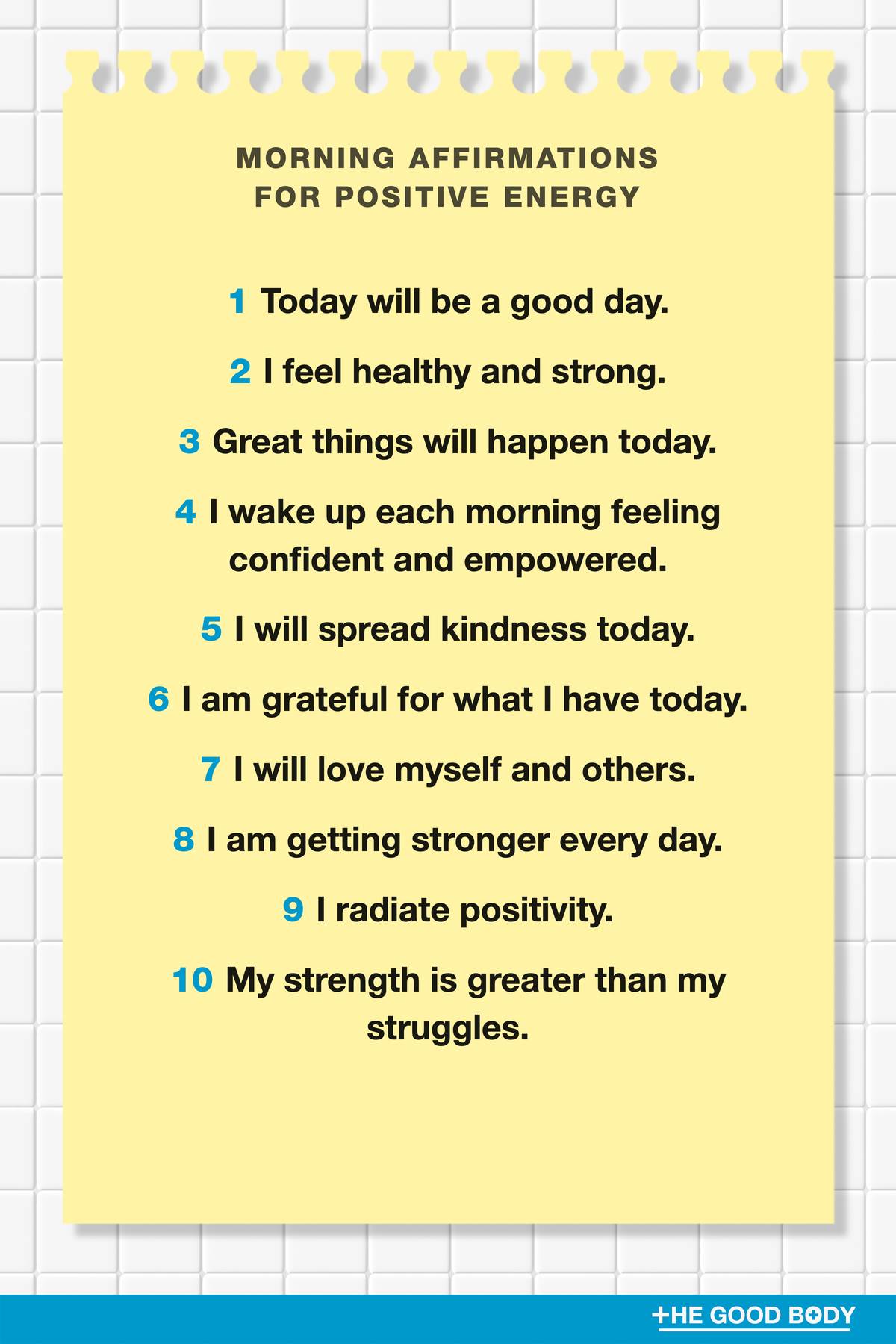
Credit: www.thegoodbody.com
Using Technology To Support Your Practice
You don’t have to do it all alone. There are many tools and apps designed to help you build a morning affirmation habit. Some let you set reminders, record your voice, or pick from a list of affirmations.
You might also find online communities where people share their favorite affirmations and tips. Technology can make it easier to stay consistent, especially if you’re busy.
For more on the science and practical use of affirmations, the Positive Psychology website provides research and resources.
Frequently Asked Questions
What Is The Difference Between An Affirmation And A Mantra?
An affirmation is a positive statement about yourself or your life, meant to build confidence and focus. A mantra is often a word or phrase repeated during meditation, sometimes with spiritual meaning. Both can be used in the morning, but affirmations are usually about personal goals or beliefs.
How Long Should I Spend On Morning Affirmations?
You only need 1-5 minutes each morning. The key is to focus and feel the meaning behind your words. Longer is not always better; consistency matters more.
Can I Write My Own Affirmations?
Yes, personal affirmations are often more effective. Use simple, clear language that feels true to you. Make sure your statements are positive and in the present tense.
Do I Have To Say Affirmations Out Loud?
Speaking out loud can make affirmations stronger, but it’s not required. You can also say them in your mind or write them down. The most important part is to focus and believe in what you are saying.

Credit: www.thegoodtrade.com
What If I Don’t Believe My Affirmation At First?
It’s common to feel doubt, especially with new affirmations. Start with statements that feel possible, even if they are small. Over time, as you repeat and act on your affirmations, your belief will grow.
Morning affirmations are a simple but powerful way to start your day with purpose and positivity. By choosing your words carefully and repeating them with feeling, you can shape your mindset, build new habits, and move closer to your goals.
Whether you are new to self-improvement or looking for a new tool, try adding morning affirmations to your routine—you may be surprised by the results.
