

What are the Benefits of Positive Affirmations: Unlock Happiness
What Are The Benefits Of Positive Affirmations
Everyone wants to live a happier, more confident life. But negative thoughts often get in the way. They can make you feel stuck, stressed, or even hopeless. Positive affirmations offer a simple tool to shift your thinking and boost your well-being.
Many people use them to create change in their lives, from building self-esteem to managing stress. But what exactly are positive affirmations, and do they really work?
In this article, you'll learn what positive affirmations are, how they work, and the many ways they can help you. We'll explore the science behind affirmations and give real examples. You’ll also discover practical tips, common mistakes, and how to get the most out of this powerful practice.
If you want to feel better about yourself and your future, keep reading.
What Are Positive Affirmations?
Positive affirmations are short, powerful statements that you repeat to yourself. They focus on what you want to believe or achieve. For example, saying “I am confident” every morning can help you build real self-confidence over time.
These statements are most effective when they are:
- Personal (use “I” or “my” statements)
- Present tense (“I am” instead of “I will be”)
- Positive (focus on what you want, not what you don’t want)
Affirmations are not magic. They work by changing your thought patterns. Over time, your mind starts to accept these new beliefs as true. This can lead to real changes in attitude and behavior.
The Science Behind Positive Affirmations
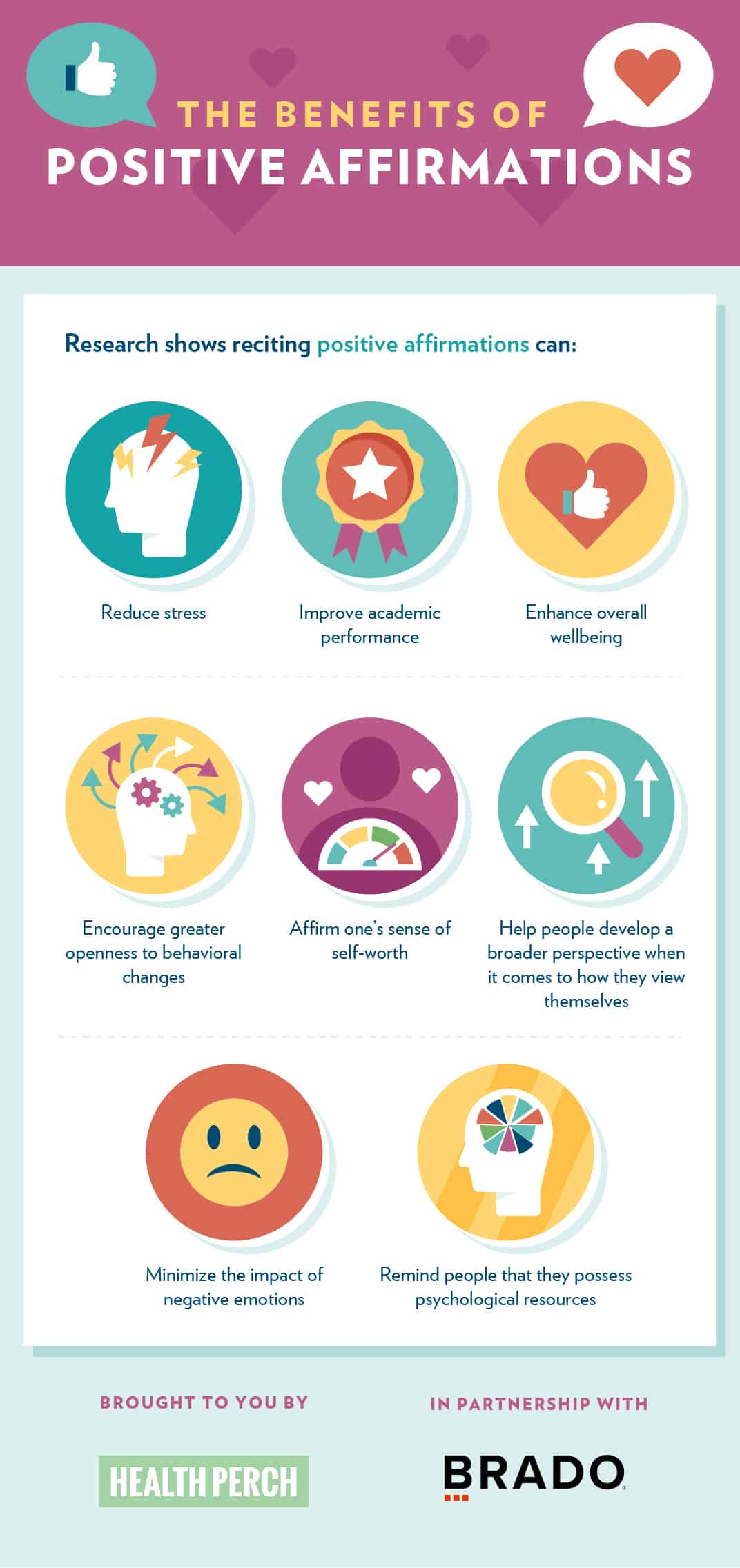
You might wonder if repeating positive statements is just wishful thinking. There is actual research behind how affirmations affect the brain and emotions. Neuroscientists have found that self-affirmation activates areas of the brain linked to self-processing and reward.
When you repeat affirmations, you create new neural pathways. This is called neuroplasticity—the brain’s ability to change and adapt. By practicing positive self-talk, you can train your brain to respond differently to stress, fear, or doubt.
One study found that people who practiced self-affirmations had lower levels of cortisol, the stress hormone, when facing challenges. Another report showed that students who used affirmations did better in school, especially those who felt left out or stressed.
Credit: ecogreenlove.com
Main Benefits Of Positive Affirmations
Let’s look at the key benefits of using positive affirmations in daily life. Each benefit is backed by research, real stories, and practical examples.
1. Boosts Self-esteem
Self-esteem is how you feel about yourself. Low self-esteem can make life harder. People with low confidence may avoid new challenges or doubt their abilities.
Repeating affirmations like “I am worthy of love and respect” helps fight negative self-talk. Over time, this can build a more positive self-image. For example, someone who always thinks “I’m not good enough” can start to believe “I have unique strengths” by using daily affirmations.
2. Reduces Stress And Anxiety
Stress and anxiety can make you feel tense or overwhelmed. Positive affirmations can calm your mind and body. Saying “I am calm and in control” or “I trust myself to handle this” can help you relax before a big test, meeting, or event.
Studies have shown that people who use affirmations feel less anxious in stressful situations. This is because affirmations help you focus on your strengths rather than your fears.
3. Improves Motivation And Focus
When you believe in yourself, it’s easier to stay motivated. Affirmations like “I am focused and determined” can help you keep working toward your goals. Athletes often use affirmations to boost their motivation before competitions.
If you repeat “I am getting better every day,” your mind starts to look for ways to improve. This creates a positive cycle of action and success.
4. Supports Emotional Health
Your emotions can change quickly. Positive affirmations help you manage negative feelings like anger, sadness, or frustration. By repeating statements such as “I forgive myself and move forward,” you encourage healing and self-compassion.
People who use affirmations regularly often report feeling happier and more balanced. This makes it easier to handle life’s ups and downs.
5. Encourages Positive Habits
Affirmations are not just about thoughts—they lead to action. When you tell yourself “I make healthy choices every day,” you’re more likely to eat well, exercise, or get enough sleep. Over time, these small actions become habits.
Many people use affirmations to break bad habits too. For example, someone trying to quit smoking might say “I am free from cravings” as a daily reminder.
6. Increases Resilience
Resilience is your ability to bounce back from setbacks. Affirmations like “I am strong enough to overcome challenges” help you face difficulties with confidence.
If you fail a test or lose a job, repeating positive statements can help you see the situation as temporary, not permanent. This mindset makes it easier to recover and try again.
7. Improves Relationships
How you talk to yourself affects how you treat others. If you use affirmations like “I am patient and understanding,” you’re more likely to be kind in your relationships.
People who feel good about themselves are better partners, friends, and family members. Affirmations can also help you set healthy boundaries, such as saying “I deserve respect in my relationships. ”
8. Promotes Better Physical Health
The mind and body are connected. Stress and negative thinking can lead to real health problems. Positive affirmations can lower stress, improve sleep, and boost your immune system.
Some studies suggest that people who use affirmations recover faster from illness or surgery. While affirmations are not a cure, they can support healthy habits and a strong mind-body connection.
9. Helps Achieve Goals
Affirmations make your goals clear and remind you why they matter. By repeating “I am achieving my dreams step by step,” you keep your focus on the result you want.
Many successful people use affirmations to visualize their success. This helps turn big goals into daily actions. Writing your affirmations is even more powerful—seeing the words makes them feel real.
10. Fights Negative Self-talk
Everyone has an inner critic. Negative self-talk can hold you back and lower your mood. Affirmations help you replace harsh thoughts with kind, supportive words.
For example, instead of “I always mess up,” you can say “I learn and grow from my mistakes. ” Over time, this creates a more positive inner voice.
11. Increases Gratitude
Gratitude is the practice of noticing and appreciating good things in your life. Affirmations like “I am grateful for my health and family” can make you more aware of what you have.
People who practice gratitude are happier, sleep better, and have stronger relationships. Affirmations help you focus on abundance instead of what’s missing.
12. Encourages A Growth Mindset
A growth mindset is the belief that you can improve with effort. Affirmations like “I am always learning new things” support this belief. They make it easier to try new things and accept challenges.
People with a growth mindset are more likely to succeed in school, work, and life. They see failure as a chance to learn, not a reason to give up.
13. Supports Healing And Recovery
If you’re going through a hard time, affirmations can support healing. People dealing with illness, addiction, or grief often use affirmations to stay hopeful.
For example, saying “I am healing every day” or “I forgive myself for the past” can help you move forward. This positive focus supports recovery and self-care.
14. Improves Performance
Whether you’re an athlete, student, or professional, affirmations can boost your performance. Before a big game, exam, or presentation, repeating statements like “I am prepared and confident” can calm nerves and sharpen your focus.
Many top performers use affirmations as part of their mental training. Visualization and affirmations work together to improve results.
15. Makes Change Easier
Change is hard for most people. Affirmations can help you accept and adapt to new situations. Saying “I welcome new experiences” or “I am open to change” makes it easier to embrace the unknown.
By practicing positive self-talk, you create a flexible mindset. This helps you see change as an opportunity, not a threat.
How Positive Affirmations Work: The Psychology Explained
Affirmations work through a mix of psychology and neuroscience. When you repeat positive statements, you create new thought patterns. These patterns become stronger over time, just like building a muscle.
Self-affirmation Theory
This theory suggests that people want to see themselves as good, capable, and worthy. When something threatens this view—like failure or criticism—affirmations help protect your sense of self. They remind you of your strengths and values.
Cognitive Restructuring
Cognitive restructuring is a tool used in therapy. It means changing negative thoughts to more helpful ones. Affirmations are a simple way to practice this skill every day.
The Power Of Repetition
Repeating affirmations daily makes them more powerful. The brain learns through repetition. The more you say something, the more likely you are to believe it.
Common Mistakes With Affirmations (and How To Fix Them)
Many people try affirmations but give up quickly. Here are some common mistakes and ways to avoid them:
1. Choosing Unrealistic Statements
Saying “I am a millionaire” when you have money problems might feel fake. Start with believable statements like “I am building better money habits. ”
2. Not Repeating Affirmations Enough
Once or twice is not enough. Repeat your affirmations every day, out loud or in writing, for best results.
3. Using Negative Words
Avoid words like “don’t,” “can’t,” or “won’t. ” Focus on what you want, not what you want to avoid.
4. Lack Of Emotion
Say your affirmations with feeling. Imagine what it feels like if they are true.
5. Giving Up Too Soon
Affirmations take time. Expect small changes at first, then bigger ones as you keep practicing.
Practical Tips For Using Positive Affirmations
Getting the most out of affirmations takes practice and creativity. Here are some expert tips:
- Write them down
Keep a journal and write your affirmations every morning or night.
- Say them out loud
Hearing your own voice makes affirmations stronger.
- Use sticky notes
Put affirmations on your mirror, fridge, or computer as reminders.
- Pair with deep breathing
Say your affirmations while breathing slowly to relax your body and mind.
- Visualize
Picture yourself living your affirmation. See, hear, and feel what it’s like.
- Be consistent
Set a routine—repeat your affirmations at the same time every day.
Examples Of Positive Affirmations For Different Goals
Here are some popular affirmations for common areas of life:
Confidence
- “I believe in myself and my abilities.”
- “I am proud of who I am.”
Stress Relief
- “I am calm and centered.”
- “I let go of what I cannot control.”
Health
- “My body is strong and healthy.”
- “I take care of myself every day.”
Success
- “I am moving closer to my goals.”
- “I am worthy of success.”
Relationships
- “I am a loving and caring friend.”
- “I communicate openly and honestly.”
Positive Affirmations Compared To Other Self-help Tools
Affirmations are just one tool for personal growth. How do they compare to other methods like meditation, journaling, or therapy? The table below gives a quick overview.
| Tool | Main Purpose | How It Works | Best For |
|---|---|---|---|
| Positive Affirmations | Change thoughts and beliefs | Repeat short, positive statements | Building confidence, motivation, focus |
| Meditation | Calm the mind, reduce stress | Focus on breathing, sensations, or a mantra | Relaxation, mindfulness, stress relief |
| Journaling | Express thoughts and feelings | Write about experiences or emotions | Self-reflection, processing feelings |
| Therapy | Deep emotional healing, behavior change | Work with a trained professional | Serious mental health concerns |
Each tool has its strengths. You can use affirmations with these other tools for even better results.
Evidence From Research And Real Life
Many studies have explored the benefits of positive affirmations. For example, research published by the National Institutes of Health showed that affirmations can reduce stress and help people make healthier choices. In one experiment, people who used health-related affirmations exercised more and ate better.
A famous example is Olympic athletes. Many use affirmations before events to build confidence and mental strength. Students, business leaders, and artists also use affirmations to improve focus and performance.
If you want more details, you can read about studies on self-affirmation at the Wikipedia Self-affirmation page.
When Positive Affirmations Might Not Work
Affirmations are helpful, but not a cure for everything. Sometimes, they may not be enough, especially if you are dealing with serious mental health issues like depression or trauma. In these cases, affirmations work best as a support, not a replacement for professional help.
Also, if you pick affirmations that feel false, your mind may resist them. That’s why starting with believable statements is important. Over time, as you build trust, you can use stronger affirmations.
How To Create Your Own Positive Affirmations
Making your own affirmations is simple, but there are a few rules to follow:
1. Use The Present Tense
Say “i Am” Or “i Have,” Not “i Will Be.”
2. Be Specific
“I am a good listener” is better than “I am good. ”
3. Keep It Positive
Focus on what you want, not what you don’t want.
4. Make It Personal
Use words that matter to you.
5. Keep It Short
Easier to remember and repeat.
Here are some examples to inspire you:
- “I trust my decisions.”
- “I am learning every day.”
- “I am kind to myself and others.”
Measuring The Impact Of Positive Affirmations
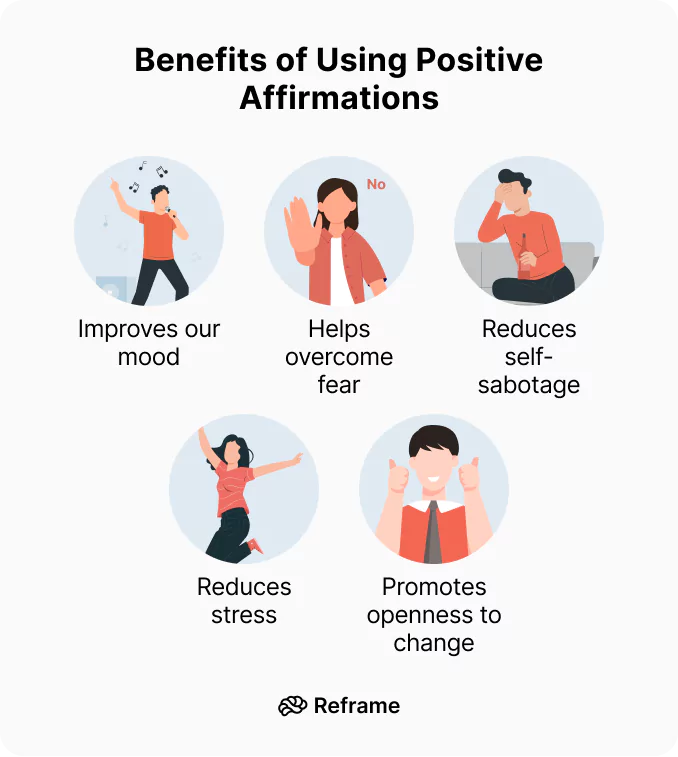
How do you know if affirmations are working? You can track changes in your thoughts, feelings, or actions. The table below shows ways to measure progress.
| Sign of Progress | How to Notice | Example |
|---|---|---|
| Better mood | Feel happier, more relaxed | Less stress before meetings |
| More confidence | Try new things, speak up more | Apply for a new job |
| Healthier habits | Eat well, exercise, sleep better | Walk daily after work |
| Improved relationships | Better communication, less conflict | Listen more to family |
Keep a journal to track your progress. Notice small changes—they add up over time.
Credit: www.joinreframeapp.com
Advanced Tips: Getting More From Affirmations
If you want deeper results, try these advanced ideas:
- Pair affirmations with meditation
Repeat your statements during quiet time for a stronger effect.
- Record your voice
Listen to your affirmations as you fall asleep.
- Use “mirror work”
Look into your eyes in the mirror while saying your affirmations.
- Change affirmations as you grow
Update your statements as your goals or challenges change.
- Practice gratitude affirmations
Combine affirmations with gratitude, like “I am grateful for my progress. ”
Two Insights Many Beginners Miss
First, affirmations are not about pretending everything is perfect. They help you focus on what you want to create, even if you’re not there yet. This is a big shift from just “thinking positive”—it’s about building a new story for your life.
Second, affirmations work best with action. Saying “I am confident” is powerful, but it’s more effective when you also take small steps outside your comfort zone. Action makes your affirmations real.
Frequently Asked Questions
What Are The Best Times To Use Positive Affirmations?
Morning And Evening Are Ideal Because Your Mind Is Calm And Open. Many People Also Use Affirmations Before Stressful Events Or When They Feel Doubt. The Key Is To Be Consistent—choose Times That Fit Your Routine.

Credit: sparkinterestwithsara.com
Can Positive Affirmations Help With Anxiety?
Yes, Affirmations Can Help Reduce Anxiety By Shifting Your Focus From Fear To Strength. Statements Like “i Am Safe And In Control” Can Calm Your Mind. However, For Severe Anxiety, Use Affirmations Along With Professional Support.
Do I Have To Believe My Affirmations For Them To Work?
Not At First. It’s Normal To Feel Doubt When You Start. Over Time, Repetition Helps Your Mind Accept New Beliefs. Start With Statements That Feel Possible, Then Build Up As Your Confidence Grows.
How Long Does It Take To See Results From Affirmations?
Some People Notice Small Changes In A Few Days; For Others, It Takes Weeks Or Months. The More You Practice, The Faster You’ll See Results. Track Your Progress In A Journal To Stay Motivated.
Are Positive Affirmations A Replacement For Therapy Or Medication?
No. Affirmations Are A Helpful Support Tool, But They Are Not A Cure For Serious Mental Health Issues. Always Talk To A Professional If You Need Help With Depression, Anxiety, Or Trauma.
Positive affirmations are a simple, powerful way to change your thinking and improve your life. They build confidence, reduce stress, and help you reach your goals. With daily practice, you can create a more positive, resilient mindset. Start small, stay consistent, and watch your life begin to change—one thought at a time.
