

What are Some Good Affirmations to Boost Your Confidence Today
Many people want to improve their lives, but sometimes, negativity and self-doubt get in the way. If you have ever felt stuck or unsure, you are not alone. One simple tool can help you feel more confident and positive: affirmations. These are short, powerful statements that you repeat to yourself. They can help change the way you think and feel about yourself.
Affirmations are more than just positive words. When you use them daily, they can shift your focus and help your mind believe better things are possible. Research shows that repeating affirmations can reduce stress, boost self-esteem, and even help you reach your goals.
But not all affirmations are equally helpful. Some work better than others, and using the right ones can make a big difference.
This article will explain what makes a good affirmation, why they work, and how to use them for the best results. You will also discover many practical examples for different situations—so you can find the ones that fit your needs.
Whether you want to build confidence, reduce anxiety, or simply feel happier, you will find useful ideas here.
What Are Affirmations?
Affirmations are short, positive statements that you say or think repeatedly. Their main purpose is to help you change negative thoughts into positive ones. For example, if you often think, "I can't do this," a good affirmation would be, "I am capable and strong.
" Over time, repeating these statements can help your mind accept them as true.
Most affirmations are written in the present tense, as if the statement is already true. This helps your brain believe the message more easily. For example, "I am successful" is stronger than "I will be successful. " The key is to choose words that feel real and powerful for you.
Why Affirmations Work
Affirmations help retrain your brain. When you repeat a positive message often, your mind starts to believe it. This can help you feel more confident and less anxious. Scientists call this process "self-affirmation theory." Studies show that using affirmations can reduce stress, improve performance, and help people handle difficult situations better.
Another reason affirmations work is the idea of "neuroplasticity. " This means your brain can change and adapt based on your experiences. By using affirmations, you create new pathways in your brain. Over time, positive thoughts become your new habit.
What Makes A Good Affirmation?
Not all affirmations are equally helpful. Here are some key qualities of a strong affirmation:
- Positive – The statement should focus on what you want, not what you fear. For example, say, "I am calm," instead of "I am not stressed."
- Present tense – Write as if the statement is true right now. "I am healthy" is better than "I will be healthy."
- Personal – Use words like "I" or "my" to make the affirmation about you.
- Short and clear – Simple statements are easier to remember and repeat.
- Believable – Choose words that feel possible for you, even if they are a stretch.
Some people make the mistake of using affirmations that feel too far from their reality. For example, saying "I am a millionaire" may feel fake if you are struggling with money. Instead, try, "I am open to new opportunities. " This is still positive but easier to believe.
Popular Types Of Affirmations
Different people need different affirmations. Here are some common types and when to use them.
Self-esteem Affirmations
These help you feel better about yourself. They are useful if you struggle with self-doubt or negative self-talk.
- "I am worthy of love and respect."
- "I trust myself to make good choices."
- "I am proud of who I am becoming."
Confidence Affirmations
These are helpful when you want to feel braver or try something new.
- "I can handle whatever comes my way."
- "I believe in my abilities."
- "I am confident and strong."
Stress And Anxiety Affirmations
If you feel worried or overwhelmed, these affirmations can help you feel calmer.
- "I am safe and supported."
- "I choose peace over worry."
- "I let go of what I cannot control."
Success And Achievement Affirmations
These are good for work, school, or personal goals.
- "I am focused and persistent."
- "My efforts lead to success."
- "I am open to new opportunities."
Health And Wellness Affirmations
If you want to improve your health or break a bad habit, these can help.
- "I care for my body with kindness."
- "I choose healthy habits each day."
- "I am full of energy and vitality."
Relationships And Social Affirmations
These are useful if you want better connections with others.
- "I attract positive and kind people."
- "I communicate with clarity and respect."
- "I am loved and valued."
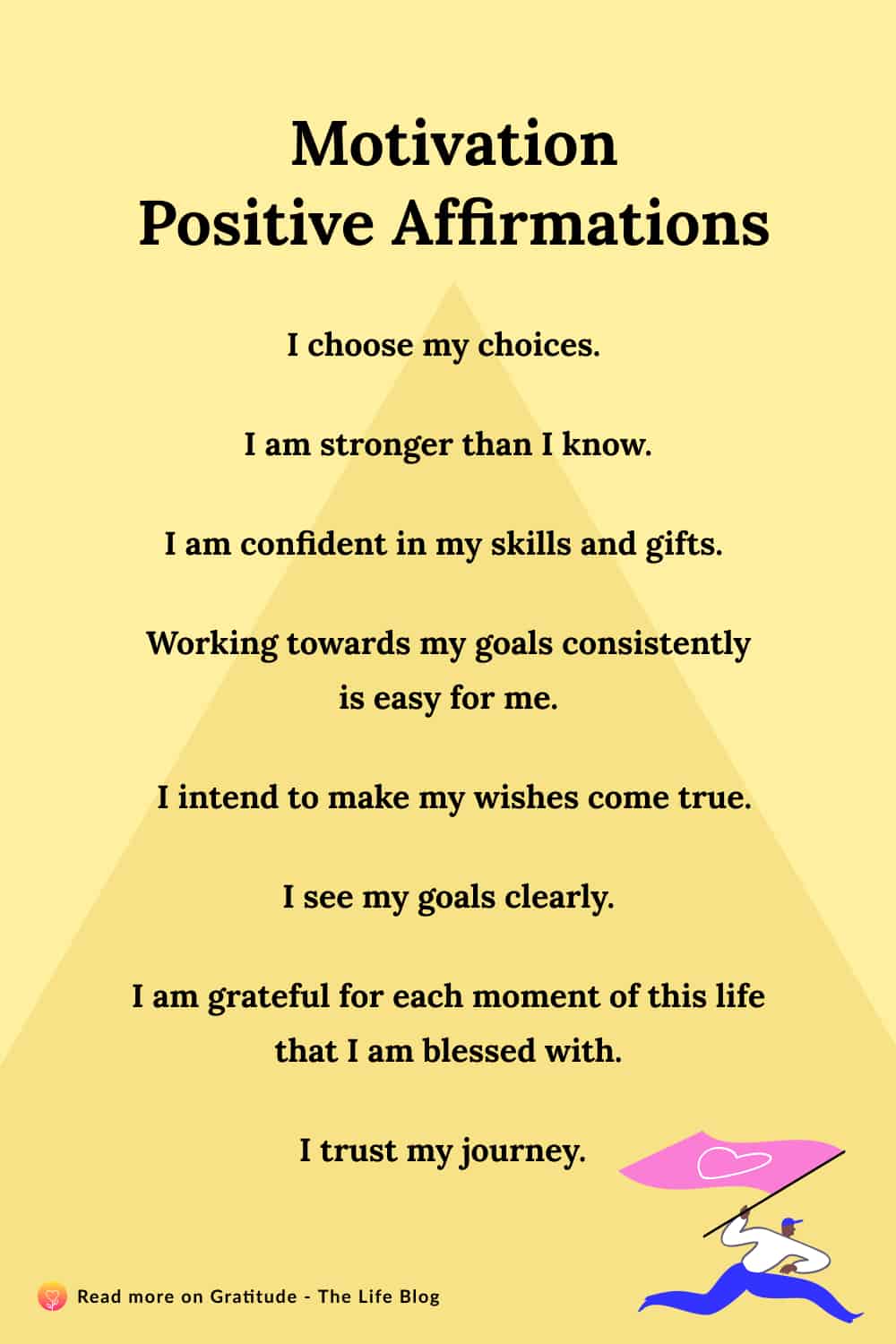
Morning Affirmations
Starting your day with a positive statement can set the right tone.
- "Today is full of possibilities."
- "I am ready for a great day."
- "I greet this day with joy and hope."
Bedtime Affirmations
Ending your day with affirmations can help you sleep better and let go of stress.
- "I am grateful for today."
- "I release all worries before sleep."
- "I am calm and at peace."
Credit: blog.gratefulness.me
How To Use Affirmations Effectively
Affirmations are simple, but there is a right way to use them for the best results. Here’s how you can make affirmations work in your life.
Repeat Them Daily
Consistency is key. Saying your affirmation once will not change much. Repeat your chosen statements several times each day. Try saying them in the morning, before important tasks, or at bedtime.
Say Them Out Loud
Speaking affirmations out loud can make them more powerful. Hearing your own voice helps the message sink in. If possible, look in the mirror while you say them. This may feel strange at first, but it strengthens the effect.
Write Them Down
Writing affirmations by hand can help your brain remember them better. Some people keep a journal and write their affirmations every day. Others post them on sticky notes where they can see them often.
Visualize The Meaning
When you say your affirmation, try to imagine what it feels like to live that truth. For example, if you say, "I am confident," picture yourself handling a challenge with calm and strength.
Use Reminders
Set reminders on your phone or computer. Place notes in your workspace or home. The more often you see and hear your affirmation, the more it becomes part of your thinking.
Be Patient
Affirmations are not magic. It takes time for your mind to change old patterns. Some days, you might not believe the words. That’s normal. Keep going, and over time you will notice a shift.
Adjust As Needed
If an affirmation does not feel right, change it. Make it more personal or believable. The best affirmations are the ones that feel true for you, even if you are still growing into them.
Examples: Good Affirmations For Different Situations
Affirmations can help in many parts of life. Here are more detailed examples for common needs.
Good Affirmations For Self-love
- "I accept myself as I am."
- "I am enough just as I am."
- "I deserve happiness and success."
- "I treat myself with kindness and respect."
- "My worth is not based on what others think."
Good Affirmations For Confidence
- "I believe in myself and my abilities."
- "I face challenges with courage."
- "I trust myself to make the right decision."
- "I am becoming more confident every day."
- "I am prepared and ready for new opportunities."
Good Affirmations For Reducing Anxiety
- "I am safe in this moment."
- "I choose to release my worries."
- "I am bigger than my fears."
- "I am calm and in control."
- "I breathe in peace, I breathe out stress."
Good Affirmations For Success
- "I am focused and motivated."
- "I create my own success."
- "Every day, I move closer to my goals."
- "My hard work pays off."
- "I am open to success in all its forms."
Good Affirmations For Health
- "I am strong and healthy."
- "I make choices that support my well-being."
- "My body is healing and growing stronger."
- "I nourish my body with care."
- "I am grateful for my healthy body."
Good Affirmations For Relationships
- "I am worthy of healthy, loving relationships."
- "I express myself honestly and kindly."
- "I attract positive connections."
- "I listen with empathy and understanding."
- "I am surrounded by love and support."
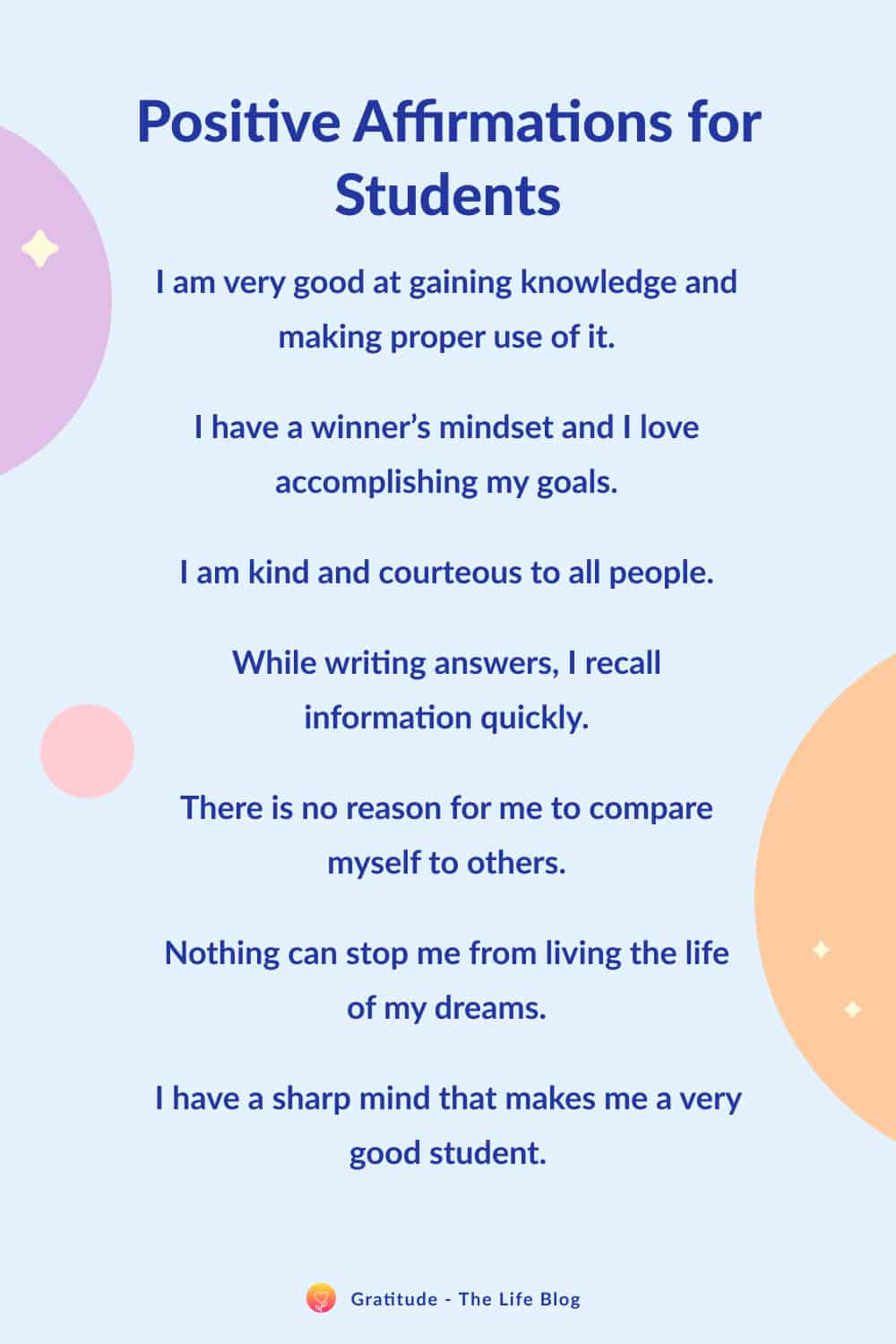
Good Affirmations For Work Or Study
- "I am capable of learning new things."
- "I approach my work with energy and focus."
- "I am creative and resourceful."
- "I handle challenges with a positive attitude."
- "I am proud of my progress."
Good Affirmations For Money And Abundance
- "I am open to wealth and abundance."
- "I am good at managing my finances."
- "Opportunities for growth are everywhere."
- "Money flows to me easily and freely."
- "I am grateful for all that I have."
Good Affirmations For Motivation
- "I am driven and persistent."
- "I finish what I start."
- "I am motivated by my goals and dreams."
- "I use setbacks as learning opportunities."
- "I celebrate my progress every day."
Good Affirmations For Spiritual Growth
- "I trust the journey of my life."
- "I am connected to my inner wisdom."
- "I am open to guidance and inspiration."
- "I am at peace with myself."
- "My life has purpose and meaning."
How Affirmations Can Change Your Day
If you are new to affirmations, you might wonder if they really work. Many people find that using affirmations can shift their mood and help them handle stress better. For example, if you start your day with "I am ready for anything," you may feel more confident facing a tough meeting.
If you end your day with "I am grateful for today," you may sleep better and wake up feeling more positive.
Some people use affirmations during difficult moments. For instance, if you feel nervous before a test, try repeating, "I am prepared and capable. " This simple act can help calm your nerves and focus your mind.
Table: Positive Vs. Negative Self-talk
To understand the power of affirmations, see how they compare to common negative thoughts.
| Negative Self-Talk | Positive Affirmation |
|---|---|
| "I can't do this." | "I can handle this challenge." |
| "I'm not good enough." | "I am worthy and capable." |
| "I always make mistakes." | "I learn and grow from every experience." |
| "Nobody likes me." | "I attract kind and positive people." |
| "I will never succeed." | "Success is within my reach." |
Switching from negative to positive self-talk can slowly rewire your thinking. This is the main goal of affirmations.
Common Mistakes When Using Affirmations
Affirmations are simple, but some people give up because they don’t see quick results. Here are a few mistakes to avoid:
- Choosing statements you do not believe – If an affirmation feels impossible, start with something smaller and work up.
- Being inconsistent – Using affirmations only once or twice will not help. Make them part of your daily routine.
- Not taking action – Affirmations work best when combined with real effort. For example, saying "I am healthy" works better if you also eat well and exercise.
- Ignoring feelings – If you feel sad or upset, do not force yourself to be positive. Use affirmations gently, and give yourself permission to feel your emotions.
Table: How To Make Affirmations More Powerful
Here is a quick comparison of basic vs. advanced ways to use affirmations:
| Basic Use | Advanced Use |
|---|---|
| Repeat out loud | Repeat out loud + visualize success |
| Say once daily | Say multiple times a day at key moments |
| Use generic phrases | Customize to your specific goals |
| Ignore emotional state | Match affirmations to your feelings |
| Forget after a few days | Keep a journal and track progress |
Using these advanced methods can make your affirmations much more effective.
Who Can Benefit From Affirmations?
Almost anyone can use affirmations. They are helpful for:
- Students who want to improve focus or reduce test anxiety.
- Professionals who want more confidence at work.
- Parents who want to model positivity for children.
- People recovering from setbacks or difficult times.
- Anyone who wants to create a more positive mindset.
Affirmations are free, require no special tools, and can be practiced anywhere. Even children can learn simple affirmations to build self-esteem.
When Affirmations May Not Be Enough
Affirmations are a helpful tool, but they are not a cure-all. If you have serious mental health challenges, such as depression or trauma, you may need more support. Affirmations can be part of your healing, but talking to a professional can also be important.
One insight that many beginners miss is that affirmations should never replace medical or psychological care. Instead, they can work alongside therapy, healthy habits, and support from loved ones.
Credit: blog.gratefulness.me
Practical Tips For Making Affirmations A Habit
Changing your thinking takes time and practice. Here are some tips to help you make affirmations part of your daily life:
- Set a reminder to say your affirmation every morning and night.
- Pair your affirmation with a daily activity, like brushing your teeth or making coffee.
- Share your affirmation with a friend or family member for support.
- Record yourself saying the affirmation and listen to it during the day.
- Celebrate small changes in your thinking or behavior.
Many people do not realize that even small changes, like repeating an affirmation during a stressful moment, can add up over time. The key is to keep going, even if you do not see results right away.
Table: Affirmations For Different Goals
This shows how you can tailor affirmations for various needs.
| Goal | Example Affirmation |
|---|---|
| Confidence | "I am confident in my abilities." |
| Health | "I make healthy choices every day." |
| Success | "I am open to success and new ideas." |
| Peace of Mind | "I am calm and at peace." |
| Gratitude | "I am grateful for all I have." |
Customizing your affirmation for your specific goal makes it more meaningful and powerful.
Scientific Support For Affirmations
Research shows that affirmations can help reduce stress, improve performance, and even change your brain. For example, a study published in the journal "Social Cognitive and Affective Neuroscience" found that affirmations activate parts of the brain involved in reward and self-worth.
This means your brain can actually become more positive with practice.
Another study from Carnegie Mellon University showed that affirmations helped people handle stressful news better and make healthier choices. If you want to learn more about the science behind affirmations, you can visit this Wikipedia page.
Frequently Asked Questions
What Is The Best Way To Start Using Affirmations?
Begin with one or two simple affirmations that fit your current needs. Say them out loud every morning and evening, and write them down. Try to feel the meaning behind the words. Over time, you can add more affirmations or change them as your goals change.
How Long Does It Take For Affirmations To Work?
It depends on the person and the affirmation. Some people notice changes in their mood or thinking in a few days. For others, it can take weeks or months. Consistency is important—keep repeating your affirmations, even if you do not see results right away.
Can Affirmations Help With Anxiety Or Depression?
Affirmations can be a helpful tool for managing stress and building a positive mindset. However, if you have serious anxiety or depression, affirmations alone may not be enough. It is important to seek help from a mental health professional as well.
Should I Write My Own Affirmations Or Use Examples?
You can do both. Using examples can be a good way to start. As you get more comfortable, try writing your own affirmations to make them more personal and meaningful. The key is that the words feel true and supportive to you.
What If I Do Not Believe My Affirmation?
This is common, especially at first. If an affirmation feels too far from your reality, try changing the words to something more believable. For example, instead of "I love myself completely," try "I am learning to accept myself. " You can update your affirmations as your confidence grows.
Affirmations are a simple but powerful tool to help you think more positively and live a happier life. With patience and practice, you can use good affirmations to boost your confidence, handle stress, and reach your goals. Remember, the most important thing is to choose statements that feel right for you and to use them regularly.
Over time, you may be surprised by how much your thinking and your life can change.

Credit: thechiclife.com
