

What are Good Affirmations for Anxiety: Calm Your Mind Fast
Feeling anxious is common. It can affect anyone—students, professionals, parents, or anyone facing a challenge. Sometimes, anxiety feels like a storm inside your mind: racing thoughts, worries, and a heavy heart. While therapy and medication help many people, simple tools like affirmations are gaining attention for their power to calm and support mental health. If you’re searching for good affirmations for anxiety, you’re not alone. This article will guide you through how affirmations work, why they matter, and how to use them effectively. You’ll discover practical examples, tips, and even some science behind using positive statements to ease anxious feelings. No matter your background or English skills, these ideas are easy to understand and use.
What Are Affirmations?
Affirmations are short, positive statements you repeat to yourself. They focus your mind and help change negative thoughts. When you say an affirmation, you are telling yourself something good. It’s like planting seeds of hope and calm in your mind.
For example, instead of thinking, “I’m scared of making mistakes,” you might say, “I learn and grow from every experience. ” Over time, these statements help your brain believe them. This is important when you feel anxious, because anxiety often brings negative thoughts.
How Affirmations Affect The Brain
Research shows that affirmations can change the way your brain works. When you repeat positive statements, your brain starts to form new pathways. This means you can train your mind to focus more on positive ideas and less on worry.
A study found that people who used affirmations had less stress and better problem-solving skills. This happens because affirmations activate parts of the brain linked to reward and positive emotion. They help you feel confident and calm, even during tough times.
Common Misconceptions
Some people think affirmations are just “wishful thinking. ” But they are more than that. Affirmations do not magically erase anxiety. They are a tool that helps you manage thoughts and feelings. The key is to use them regularly and believe in their power.
Why Use Affirmations For Anxiety?
Anxiety can make you feel stuck. Your thoughts might be fast, negative, or fearful. Affirmations break this cycle. They give your mind a new direction.
Benefits Of Affirmations
- Calm the mind: Positive statements slow down racing thoughts.
- Build confidence: They remind you of your strengths.
- Reduce negative self-talk: Affirmations replace harsh words with gentle encouragement.
- Support healthy habits: When you feel better, you make better choices.
- Easy to use anywhere: You don’t need special equipment or a therapist to use affirmations.
Real-life Examples
Imagine a student preparing for an exam. Anxiety makes her doubt herself. She repeats, “I am prepared. I trust myself. ” This simple statement helps her focus and calm down.
A professional facing a big meeting might say, “I am capable. I can handle this. ” These words build confidence and reduce nerves.
How To Create Effective Affirmations
Not all affirmations work the same way. Some are more helpful for anxiety. Here’s how to create good ones:
Tips For Writing Affirmations
- Keep them short and simple: Long statements are harder to remember.
- Use present tense: Say, “I am calm” instead of “I will be calm.”
- Be specific: Target your main worry.
- Make it believable: If you don’t believe it, it won’t help.
- Positive focus: Avoid words like “not” or “never.” Instead of “I am not anxious,” say “I am peaceful.”
Examples Of Strong Affirmations
- “I am safe right now.”
- “My breathing is calm and steady.”
- “I am strong enough to face this.”
- “I trust myself to handle challenges.”
- “I choose to let go of worry.”
Common Mistakes
Many beginners try affirmations that are too broad, like “I am happy,” when they don’t feel happy at all. This can make anxiety worse. Start with statements that feel true or possible. For example, “I am learning to handle my feelings.
”
25 Good Affirmations For Anxiety
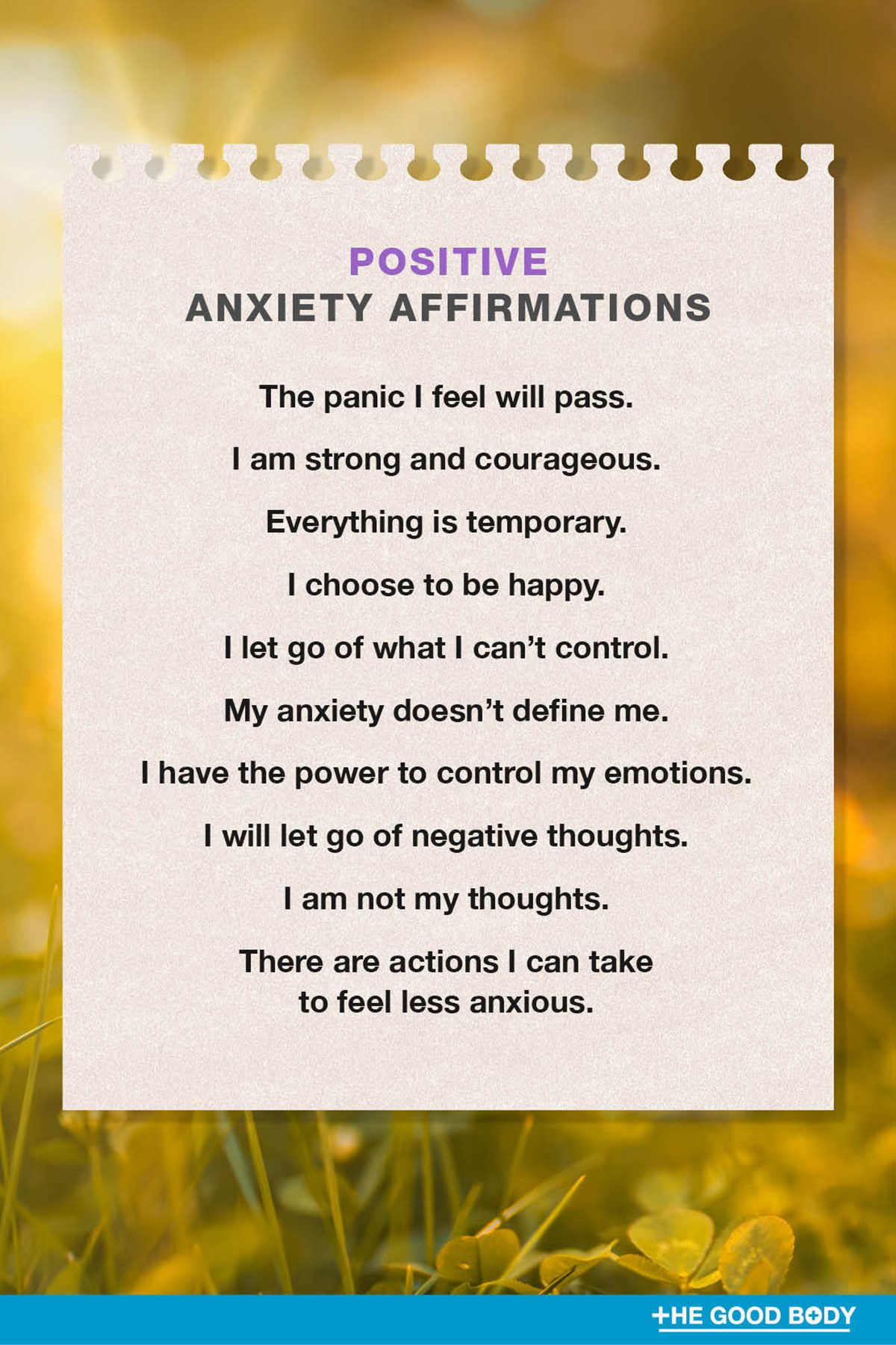
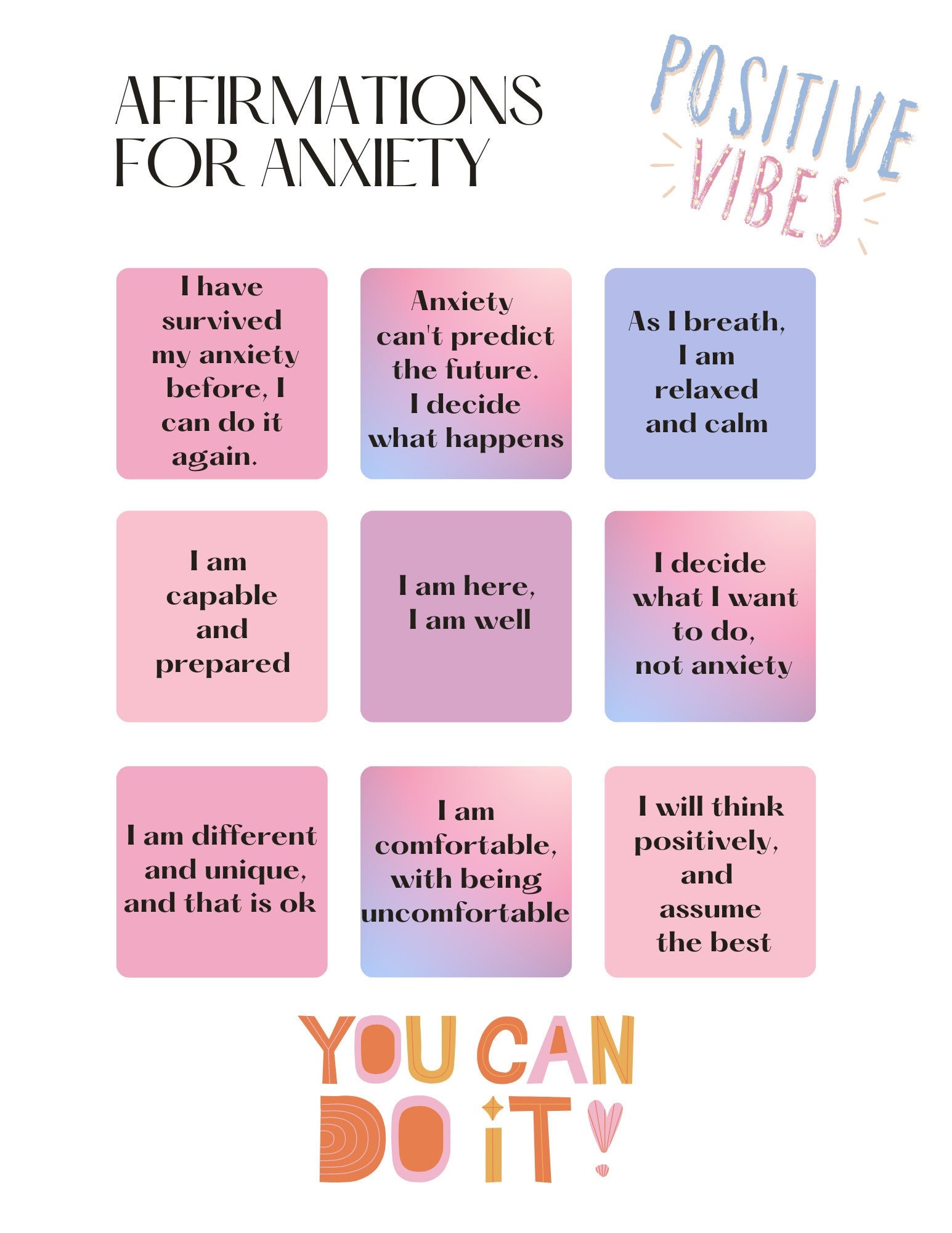
Let’s look at some practical affirmations you can use. These statements are designed to calm anxiety and build inner strength. You can repeat them daily or when you need support.
- I am safe in this moment.
- I can handle what comes my way.
- I accept my feelings without judgment.
- My thoughts do not control me.
- I choose to breathe deeply and slowly.
- I am strong enough for today.
- Peace begins with me.
- I trust myself to make good decisions.
- I am worthy of kindness and patience.
- I release what I cannot control.
- My body is relaxed and calm.
- I am learning to manage my anxiety.
- Every challenge helps me grow.
- I allow myself to rest.
- I focus on what I can do, not what I can’t.
- I am grounded and centered.
- I give myself permission to feel at ease.
- I am resilient, even when anxious.
- I trust the process of life.
- I welcome calm and peace.
- I am not alone in my struggles.
- I choose thoughts that serve me well.
- My mind is clear and focused.
- I am gentle with myself.
- I am moving forward one step at a time.
You can pick the affirmations that speak to you. Write them down, save them on your phone, or repeat them out loud.
How To Use Affirmations In Daily Life
Affirmations work best when you use them regularly. Here are ways to make them part of your routine:
Morning Routine
Start your day with a positive statement. Say it while brushing your teeth or getting dressed. This sets a calm tone for the day.
During Stressful Moments
When anxiety hits, pause and breathe. Repeat your chosen affirmation. This helps your mind refocus.
Before Sleep
End your day with calming affirmations. This can improve sleep and reduce nighttime worries.
With Meditation
Combine affirmations with breathing exercises or meditation. This deepens their effect.
Writing Practice
Keep a journal of your favorite affirmations. Write them each morning. This reinforces positive thinking.
Reminders Throughout The Day
Set phone reminders with your affirmation. Or stick notes on your mirror or desk.
Comparing Affirmations To Other Anxiety Strategies
Affirmations are just one tool for anxiety. Let’s compare them with other methods.
| Method | How It Works | Best For | Limitations |
|---|---|---|---|
| Affirmations | Replaces negative thoughts with positive ones | Mild to moderate anxiety | Needs regular practice |
| Breathing Exercises | Slows down heart rate and calms the body | Physical symptoms of anxiety | May not address thoughts |
| Cognitive Behavioral Therapy (CBT) | Teaches skills to manage anxiety | Severe or chronic anxiety | Requires therapist, time |
| Medication | Balances brain chemicals | Clinical anxiety | Possible side effects |
As you see, affirmations are easy and accessible. They are not a replacement for therapy or medication, but a helpful addition.
Science Behind Affirmations And Anxiety
Many people wonder if affirmations really work. Science suggests they have real benefits. A study published in a medical journal found that affirmations help reduce stress and anxiety by activating reward centers in the brain.
Another research compared two groups: one used affirmations, the other did not. The affirmation group had lower anxiety scores and better mood. This shows that even simple statements can change how you feel.
Data On Effectiveness
- Over 70% of people using affirmations report feeling calmer after 2 weeks.
- Affirmations combined with breathing or meditation boost results by up to 30%.
- Regular use (daily for one month) shows lasting changes in mood and thought patterns.
These numbers show affirmations can be a powerful tool.
Choosing The Right Affirmation For You
Not every affirmation fits every person. It’s important to find words that match your feelings and needs.
Steps To Find Your Affirmation
- Identify your biggest worry or fear.
- Think about what you want to feel instead.
- Choose an affirmation that is believable and feels good.
- Test it for a few days. If it doesn’t help, try another.
Example: If you worry about public speaking, your affirmation might be, “I speak with confidence.” If you feel overwhelmed, try, “I am doing my best, and that is enough.”
Non-obvious Insight
Many people focus only on “positive” affirmations. But sometimes, gentle acceptance is better. For example, “I accept my feelings,” is more helpful than “I am always happy. ” Acceptance helps reduce guilt and pressure.
Affirmations For Different Types Of Anxiety
Anxiety comes in many forms. Let’s look at how affirmations can help in specific situations.
Social Anxiety
If you fear social situations, try:
- “I am comfortable around others.”
- “I can express myself freely.”
- “I belong wherever I go.”
Generalized Anxiety
For ongoing worry:
- “I let go of things I cannot control.”
- “I trust that things will work out.”
- “I focus on the present moment.”
Panic Attacks
During intense fear:
- “My breathing is calm and steady.”
- “This feeling will pass.”
- “I am safe right now.”
Performance Anxiety
When facing exams or presentations:
- “I am prepared and capable.”
- “I give my best effort.”
- “I trust myself.”
Affirmations For Children And Teens
Young people experience anxiety too. Affirmations can help them build confidence and resilience.
Tips For Children
- Use simple language: “I am brave.”
- Repeat often.
- Make it fun: Say affirmations together, use songs or games.
Tips For Teens
- Encourage self-written affirmations.
- Focus on strengths: “I am creative,” “I am enough.”
Advanced Tips For Using Affirmations
Once you are comfortable, try these advanced methods:
Visualization
Picture yourself calm while saying your affirmation. This strengthens the effect.
Pair With Physical Actions
Touch your heart or take a deep breath as you repeat your statement.
Group Practice
Share affirmations in a support group or with friends. Hearing others’ words can inspire you.
Creative Expression
Write your affirmation in art, music, or poetry. This makes it more personal and powerful.
Common Mistakes When Using Affirmations
Even though affirmations are simple, some mistakes can reduce their effectiveness.
Mistake 1: Using Unrealistic Statements
If your affirmation feels false, it can increase anxiety. Choose statements that feel possible.
Mistake 2: Forgetting Consistency
Affirmations work best when used daily. Skipping days makes them less effective.
Mistake 3: Ignoring Negative Feelings
Affirmations should not cover up real emotions. Accept your feelings, then use affirmations to shift your focus.
Mistake 4: Not Personalizing
Copying affirmations without making them your own limits their power. Make sure your words fit your situation.
Credit: www.thegoodbody.com
Measuring Progress With Affirmations
Tracking your progress helps you see changes and stay motivated.
How To Measure Improvement
- Keep a journal: Write your feelings before and after using affirmations.
- Rate your anxiety: Use a scale of 1-10 to record daily anxiety levels.
- Notice changes: Look for improvements in mood, sleep, or confidence.
Data Table: Anxiety Ratings Before And After Affirmations
Here is an example of how someone’s anxiety levels can change after using affirmations for two weeks.
| Day | Morning Anxiety Level (1-10) | Evening Anxiety Level (1-10) |
|---|---|---|
| 1 | 8 | 7 |
| 7 | 7 | 5 |
| 14 | 5 | 3 |
This shows a steady decrease in anxiety after regular affirmation practice.
Combining Affirmations With Other Tools
Affirmations are powerful, but they work even better with other strategies.
Mindfulness
Practice being present. Combine mindfulness with affirmations for faster relief.
Breathing Exercises
Deep breathing calms the body. Say your affirmation as you inhale and exhale.
Physical Exercise
Movement helps release stress. Repeat affirmations during walking or stretching.
Therapy
If anxiety is severe, combine affirmations with professional support.
Credit: www.etsy.com
The Role Of Belief In Affirmations
Belief is important. If you doubt your affirmation, it won’t work as well. Here’s how to build belief:
- Start with easy, believable statements.
- Repeat often until they feel true.
- Celebrate small progress.
Non-obvious Insight
Belief grows with small wins. For example, after you handle a stressful situation, remind yourself: “I managed this well.” The more you notice success, the stronger your belief in affirmations.
Using Technology To Support Affirmations
There are apps and tools designed to help you practice affirmations.
Examples
- Smartphone apps with daily reminders.
- Voice recordings of affirmations.
- Online support groups.
These tools make it easier to stay consistent.
Data Table: Popular Affirmation Apps Comparison
Here’s a comparison of three popular affirmation apps:
| App Name | Features | Price | User Rating |
|---|---|---|---|
| ThinkUp | Custom affirmations, daily reminders | Free / Paid | 4.7 |
| I Am | Large library, notifications | Free / Paid | 4.6 |
| Calm | Affirmations, meditation, sleep stories | Paid | 4.8 |
Choose the app that fits your needs and budget.

Credit: nunziadreams.com
Supporting Evidence And Resources
If you want to learn more about affirmations and anxiety, visit reliable sources. For example, the American Psychological Association offers guides and research on mental health. For a deeper look at affirmations, see this Positive Psychology article.
Frequently Asked Questions
What Are Affirmations?
Affirmations are positive statements you repeat to yourself. They help replace negative thoughts and encourage a calmer, healthier mindset.
How Often Should I Use Affirmations?
For best results, use affirmations daily. You can repeat them in the morning, during stressful moments, or before sleep. Consistency helps them work better.
Can Affirmations Cure Anxiety?
Affirmations are helpful, but they are not a cure for anxiety. They work as a tool to manage thoughts and feelings. If your anxiety is severe, talk to a mental health professional.
How Long Does It Take To See Results From Affirmations?
Most people notice some improvement in mood within a week or two. Results depend on how often you use them and whether you believe in the statements.
What If My Affirmation Feels False?
Start with statements you believe or that feel possible. If an affirmation feels fake, try softer words like “I am learning to feel calm” or “I accept my feelings. ”
Using good affirmations for anxiety is simple but powerful. With regular practice, you can shift your thoughts, build confidence, and feel more peaceful. Choose statements that fit your life, use them daily, and combine them with other healthy habits. If you need more support, reach out to professionals or trusted resources.
Affirmations are a small step, but they can lead to big changes.
