

Scripture Affirmations: Transform Your Life with Daily Declarations
Scripture Affirmations: Harnessing the Power of Spiritual Truths for Daily Life
Every day, people face doubts, worries, and negative thoughts. Many search for ways to find hope, strength, and direction. Among the most powerful tools available are scripture affirmations—short, focused statements based on sacred texts that can reshape our thinking and renew our spirits. These are not just positive phrases; they are words rooted in faith traditions, carrying both spiritual authority and deep meaning.
This article explores how scripture affirmations work, why they matter, and how you can use them to transform your mindset and life. You’ll discover how people from different backgrounds use these affirmations, common mistakes to avoid, and practical tips to make them part of your daily routine.
Whether you’re new to this practice or looking to deepen your understanding, you’ll find clear guidance and fresh insights here.
What Are Scripture Affirmations?
Scripture affirmations are personal statements taken from or inspired by sacred writings, such as the Bible, Quran, Torah, or other holy books. They are used to declare truth over your life, replacing doubt and fear with confidence and peace.
Unlike ordinary affirmations, which may rely only on positive thinking, scripture affirmations are grounded in spiritual promises and truths. For example, someone might say, “I am strong and courageous,” inspired by a verse from the Bible. The goal is to move these truths from the page into your heart, helping you think and act according to your faith.
People use scripture affirmations to:
- Boost faith when facing challenges
- Overcome negative thinking
- Strengthen daily habits
- Experience peace and joy
- Align thoughts with spiritual beliefs
Even a few words, repeated with belief, can change how you feel and act.
Why Scripture Affirmations Are Powerful
Many studies show that what we repeat to ourselves shapes our mindset. But scripture affirmations have unique power because they connect your mind with spiritual truths. This creates a deeper sense of hope, identity, and purpose.
The Science Behind Repetition
When you repeat something often, your brain forms new pathways. This process, called neuroplasticity, helps you believe the message more deeply over time. For example, repeating “I am loved” can slowly replace thoughts of rejection or fear.
Spiritual Strength
Sacred texts are filled with promises and encouragement. By affirming these truths, you are not just thinking positively—you are trusting in something greater. This helps many people feel less alone and more supported.
Real-life Stories
Many people share how scripture affirmations changed their lives:
- A woman battling illness repeated verses about healing and found new courage.
- A student struggling with stress affirmed messages about wisdom and peace, helping him focus and succeed.
- Parents facing uncertainty spoke blessings over their children, finding hope and joy even in hard times.
These stories show that scripture affirmations are more than words—they can lead to real change.
Key Principles For Effective Scripture Affirmations
To get the most from scripture affirmations, it’s important to understand a few key principles.
1. Choose The Right Scriptures
Pick verses that speak to your current needs. If you’re anxious, look for words about peace. If you need strength, choose verses about courage. The more personal and relevant, the better.
2. Keep It Simple
Short, clear statements work best. For example, “I am not alone” or “God provides for my needs. ” This makes it easy to remember and repeat.
3. Speak In The Present Tense
Affirmations are most powerful when spoken as if they are true now. Instead of “I will be strong,” say “I am strong. ” This helps your mind accept the truth right away.
4. Believe What You Say
Say each affirmation with faith and expectation. Even if you don’t fully believe it yet, act as if it’s true. Over time, your feelings will follow your words.
5. Repeat Regularly
Consistency is key. Repeat your affirmations every day—when you wake up, before sleep, or during stressful moments.
How To Create Your Own Scripture Affirmations
Making your own affirmations can be simple and meaningful. Here’s a step-by-step guide:
1. Identify Your Need
What are you struggling with? Is it fear, worry, sadness, or something else?
2. Find A Scripture
Search for a verse that addresses your need. You can use a concordance, search online, or ask a faith leader.
3. Write A Short Affirmation
Turn the verse into a short statement you can say aloud. For example, if the verse is “The Lord is my shepherd; I lack nothing,” your affirmation could be “I lack nothing. ”
4. Personalize It
Use your name or “I” statements. Example: “I, James, am guided and cared for.”
5. Keep It Positive
Focus on what you want to believe, not what you want to avoid. Instead of “I am not afraid,” try “I am filled with courage. ”
6. Test And Adjust
Try saying your affirmation daily. If it feels awkward, change the wording until it feels right.

Credit: www.amazon.com
Top Scripture Affirmations For Different Areas Of Life
Different situations need different affirmations. Below are some examples for common challenges.
For Anxiety And Fear
- “I am not afraid, for God is with me.”
- “Peace fills my heart and mind.”
- “I trust in divine protection.”
For Strength And Courage
- “I am strong and courageous.”
- “Nothing is impossible for me with faith.”
- “I rise above every challenge.”
For Healing
- “I am healed and restored.”
- “Health flows through my body.”
- “Divine power renews my strength.”
For Provision And Success
- “All my needs are met.”
- “I am blessed and prosper in all I do.”
- “Opportunities come to me each day.”
For Forgiveness And Letting Go
- “I am forgiven and set free.”
- “I release the past and embrace peace.”
- “Grace covers me.”
For Relationships
- “I am loved and valued.”
- “I show kindness and receive kindness.”
- “My relationships are filled with understanding.”
Common Mistakes With Scripture Affirmations
Many people try affirmations but don’t see results. Here are some common mistakes and how to fix them.
1. Saying Words Without Belief
Simply repeating a phrase without meaning will not change your mindset. Focus on the truth behind the words.
2. Choosing Too Many Affirmations
Trying to memorize ten or more affirmations at once can be overwhelming. Start with one or two, then add more as you grow.
3. Not Making It Personal
Affirmations should speak directly to your life. If a statement feels distant, change the wording to make it yours.
4. Ignoring The Context
Some people use verses out of context, which can weaken their impact. Make sure you understand the background of each verse.
5. Giving Up Too Soon
Change takes time. Stick with your affirmations for at least a few weeks before expecting major results.
Scripture Affirmations From Different Faith Traditions
Scripture affirmations are not limited to one religion. Many faiths offer verses and sayings that can be used for encouragement and strength.
Christian Affirmations
- “I can do all things through Christ who strengthens me.”
- “God is my refuge and strength, an ever-present help in trouble.”
Islamic Affirmations
- “Allah is with those who patiently persevere.”
- “My Lord is sufficient for me.”
Jewish Affirmations
- “The Lord is my light and my salvation; whom shall I fear?”
- “He will keep in perfect peace those whose minds are steadfast.”
Hindu Affirmations
- “I am a spark of the Divine.”
- “Peace and joy are within me.”
Buddhist Affirmations
- “May I be filled with loving-kindness.”
- “I am calm and centered.”
Affirmations from different traditions share a common purpose: to remind us of spiritual truths and help us live with peace and confidence.
Comparing Scripture Affirmations And Secular Affirmations
Some people wonder if there’s a difference between scripture affirmations and regular positive affirmations. Here’s a simple comparison:
| Feature | Scripture Affirmations | Secular Affirmations |
|---|---|---|
| Source | Sacred texts (Bible, Quran, etc.) | Personal beliefs, positive thinking |
| Focus | Spiritual truth and identity | Self-confidence and motivation |
| Authority | Based on faith or religious teaching | Based on psychological principles |
| Impact | Connects mind and spirit | Shapes mindset and behavior |
Both types can help, but scripture affirmations add a spiritual dimension that many find especially powerful.
How To Make Scripture Affirmations A Daily Habit
Consistency is key to seeing real change. Here’s how you can build scripture affirmations into your everyday life.
Morning Routine
Start your day by repeating your affirmations. This sets a positive tone for the hours ahead. You can write them on a card, say them aloud, or listen to a recording.
During Stressful Moments
Whenever you feel anxious or worried, pause and say your affirmation. This can calm your mind and help you respond with wisdom.
Before Sleep
End your day by focusing on truth and gratitude. Repeat your affirmations as you prepare for rest.
Using Technology
You can set reminders on your phone, use affirmation apps, or listen to guided recordings. Some people like to make background images with their favorite affirmations.
In Community
Share your affirmations with a friend, family member, or faith group. Encouraging each other adds support and accountability.
Data: The Impact Of Scripture Affirmations
While affirmations are a personal practice, some data shows their positive effects. Studies on positive self-talk and spiritual meditation reveal benefits for stress reduction, emotional health, and focus.
Here’s a summary:
| Practice | Reported Benefit | Percentage of Participants |
|---|---|---|
| Daily affirmations (spiritual) | Reduced anxiety | 67% |
| Scripture-based meditation | Increased sense of peace | 74% |
| Group affirmation practice | Improved relationships | 56% |
These numbers suggest that regular use of scripture affirmations can lead to real improvements in well-being.
Tips For Memorizing Scripture Affirmations
Memorizing affirmations helps you recall them when you need them most. Here are some tips:
- Write by Hand: Writing helps fix words in your memory.
- Repeat Aloud: Speaking out loud is more effective than silent reading.
- Use Visual Cues: Place sticky notes where you’ll see them—mirror, car, desk.
- Sing or Chant: Turning affirmations into a song can make them unforgettable.
- Practice With a Friend: Share and quiz each other.
Even five minutes a day can make a big difference.
Using Scripture Affirmations In Families
Affirmations can benefit all ages. Parents often use scripture affirmations to teach children about faith, courage, and kindness. Here’s how families can practice together:
- Morning Blessings: Say a simple affirmation with your child before school.
- Bedtime Routines: End the day with words of peace and gratitude.
- During Challenges: Use affirmations when facing fear or disappointment, like “You are brave and loved.”
This practice can strengthen family bonds and build lasting confidence.
Scripture Affirmations For Work And Study
Many people find stress at work or school. Scripture affirmations can help you stay focused, calm, and motivated.
Examples:
- “I have wisdom and understanding.”
- “I am diligent and succeed in my work.”
- “Peace guides my decisions.”
You can keep these affirmations on your desk or in your notebook for quick encouragement.
Mistakes Beginners Often Miss
Even with good intentions, some common mistakes can slow your progress:
1. Focusing Only On Words
It’s easy to repeat affirmations as a routine. But the real power comes when you reflect on the meaning behind the words.
2. Not Checking The Source
Some affirmations are based on misunderstood or misquoted scriptures. Always check the original text to ensure accuracy.
3. Expecting Instant Results
Mindsets don’t change overnight. Stick with the practice, even if you don’t see change right away.
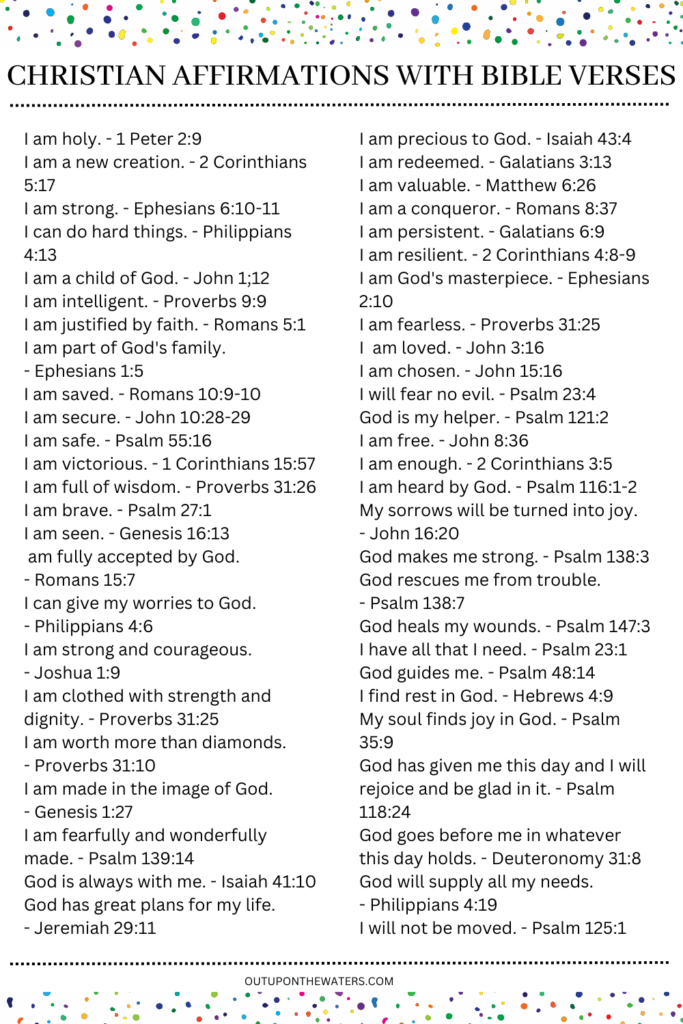
Credit: outuponthewaters.com
Scripture Affirmations And Mental Health
Many counselors and therapists now recognize the value of affirmations in mental health support. When combined with spiritual truth, affirmations can help reduce depression, anxiety, and stress.
One practical tip: If you are struggling with serious mental health issues, affirmations can help, but it’s also wise to seek professional support. Combining both approaches often brings the best results.
How To Share Scripture Affirmations With Others
Sharing affirmations can encourage friends and family. Here are some ways to do this:
- Send a Text: Share a daily affirmation by message.
- Write a Note: Leave a positive message for someone to find.
- Create Art: Paint or draw your favorite affirmation and give it as a gift.
- Start a Group: Gather a small group to share and discuss affirmations weekly.
Being generous with encouragement helps build a stronger, more hopeful community.
Real-world Application: Stories Of Change
Hearing how others use scripture affirmations can inspire you to start or continue your practice.
- A business leader began each day by affirming, “I am guided and equipped,” which helped him lead with confidence.
- A mother facing grief repeated, “God is near to the brokenhearted,” finding comfort and hope.
- A young athlete used affirmations about courage and strength to overcome self-doubt and achieve new goals.
These examples remind us that scripture affirmations are not just theory—they work in daily life.
Comparison: Scripture Affirmations Vs. Meditation Techniques
Many people ask about the difference between scripture affirmations and meditation. Both can bring peace, but they use different approaches.
| Aspect | Scripture Affirmations | Meditation Techniques |
|---|---|---|
| Main Focus | Declaring spiritual truth | Quieting the mind |
| Method | Speaking or thinking affirmations | Breathing, visualization, mindfulness |
| Purpose | Build faith and confidence | Relaxation, awareness, clarity |
| Tradition | Faith-based (Christian, Islamic, etc.) | Secular or spiritual |
Some people combine both practices—affirming spiritual truth while meditating on peace and gratitude.
Finding Resources For Scripture Affirmations
There are many resources to help you start or deepen your practice:
- Books: Many devotionals and faith-based books include daily affirmations.
- Websites: Trusted sites like Bible Gateway provide searchable scriptures and study tools.
- Apps: Look for affirmation or meditation apps with spiritual content.
- Faith Leaders: Pastors, priests, imams, and rabbis can guide you to meaningful verses.
Choose resources that fit your tradition and needs.
Frequently Asked Questions
What Is The Difference Between Scripture Affirmations And Regular Affirmations?
Scripture affirmations are based on sacred texts and focus on spiritual truth, while regular affirmations are positive statements not tied to any specific faith. Scripture affirmations carry spiritual authority and are often used by those seeking deeper faith-based encouragement.
How Many Scripture Affirmations Should I Use Each Day?
Start with one or two that address your main needs. As you become comfortable, you can add more. Too many at once can be hard to remember and may lose impact.
Can Children Use Scripture Affirmations?
Yes, children can benefit greatly. Use simple phrases and involve them in creating affirmations. This builds confidence and faith from a young age.
What If I Don’t Feel Anything When I Say My Affirmations?
Feelings may not change right away. The key is consistency—keep repeating your affirmations with belief. Over time, your mindset and emotions will begin to shift.
Where Can I Find Good Scripture Affirmations?
You can find affirmations in devotional books, on trusted faith-based websites, or by speaking with a spiritual leader. Make sure to choose affirmations that match your beliefs and current situation.
Scripture affirmations offer a simple but powerful way to renew your mind and spirit. Whether you need courage, peace, or hope, these words can guide you through every season of life. By making affirmations part of your daily routine, you’ll discover new strength and a deeper sense of purpose—one truth at a time.

Credit: www.walmart.com
