

Positive Affirmation for Healthcare: Boost Wellbeing and Resilience
Positive Affirmation For Healthcare
Healthcare workers face intense challenges every day. Long hours, emotional stress, and physical demands are normal. Many work under pressure, often with little rest or thanks. In this environment, staying positive is not easy. Yet, positive affirmation offers a practical tool to build resilience, motivation, and self-worth. It can help healthcare professionals feel stronger, more focused, and valued.
This article explains what positive affirmation means for healthcare, why it matters, and how to use it effectively. You will learn practical ways to create and use affirmations, see real examples, and understand how affirmations support mental health. We will also look at scientific evidence, tips for building an affirming culture in medical teams, and common mistakes to avoid.
Whether you are a nurse, doctor, therapist, or support staff, positive affirmation can improve your wellbeing and your work.
What Is Positive Affirmation?
Positive affirmation is a simple statement that encourages self-belief and confidence. It is a way to remind yourself of your strengths, values, and abilities. In healthcare, positive affirmation might be:
- “I make a difference every day.”
- “I am skilled and dedicated.”
- “My care matters.”
These phrases help you focus on the positive, even when things are tough. By repeating these statements, you can change your mindset and build inner strength.
Positive affirmation is not just about feeling good. It is about creating a strong foundation for mental health. For healthcare professionals, this foundation is important because work is often stressful and demanding.
Why Positive Affirmation Matters In Healthcare
Healthcare is full of pressure. Professionals must make quick decisions, handle emergencies, and manage patient care with compassion. Many face burnout, anxiety, and even depression. Positive affirmation helps in several ways:
- Reduces Stress: Affirmations can calm the mind during stressful moments.
- Builds Confidence: Reminding yourself of your abilities strengthens self-esteem.
- Improves Focus: Positive statements help you stay centered and attentive.
- Boosts Motivation: Affirmations can reignite passion for your work.
- Supports Teamwork: Shared affirmations create a supportive environment.
Studies show that positive self-talk can lower stress hormones and improve mood. It is especially helpful during difficult shifts or after challenging cases.
Data On Mental Health In Healthcare
Healthcare workers are at high risk for mental health issues. Research shows:
- Over 40% of healthcare professionals report high stress levels.
- Nearly 30% face symptoms of burnout.
- Anxiety rates are higher among healthcare workers than other fields.
These numbers show why mental health strategies like positive affirmation are so important.
How Positive Affirmation Works
Positive affirmations change the way you think. They help replace negative thoughts with positive ones. When you repeat affirmations regularly, your brain starts to believe them.
This process is called neuroplasticity. The brain can form new connections and habits. Positive statements, spoken or written, build new pathways. Over time, you feel more confident, calm, and motivated.
Example Of Neuroplasticity In Action
A nurse who often thinks, “I am not good enough,” can use an affirmation like, “I am skilled and compassionate. ” By repeating this, she changes her thinking. Slowly, her confidence grows, and her job feels easier.
Creating Effective Healthcare Affirmations
Not all affirmations work equally well. To be effective, they must be:
- Personal: Match your values and experiences.
- Positive: Focus on strengths, not weaknesses.
- Present Tense: Use “I am” or “I do,” not “I will.”
- Simple: Easy to remember and repeat.
- Realistic: Reflect true possibilities.
Steps To Create Your Affirmation
- Identify a Challenge: Choose an area where you need support.
- Focus on Strength: Think about what you do well.
- Write a Statement: Make it positive and present-tense.
- Repeat Daily: Say your affirmation out loud or write it down.
Examples For Healthcare Workers
- “I handle emergencies with skill.”
- “My patients trust my care.”
- “I am calm and strong under pressure.”
- “I bring hope to my team.”
- “I learn and grow every day.”
These affirmations help you focus on what matters and build confidence.
Using Affirmation In Daily Healthcare Practice
Affirmations are most powerful when used regularly. Here are ways to include them in your routine:
Morning Routine
Start your day with a positive statement. Before your shift, say your affirmation. This sets your mindset for the day.
During Stressful Moments
When things get tough, take a deep breath. Repeat your affirmation silently or out loud. This helps you regain control and calm.
Team Meetings
Share affirmations with your team. For example, start meetings with a group affirmation like, “We support each other and our patients. ” This builds unity.
End-of-day Reflection
Before leaving work, reflect on your day. Use an affirmation to celebrate your effort. “I gave my best today,” helps close the day with positivity.
Written Affirmations
Write your affirmation on sticky notes. Place them on your desk, locker, or computer. Seeing them often reinforces their message.
Scientific Evidence Behind Positive Affirmations
Positive affirmation is not just a motivational trick. There is real science behind it.
Research Findings
- Studies show that positive self-talk reduces stress and anxiety.
- Affirmations can lower blood pressure and heart rate during stressful events.
- They improve problem-solving under pressure.
- Regular affirmation practice increases self-esteem and motivation.
One study found that healthcare workers who used daily affirmations felt less exhausted and more engaged at work.
Comparison: Affirmation Vs. No Affirmation
Here is a simple comparison of two groups—one using affirmations, one not.
| Outcome | With Affirmation | Without Affirmation |
|---|---|---|
| Stress Level | Lower | Higher |
| Self-Esteem | Higher | Lower |
| Job Satisfaction | Improved | Unchanged |
| Burnout | Reduced | Increased |
This table shows that positive affirmation can make a real difference.
Building A Culture Of Affirmation In Healthcare Teams
Healthcare is a team effort. Creating a culture of affirmation helps everyone. Here’s how to build this culture:
Leadership Support
Leaders should use affirmations and encourage staff to do the same. For example, managers can begin meetings with positive statements.
Peer Recognition
Recognize colleagues’ strengths with affirmations. “You handled that case so well,” or “Your care made a big difference. ” This builds trust and respect.
Affirmation Boards
Create a visible board in staff areas. Write positive statements for everyone to see. Staff can add their own affirmations.
Group Activities
Have affirmation sessions during team-building. Everyone writes or shares a positive statement. This helps connect and motivate the team.
Practical Tips For Healthcare Professionals
Positive affirmation works best when used consistently and correctly. Here are practical tips:
- Be Honest: Choose affirmations that feel true to you.
- Practice Daily: Repeat affirmations every day, not just during stress.
- Combine with Breathing: Deep breaths help affirmations work faster.
- Visualize Success: Imagine the outcome as you say your affirmation.
- Write It Down: Written affirmations are powerful reminders.
- Avoid Negatives: Never use “not” or negative words.
- Share with Others: Encourage team members to use affirmations.
Common Mistakes
- Using vague statements: “I am good” is less helpful than “I give compassionate care.”
- Skipping practice: Affirmations need regular use.
- Ignoring feelings: If an affirmation feels fake, adjust it.
- Forgetting teamwork: Affirmations work best when shared.

Credit: www.careerstaff.com
Positive Affirmation Examples For Different Healthcare Roles
Affirmations are not one-size-fits-all. Each role in healthcare has unique challenges. Here are examples for various roles:
Nurses
- “I provide comfort and healing.”
- “My attention saves lives.”
- “I am organized and patient.”
Doctors
- “I make wise decisions.”
- “My expertise brings hope.”
- “I lead with integrity.”
Therapists
- “I listen with empathy.”
- “My guidance helps patients grow.”
- “I create safe spaces.”
Support Staff
- “My work keeps care running smoothly.”
- “I am important to the team.”
- “I solve problems with care.”
Administrators
- “I support patient care with efficiency.”
- “My leadership helps teams succeed.”
- “I manage challenges calmly.”
Affirmation In Patient Care
Affirmations are not just for staff. Patients can benefit too. Healthcare professionals can use positive statements to support patients:
- “You are making progress.”
- “Your strength inspires us.”
- “We believe in your recovery.”
These phrases help patients feel hopeful and supported.
Example: Patient Recovery
A physical therapist tells a patient, “You are getting stronger every day. ” The patient feels motivated and tries harder. This positive feedback speeds up recovery.
Integrating Affirmation Into Healthcare Education
Teaching affirmations in medical schools and training programs prepares students for the real world.
Curriculum Ideas
- Include affirmation exercises in classes.
- Teach students to write their own affirmations.
- Practice affirmations before exams or clinical work.
Benefits For Students
- Reduced anxiety during exams.
- Improved confidence in clinical settings.
- Better teamwork and communication.
Data: Impact Of Affirmation On Healthcare Outcomes
Positive affirmation affects not just mental health but also patient care and team performance. Here are some key data points:
- Teams using daily affirmations report 20% higher job satisfaction.
- Patient satisfaction scores increase when staff use positive self-talk.
- Hospitals with affirmation programs see lower staff turnover.
Healthcare Outcome Comparison
| Metric | With Affirmation | Without Affirmation |
|---|---|---|
| Staff Retention | Higher | Lower |
| Patient Satisfaction | Improved | Unchanged |
| Team Morale | Strong | Weak |
| Error Rate | Lower | Higher |
This data shows that affirmations improve both staff and patient outcomes.
Real-life Stories: Affirmation In Action
Story 1: Nurse Overcomes Burnout
A nurse felt overwhelmed and close to quitting. She started using the affirmation, “I am strong and make a difference. ” Within weeks, her mood improved. She handled stress better and felt more valued.
Story 2: Doctor Boosts Team Morale
A doctor introduced daily affirmations in team meetings. “We are skilled and united. ” The team felt more connected and motivated. Patient care improved, and staff turnover dropped.
Story 3: Therapist Helps Patient Recovery
A therapist encouraged a patient to use the affirmation, “I am improving every day. ” The patient’s confidence grew. Progress was faster, and the patient felt hopeful.
Affirmation For Healthcare Leaders
Leaders play a key role. They can use affirmations to inspire their teams:
- “Our team delivers excellent care.”
- “We support each other through challenges.”
- “I lead with compassion and vision.”
Leaders should model affirmation and encourage staff to follow.
Example: Leadership Impact
A hospital administrator uses affirmations during briefings. Staff feel more confident and motivated. The culture becomes positive, and patient care improves.
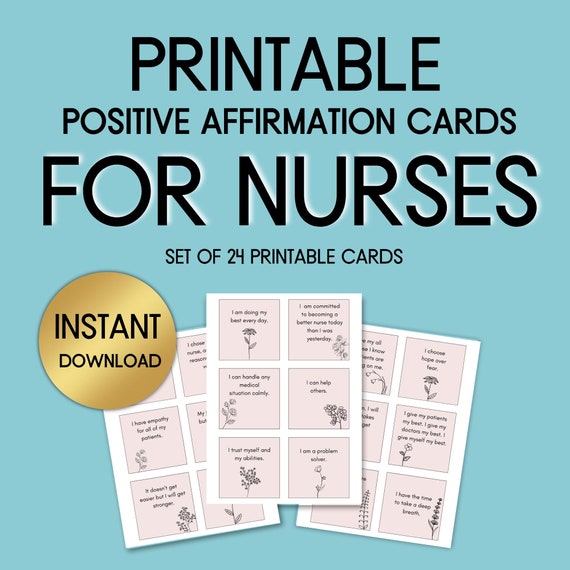
Credit: www.etsy.com
Positive Affirmation And Emotional Intelligence
Emotional intelligence is the ability to understand and manage emotions. Affirmations increase emotional intelligence by:
- Building self-awareness
- Improving empathy
- Strengthening relationships
Healthcare workers with high emotional intelligence handle stress better and communicate more effectively.
Table: Affirmation And Emotional Intelligence Skills
| Skill | With Affirmation | Without Affirmation |
|---|---|---|
| Self-Awareness | Higher | Lower |
| Empathy | Improved | Unchanged |
| Stress Management | Strong | Weak |
| Communication | Effective | Less Effective |
This shows how affirmation boosts emotional skills in healthcare.
Overcoming Challenges With Affirmation
Healthcare workers face many challenges:
- Lack of time
- Emotional exhaustion
- Difficult patients
- Unclear communication
Affirmations can help overcome these barriers. For example, “I handle challenges with grace,” can support staff during tough cases.
Two Non-obvious Insights
- Affirmation is not just for crises: It works best as a regular habit, not only during emergencies. Daily use builds resilience before problems arise.
- Affirmation can be silent: Even quiet repetition, without speaking out loud, can change thinking and mood. This is useful in busy or public settings.
Customizing Affirmations For Diverse Healthcare Teams
Healthcare teams are diverse. Different cultures, backgrounds, and languages are common. Affirmations must be inclusive:
- Use simple language.
- Respect cultural values.
- Encourage team members to create their own affirmations.
Example: Inclusive Affirmation
A multicultural team uses, “We respect and support each other,” as a group affirmation. This builds unity and trust.
Measuring Affirmation Impact In Healthcare
Measuring the impact of affirmation helps improve its use. Here’s how:
- Surveys: Ask staff about mood, stress, and job satisfaction.
- Patient feedback: Track patient satisfaction after staff use affirmations.
- Performance data: Compare error rates and staff turnover.
Tracking these outcomes helps refine affirmation programs and shows their value.

Credit: www.amazon.com
Combining Affirmation With Other Wellness Strategies
Affirmation is powerful but works best with other wellness tools:
- Mindfulness meditation
- Breathing exercises
- Physical activity
- Peer support groups
Combining these strategies creates a stronger foundation for mental health.
Example: Affirmation + Breathing
A nurse uses deep breathing and the affirmation, “I am calm and focused,” during emergencies. This reduces stress and improves decision-making.
Technology And Affirmation In Healthcare
Modern technology makes affirmation easy to use:
- Mobile apps: Reminders and affirmation prompts.
- Email: Daily affirmation messages for staff.
- Social media: Sharing positive statements with colleagues.
These tools help staff stay connected and motivated.
External Resource
For more research on mental health and positive psychology, visit Positive Psychology.
Frequently Asked Questions
How Often Should I Use Positive Affirmations In Healthcare?
Daily use is best. Repeat affirmations in the morning, during stressful moments, and at the end of your shift. Consistency builds lasting benefits.
Can Positive Affirmation Really Reduce Stress For Healthcare Workers?
Yes, research shows that regular positive self-talk lowers stress levels and improves mood. It also helps you handle difficult situations better.
What If An Affirmation Feels Fake Or Forced?
Adjust it to match your real feelings and strengths. Choose statements that feel believable and authentic. Start small and build confidence over time.
Can Affirmations Help Teams, Not Just Individuals?
Absolutely. Group affirmations build unity and trust. Sharing positive statements strengthens teamwork and improves patient care.
Are There Apps Or Tools To Support Affirmation In Healthcare?
Yes, many mobile apps and online tools offer daily affirmation prompts and reminders. They make it easy to practice affirmations regularly.
Positive affirmation is a powerful tool for healthcare professionals. It builds confidence, reduces stress, and supports mental health. Used daily, affirmations improve teamwork, patient care, and personal wellbeing. Whether you are new to healthcare or experienced, positive affirmation can help you face challenges and grow.
Start today—choose a statement that fits you, repeat it often, and see the difference.
