

Oath Affirmation Which Schedule: Complete Guide
The words oath and affirmation are deeply rooted in legal systems around the world. These words carry great importance in courts, government offices, and many official processes. If you have ever filled out legal forms or watched a courtroom scene, you have probably heard someone say, “Do you swear or affirm…” This is not just a formality. The process of taking an oath or affirmation is a serious act, one that ties a person to the truth, honesty, and the law.
But what exactly do “oath” and “affirmation” mean? Why do we use them? And what does “which schedule” refer to in this context? This article explores these questions in detail. We will look at the definitions, the different types, and why they matter.
We will also see how these concepts connect to legal schedules, especially in countries that follow the British legal tradition, like India, the UK, and others. If you need to understand oaths and affirmations for your studies, your work, or your citizenship process, this guide will give you the clear answers you need.
What Is An Oath?
An oath is a solemn promise. When a person takes an oath, they are making a public declaration that they will tell the truth or do something faithfully. This promise is usually made in the name of a deity or something sacred. In legal terms, an oath is a binding statement. If a person lies after taking an oath, they can be punished for perjury.
For example, when a witness in a court case is about to speak, they are asked to take an oath. This is not just a tradition. It is meant to remind the person that their words have serious consequences. The law uses oaths to make sure people speak honestly, especially when their words can affect someone’s life, rights, or freedom.
What Is An Affirmation?
An affirmation is similar to an oath, but there is a key difference. An affirmation is a solemn promise to tell the truth or do a duty, but it does not include any reference to religion or a deity. This is important for people who do not believe in God or prefer not to use religious language. The law respects this choice.
For example, in a court, a person can choose to “affirm” instead of “swear. ” The legal effect is the same. If a person lies after making an affirmation, they are still guilty of perjury. Affirmations are based on personal honor and are equally binding.
Why Are Oaths And Affirmations Used?
The main reason for using oaths and affirmations is accountability. They are designed to:
- Remind people of the seriousness of their words or actions.
- Create a legal bond between the person and the truth.
- Allow courts and official bodies to punish those who deliberately lie or break their promises.
Oaths and affirmations are used in many official situations:
- Giving testimony in court
- Taking public office (like judges, ministers, or civil servants)
- Filing affidavits or written statements
- Official declarations in government forms
By including these solemn promises, the law tries to make sure that people are honest and responsible.
The Legal Concept Of “which Schedule”
Now, let’s look at the phrase “which schedule”. In many countries, especially those with a British legal background, laws are often divided into different sections called “schedules.” These schedules are like special lists or annexes at the end of a law. They provide extra details, formats, or lists that are too long or detailed for the main part of the law.
When someone asks about the “oath affirmation which schedule,” they usually want to know: Which schedule in a law contains the official forms or wording for oaths and affirmations? This is important because the exact words a person must say are often written in these legal schedules.
How Schedules Work In Law
A schedule in a law is like an appendix in a book. It contains:
- Detailed forms or templates (like the exact words for an oath)
- Lists of positions or offices that require an oath
- Extra rules or explanations
Not every law has schedules. But when a law is complex or needs official formats, schedules are very helpful. For oaths and affirmations, these schedules are critical. They make sure everyone uses the same, legally approved wording.
Examples Of Oath And Affirmation Schedules In Major Legal Systems
Let’s look at how different countries use schedules for oaths and affirmations.
India
India’s legal system is based on common law. Many of its most important laws use schedules.
The Constitution
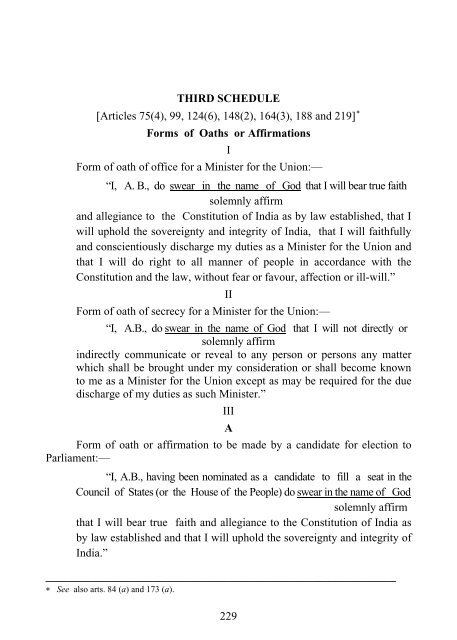
The Constitution has schedules that set out the official forms for oaths and affirmations. For example, the schedule for the oath of office for the President, Vice President, judges, and ministers is set out clearly.
The wording is very specific. For example, a minister’s oath says they will “bear true faith and allegiance to the Constitution” and will “faithfully discharge the duty” of their office.
The Oaths Act
India also has the Oaths Act. This law describes who can take an oath or affirmation and how it should be done. The act provides the forms for witnesses, interpreters, and other people who must make statements in court. The official forms are often included in a schedule at the end of the act.
United Kingdom
In the UK, oaths and affirmations are also set out by law. The Promissory Oaths Act is one such law, which has schedules at the end listing the wording for different oaths.
For example, the oath for the Prime Minister or a government minister is written out in the schedule. This ensures that everyone uses the same form of words, making the process uniform and legally sound.
United States
While the US does not use “schedules” in quite the same way, it does set out the wording for oaths in its laws. For instance, the oath for the President is written in the Constitution. Other federal officials have oaths set out in statutes, sometimes as appendices.
Why Standard Wording Matters
Using a standard form of words is not just a formality. The law is very precise. If someone takes an oath using the wrong words, their promise might not be legally valid. Schedules make sure that everyone uses the correct, accepted wording.
The Oath And Affirmation: Key Differences
To avoid confusion, it’s important to understand the key differences between an oath and an affirmation.
| Aspect | Oath | Affirmation |
|---|---|---|
| Reference to Religion | Yes (swears by God or sacred object) | No (secular promise) |
| Suitable For | Those who believe in God or a deity | Those who do not want to use religious language |
| Legal Effect | Binding | Binding |
| Used In | Court, public office, affidavits | Court, public office, affidavits |
Both have the same legal effect. The main difference is the reference to religion.
Common Situations Where Oath/affirmation Schedules Are Used
Oath and affirmation schedules are not just for high-level officials. They are used in many everyday legal situations. Here are some common examples:
- Court Witnesses: Before testifying, a witness must swear or affirm to tell the truth.
- Public Officials: Judges, ministers, civil servants, and police officers often take an oath or affirmation when starting their jobs.
- Electoral Candidates: Many election laws require candidates to swear or affirm that their information is correct.
- Affidavits: When a person submits a sworn statement, the wording often follows the form in a schedule.
- Company Directors: In some countries, company officers must make a statutory declaration using a set form.
- Interpreters: Court interpreters may have to affirm that they will translate honestly.
How To Find The Correct Schedule For Oaths And Affirmations
Finding the correct schedule is important. Here’s how you can do it:
- Identify the Law: First, know which law covers your situation. For example, for court witnesses, look for the Oaths Act or Evidence Act.
- Check the Schedules: Go to the end of the law, where schedules are usually found. Look for the schedule that mentions oaths and affirmations.
- Read the Form: The schedule will have the exact wording. Use this wording when taking or administering the oath or affirmation.
- Follow Instructions: Some laws allow you to change a few words (for example, “swear” to “affirm”). Follow the instructions carefully.
Using the wrong words can cause problems. In some cases, a person’s appointment or testimony could be challenged if the oath was not taken correctly.
Real-world Examples Of Oath/affirmation Schedules
Let’s look at some real examples of how schedules are used for oaths and affirmations.
Example 1: Oath Of Office For A Judge
A schedule might say:
“I, [Name], having been appointed as a judge, do swear in the name of God that I will faithfully perform the duties of my office, uphold the Constitution, and do justice without fear or favor. ”
If someone chooses affirmation:
“I, [Name], having been appointed as a judge, do solemnly affirm that I will faithfully perform the duties of my office, uphold the Constitution, and do justice without fear or favor. ”
The only difference is the reference to God.
Example 2: Oath For Witnesses In Court
A schedule may provide:
“I swear by Almighty God that the evidence I shall give shall be the truth, the whole truth, and nothing but the truth. ”
Or for affirmation:
“I solemnly affirm that the evidence I shall give shall be the truth, the whole truth, and nothing but the truth. ”
Example 3: Oath Of Allegiance For Public Officials
A common schedule for allegiance might say:
“I, [Name], do swear in the name of God that I will be faithful and bear true allegiance to [country], and that I will faithfully discharge the duties of my office. ”
The affirmation version removes the religious part but keeps the rest.
How Schedules Vary By Country And Office
The wording in each schedule can change depending on:
- The country (laws are different in each place)
- The type of office (President, judge, police officer, etc.)
- The purpose (court testimony, public office, affidavit, etc.)
It is always important to check the most recent law or regulation for your country or state.
The Process Of Administering Oaths And Affirmations
Taking an oath or affirmation is usually a formal process. Here is how it often works:
- Official Presence: The person must be in front of an authorized official (like a judge, notary, or government officer).
- Reading the Schedule: The official reads the exact words from the schedule, or the person repeats them.
- Choosing Oath or Affirmation: The person can choose between swearing (oath) or affirming (affirmation).
- Signing: Sometimes, the person signs a written form of the oath or affirmation.
- Record Keeping: The official records that the oath or affirmation was taken properly.
If the process is not followed, the oath or affirmation may not be valid.
Key Things To Remember When Taking An Oath Or Affirmation
- Check the Law: Always know which law applies to your situation.
- Use the Correct Words: Follow the exact wording in the schedule.
- Choose Freely: You can choose affirmation if you do not want to use religious language.
- Understand the Consequences: Lying after taking an oath or affirmation is a serious crime.
- Ask Questions: If you are unsure, ask the official for guidance.
Non-obvious Insights About Oaths, Affirmations, And Schedules
Many beginners think oaths and affirmations are just formality. In reality, there are hidden details:
- Not Every Job Requires an Oath: Some positions do not require any oath or affirmation. It depends on the law and the schedule.
- Schedules Change Over Time: Lawmakers can update schedules. Always use the latest version.
- Language and Translation: In multilingual countries, schedules may include forms in different languages. Using the wrong language can sometimes make the oath invalid.
- Special Schedules for Sensitive Jobs: Some jobs, like intelligence officers or judges, have more detailed schedules to cover secrecy, impartiality, or loyalty.

Credit: www.nationalnotary.org
Comparison Of Oaths And Affirmations In Different Countries
Here’s a comparison to show how countries handle the wording of oaths and affirmations.
| Country | Oath Wording | Affirmation Wording | Where Found |
|---|---|---|---|
| India | “I swear in the name of God…” | “I solemnly affirm…” | Schedules in the Constitution, Oaths Act |
| UK | “I swear by Almighty God…” | “I do solemnly, sincerely and truly declare and affirm…” | Schedules in Promissory Oaths Act |
| USA | “I do solemnly swear…” | “I do solemnly affirm…” | Constitution, statutes |
| Australia | “So help me God.” | “Solemnly and sincerely declare and affirm…” | Schedules in Oaths Act |
This shows the importance of checking your country’s laws and schedules for the exact wording.
Common Mistakes To Avoid
Many people make simple but serious mistakes with oaths, affirmations, and schedules. Here are a few:
- Using Incorrect Wording: Not following the official schedule can make the oath invalid.
- Forcing an Oath: Officials must not force people to swear if they prefer to affirm.
- Skipping the Process: Sometimes, people forget to take the oath altogether. This can cause appointments or decisions to be challenged in court.
- Not Updating Schedules: Using old or outdated schedules can lead to legal problems.
- Overlooking Minor Offices: Some minor offices or roles may require an oath as per the schedule, even if it seems unimportant.

Credit: www.nationalnotary.org
How To Administer An Oath Or Affirmation Properly
Here are practical steps for officials:
- Always have the schedule or legal text at hand.
- Confirm the person’s choice (oath or affirmation).
- Ask the person to repeat the words exactly as in the schedule.
- If the person cannot read, read the words aloud for them.
- Record in writing that the oath or affirmation was made.
- Sign and date the document, if required.
The Impact Of Oaths And Affirmations On Legal Proceedings
Oaths and affirmations are central to justice. If a witness gives false evidence after taking an oath or affirmation, they can be charged with perjury. This is a serious crime and can lead to jail or fines.
In public office, failure to take the correct oath can mean that actions are not legally valid. For example, if a judge does not take the proper oath, their decisions may be challenged in higher courts.
Credit: www.yumpu.com
Digital And Remote Oaths: The Modern Evolution
With technology, many countries now allow people to take oaths and affirmations over video calls or using digital signatures. However, the wording must still match the official schedule. The process is carefully recorded to avoid fraud.
This evolution is important in times of crisis or when people cannot travel. But the legal requirements remain strict. Always check the latest rules for remote or digital oaths.
Why Understanding Schedules Matters For Citizens
You may think oaths and affirmations only matter for officials, but they affect everyone:
- When you are a witness in court
- When you make a statutory declaration for your job or business
- When you become a citizen or voter
- When you are involved in legal disputes
Knowing the correct schedule and wording protects your rights and avoids legal trouble.
Key Takeaways
- Oaths are religious or sacred promises; affirmations are secular.
- The exact words for oaths and affirmations are often found in schedules at the end of laws.
- Using the correct schedule is critical for legal validity.
- Both oaths and affirmations have the same legal effect.
- Always check the most recent law and schedule for your country or situation.
For deeper study, you can find more about legal schedules and their role in official oaths at Wikipedia: Oath of Office.
Frequently Asked Questions
What Is A Schedule In Law?
A schedule in law is an extra part at the end of a legal document. It lists forms, details, or specific wording needed for certain actions, like oaths or affirmations.
Can I Choose To Affirm Instead Of Swearing An Oath?
Yes. Most legal systems allow people to choose affirmation if they do not want to use religious language. Both options are equally valid.
What Happens If I Use The Wrong Wording For An Oath?
If the wording does not match the official schedule, the oath or affirmation might not be legally valid. Always use the exact words given in the schedule.
Where Can I Find The Official Wording For An Oath Or Affirmation?
Check the schedule at the end of the relevant law. For example, look in the Constitution, Oaths Act, or the law about your job or role.
Are Oaths And Affirmations Required For Every Official Position?
Not always. Only some positions or actions require an oath or affirmation. The law and its schedules will say when it is needed.
Taking oaths and affirmations seriously, and using the correct schedule, keeps the legal system fair and trustworthy for all.
