

How Words of Affirmation Works: Transform Your Relationships Today
How Words Of Affirmation Works
Words have the power to shape emotions, build connections, and even transform relationships. Sometimes, a simple phrase can make a person's day, boost their confidence, or heal a hurt. This is the magic behind words of affirmation—one of the five love languages described by Dr. Gary Chapman. For many, hearing kind, supportive, or loving words is as important as receiving gifts or spending time together. But how does this love language truly work, and why does it matter so much to some people?
Understanding the mechanics and impact of words of affirmation can help deepen bonds, improve communication, and lead to stronger, more fulfilling relationships. Whether it's between partners, friends, family, or even colleagues, the right words at the right time can make all the difference. Let's explore what words of affirmation really are, why they matter, and how anyone can use them to enrich their connections.
What Are Words Of Affirmation?
Words of affirmation are spoken or written statements that express love, appreciation, encouragement, or support. They make people feel valued and noticed. Examples include "I love you," "You did a great job," or "I'm proud of you." These words can be simple or creative, spoken in private or public, and tailored to fit any relationship.
This love language is not just about compliments. It's about sincere acknowledgment and verbal appreciation. For people who value words of affirmation, hearing positive feedback or loving words means more than actions or gifts.
People respond differently to words. Some feel deeply connected when they receive verbal praise or encouragement, while others may not place as much importance on words. For those whose primary love language is words of affirmation, these statements act as emotional nourishment.
The Science Behind Words Of Affirmation
Research in psychology and neuroscience shows that positive verbal feedback can have a powerful effect on the brain and emotions. When people hear genuine praise or encouragement, their brains release dopamine and oxytocin. These chemicals create feelings of happiness and bonding.
Studies also show that affirming words can reduce stress. When someone feels appreciated or loved, their body produces less cortisol, the hormone linked to stress. Over time, regular positive communication can even improve mental health and self-esteem.
A famous experiment called the "Pygmalion effect" found that people perform better when they receive positive expectations and encouragement. This effect works in relationships too—when you tell someone you believe in them, they're more likely to believe in themselves.
How Words Of Affirmation Work In Relationships
The role of words of affirmation in relationships is both practical and emotional. For many, hearing kind words is proof of love or care. These words can be simple, like "Thank you for being here," or more detailed, like "I admire how hard you work for our family."
Building Emotional Security
Consistent, sincere affirmations help build emotional security. They let someone know they are loved, wanted, and appreciated. This foundation makes it easier to handle conflicts or misunderstandings, because both people feel respected.
Encouraging Growth And Confidence
When people hear supportive words, they often feel more confident and willing to try new things. For example, a child who hears "I'm proud of you" after a test may feel motivated to keep learning. In romantic relationships, a partner who hears "You make me happy" may feel more secure and open to deeper connection.
Repairing And Strengthening Bonds
During hard times or after disagreements, words of affirmation can help repair trust. Apologies, reassurance, and positive statements make it easier to move forward. This is why couples who use affirming language tend to stay together longer and report higher satisfaction.
Common Types Of Words Of Affirmation
People use words of affirmation in many ways. Here are some of the most common types:
- Compliments: Simple praise like "You look nice today" or "That was a great idea."
- Expressions of Love: Saying "I love you" or "You mean so much to me."
- Acknowledgement: Recognizing effort, such as "Thank you for your hard work."
- Encouragement: Phrases like "You can do it" or "I believe in you."
- Reassurance: Reminders of support, like "I'm here for you" or "We're in this together."
- Gratitude: Saying "I'm grateful for you" or "Thanks for always listening."
- Celebration: Sharing excitement for achievements, for example, "Congratulations on your promotion!"
Each type serves a different purpose, but all aim to make the other person feel seen and valued.
Examples Of Words Of Affirmation In Different Relationships
The way you express affirmations can change depending on the relationship. Here are some examples for different situations:
Romantic Partners
- "You make my life better."
- "I'm so lucky to have you."
- "Thank you for always being there for me."
Friends
- "I really appreciate your friendship."
- "You're always there when I need you."
- "You inspire me with your positivity."
Family
- "I'm proud to be your sibling/parent/child."
- "Thank you for supporting me."
- "Our family is stronger because of you."
Workplace
- "Great job on that project!"
- "Your ideas always make a difference."
- "I value your hard work and dedication."
Using the right words in the right context can strengthen any relationship and create a positive atmosphere.
Why Words Of Affirmation Matter
Not everyone values words of affirmation the same way, but for those who do, they are essential. Here’s why:
Fulfilling Emotional Needs
Humans have a basic need to feel seen, heard, and appreciated. For some, these needs are met through actions; for others, through words. When someone’s primary love language is words of affirmation, not receiving them can lead to feelings of neglect or insecurity.
Boosting Self-worth
Receiving positive feedback helps people see their value. A child who hears "You are smart" or an employee who hears "Your work matters" often develops stronger self-esteem.
Creating Connection
Verbal affirmation builds trust and intimacy. It opens the door for deeper conversations and emotional vulnerability.
Preventing Misunderstandings
Sometimes, people think their actions show love or appreciation. But if the other person values words, silence can feel like rejection. Saying affirming words helps avoid confusion and hurt feelings.
Words Of Affirmation Vs. Other Love Languages
Dr. Gary Chapman’s theory suggests there are five main love languages:
- Words of Affirmation
- Acts of Service
- Receiving Gifts
- Quality Time
- Physical Touch
Each person has a preferred way to give and receive love. Understanding these differences can prevent conflict and increase satisfaction in relationships.
Here is a comparison of the five love languages and how they meet emotional needs:
| Love Language | How It Works | Best For | Common Mistake |
|---|---|---|---|
| Words of Affirmation | Expressing love and appreciation through spoken or written words | People who feel valued by verbal praise | Assuming actions alone are enough |
| Acts of Service | Showing love by doing helpful things | People who value practical support | Ignoring verbal praise |
| Receiving Gifts | Giving thoughtful presents | People who appreciate physical tokens of love | Overlooking the meaning behind gifts |
| Quality Time | Spending focused, undivided time together | People who value shared experiences | Being present physically but not emotionally |
| Physical Touch | Expressing love through touch (hugs, holding hands) | People who feel connected through physical closeness | Ignoring verbal or emotional needs |
If your partner or loved one prefers words of affirmation, focusing on this language can lead to a much stronger connection. But remember: most people appreciate a mix of all five.
How To Give Effective Words Of Affirmation
Not all affirmations have the same impact. Here are ways to make your words of affirmation more powerful:
Be Specific
Generic praise ("You're great") can feel empty. Instead, say what you appreciate: "You handled that meeting so well—I was impressed by your ideas." Specific words show you are paying attention.
Be Sincere
People can sense when words are not genuine. Only say what you truly mean. Forced or exaggerated praise can make someone uncomfortable.
Choose The Right Time
Timing matters. Giving encouragement before a big event, or expressing gratitude after someone helps, makes words more meaningful.
Mix Spoken And Written Words
Verbal affirmations are powerful, but sometimes a written note or text can have lasting impact. Mix both to keep things fresh and meaningful.
Use Their Name
Saying someone's name makes affirmations feel more personal. "Anna, I really appreciate how you handled that problem. "
Repeat Important Messages
Sometimes, people need to hear loving words more than once to truly believe them. Don't be afraid to repeat important affirmations.
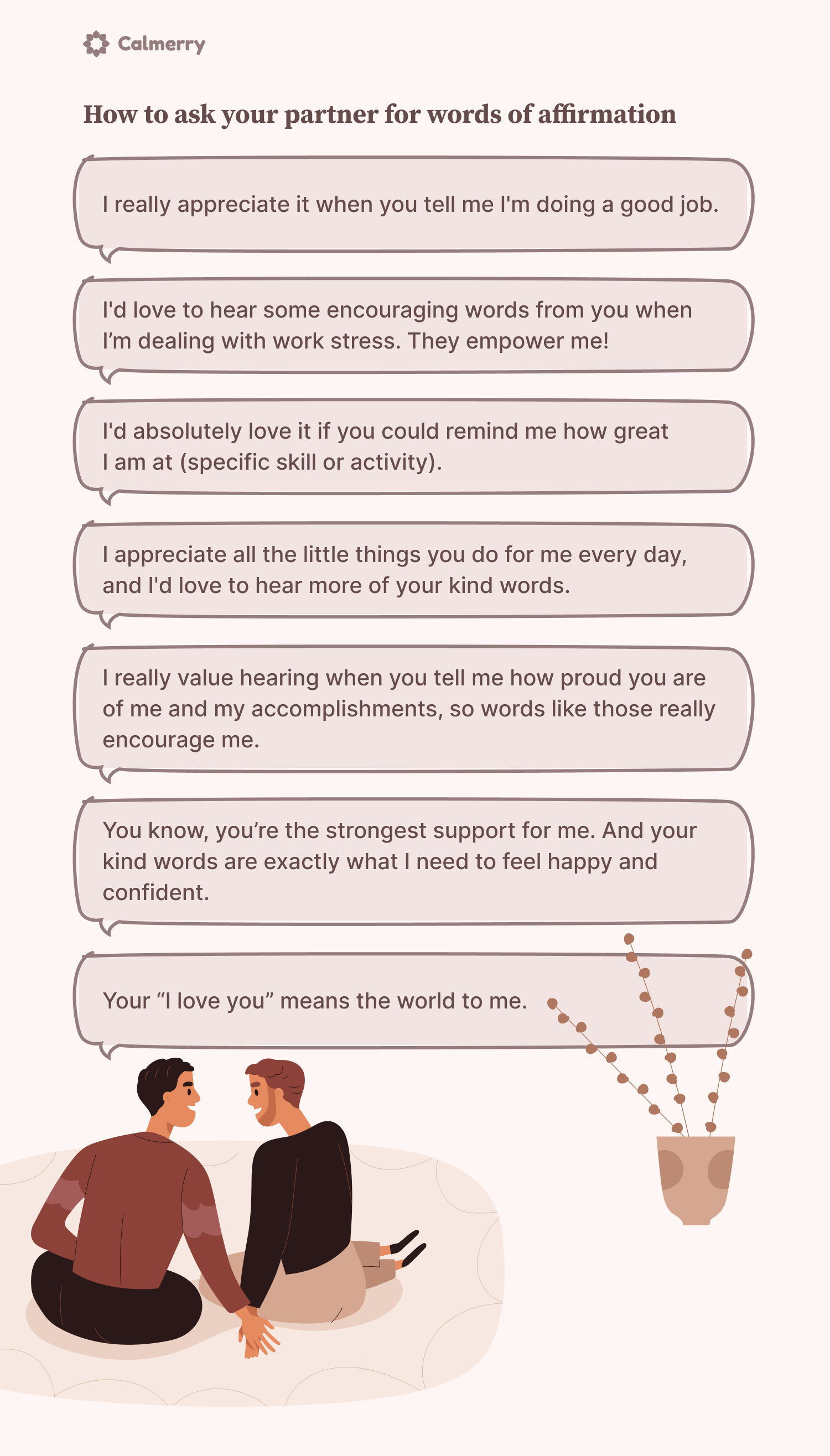
Credit: calmerry.com
Common Mistakes When Using Words Of Affirmation
Even with good intentions, people sometimes misuse or misunderstand this love language. Here are mistakes to avoid:
- Using Generic Praise: Avoid empty phrases like "You're nice" without details. They can feel insincere.
- Overdoing It: Too many affirmations at once can seem forced or make the other person uncomfortable.
- Ignoring Other Needs: Relying only on words without actions or time together may seem shallow.
- Expecting Immediate Change: It takes time for affirmations to build trust or change behavior.
- Using Backhanded Compliments: Phrases like "You did well, for once" hurt more than help.
Words Of Affirmation In Different Cultures
How people use and receive affirmations can depend on culture. In some cultures, direct praise is common and expected. In others, it may be seen as boasting or uncomfortable.
For example, in many Western countries, saying "I love you" is normal in families and romantic relationships. In some Asian cultures, love is shown more through actions than words. Knowing a person's background can help you choose the right approach.
Here's a brief comparison of attitudes toward words of affirmation in different cultures:
| Culture | Common Approach to Affirmation | Potential Challenges |
|---|---|---|
| Western (e.g., US, UK) | Direct verbal praise and open expressions of love | Can feel insincere if overused |
| East Asian (e.g., Japan, China) | Indirect or subtle affirmations, actions over words | Words may feel awkward or unnecessary |
| Middle Eastern | Mix of verbal and non-verbal affirmations, respect shown through family roles | Public praise can be uncomfortable |
| Latin American | Warm, expressive verbal affirmations, often in family settings | May expect frequent affirmations |
When using words of affirmation across cultures, pay attention to how the other person responds and adjust your approach as needed.
The Role Of Words Of Affirmation In Self-talk
Words of affirmation are not just for others. Self-affirmation—using positive words about yourself—can improve self-esteem, motivation, and resilience.
How To Practice Self-affirmation
- Write down positive statements about your strengths or achievements.
- Speak affirmations aloud in the mirror.
- Remind yourself of your value during difficult times.
Research shows that people who practice self-affirmation are better at handling stress and less likely to give up when faced with challenges.
Examples Of Self-affirmations
- "I am capable and strong."
- "I deserve happiness."
- "I can handle whatever comes my way."
Self-affirmation is especially helpful for people who struggle with negative self-talk or low confidence.
The Impact Of Words Of Affirmation On Children
Children who receive regular, sincere affirmations from parents, teachers, or caregivers tend to develop higher self-esteem and emotional resilience. Positive words can shape a child's beliefs about themselves and their abilities.
Key Benefits
- Builds Confidence: Children who hear "You can do it" are more likely to try new things.
- Encourages Good Behavior: Praise for positive actions increases the chance they'll be repeated.
- Strengthens Parent-Child Bond: Affirming words help children feel safe and loved.
How To Use Affirmations With Children
- Focus on effort, not just results ("I'm proud of how hard you worked").
- Be age-appropriate and specific.
- Avoid comparisons with others.
Even small affirmations can make a big difference in a child's emotional development.
Words Of Affirmation In The Workplace
Affirming words aren't just for personal relationships—they play an important role at work too. Employees who feel appreciated are more productive, engaged, and loyal.
Ways To Use Affirmations At Work
- Recognize achievements publicly and privately.
- Give feedback that highlights strengths as well as areas for growth.
- Encourage teamwork with supportive language.
Data And Impact
According to studies, employees who feel appreciated are up to 50% more productive. A positive work environment with regular affirmations leads to lower turnover and higher job satisfaction.
Digital Words Of Affirmation: Texts, Social Media, And More
In today's digital world, words of affirmation often come through texts, emails, or social media. While these messages can be less personal, they still have a big impact.
Tips For Digital Affirmations
- Keep messages clear and sincere.
- Use emojis or GIFs to add warmth, but don't rely on them alone.
- Send unexpected affirmations to brighten someone's day.
Digital communication makes it easy to stay connected and supportive, even from a distance.

Credit: calmerry.com
Two Non-obvious Insights About Words Of Affirmation
- Silent Affirmation is Still Powerful: Sometimes, words of affirmation can work even when spoken quietly or in private. For example, writing a letter and never sending it can help you process emotions or strengthen your own feelings, even if the other person never hears the words.
- Receiving Affirmation Can Be Uncomfortable for Some: While many people crave affirming words, others feel awkward or embarrassed when praised. This discomfort often stems from past experiences or cultural beliefs. In these cases, gentle, private affirmations or written notes can be more effective than public praise.
Practical Tips To Make Words Of Affirmation A Habit
- Set a daily reminder to say something positive to someone you care about.
- Keep a journal of affirmations you give and receive.
- Ask loved ones what words mean most to them.
- Practice active listening to pick up on what others value.
Making affirmations a regular part of your routine leads to stronger, happier relationships.

Credit: www.cultureally.com
Frequently Asked Questions
What Are Some Examples Of Words Of Affirmation?
Examples include "I'm proud of you," "You make my life better," "Thank you for being there," "I believe in you," and "Your effort means a lot to me. " The key is to be sincere and specific.
Can Words Of Affirmation Really Change A Relationship?
Yes, regular and genuine words of affirmation can improve trust, intimacy, and satisfaction in relationships. Research shows that positive communication is linked to stronger bonds and happier partnerships.
How Do I Know If Words Of Affirmation Are My Love Language?
If you feel happiest or most loved when you hear kind, supportive, or loving words, words of affirmation may be your main love language. You may also notice that you often give affirming words to others.
Is It Possible To Overuse Words Of Affirmation?
Yes, using too many affirmations at once or giving praise that feels forced can make them lose meaning. Balance is important—focus on sincerity and timing, not quantity.
Where Can I Learn More About Love Languages And Words Of Affirmation?
A helpful resource is the official 5 Love Languages website, which offers articles, quizzes, and tips for using love languages in all kinds of relationships.
Words of affirmation can turn an ordinary moment into something special. By understanding how and why they work, you can bring more joy, trust, and connection into your life and the lives of those around you. Whether through spoken praise, written notes, or supportive texts, the right words truly matter.
