

How to Use Positive Affirmations Correctly for Lasting Success
How To Use Positive Affirmations Correctly
Positive affirmations are simple phrases you repeat to yourself to build confidence, shift your mindset, and support your goals. Many people use them every day, hoping for big changes. But not everyone sees results. Why? The secret is not just saying the words—it’s about using positive affirmations correctly. In this article, you’ll discover how to apply affirmations so they actually work. You’ll learn how to write your own, when and how to use them, and how to avoid common mistakes. Whether you’re new to affirmations or want deeper results, you’ll find practical advice and examples here.
What Are Positive Affirmations?
Positive affirmations are short statements that focus on strengths, goals, or positive beliefs. You repeat them to help reprogram your mind. For example, saying “I am confident” can help you feel more confident over time. The idea is simple: by repeating positive thoughts, you can replace negative ones.
How Affirmations Affect The Brain
Research shows that affirmations can change how you think. When you repeat a positive phrase, your brain starts to accept it as true. This process is called neuroplasticity—your mind adapts and forms new habits. Studies using MRI scans found that self-affirmation activates areas in the brain linked to self-processing and reward.
Common Examples
Some popular affirmations include:
- “I am strong.”
- “I am worthy of love.”
- “I can achieve my goals.”
- “I am calm and focused.”
These statements are meant to help you feel better, act with confidence, or handle challenges more easily.
Why Positive Affirmations Work (and When They Don’t)
Many people see affirmations as magic words. But they work only when used with understanding. Let’s explore why affirmations help—and why sometimes they fail.
The Science Behind Success
Several studies have shown that affirmations can reduce stress, improve performance, and boost self-esteem. For example, athletes who use affirmations before competitions often perform better. Students using affirmations before exams report less anxiety.
When Affirmations Fail
Affirmations don’t work for everyone. If you don’t believe the words, or you use them incorrectly, you may feel worse. For example, saying “I am rich” when you struggle financially can feel fake. Your mind may resist the phrase, causing doubt or frustration.
Key Insight
Affirmations must feel possible and personal. If they’re too far from your reality, your brain may reject them. One study found that affirmations worked best when people combined them with action, not just repetition.
How To Create Effective Positive Affirmations
The first step is learning to write affirmations that suit you. An affirmation should feel natural and believable. Here are practical steps and examples to help you craft your own.
1. Keep It Simple And Specific
Use clear, short phrases. Avoid complicated language. For example:
- “I am learning every day.”
- “I handle stress calmly.”
2. Use The Present Tense
Write affirmations as if they’re true now. This helps your brain accept the idea. Say “I am confident,” not “I will be confident. ”
3. Make It Personal
Affirmations should fit your life. Use words that matter to you. If you want to improve your health, try “I care for my body with respect. ”
4. Focus On Positive Action
Instead of “I am not afraid,” say “I am brave. ” Avoid negatives. Positive words have more power.
5. Believe In Your Statement
Start with affirmations you can accept. If “I am successful” feels too big, begin with “I am improving every day. ”
Example Table: Good Vs. Bad Affirmations
| Effective Affirmation | Ineffective Affirmation | Why Effective? |
|---|---|---|
| I am learning new skills. | I will be perfect someday. | Focuses on progress, not perfection. |
| I am calm under pressure. | I am never stressed. | Realistic, positive, and believable. |
| I treat myself with kindness. | I am always happy. | Encourages self-care, not forced happiness. |
When And How To Use Positive Affirmations
Timing and method are important. Affirmations work best when you use them regularly and with intention.
Best Times To Use Affirmations
- Morning: Start your day with positive thoughts. This sets your mood and direction.
- Before Challenges: Use affirmations before exams, interviews, or difficult conversations.
- Evening: Reflect on your day and repeat affirmations to relax and prepare for tomorrow.
How To Use Affirmations
- Say Them Aloud: Hearing your own voice has more impact. Speak clearly and slowly.
- Write Them Down: Keep a journal. Writing helps you focus and remember.
- Repeat Often: Consistency is key. Repeat your affirmations daily.
- Visualize: Imagine yourself living the affirmation. For example, picture yourself calm and confident.
- Combine With Action: Take steps toward your goal. If your affirmation is “I am organized,” clean your workspace as you say it.
Example Table: Affirmation Methods
| Method | How It Works | Best For |
|---|---|---|
| Saying Aloud | Engages hearing and speaking. Boosts confidence. | Building self-esteem |
| Writing | Deepens focus. Encourages reflection. | Setting goals |
| Visualization | Creates mental images. Strengthens belief. | Reducing anxiety |
| Combining With Action | Links words to real change. Builds habits. | Personal growth |
How Often Should You Use Affirmations?
There’s no fixed rule, but most experts recommend daily use. You might start with 3–5 affirmations each morning and evening. Some people use them before stressful events. Consistency matters more than frequency.
Common Mistakes And How To Avoid Them
Many people make mistakes with affirmations. Here’s what to watch out for, and how to fix them.
Mistake 1: Using Unrealistic Affirmations
If your affirmation feels impossible, your mind will resist. Saying “I am a billionaire” when you struggle financially can increase doubt.
Solution: Start with believable statements. Try “I am improving my finances” or “I make wise money choices.”
Mistake 2: Ignoring Emotions
Affirmations work best when you connect emotionally. If you recite words with no feeling, they lose power.
Solution: Feel the meaning. Imagine the words as real.
Mistake 3: Not Personalizing
Copying popular affirmations may not suit your needs.
Solution: Write your own. Think about what you want and what fits your life.
Mistake 4: Using Negatives
Avoid affirmations with “not” or “never. ” For example, “I am not anxious” can remind you of anxiety.
Solution: Use positive language. Try “I am calm and relaxed.”
Mistake 5: Expecting Instant Results
Affirmations take time. Expecting quick changes can lead to disappointment.
Solution: Use affirmations daily and be patient. Small shifts add up.
Mistake 6: Repeating Without Action
Saying affirmations is not enough. If you don’t take steps toward your goal, progress is slow.
Solution: Combine affirmations with real actions.
Comparison Table: Common Affirmation Mistakes
| Mistake | Impact | How to Fix |
|---|---|---|
| Unrealistic statements | Causes doubt, frustration | Use believable affirmations |
| No emotional connection | Lack of impact | Feel the words |
| Negative phrasing | Reminds of problems | Use positive language |
| No action | Little real change | Act on your affirmations |
Real-life Examples And Success Stories
Positive affirmations have helped people across the world. Here are a few real-life examples to show how affirmations can change lives.
Example 1: Boosting Confidence
Maria, a student, struggled with public speaking. She used the affirmation “I speak confidently” every morning. She also practiced speaking in front of a mirror. After several weeks, Maria reported feeling less nervous and more prepared in class.
Example 2: Managing Stress
Tom, a manager, faced daily stress at work. He started using “I handle stress with calm” and visualized himself relaxed during meetings. He combined this with deep breathing. His coworkers noticed he was less anxious and more focused.
Example 3: Improving Health Habits
Lisa wanted to exercise more. She used “I enjoy taking care of my body” and scheduled daily walks. After three months, she felt healthier and happier.
Example 4: Overcoming Self-doubt
Ahmed, a new entrepreneur, doubted his skills. He used “I trust my decisions” and “I learn from every challenge. ” By tracking his progress, Ahmed built confidence and made better choices for his business.
Data: Affirmation Success Rates
A study found that 62% of participants felt more positive after one month of daily affirmations. Those who combined affirmations with action saw even higher results—around 78%.

Credit: psychology-spot.com
Advanced Tips For Using Affirmations
Once you understand the basics, you can make affirmations even more powerful. Here are some advanced techniques.
1. Use Visualization
When you say your affirmation, picture yourself living it. If your affirmation is “I am confident,” imagine standing tall, speaking clearly, and feeling proud.
2. Create Affirmation Cards
Write each affirmation on a card. Place them where you’ll see them—on your desk, mirror, or fridge. This reminds you to repeat them.
3. Record Your Voice
Record yourself saying affirmations. Listen to them during your commute or before sleep. Hearing your own voice reinforces belief.
4. Pair Affirmations With Meditation
Practice meditation and include affirmations. As you relax, repeat your statements. This deepens their impact.
5. Use Technology
Apps and reminders can prompt you to use affirmations. Some apps let you set daily affirmations, track your progress, and even send motivational quotes.
6. Share With Others
Discuss affirmations with friends or family. Group support makes it easier to stay committed.
7. Adjust Over Time
Change your affirmations as your goals shift. If you achieve one goal, create new statements for your next challenge.
How Positive Affirmations Support Mental Health
Affirmations are not a cure for mental health issues, but they can help. Studies show that regular use of positive affirmations can reduce symptoms of depression and anxiety. By focusing on strengths, you build resilience.
Practical Example
A group of patients with mild anxiety used affirmations like “I am safe and in control. ” After six weeks, many reported lower anxiety levels and better sleep.
Data On Mental Health Benefits
According to the National Institutes of Health, self-affirmation exercises can reduce stress and improve problem-solving skills, especially under pressure.
Using Positive Affirmations For Different Goals
Affirmations can help in many areas of life. Here are examples for different goals.
For Confidence
- “I believe in myself.”
- “I am capable of great things.”
For Stress Management
- “I relax and breathe deeply.”
- “I handle challenges with calm.”
For Health
- “I care for my body.”
- “I choose healthy habits.”
For Relationships
- “I communicate with kindness.”
- “I am worthy of love and respect.”
For Success
- “I am focused and determined.”
- “I reach my goals with patience.”
For Learning
- “I learn from every experience.”
- “I grow and improve daily.”
Measuring Your Progress With Affirmations
Tracking progress is important. It helps you see what works and make changes.
How To Measure Success
- Keep a Journal: Write your affirmations and note how you feel after each session.
- Set Goals: Choose clear goals, like “feel more confident in meetings.”
- Rate Your Feelings: Use a scale from 1–10 to rate confidence, stress, or happiness before and after using affirmations.
- Observe Changes: Look for real changes in your behavior, mood, or actions.
Example: Tracking Confidence
Maria started with a confidence level of 3/10. After one month of daily affirmations, she rated herself 7/10. She noticed she spoke more in class and felt comfortable.

Credit: thecalmishteacher.com
Positive Affirmations Vs. Other Self-help Tools
Affirmations are just one tool in self-improvement. How do they compare to other methods?
Comparison Table: Affirmations Vs. Other Tools
| Method | How It Works | Best For | Limitations |
|---|---|---|---|
| Positive Affirmations | Replaces negative thoughts with positive ones | Building confidence, changing mindset | Needs belief and regular practice |
| Visualization | Imagining goals as achieved | Boosting motivation | Requires focus and imagination |
| Goal Setting | Defines clear targets | Organizing actions | May lack emotional impact |
| Meditation | Calms mind and reduces stress | Relaxation, clarity | Needs time and practice |
Affirmations can be combined with other tools for best results.
Two Common Insights Beginners Miss
- Emotion Is Essential: Many people repeat affirmations without feeling them. Emotional connection is what makes affirmations powerful. Try to feel the meaning as you say each phrase.
- Small Changes Matter: Beginners often expect big changes fast. But affirmations usually bring small shifts over time. Noticing small improvements is important. Celebrate every bit of progress.
What Makes Affirmations Truly Effective?
The real power of affirmations comes from:
- Consistency: Using them daily
- Belief: Choosing statements you can accept
- Action: Linking words to real steps
- Emotion: Feeling the meaning
- Personalization: Creating affirmations that fit your life
If you follow these steps, affirmations can help you build confidence, face challenges, and grow.
Frequently Asked Questions
How Long Does It Take For Positive Affirmations To Work?
Most people notice small changes within a few weeks of daily use. For bigger shifts, it can take months. Consistency is more important than speed. Track your progress and adjust affirmations as needed.
Can Positive Affirmations Help With Anxiety Or Depression?
Affirmations can support mental health by focusing on strengths and positive thoughts. They are not a replacement for therapy or medication, but they can help reduce anxiety and improve mood. For serious issues, seek professional help.
Should I Write My Own Affirmations Or Use Popular Ones?
Writing your own affirmations is best. Personal statements fit your needs and feel more believable. Popular affirmations can work if they match your goals. Adjust them to fit your life.
How Many Affirmations Should I Use Each Day?
Start with 3–5 affirmations daily. Too many can feel overwhelming. Choose statements that matter most to you. Repeat them morning and evening for best results.
Can Children Use Positive Affirmations?
Yes, affirmations work for all ages. Children can benefit from statements like “I am kind” or “I can solve problems. ” Make affirmations simple and encourage children to repeat them regularly.
Positive affirmations are a simple tool with big potential. Used correctly, they can help you change your mindset, build confidence, and reach your goals. Remember, the words you choose matter. Practice daily, feel the meaning, and take action toward your dreams. With patience and consistency, affirmations can become a powerful part of your life. For more details on the science behind affirmations, visit National Institutes of Health.
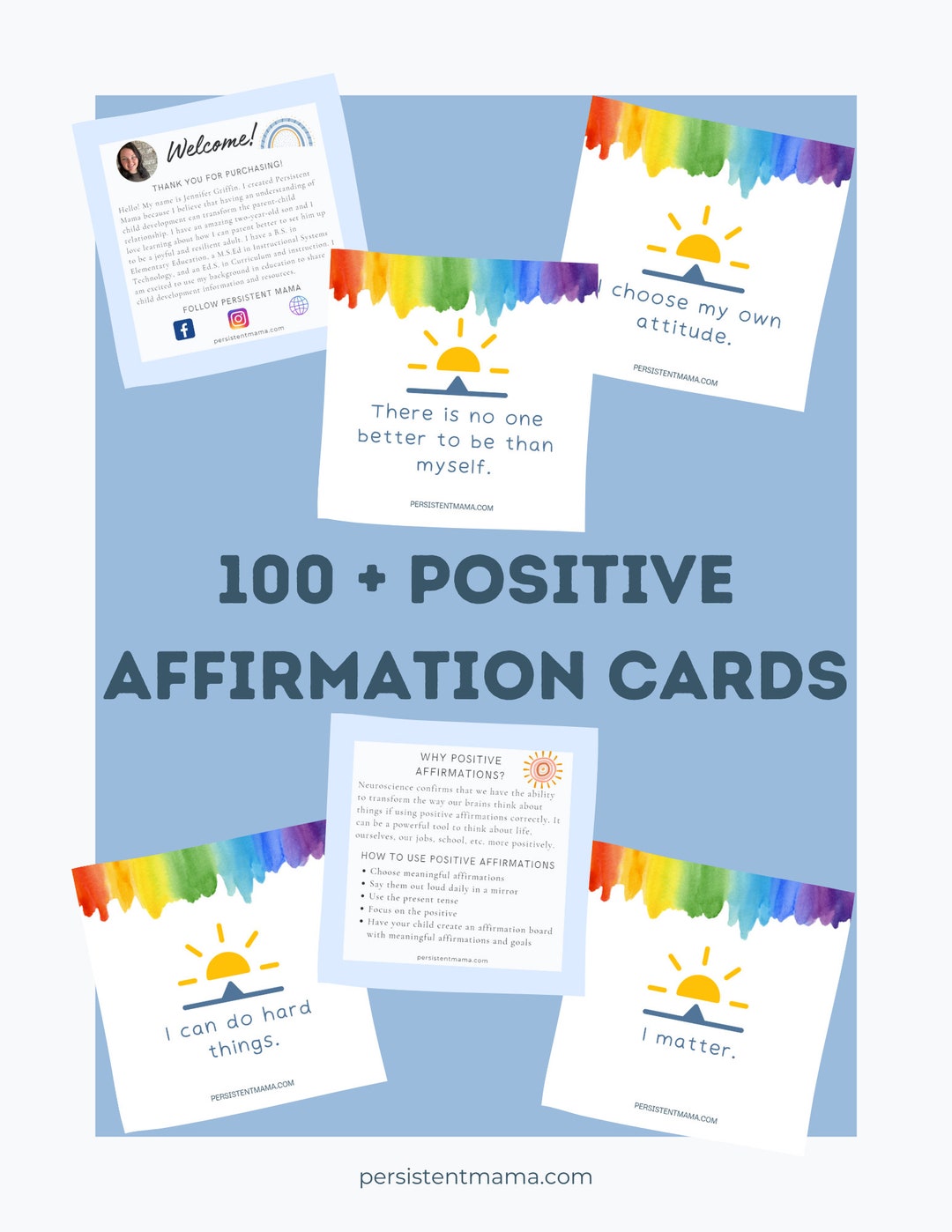
Credit: www.etsy.com
