

How to Use Affirmation Cards for Daily Motivation and Growth
How To Use Affirmation Cards
Life can feel overwhelming. Sometimes, the negative thoughts in our minds make us doubt ourselves or lose motivation. Affirmation cards are a simple tool to help shift your mindset and build confidence. These cards have positive statements written on them, designed to encourage you and remind you of your strengths. Many people use them to boost self-esteem, reduce stress, or create a daily habit of positive thinking.
Using affirmation cards is not just about reading words. It is about making these positive beliefs a part of your everyday life. If you are new to affirmation cards, this guide will help you understand how to use them effectively.
You will learn how to choose cards, how to use them for different goals, and how to get the most benefit from this practice. Whether you want to feel happier, overcome challenges, or build a new routine, you will find everything you need here.
Let’s explore how affirmation cards can transform your mindset.
What Are Affirmation Cards?
Affirmation cards are small cards with positive statements printed on them. The statements are designed to encourage, motivate, or calm you. Some cards focus on self-love, others on confidence or gratitude. The goal is to help you replace negative thoughts with positive ones.
You might find affirmation cards in bookstores, online shops, or you can make them yourself. They are usually the size of a playing card or smaller, making them easy to carry in your wallet, bag, or pocket.
Affirmation cards have become popular in therapy, coaching, and wellness routines. They are often used in meditation, journaling, or as a quick pick-me-up during stressful moments.
Why Use Affirmation Cards?
Affirmation cards are more than just pretty words. Research shows that positive self-talk can change your brain and improve your mood. When you repeat affirmations, you reinforce beliefs that help you feel empowered and resilient. Here are some reasons to use affirmation cards:
- Reduce stress and anxiety: Reading positive statements can calm your mind and help you handle difficult situations.
- Build self-confidence: Affirmations remind you of your abilities and strengths.
- Create new habits: Using cards daily helps you focus on positive thinking.
- Support mental health: Many therapists recommend affirmations for people struggling with low self-esteem or negative thoughts.
- Motivate yourself: Cards can help you stay focused on your goals.
A study in the Journal of Behavioral Medicine found that regular affirmation use can lower stress levels and improve problem-solving. Another insight: Affirmation cards work best when you believe the statements. If you feel resistance, pick cards that are realistic for you.
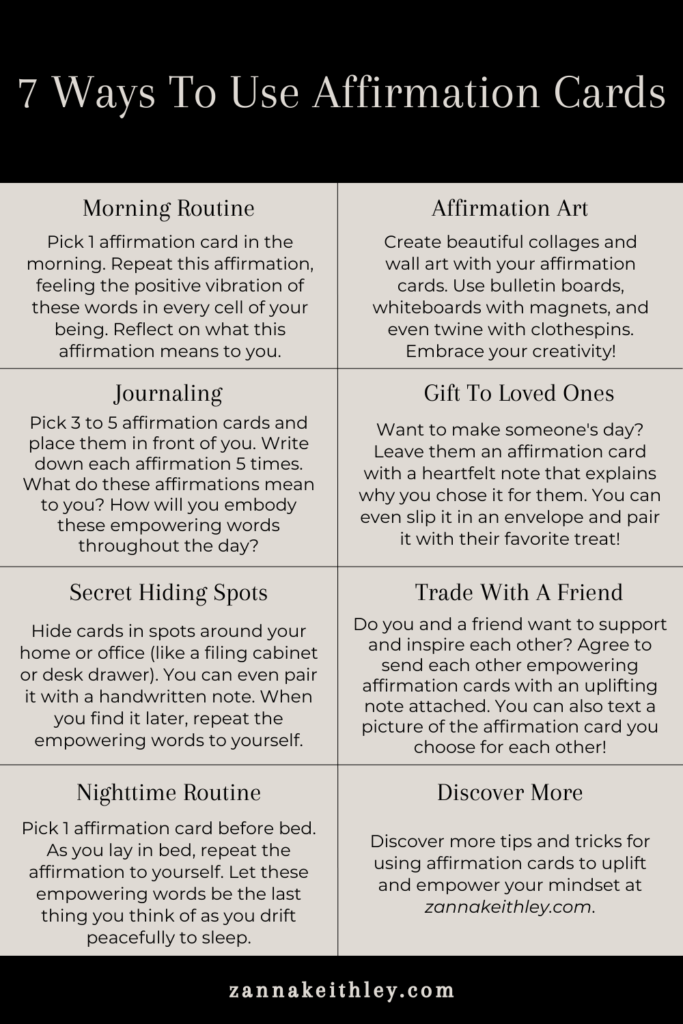
Credit: zannakeithley.com
How To Choose The Right Affirmation Cards
Affirmation cards come in many styles. Some have simple messages, others are more detailed. Choosing the right cards depends on your goals and personality.
Consider Your Goals
What do you want to achieve? Some common goals include:
- Boosting confidence
- Reducing anxiety
- Improving relationships
- Focusing on gratitude
- Overcoming self-doubt
Pick cards that match your main goal. If you want to feel calmer, look for cards with soothing phrases like "I am at peace. " For motivation, choose cards like "I am capable of achieving my dreams. "
Look At The Design
The design of the card can affect your experience. Some people prefer minimalist cards with plain backgrounds. Others like colorful cards with illustrations. Choose cards that feel good to you. The visual style should make you want to use them regularly.
Quality Matters
High-quality cards are durable and easy to handle. If you plan to carry them with you, choose cards made from thick paper or laminated material. Homemade cards can be fun, but store-bought cards often last longer.
Make Your Own Cards
If you cannot find cards you like, make your own. Use index cards or sturdy paper. Write your favorite affirmations in your handwriting. Personalizing your cards makes the practice more meaningful.
Compare Different Types
Here is a comparison of common affirmation card styles:
| Type | Design | Main Focus | Best For |
|---|---|---|---|
| Minimalist | Plain color, simple font | Clarity | People who dislike distractions |
| Illustrated | Art, images, colors | Inspiration | Visual learners, children |
| DIY | Handwritten, custom style | Personalization | Creative people |
| Theme-based | Grouped by topic | Specific goals | Targeted support (e.g., anxiety, motivation) |
How To Use Affirmation Cards Daily
Using affirmation cards is a habit, not a one-time event. Here are practical ways to use them every day:
Morning Routine
Start your day with a positive mindset. Right after you wake up, pick a card. Read it slowly, and repeat the statement out loud. For example, "Today, I choose happiness. " This sets the tone for your day.
If you have more time, sit quietly and reflect on the card’s meaning. Ask yourself: How can I apply this affirmation today?
Work Or Study Breaks
When you feel stressed or tired, take a short break. Pull out a card and read it. This helps reset your mind. Some people keep cards on their desk or in their locker.
Example: During a busy workday, you pick "I am resourceful and resilient." This reminds you to trust your abilities.
Before Sleep
End your day on a positive note. Choose a card before going to bed. Reflect on the statement. You can write about it in a journal or simply think about it as you fall asleep.
For instance: "I am grateful for today’s experiences." This helps you focus on gratitude and prepares you for restful sleep.
On The Go
Carry a few cards in your wallet or bag. Use them whenever you need a boost. Some people tape cards to their mirror, fridge, or computer screen.
In Meditation
Use affirmation cards during meditation. Hold a card, close your eyes, and breathe deeply. Repeat the affirmation silently. This practice calms your mind and strengthens positive beliefs.
Family And Group Settings
Affirmation cards are not just for individuals. Families and groups can use them together. Share a card during meals, meetings, or group activities. Discuss the meaning and how it applies to everyone.
Steps For Effective Use
To get the most out of affirmation cards, follow these steps:
- Set an intention: Decide why you are using the cards. Is it for confidence, calmness, or gratitude?
- Pick a card: Choose randomly or select one based on your mood.
- Read the affirmation: Say the statement out loud or silently.
- Reflect: Think about what the affirmation means to you. How can you apply it today?
- Repeat: Repeat the affirmation several times. Repetition helps reinforce the positive belief.
- Write or journal: If you have time, write about your thoughts or feelings related to the card.
How Affirmation Cards Work
The science behind affirmation cards is simple but powerful. Your brain responds to repeated positive statements. When you use affirmation cards, you are training your mind to focus on strengths, not weaknesses.
The Power Of Repetition
Repetition is key. The more you repeat an affirmation, the more your brain believes it. This is called neuroplasticity—your brain changes based on what you focus on.
Example: If you repeat "I am confident" daily, your brain starts to believe it, and you behave more confidently.
Positive Emotions
Affirmation cards help you access positive emotions. When you read uplifting statements, you feel happier and less stressed. This improves your overall well-being.
Self-talk Vs. Negative Thoughts
Most people have negative self-talk. Affirmation cards help replace those thoughts with positive ones. Instead of thinking "I can’t do this," you start thinking "I am capable. "
Practical Tips For Beginners
If you are new to affirmation cards, here are some tips to help you get started:
- Start small: Use one card a day. Don’t overwhelm yourself.
- Be patient: It takes time to see results. Consistency matters.
- Personalize your cards: Choose or make cards that feel right for you.
- Use cards in different settings: Try using them at home, work, or with friends.
- Combine with other practices: Affirmation cards work well with journaling, meditation, or therapy.
A non-obvious tip: If you struggle to believe the affirmation, try adjusting the statement. For example, instead of "I am confident," say "I am learning to be confident." This makes it more believable.
Common Mistakes To Avoid
Many beginners make mistakes that reduce the effectiveness of affirmation cards. Here are some pitfalls:
- Choosing unrealistic affirmations: If the statement feels too far from your reality, you may resist it. Pick affirmations that are believable.
- Skipping reflection: Simply reading the card is not enough. Take time to reflect on the meaning.
- Inconsistent use: Using cards once in a while will not create lasting change. Make it a daily habit.
- Ignoring your feelings: If an affirmation triggers negative emotions, don’t ignore it. Explore why it feels uncomfortable.
- Expecting instant results: Affirmation cards are not magic. Changes happen slowly with regular practice.
Another insight: If you notice resistance to certain affirmations, it can reveal areas where you need extra support or self-compassion.
How To Create Your Own Affirmation Cards
Making your own affirmation cards is simple and powerful. When you write your own statements, they become more personal and meaningful. Here’s how:
Materials Needed
- Index cards or thick paper
- Pens or markers
- Optional: Stickers, colored pencils, decorations
Steps
- List your favorite affirmations: Think about positive statements that inspire you. Examples: "I am strong," "I am worthy," "I embrace new challenges."
- Write clearly: Use clear handwriting. Keep the statement short and positive.
- Decorate if you like: Add colors, stickers, or drawings.
- Organize by theme: You can group cards by topics like confidence, gratitude, or calmness.
Example Affirmations
Here are some examples to inspire you:
- "I trust myself to make good decisions."
- "I am worthy of love and respect."
- "I am calm and centered."
- "I am grateful for my life."
- "I am open to new possibilities."
How To Use Affirmation Cards For Specific Goals
Affirmation cards can help with many goals. Here’s how to use them for some common purposes:
Self-confidence
Choose cards with statements like "I am confident" or "I believe in myself. " Use them before important events, interviews, or presentations.
Stress And Anxiety
Pick cards that focus on calmness and peace. Example: "I breathe deeply and release tension." Use these during stressful moments or before sleep.
Motivation
Use cards with action-focused statements. Example: "I am making progress every day." Read them in the morning or before starting a project.
Gratitude
Gratitude cards help you focus on what you have. Example: "I am thankful for my friends." Use them during meals or family gatherings.
Relationships
Choose cards about love and kindness. Example: "I show compassion to others." Use these before difficult conversations or when you want to connect with someone.
Using Affirmation Cards With Children
Affirmation cards are great for kids. They help build confidence, reduce anxiety, and teach positive self-talk.
How To Use With Kids
- Let children pick a card each day.
- Read the affirmation together and discuss what it means.
- Use cards during bedtime or morning routines.
- Make cards with simple language and fun designs.
Example Kid-friendly Affirmations
- "I am brave."
- "I am a good friend."
- "I can try new things."
- "I am loved."
A tip: Kids respond best to affirmations with visual elements. Use images or symbols along with words.
Using Affirmation Cards In Groups
Affirmation cards can be used in group settings, like therapy groups, classrooms, or family gatherings.
Group Activities
- Each person picks a card and shares what it means to them.
- Use cards to start group discussions about strengths and challenges.
- Create group cards with affirmations that everyone agrees on.
Benefits
Group use builds trust and connection. It helps everyone feel supported and valued.
Credit: www.blogthelamare.com
Combining Affirmation Cards With Other Practices
Affirmation cards work best when combined with other positive habits.
Journaling
Write about your daily affirmation. Explore how it applies to your life. This deepens the practice and reveals new insights.
Meditation
Use a card as a focus for meditation. Repeat the affirmation as you breathe deeply.
Therapy
Therapists often use affirmation cards with clients. Cards can help clarify goals and build self-esteem.
Yoga
Use affirmation cards before or after yoga practice. Choose statements like "I am strong," "I am balanced," or "I am relaxed. "
How To Track Your Progress
Tracking your progress helps you see the impact of affirmation cards.
Methods
- Keep a journal of your daily cards and how you felt.
- Use a calendar to mark days when you used affirmations.
- Reflect weekly on changes in your mood or confidence.
Example Progress Tracker
| Day | Affirmation Used | Mood Before | Mood After | Notes |
|---|---|---|---|---|
| Monday | I am confident | Nervous | Calm | Helped before meeting |
| Tuesday | I am grateful | Stressed | Relaxed | Felt thankful after |
| Wednesday | I am resilient | Sad | Hopeful | Encouraged me |
The Best Time And Place To Use Affirmation Cards
Affirmation cards are flexible. You can use them anywhere, anytime. Some people use them:
- In the morning, to start the day positively
- During stressful moments, for quick relief
- At bedtime, to end the day on a good note
- In the car, before a big event
- At work, for motivation
Choose times and places that fit your routine.
How To Get The Most Benefit
To maximize the impact of affirmation cards:
- Believe in the process: Open-mindedness helps you absorb positive statements.
- Make it a habit: Use cards daily. The more consistent, the better the results.
- Personalize your affirmations: Adjust statements to fit your life.
- Reflect and act: Think about the affirmation and how you can apply it.
- Share with others: Discuss cards with friends or family to build connection.
A non-obvious insight: If you find a card that really speaks to you, carry it for several days. Deep repetition can make the affirmation part of your identity.
Examples Of Affirmation Card Practices
Different people use affirmation cards in creative ways. Here are some examples:
- A student uses a card before exams: "I am prepared and confident."
- A busy parent reads a card during morning coffee: "I can handle today’s challenges."
- An employee uses a card before meetings: "I communicate clearly."
- A group uses cards to start meetings: Each person shares an affirmation.
Comparing Affirmation Cards To Other Tools
There are many tools for positive thinking. Here is how affirmation cards compare:
| Tool | Ease of Use | Portability | Personalization | Cost |
|---|---|---|---|---|
| Affirmation Cards | Very easy | High | Customizable | Low to medium |
| Journals | Moderate | Medium | Customizable | Medium |
| Apps | Easy | High | Limited | Low to high |
| Books | Moderate | Low | Limited | Medium |
Affirmation cards are unique because they are quick, portable, and easy to personalize.

Credit: www.zorluna.com
Where To Find Affirmation Cards
You can find affirmation cards in many places:
- Bookstores
- Online shops
- Wellness centers
- Therapy offices
Popular brands offer cards for different needs. You can also download printable cards or buy digital versions. If you want more details, visit Psychology Today for information on self-talk and affirmations.
Frequently Asked Questions
How Often Should I Use Affirmation Cards?
Use affirmation cards daily for best results. Consistency helps build new habits and positive beliefs. If daily use feels overwhelming, try using them a few times a week.
Can Affirmation Cards Help With Anxiety?
Yes. Affirmation cards can reduce anxiety by shifting your focus to positive thoughts. Choose cards with calming statements, and use them during stressful moments or before sleep.
Is It Better To Buy Or Make My Own Affirmation Cards?
Both options work well. Homemade cards are more personal and can be tailored to your needs. Store-bought cards are durable and often beautifully designed. Choose what feels right for you.
What If I Do Not Believe The Affirmation?
If an affirmation feels unrealistic, adjust the statement. For example, change "I am confident" to "I am learning to be confident. " Over time, your belief will grow as you repeat and reflect on the affirmation.
Can I Use Affirmation Cards With Children?
Yes. Affirmation cards are helpful for kids. Use simple language and fun designs. Read cards together and discuss their meaning. This builds confidence and positive self-talk early in life.
Affirmation cards are a powerful tool for personal growth. With regular practice, you can transform your mindset and live a happier, more confident life. Try different approaches, personalize your cards, and stay consistent. The positive changes will come with time.
