

How to Get the Most Out of Affirmations: Maximize Your Results
How To Get The Most Out Of Affirmations
Affirmations have become a popular tool for self-improvement, but many people struggle to see real results. You may hear about affirmations from friends, in books, or on social media, but simply repeating positive statements is not enough. To truly benefit from affirmations, you need to know how they work, why they sometimes fail, and what steps make them powerful for personal change.
If you feel like affirmations are “just words,” you’re not alone. However, with the right approach, affirmations can help build confidence, reduce stress, and create real shifts in your thinking.
This article explains, in simple English, how to get the most out of affirmations. You will learn what affirmations are, why they matter, the science behind them, and the common mistakes beginners make. You’ll also find out how to write your own affirmations, how to use them daily, and what to do when progress feels slow.
Practical tips, real examples, and expert-backed advice make this guide useful for both beginners and experienced users. Let’s discover how affirmations can become a powerful tool in your life.
What Are Affirmations And Why Do They Matter?
Affirmations are short, positive statements you repeat to yourself. They focus your mind on what you want to achieve or feel. For example, saying, “I am confident in my abilities,” helps shift your mindset toward self-belief. The goal is not magic, but to guide your thoughts and actions in a better direction.
Many people struggle with negative self-talk. Thoughts like “I’m not good enough” or “I always fail” can limit your progress. Affirmations work to replace these negative beliefs with supportive, encouraging ones. Over time, repeating positive statements helps your brain accept them as true.
This can change how you see yourself and what you believe is possible.
Affirmations matter because your thoughts influence your feelings and actions. If you believe you can succeed, you are more likely to take positive steps. If you doubt yourself, you may avoid trying at all. Using affirmations is like giving your mind a gentle push toward your goals.
The Science Behind Affirmations
Many people wonder if affirmations are backed by science or just wishful thinking. Research in psychology shows that self-affirmation theory helps explain why affirmations can be effective. This theory suggests that reminding yourself of your values and strengths can reduce stress and improve performance.
Studies using brain scans found that affirmations activate the brain’s reward centers. When you repeat positive statements, your brain responds as if you are experiencing something pleasant. This can make you more open to change and help you deal with challenges.
One study found that people who used affirmations before a stressful event had lower levels of the stress hormone cortisol. Another study showed that students who practiced self-affirmations before exams performed better than those who did not.
However, affirmations are not magic. They work best when combined with effort and real action. If you just repeat words without believing in them or taking steps toward your goals, you may not see results. Understanding this balance is important for anyone who wants to use affirmations effectively.

Credit: www.tommyjohn.com
Common Mistakes People Make With Affirmations
Affirmations sound simple, but many people get frustrated when they don’t work. Here are some common mistakes to avoid:
- Using vague statements: Saying “I am happy” is too general. Specific affirmations like “I am calm and focused during meetings” are more effective.
- Not believing the words: If you don’t believe your affirmation, your mind will resist it. Starting with statements that feel possible helps build trust.
- Repeating without feeling: Just saying words without emotion has little effect. Feeling the meaning makes affirmations stronger.
- Inconsistency: Doing affirmations only once or twice will not create change. Daily practice is key.
- Ignoring negative beliefs: If you ignore your doubts, they can block progress. Notice your negative thoughts and work to replace them.
- Trying to change too much at once: Focus on one or two areas at a time for better results.
Many beginners overlook the importance of consistency and belief. They may try affirmations for a few days, then stop if nothing changes. Others pick affirmations that feel too far from their reality, causing their brain to reject the idea. To avoid these mistakes, start small and build up as your confidence grows.
How To Write Powerful Affirmations
Writing your own affirmations makes them more personal and effective. Here are steps to create affirmations that work:
- Start with “I am” or “I have”: This puts your statement in the present tense.
- Be specific: Instead of “I am successful,” try “I am successful at completing my work on time.”
- Use positive language: Focus on what you want, not what you want to avoid. Say “I am healthy” instead of “I am not sick.”
- Keep it short and simple: Easy-to-remember phrases are more powerful.
- Make it believable: Choose statements that feel possible. If “I am a millionaire” feels fake, start with “I am improving my finances every day.”
- Focus on feelings and actions: Add emotion or action, like “I feel confident when I speak in public.”
Here are some examples of strong affirmations:
- “I am calm and relaxed when facing challenges.”
- “I trust myself to make good decisions.”
- “I am grateful for the good in my life.”
- “I am getting stronger every day.”
Table: Weak Vs. Strong Affirmations
Below is a comparison of common weak affirmations and how you can make them more powerful.
| Weak Affirmation | Stronger Version |
|---|---|
| I am happy. | I find joy in small moments every day. |
| I am confident. | I speak with confidence in meetings. |
| I am successful. | I achieve my daily goals and celebrate progress. |
| I am healthy. | I make healthy choices for my body each day. |
| I want to be rich. | I manage my money wisely and attract new opportunities. |
Notice how the stronger affirmations are more specific and action-oriented. This makes them easier for your mind to accept and act on.
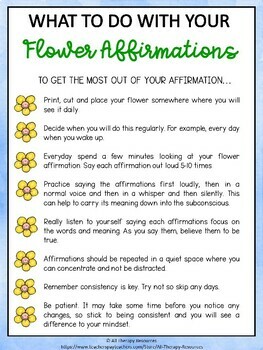
Credit: www.madebyteachers.com
How To Use Affirmations For Maximum Impact
To get real results, you need to use affirmations the right way. Here is a step-by-step approach:
1. Choose A Quiet Time
Select a time when you can focus, such as early morning or before bed. This helps you avoid distractions and makes your affirmations more effective.
2. Repeat Affirmations Daily
Consistency is essential. Repeat your chosen affirmations every day, ideally at the same time. This creates a habit and helps your brain accept the new beliefs.
3. Say Affirmations Out Loud
Speaking affirmations out loud makes them more real. If you feel shy, say them softly or in your mind, but using your voice adds power.
4. Use A Mirror
Looking at yourself in the mirror while saying affirmations increases their impact. This technique, known as mirror work, helps you connect with the words emotionally.
5. Visualize The Result
While repeating your affirmation, imagine how it feels to achieve your goal. Picture the details in your mind—what you see, hear, and feel. Visualization makes the affirmation more believable.
6. Feel The Emotion
Affirmations work best when you feel the emotion behind the words. Try to bring up feelings of confidence, gratitude, or calm as you speak.
7. Write Them Down
Writing affirmations in a journal every day helps reinforce them. Some people write each statement multiple times to deepen the effect.
8. Use Reminders
Place written affirmations where you will see them often—on your bathroom mirror, fridge, or phone background. Frequent reminders keep your goals at the front of your mind.
9. Combine With Action
Affirmations are not a substitute for action. Take steps toward your goal, even small ones. Affirmations prepare your mind, but action creates results.
Table: Daily Affirmation Practice Vs. Occasional Use
Here’s how daily practice compares to using affirmations only sometimes.
| Daily Practice | Occasional Use |
|---|---|
| Faster mindset change | Slow or no change |
| Greater confidence | Confidence remains the same |
| Habit forms easily | Hard to remember |
| Clear, measurable progress | Little or no progress |
Consistency is the difference between small results and real transformation.
How To Personalize Affirmations For Your Goals
Everyone’s goals are different. Personalizing affirmations makes them more meaningful and effective. Here’s how to match affirmations to your needs:
For Confidence
If you want to boost self-confidence, use statements like:
- “I am proud of my achievements.”
- “I trust my decisions.”
- “I speak clearly and confidently.”
For Stress Relief
To manage stress, try:
- “I am calm and in control.”
- “I handle challenges with ease.”
- “I breathe deeply and relax my body.”
For Health
If your goal is better health:
- “I choose nourishing foods for my body.”
- “I enjoy being active every day.”
- “I listen to my body’s needs.”
For Money And Success
For financial or career goals:
- “I create new opportunities for success.”
- “I attract abundance into my life.”
- “I manage my money wisely.”
For Relationships
To improve relationships:
- “I am a caring and supportive friend.”
- “I listen with empathy and understanding.”
- “I attract positive people into my life.”
Personalizing affirmations helps your mind connect with them. If you have a specific goal, write an affirmation that matches it. Don’t be afraid to adjust your statements as your goals change.

Credit: thehappyplanner.com
Two Insights Most People Miss About Affirmations
While many people know the basics, there are two important insights that beginners often miss:
1. Affirmations Shape Your Identity Over Time
Most people use affirmations to get quick results—like feeling confident for a presentation. However, the real power of affirmations is in shaping your identity. When you repeat positive statements day after day, you start to see yourself differently. Over weeks and months, this new identity affects your behavior, choices, and even your relationships.
The change is gradual, but it can be life-changing if you stick with it.
2. Resistance Is Part of the Process
It’s normal to feel uncomfortable or even doubtful when you start using affirmations. Your mind may argue back: “This isn’t true” or “I don’t deserve this.” Instead of seeing this as failure, recognize it as a sign that your beliefs are being challenged. The more you practice, the weaker the resistance becomes. Over time, your mind will start to accept new, positive beliefs.
How To Measure Progress With Affirmations
It can be hard to know if affirmations are working. Here are some ways to track your progress:
1. Notice Changes In Self-talk
Pay attention to your thoughts throughout the day. Are you kinder to yourself? Do you catch negative thoughts and replace them with positive ones? This is a good sign that affirmations are working.
2. Track Emotional Reactions
Do stressful events feel less overwhelming? Are you more hopeful about the future? Keep a journal to note your feelings and reactions. Small shifts are progress.
3. Observe Your Actions
Are you taking steps toward your goals more often? Affirmations help you act with more confidence and less fear. Celebrate every small win.
4. Ask For Feedback
Sometimes, others notice changes before you do. Ask trusted friends or family if they see any difference in your attitude or behavior.
Table: Signs Your Affirmations Are Working
Here are some indicators that your affirmations are making a difference.
| Before Using Affirmations | After Using Affirmations |
|---|---|
| Frequent negative self-talk | More supportive inner voice |
| Low motivation | Increased drive to take action |
| Difficulty handling stress | Calmer responses to challenges |
| Fear of trying new things | Willingness to try and learn |
| Little or no progress toward goals | Regular small achievements |
Remember, progress is not always fast or obvious. Keep practicing and reviewing your journey.
Advanced Tips For Getting More From Affirmations
Once you are comfortable with the basics, try these advanced strategies to boost your results.
1. Use Affirmations With Meditation
Combine affirmations with meditation for deeper impact. After a few minutes of deep breathing, repeat your affirmations slowly. Your mind is more open and relaxed during meditation, making the statements more powerful.
2. Record And Listen
Record yourself saying your affirmations and listen during your commute or before bed. Hearing your own voice can make the affirmations feel more real.
3. Pair With Physical Movement
Say your affirmations while walking, exercising, or doing yoga. Movement connects your mind and body, reinforcing the message.
4. Create Affirmation Art
Write or draw your affirmations in colorful, creative ways. Hang them where you will see them often. This visual reminder keeps your goals fresh in your mind.
5. Use Affirmation Apps
Many apps can help you schedule reminders, track progress, and suggest new affirmations. Technology can make your practice easier and more consistent.
Non-obvious tip: If you struggle to believe an affirmation, add the phrase “I am willing to…” or “I am learning to…” For example, “I am willing to believe in my abilities.” This feels more honest and can reduce resistance.
What To Do When Affirmations Don’t Seem To Work
Sometimes, despite your best efforts, affirmations feel ineffective. Here’s how to troubleshoot:
- Check your belief: If your affirmation feels impossible, adjust it to something you can accept.
- Look for negative self-talk: Are you repeating old doubts after your affirmations? Try to notice and gently correct these thoughts.
- Increase your emotion: Say your affirmations with more feeling. Imagine the outcome as real.
- Review your consistency: Are you practicing every day? If not, set reminders or add affirmations to your routine.
- Take small actions: Even tiny steps toward your goal can help make affirmations more believable.
If you feel stuck, consider talking to a coach or counselor. Sometimes, deeper issues like trauma or low self-worth need extra support. Affirmations are a helpful tool, but they work best as part of a larger self-care plan.
Real-life Examples Of Affirmations In Action
Hearing about others’ experiences can be motivating. Here are two real-life stories:
Maria’s Confidence Boost
Maria was always nervous before work presentations. She started using the affirmation, “I communicate my ideas with confidence. ” At first, it felt strange, but she repeated it every morning and night for a month. She also visualized herself speaking clearly and receiving positive feedback.
Over time, Maria noticed her anxiety lessening. She began speaking up more in meetings, and her manager praised her clear communication. Maria credits affirmations for helping her believe in herself.
Ahmed’s Health Journey
Ahmed wanted to lose weight but struggled with motivation. He created a set of affirmations: “I enjoy nourishing my body,” “I am committed to daily exercise,” and “I treat myself with kindness.” He wrote these on sticky notes and put them on his fridge and bathroom mirror. Whenever he felt discouraged, Ahmed read his affirmations out loud. After a few months, he noticed he was making healthier choices without thinking. The affirmations helped him stay focused and positive, even when progress was slow.
Frequently Asked Questions
What Are The Best Times To Use Affirmations?
Morning And Evening Are Ideal Times For Affirmations. Your Mind Is More Open And Relaxed Right After Waking Up Or Before Sleep. These Moments Help Your Brain Absorb Positive Statements More Easily. However, You Can Use Affirmations Any Time You Need Encouragement Or A Mental Boost.
Can Affirmations Help With Anxiety Or Stress?
Yes, Affirmations Can Help Reduce Anxiety And Stress. Repeating Calming Statements, Like “i Am Safe And In Control,” Can Interrupt Anxious Thoughts. When Used Regularly, Affirmations Help Create A Sense Of Calm And Build Resilience During Tough Times.
How Long Does It Take To See Results From Affirmations?
Results Can Vary. Some People Notice Changes In A Few Days, While Others Need Weeks Or Months. The Key Is Consistency And Belief. If You Practice Daily And Truly Feel Your Affirmations, You Are More Likely To Notice Changes In Your Thoughts, Feelings, And Actions.
Do Affirmations Work For Everyone?
Affirmations Can Help Most People, But They Are Not A Cure-all. If You Have Deep-seated Negative Beliefs Or Mental Health Challenges, Affirmations Alone May Not Be Enough. Combining Affirmations With Other Tools—like Therapy, Journaling, Or Meditation—can Give Better Results. For A Scientific Overview, See wikipedia: Self-affirmation.
Should I Use The Same Affirmation Every Day Or Change Them Often?
Both Approaches Can Work. Using The Same Affirmation Every Day Helps Reinforce A Specific Belief. Changing Your Affirmations Can Keep Things Fresh And Address New Goals. Listen To Your Feelings—if One Affirmation Becomes Boring Or Feels Unhelpful, Update It. The Most Important Thing Is That Your Affirmations Feel Meaningful And Relevant To You.
Affirmations are a simple yet powerful way to change your mindset and create positive habits. By understanding the science, avoiding common mistakes, and practicing daily with belief and emotion, you can unlock their full potential. With patience and consistency, affirmations can help you build confidence, reduce stress, and achieve your goals—one positive statement at a time.
