

How to Affirmations Work: Unlocking the Science Behind Success
How Do Affirmations Work: A Complete Guide
Many people talk about affirmations, but not everyone understands how they really work. You might have heard about repeating positive sentences to yourself, but what is happening in your mind and body when you do this? Are affirmations just wishful thinking, or do they have real effects?
This guide explores the science, psychology, and practical use of affirmations—explained in simple words for everyone to understand.
Affirmations are more than just saying nice things. Used correctly, they can change your thoughts, feelings, and even your actions. But not all affirmations work for everyone, and the way you use them matters a lot. If you have ever felt confused by conflicting advice, or wondered why affirmations sometimes fail, you are not alone.
This article will uncover how affirmations work, what mistakes to avoid, and how to make them a powerful tool in your life.
What Are Affirmations?
Affirmations are positive statements you say to yourself, often to challenge or replace negative thoughts. They are usually written in the present tense, like “I am confident,” “I deserve success,” or “I am healthy and strong.” The goal is to make these positive ideas feel true, even if they do not feel true right now.
People use affirmations for many reasons:
- To build self-confidence
- To reduce stress and anxiety
- To help reach goals
- To change negative thinking patterns
Affirmations can be spoken out loud, written down, or repeated silently in your mind. Some people use them during meditation, while others say them in front of a mirror. The important part is the regular practice and the belief behind the words.
The Science Behind Affirmations
Many wonder if affirmations actually work or if they are just wishful thinking. Science gives us some answers. Affirmations are rooted in psychology and brain science.
Self-affirmation Theory
Self-affirmation theory explains that people want to see themselves as good, capable, and moral. When something threatens our self-image (like failure or criticism), affirmations help protect our sense of self-worth. By reminding ourselves of our strengths, we feel less stressed and more able to handle challenges.
Brain Plasticity
The brain can change and adapt. This is called neuroplasticity. When you repeat affirmations, you create new pathways in your brain. Over time, these new pathways can become stronger, making positive thoughts more natural.
Research And Evidence
Studies show that affirmations:
- Reduce stress in high-pressure situations
- Improve problem-solving
- Lower self-doubt
For example, a study published in “Social Cognitive and Affective Neuroscience” found that people who used self-affirmations showed more activity in the brain regions linked to self-processing and reward. This suggests affirmations can actually change how the brain reacts to information.
However, not all research is positive. Some studies found that affirmations can make people with low self-esteem feel worse if the statements feel too unrealistic. This shows that how you use affirmations is very important.
Why Do Affirmations Work?
Affirmations are not magic. They work through a mix of psychology, brain science, and personal action.
Shifting Focus
Your mind is always noticing things. If you focus on problems, you see more problems. If you focus on strengths, you notice more good things. Affirmations help shift your focus from negative to positive.
Changing Self-talk
Everyone has an “inner voice.” Sometimes, this voice is critical or negative. Affirmations help you replace negative self-talk with positive messages. Over time, your inner voice becomes kinder and more supportive.
Creating New Habits
Repeating affirmations every day builds a new mental habit. Like brushing your teeth, it becomes part of your routine. The more you repeat, the stronger the habit.
Boosting Motivation
When you tell yourself you can do something, you are more likely to try. Affirmations can boost your motivation and help you take action. For example, telling yourself, “I am a good learner,” may encourage you to study more.
How Affirmations Affect The Subconscious Mind
Affirmations do more than just change surface thoughts. They can reach deep into your subconscious mind.
What Is The Subconscious Mind?
Your subconscious mind controls many thoughts and behaviors you are not aware of. It holds beliefs, memories, and habits. If these beliefs are negative, they can block your progress.
Planting New Beliefs
Affirmations work by planting new beliefs. When you repeat a positive statement, your subconscious begins to accept it as true. This does not happen overnight. It needs regular practice.
Overcoming Inner Resistance
At first, your mind might fight against new affirmations. For example, if you say “I am confident,” but you have always felt shy, your subconscious might argue back. Over time, repetition can soften this resistance.
Non-obvious Insight: Imagination Helps
Simply repeating words is not enough. If you imagine the feeling of your affirmation as you say it, it becomes more powerful. For example, feel what confidence would be like in your body as you affirm, “I am confident.” This helps your subconscious accept the new idea faster.
The Importance Of Emotion In Affirmations
Affirmations are not just about words. The emotion behind the words matters even more.
Why Emotion Matters
Your brain responds strongly to feelings. If you say an affirmation with no emotion, it is less effective. When you add feeling—like hope, excitement, or gratitude—the brain pays more attention.
How To Add Emotion
- Speak your affirmation with energy.
- Smile as you say it.
- Imagine a time when the affirmation felt true.
- Feel the emotion in your body.
Non-obvious Insight: Physical State Affects Results
Standing tall or using a “power pose” while saying affirmations increases their impact. Your body sends signals to your brain, making the affirmation feel more real. This is why many coaches recommend saying affirmations while looking in the mirror or after stretching.
Different Types Of Affirmations
Affirmations are not one-size-fits-all. There are different types, each with a different purpose.
Self-esteem Affirmations
These focus on building self-worth. Examples:
- “I am enough.”
- “I value myself.”
Goal-oriented Affirmations
Used to focus on achieving a goal. Examples:
- “I am becoming more skilled every day.”
- “I reach my goals with confidence.”
Health And Wellness Affirmations
Support physical and mental well-being. Examples:
- “I choose healthy foods.”
- “My body is strong and energetic.”
Relationship Affirmations
Improve relationships with others. Examples:
- “I attract positive people into my life.”
- “I communicate with kindness.”
Abundance And Success Affirmations
Increase your sense of wealth and achievement. Examples:
- “I welcome abundance in all forms.”
- “Success comes naturally to me.”
How To Write Effective Affirmations
Not all affirmations are created equal. Some are too vague or unrealistic. Here’s how to write affirmations that actually work.
1. Use Present Tense
Write as if the affirmation is already true. For example, “I am calm” instead of “I will be calm. ”
2. Keep It Positive
Focus on what you want, not what you do not want. Say, “I am healthy,” not “I am not sick. ”
3. Make It Personal
Use “I” or “my” so the affirmation is about you.
4. Be Specific
The more specific, the better. Instead of “I am successful,” try “I complete my work with confidence. ”
5. Keep It Short And Simple
Long or complicated sentences are hard to remember. Simple affirmations are easy to repeat and believe.
6. Choose Realistic Statements
Pick affirmations that you can believe, even if they are a stretch. If “I am rich” feels wrong, try “I am open to new opportunities. ”
Example Table: Weak Vs. Strong Affirmations
Here’s how to improve common affirmations:
| Weak Affirmation | Strong Affirmation |
|---|---|
| I want to be happy. | I choose happiness every day. |
| I am not stressed. | I am calm and relaxed. |
| I hope to succeed. | I am succeeding step by step. |
Best Practices For Using Affirmations
To get real results, follow these best practices.
Repeat Daily
Consistency is key. Say your affirmations every day, ideally in the morning and before bed.
Use The Mirror
Saying affirmations while looking in a mirror increases their power. You see yourself as you speak, making the message more believable.
Write Them Down
Writing helps you focus. You can keep a journal or write affirmations on sticky notes around your home.
Pair With Action
Affirmations are not magic. Combine them with action. For example, if your affirmation is about health, also make healthy choices.
Speak With Feeling
As discussed earlier, add emotion and energy to your affirmations.
Review And Update
Change your affirmations as you grow. Outdated affirmations lose their power.
Use Visual Reminders
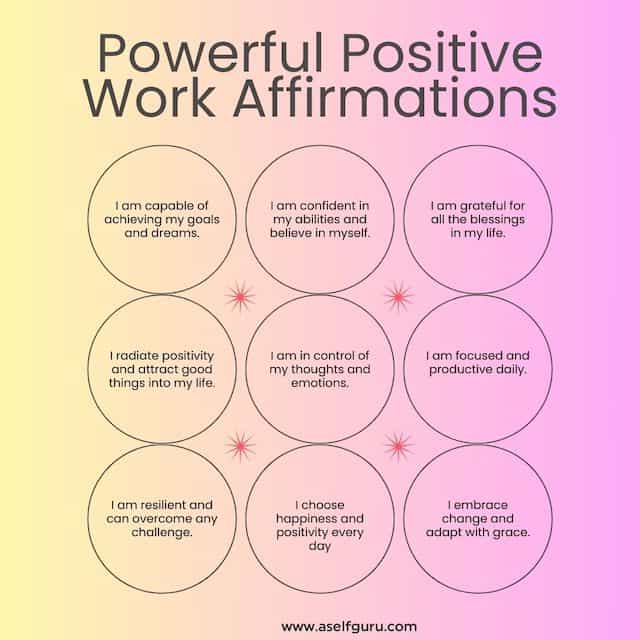
Place reminders where you will see them—like your phone background or bathroom mirror.
Credit: aselfguru.com
Common Mistakes With Affirmations
Even with the best intentions, people often make mistakes that reduce the power of affirmations.
1. Choosing Unrealistic Statements
If the affirmation feels impossible, your mind will reject it. Start with statements you can believe.
2. Inconsistent Practice
Saying affirmations once or twice is not enough. Like exercise, results come from regular practice.
3. Lack Of Emotion
Repeating words with no feeling will not create change. Add energy and belief.
4. Ignoring Negative Thoughts
Affirmations are not about ignoring problems. If you have strong negative beliefs, address them too. Sometimes, it helps to use “bridge affirmations” like “I am learning to feel confident. ”
5. Expecting Quick Results
Change takes time. Do not give up if you do not see results right away.
When Affirmations May Not Work
Affirmations do not work for everyone in every situation. Here are some reasons why:
Deep-rooted Beliefs
If you have strong negative beliefs, affirmations alone may not be enough. You might need therapy, coaching, or deeper self-exploration.
Lack Of Commitment
If you do not practice regularly, affirmations are unlikely to make a difference.
Too Much Focus On Words
Affirmations work best when paired with action. Words alone are not enough.
Example Table: Affirmations Vs. Action
See how affirmations and action work together:
| Affirmation Only | Affirmation + Action |
|---|---|
| I am healthy. | I am healthy and I exercise daily. |
| I am confident. | I am confident and I speak up in meetings. |
| I am successful. | I am successful and I finish my daily tasks. |
How To Make Affirmations A Daily Habit
Affirmations are most powerful when they become a habit. Here’s how to build this routine into your life.
Set A Reminder
Use your phone or calendar to remind you to say your affirmations.
Link To An Existing Habit
Say your affirmations while doing something you already do, like brushing your teeth or making coffee.
Track Your Progress
Keep a journal of your affirmations and how you feel over time. This helps you see changes and stay motivated.
Get Support
Share your affirmations with a friend or join a group. Support can increase your commitment.
Be Patient
Remember that change takes time. Celebrate small wins along the way.
Affirmations And Visualization
Combining affirmations with visualization is a powerful technique.
How To Visualize
As you say your affirmation, picture the result in your mind. For example, if your affirmation is “I am calm during meetings,” imagine yourself sitting calmly in a meeting, speaking clearly.
Why This Works
The brain often cannot tell the difference between real and imagined events. Visualization makes the affirmation feel more real and possible.
Using Multi-sensory Visualization
Do not just “see” the outcome—try to feel, hear, and even smell the situation. The more senses you use, the more your mind believes the affirmation.
Real-world Examples Of Affirmations In Action
Many successful people use affirmations. Here are a few examples:
Athletes
Top athletes use affirmations to build confidence before games. For example, a runner might say, “I am fast and strong,” before a race.
Business Leaders
Some business leaders use affirmations to stay focused. For example, “I am a clear and confident decision-maker. ”
Students
Students use affirmations to reduce test anxiety: “I am prepared and I remember what I study.”
Everyday People
Anyone can benefit. For example, “I am a loving parent,” or “I am open to new friendships. ”
The Limits Of Affirmations
Affirmations are a tool, not a cure-all. They work best when combined with:
- Action and effort
- Self-reflection
- Addressing deeper emotional issues
They are not a replacement for medical or psychological help if you need it.
Comparing Affirmations To Other Self-help Tools
Affirmations are popular, but how do they compare to other tools like visualization, journaling, or meditation?
| Tool | Main Focus | Best For |
|---|---|---|
| Affirmations | Positive self-talk | Changing beliefs, self-image |
| Visualization | Imagining success | Boosting motivation, goal-setting |
| Journaling | Self-reflection | Understanding thoughts, tracking progress |
| Meditation | Calm and focus | Reducing stress, mindfulness |
Many people combine these tools for the best results.
Practical Steps To Start Using Affirmations
Ready to try affirmations? Here’s a step-by-step guide.
1. Decide What You Want To Change
Pick an area of your life you want to improve—confidence, health, relationships, or something else.
2. Write 2-3 Affirmations
Make them positive, present-tense, personal, and specific.
3. Say Them Out Loud
Stand in front of a mirror and speak your affirmations with emotion.
4. Repeat Daily
Morning and night are best. Consistency is more important than saying many affirmations at once.
5. Pair With Visualization
Imagine the result as you say each affirmation.
6. Take Action
Do something each day that supports your affirmation.
7. Track Your Feelings
Notice any changes in your thoughts, feelings, or actions.
Who Should Use Affirmations?
Affirmations can help almost anyone, but they are especially useful if you:
- Struggle with negative self-talk
- Want to build confidence
- Are working toward a goal
- Need to manage stress or anxiety
However, if you are dealing with serious mental health problems, affirmations should not replace professional help.
Advanced Tips For Affirmation Success
If you have used affirmations before and want to go deeper, try these strategies:
Use “why” Affirmations
Instead of “I am confident,” try “Why am I so confident? ” This question makes your mind look for reasons, which can deepen belief.
Record And Listen
Record your affirmations in your own voice and listen to them during the day.
Affirmations With Movement
Say affirmations while walking, jogging, or stretching. Movement can help the message sink in.
Group Affirmations
Practice affirmations in a group. The shared energy can increase belief and motivation.
The Role Of Language And Culture
Affirmations are used around the world, but language and culture shape how they work. Some cultures value direct statements, while others prefer softer, more gentle words.
If an affirmation feels strange in your language, change it so it feels natural. The most important part is that you believe the message.
Combining Affirmations With Mindfulness
Mindfulness means being present and aware. When you combine affirmations with mindfulness, you notice how each affirmation feels in your body and mind. If an affirmation feels wrong, you can adjust it.
Mindful affirmations help you stay honest with yourself and make real changes.
Credit: ryanzofay.com
Resources For Learning More
If you want to explore further, many books, websites, and coaches offer guidance on affirmations. A helpful place to start is the Wikipedia page on affirmations.
Frequently Asked Questions
What If I Do Not Believe My Affirmation?
It is normal to feel doubt at first. Start with affirmations that feel possible, even if they are a small stretch. Over time, as you build confidence, you can use stronger affirmations.
How Long Does It Take For Affirmations To Work?
There is no fixed time. For some, changes happen in a few weeks; for others, it takes months. Consistency is more important than speed. Track your feelings and actions, not just outcomes.
Can Affirmations Replace Therapy Or Medication?
No, affirmations are a self-help tool. They can support your well-being, but they are not a replacement for professional help if you have serious mental health issues.
Is It Better To Say Affirmations Out Loud Or Silently?
Both can work, but saying them out loud with emotion is usually more powerful. Hearing your own voice helps your mind believe the message.
How Many Affirmations Should I Use At Once?
Start with 2-3 affirmations that matter most to you. Too many can be overwhelming. Focus on quality and belief, not quantity.
Affirmations are a simple tool, but they can create real change when used correctly. With patience, emotion, and regular practice, you can reshape your thoughts and open new possibilities in your life.
Credit: www.boldtuesday.com
