

How to Affirmations Self Love: Transform Your Mindset Today
Self-love is not just a trendy phrase. It’s a foundation for healthy relationships, emotional balance, and personal success. If you struggle with confidence or self-worth, you’re not alone. Many people, especially those learning English or living in new cultures, find it hard to accept themselves fully. But there is a simple tool that can help: affirmations.
Affirmations are positive statements you say to yourself. They may sound simple, but when used correctly, they can reshape how you think and feel. Imagine repeating a phrase like “I am worthy” every day. Over time, your mind starts to believe it.
This article explains exactly how affirmations work for self-love, how you can use them, and what mistakes to avoid. You’ll learn practical steps, see real examples, and understand why affirmations are more than just words.
Understanding Self-love
Self-love is the act of valuing yourself. It means accepting your strengths and weaknesses, treating yourself kindly, and believing you deserve happiness. Self-love is not selfishness. It is about respect for yourself, which helps you respect others.
Many people confuse self-love with ego or arrogance. But true self-love is quiet and gentle. It creates inner peace and helps you handle stress better. Studies show that people who practice self-love are more resilient and happier.
Self-love is not about thinking you are better than others. It’s about understanding that you have worth just as you are, even if you have flaws. When you treat yourself with the same care that you give to your friends or family, you build a more positive relationship with yourself.
This self-respect also makes it easier to set healthy boundaries and say “no” when needed.
Why Is Self-love Important?
- Better mental health: People who love themselves have lower rates of anxiety and depression.
- Stronger relationships: When you value yourself, you attract healthier friendships and partnerships.
- Greater confidence: Self-love helps you face challenges without fear.
- More motivation: Believing in yourself makes it easier to work towards goals.
Self-love is also important because it helps you recover from setbacks. If you make a mistake, you can forgive yourself and try again, instead of feeling ashamed. This mindset is a key part of growing as a person. When you practice self-love, you are more likely to treat others with kindness and patience as well.
Sometimes, people who lack self-love become people-pleasers, always trying to make others happy while ignoring their own needs. Learning self-love means you can find a balance between helping others and taking care of yourself. This balance leads to a happier and more fulfilling life.
What Are Affirmations?
Affirmations are short, positive phrases you repeat to yourself. They are like gentle reminders. For example, “I am strong” or “I am enough. ” You can say them out loud, write them, or even think them quietly.
Affirmations are not about ignoring problems or pretending everything is perfect. Instead, they help you focus on your strengths and build a healthier self-image. By choosing your own words, you can address your personal struggles and encourage positive change.
How Affirmations Work
Your brain reacts to repeated messages. If you always hear negative talk (like “I’m not good enough”), you start to believe it. Affirmations replace these messages with positive ones. Over time, your brain accepts them as truth.
This process is called neuroplasticity. It means your brain can change and grow. Affirmations help build new patterns, making self-love easier.
Think of your mind as a garden. If you plant positive thoughts and care for them, they grow stronger. Negative thoughts are like weeds; if you stop feeding them, they fade away. Affirmations help you plant better seeds in your mind.
You can use affirmations for many purposes, not just self-love. Some people use them to overcome fears, improve work performance, or handle stress. The key is to choose words that matter to you.
Examples Of Common Affirmations
- I am worthy of love and respect.
- I accept myself as I am.
- I am proud of who I am becoming.
- My mistakes do not define me.
- I deserve happiness.
You can change these examples to fit your life. For example, “I am proud of learning English” or “I am enough, even if I make mistakes. ” The more specific your affirmation, the more powerful it becomes.
The Science Behind Affirmations
Many people wonder if affirmations really work. Research shows that positive self-talk can change your mood, reduce stress, and improve performance.
A study published in the journal “Social Cognitive and Affective Neuroscience” found that affirmations activate areas of the brain related to reward and positive feelings. Another research by psychologists at Carnegie Mellon University showed that self-affirmations can reduce stress and boost problem-solving skills.
Affirmations also help you focus on what you can do, instead of what you cannot. When you repeat positive phrases, your brain releases chemicals that make you feel more relaxed and focused. This helps you handle daily problems with a clear mind.
Here is a comparison of how affirmations affect mental health and motivation:
| Benefit | With Affirmations | Without Affirmations |
|---|---|---|
| Stress Levels | Lower | Higher |
| Self-Esteem | Improved | Unchanged or Lower |
| Motivation | Increased | Decreased |
| Resilience | Stronger | Weaker |
It’s important to note that affirmations are most effective when combined with action. For example, saying “I am a good speaker” is helpful, but practicing speaking will make the affirmation even more true. The brain responds best when you match your words with your actions.
How To Create Effective Self-love Affirmations
Not all affirmations work the same. The best affirmations are personal, believable, and positive. Here’s how you can make your own:
- Start with “I am” or “I deserve.” This makes the statement about you.
- Keep it short and clear. Simple words are easier to remember.
- Focus on positives. Say what you want to feel, not what you want to avoid.
- Make it believable. If you don’t believe the affirmation, it won’t work.
- Be specific. “I am confident speaking English” is better than “I am confident.”
A common mistake is choosing affirmations that feel too big or unrealistic. For example, if you feel very shy, saying “I am the most confident person in the world” may not feel true to you. It’s better to start small: “I am learning to be more confident.” As you grow, you can adjust your affirmations to match your progress.
Another tip is to include action words. For example, “I am taking steps to care for myself” feels more active than simply “I care for myself. ” Active affirmations can motivate you to make positive changes in your life.
Examples Of Personalized Self-love Affirmations
- I am learning and growing every day.
- I forgive myself for past mistakes.
- I am comfortable in my own skin.
- I trust myself to make good decisions.
- I am worthy of friendship and love.
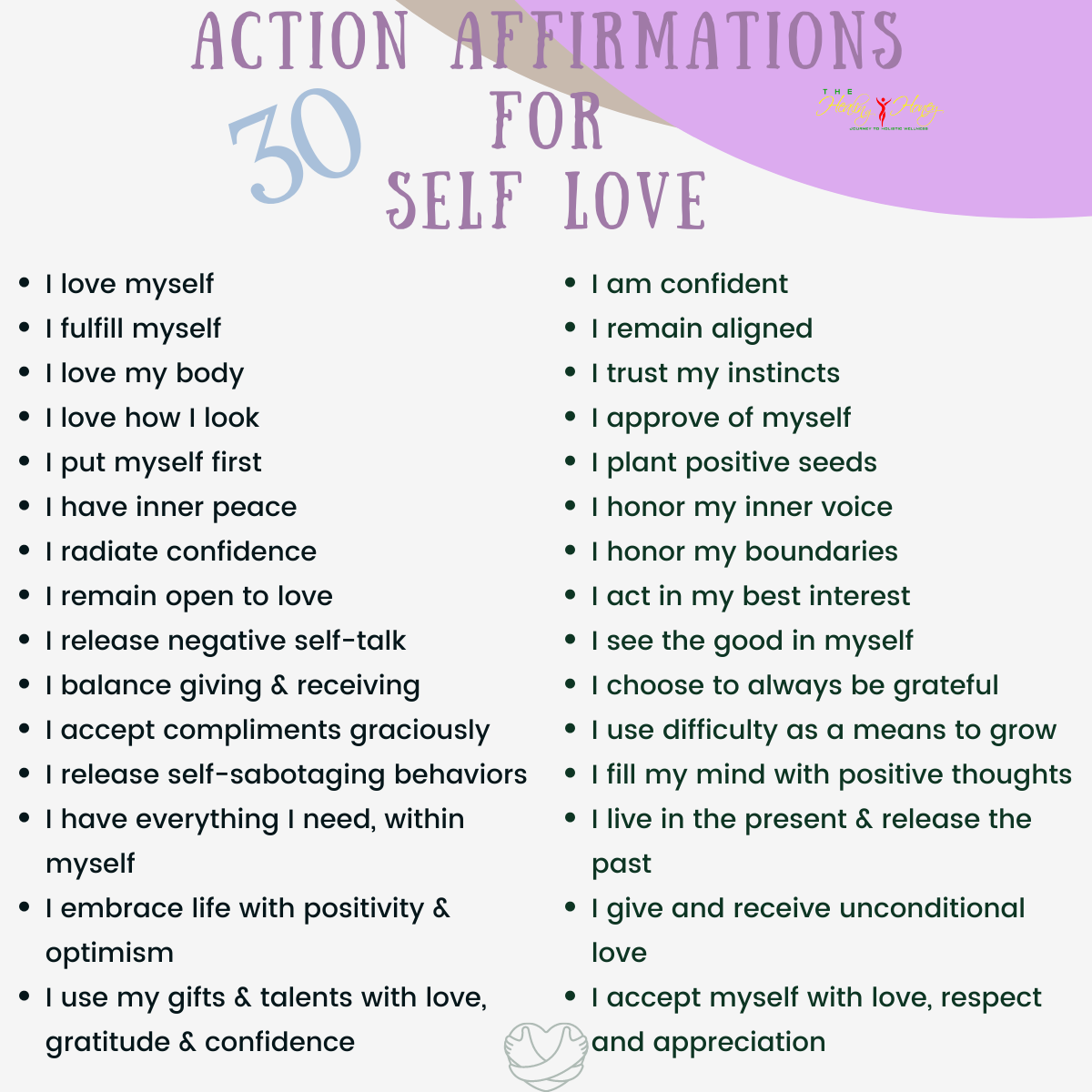
You can also focus on specific situations. If you feel nervous before a meeting, try “I am prepared and calm. ” If you struggle with body image, use “I appreciate my body for all it does for me. ” Make your affirmations a reflection of your true needs.
Credit: www.thehealinghoney.com
How To Use Affirmations Daily
Using affirmations is simple, but consistency matters. Here’s a step-by-step guide to make affirmations a habit:
- Choose your affirmations. Pick 3-5 that feel right for you.
- Say them aloud. Speak your affirmations every morning and night.
- Write them down. Keep a notebook or sticky notes.
- Repeat regularly. Try repeating each affirmation 5-10 times.
- Visualize the meaning. Imagine yourself feeling the affirmation.
- Stay patient. It may take weeks to see changes.
Some people like to use their phone alarms or calendar reminders to practice affirmations. Others include them in daily routines, like brushing teeth or making coffee. If you enjoy music, you can even turn your affirmations into a song or chant.
Try adding emotion when you speak your affirmations. Smile, stand tall, or place a hand on your heart. The more you feel the words, the stronger the impact.
Sample Daily Affirmation Routine
- Wake up: Say “I am worthy of love.”
- Before work: Repeat “I am confident in my abilities.”
- At bedtime: Whisper “I am grateful for who I am.”
If you have a busy schedule, even a minute of affirmations can help. The key is to make it a regular part of your day, so your mind starts to expect and accept the positive words.
Common Mistakes With Affirmations
Beginners often make mistakes that stop affirmations from working. Here are some pitfalls and how to avoid them:
Mistake 1: Saying Affirmations Without Believing
If you repeat “I am happy” but feel sad inside, your brain may reject it. Try softer statements first, like “I am learning to be happy. ”
It’s normal to feel uncomfortable at first. If your affirmation feels fake, change it to something more believable. For example, “I am open to feeling happier” is a gentle way to start.
Mistake 2: Using Negative Words
Avoid affirmations like “I am not scared.” Focus on the positive: “I am brave.”
Your brain pays more attention to the main idea, so even if you say “not scared,” it may focus on “scared. ” Always use positive language to direct your thoughts where you want them to go.
Mistake 3: Being Inconsistent
Affirmations need repetition. If you forget for days, progress slows. Set reminders to stay on track.
Try attaching your affirmation practice to a daily habit. For example, say your affirmations every time you wash your hands or before eating lunch.
Mistake 4: Copying Generic Phrases
Personalized affirmations work better than generic ones. Adjust phrases to match your real needs.
Think about your unique experiences and struggles. If you are learning a new skill, say, “I am proud of my effort to learn. ” The more personal the affirmation, the deeper its impact.
Mistake 5: Ignoring Feelings
Affirmations should connect with emotion. If you feel nothing, try different words.
Sometimes, changing just one word can make an affirmation feel more real. Experiment until you find phrases that spark a feeling inside you, even if it’s a small one.
How Affirmations Build Self-love
Affirmations change how you see yourself. Over time, they help you:
- Replace negative thoughts with positive ones.
- Build self-trust by repeating kind words.
- Reduce self-criticism by focusing on strengths.
- Increase self-compassion by accepting mistakes.
- Create new habits for mental health.
When you use affirmations, you start to notice new qualities in yourself. You may become less harsh when you make mistakes and more willing to try new things. Over time, you develop inner support, which can be more powerful than praise from others.
Real-life Example
Maria moved to a new country and felt lost. She started saying “I am brave” and “I am worthy of friendship” every morning. After a few weeks, Maria felt more confident making friends and speaking English. Her affirmations gave her courage.
Maria’s story is common for many people starting something new or facing a big life change. Affirmations remind you that you have the strength to handle new experiences. They help replace fear with hope and give you the energy to take small steps forward.
Choosing The Right Affirmations For You
Everyone’s journey is different. The best affirmations are the ones that fit your life. Here’s how to choose wisely:
- Identify your struggles. Are you shy, insecure, or worried?
- Pick affirmations that address your needs.
- Test different phrases. Notice which ones feel powerful.
- Adjust as you grow. Change affirmations as your confidence grows.
You can also rate your affirmations on a scale from 1 to 10. If an affirmation feels like a 3, try changing it until it feels stronger. Over time, what feels powerful will change, so update your affirmations to match your progress.
Example Table: Affirmations By Challenge
| Challenge | Sample Affirmation |
|---|---|
| Low Self-Esteem | I am valuable and unique. |
| Fear of Failure | I learn from every experience. |
| Body Image Issues | I appreciate my body. |
| Language Insecurity | I am confident speaking English. |
| Loneliness | I am worthy of connection. |

Credit: www.selfloverainbow.com
Advanced Tips For Affirmation Practice
Once you master the basics, you can make affirmations even more powerful. Here are some advanced strategies:
1. Pair Affirmations With Meditation
Sit quietly and repeat affirmations in your mind. Meditation helps you connect deeply with the words.
Try closing your eyes, breathing slowly, and focusing on each word as you say it. This calms your mind and helps you absorb the meaning.
2. Use Visual Aids
Write your affirmations on cards or posters. Place them where you can see them—on your mirror, desk, or phone screen.
Bright colors and creative designs can make your affirmations more attractive and memorable. Some people use vision boards, adding pictures and words that inspire them.
3. Combine With Journaling
After repeating affirmations, write about your feelings. This helps you notice progress and understand emotions better.
You can also write about your successes, no matter how small. Reading your journal later will remind you how far you’ve come.
4. Record Yourself
Make a voice recording of your affirmations. Listen to them during the day for an extra boost.
Hearing your own voice saying positive words can be powerful, especially when you feel stressed or tired.
5. Share With Others
Talk about your affirmations with friends or support groups. Sharing makes them stronger.
If you feel nervous, start by writing them in an online forum or sharing with a trusted friend. You might inspire others to try affirmations too.
How Affirmations Change Behavior
Affirmations don’t just change feelings. They also change actions. When you repeat “I am capable,” you start to act more confidently.
Studies show that people who use affirmations are more likely to set goals, take risks, and solve problems. Affirmations help you:
- Step out of your comfort zone
- Try new things
- Handle criticism with grace
- Make decisions calmly
Over time, you may notice you’re less afraid to speak up, ask questions, or try something new. Affirmations give you a mental “green light” to move forward, even when you feel nervous.
Example Table: Behavior Changes From Affirmations
| Before Affirmations | After Affirmations |
|---|---|
| Fearful of speaking in public | Willing to share ideas |
| Often doubt abilities | Confident in skills |
| Avoids new situations | Explores opportunities |
| Easily discouraged | Stays motivated |
Affirmations For Different Life Areas
Self-love affects all parts of life. Here are specific affirmations for different areas:
Career
- I am skilled and valuable at work.
- I handle challenges with confidence.
- I am open to learning new things.
You can add more detail to match your job. For example, “I am improving my communication with my team” or “I am learning new skills every month. ”
Relationships
- I deserve healthy relationships.
- I am a good friend.
- I am open to love and connection.
Try using affirmations before meeting someone new or having a difficult conversation: “I am calm and honest in my relationships.”
Health
- I respect my body and mind.
- I make healthy choices.
- I am strong and resilient.
If you are trying to build a new habit, say, “I enjoy moving my body every day” or “I choose foods that nourish me. ”
Personal Growth
- I am always improving.
- I welcome change.
- I am proud of my progress.
Personal growth affirmations help you accept yourself during times of change. For example, “I am patient with myself as I learn new things. ”
Non-obvious Insights For Beginners
Many new users miss these points:
- Affirmations are not magic. They are tools. Results need patience and effort.
- You must feel the words. Saying affirmations without emotion will not work. Connect deeply.
- Negative feelings may come up. It’s normal to feel resistance. This is a sign you need the affirmation most.
- Small changes matter. Notice tiny improvements. Celebrate small wins.
Another insight is that you can change your affirmations as your life changes. What works now may not work in the future. Be flexible and allow your affirmations to grow with you.
Some beginners also miss the benefit of combining affirmations with other self-care habits. For example, taking a deep breath or stretching while saying your affirmation can make it even more effective.
Measuring Progress With Affirmations
How do you know affirmations are working? Here’s how to track progress:
- Keep a journal. Write about your thoughts and feelings before and after starting affirmations.
- Notice changes in mood. Are you feeling happier, calmer, or more confident?
- Ask friends or family. Sometimes others see changes before you do.
- Watch your actions. Are you trying new things, speaking up, or taking care of yourself?
You might not see big changes right away. Pay attention to small differences. For example, you may notice you are less harsh with yourself after making a mistake. Or you might feel a little more comfortable in social situations. These small wins show that your affirmations are working.
If you want, you can give yourself a “progress score” each week. Rate your self-love or confidence from 1 to 10, and watch how it changes over time.
Self-love Affirmations For Non-native English Speakers
If English is not your first language, affirmations can be extra helpful. You may face self-doubt, language barriers, and cultural challenges. Here are tailored affirmations:
- I am proud of learning a new language.
- I am patient with myself as I improve.
- My mistakes are part of my growth.
- I am brave for trying new things.
- I connect with people even if my English is not perfect.
You can also translate affirmations into your native language for deeper meaning. Some people write them in both languages and notice which words feel most powerful.
Practical Example
Ajay moved to a city where English was spoken everywhere. He felt shy and made mistakes. He started using affirmations like “I am learning every day” and “I am confident speaking English. ” Over time, Ajay felt less nervous and began talking with new friends.
Ajay’s progress was not instant. He still made mistakes, but he stopped judging himself harshly. Instead, he saw mistakes as steps toward improvement. This new attitude made learning and living in a new culture much easier.

Credit: www.amazon.com
Affirmations For Children And Teens
Self-love starts early. Children and teens need affirmations too. Parents and teachers can help by encouraging positive self-talk.
- I am smart and creative.
- I am a good friend.
- I am proud of myself.
- I can learn new things.
- I am loved and accepted.
Affirmations can also help children deal with bullying, school stress, or changes at home. They give young people the words to support themselves, building strength for life.
Tips For Parents
- Model affirmations: Say positive statements about yourself.
- Make it fun: Use songs or games.
- Praise effort: Focus on trying, not just results.
You can also create affirmation cards together or put sticky notes in their lunchboxes. When children hear kind words regularly, they learn to speak kindly to themselves.
Combining Affirmations With Other Self-love Practices
Affirmations work best with other self-care activities. Here are some ways to boost self-love:
- Practice gratitude: Write down things you are thankful for.
- Exercise regularly: Movement boosts mood.
- Eat healthy: Good food helps you feel strong.
- Get enough sleep: Rest is vital for mental health.
- Spend time with positive people: Support matters.
You can also try deep breathing, creative hobbies, or spending time in nature. Affirmations become even more effective when you combine them with physical and emotional self-care.
Myths And Misunderstandings About Affirmations
Some people think affirmations are silly or useless. Here are common myths:
- Myth: Affirmations are only for weak people.
- Truth: Strong people use affirmations to stay strong.
- Myth: You must be positive all the time.
- Truth: It’s okay to feel sad or angry. Affirmations help balance emotions.
- Myth: Affirmations work instantly.
- Truth: Real change takes time.
Another myth is that affirmations mean ignoring problems. In fact, affirmations help you face problems with more confidence. They give you the mindset to solve challenges rather than run away from them.
When Affirmations Are Not Enough
Sometimes, affirmations alone cannot fix deep problems. If you feel very sad, anxious, or have trouble coping, it’s wise to seek help from a counselor or therapist. Affirmations are a tool, not a cure.
If you want more scientific information about affirmations, you can visit this Wikipedia page.
Frequently Asked Questions
What Are The Best Affirmations For Self-love?
The best affirmations are those that feel real and personal to you. Examples include I am worthy of love, I accept myself, and I am proud of who I am. Choose phrases that match your needs.
How Long Does It Take For Affirmations To Work?
Results vary. Some people notice changes in a few weeks, others may need months. The key is consistency—repeat your affirmations daily, and be patient with yourself.
Can I Use Affirmations In My Native Language?
Yes, affirmations work in any language. The important part is that you believe the words and connect with their meaning. If English feels difficult, use your native language or mix both.
Do Affirmations Help With Anxiety Or Depression?
Affirmations can reduce anxiety and improve mood, but they may not solve serious depression. If you have strong symptoms, affirmations can be part of your healing, but professional help is often needed.
What If I Don’t Believe My Affirmations?
Start with softer statements like I am learning to love myself or I am open to change. Over time, your mind will accept stronger affirmations. It’s normal to feel resistance at first.
Self-love is a journey, not a destination. Affirmations are a powerful tool along the way. By choosing kind words, repeating them daily, and believing in your own value, you build a stronger, happier self. Remember, every person deserves love—including you.
