

How Often Should You Say Affirmations for Lasting Results?
How Often Should You Say Affirmations
Affirmations are simple phrases you repeat to yourself to shape your thoughts and beliefs. Many people use affirmations to feel more confident, less anxious, and more positive about life. But if you have tried affirmations before, you may wonder: How often should you say affirmations for them to work? Is more always better, or is there a sweet spot?
This question is more than just about numbers. The way you use affirmations can change how you feel each day. Too few, and you may not see results. Too many, and you might feel overwhelmed or even lose belief in the words.
The answer depends on your goals, your routine, and what works best for your mind. This article explores the science behind affirmations, how frequency matters, and gives you clear advice to find your ideal routine. You will also learn the common mistakes, see real examples, and discover how to fit affirmations naturally into your life.
What Are Affirmations And Why Do They Matter?
Affirmations are positive statements that help change the way you think and feel. People use them to build self-esteem, reduce stress, and create new habits. For example, saying "I am calm and focused" can help you stay relaxed in stressful moments.
Science shows that affirmations can really affect your brain. When you repeat a statement, your mind starts to accept it as true. This is called self-affirmation theory. Studies suggest that affirmations can reduce the impact of stress and even improve performance in some cases.
But affirmations do not work like magic. You need to repeat them often and believe in them. They help most when you match them to your real goals and values. This is why how often you say affirmations is so important.
It is not just about the words, but about building a habit and a mindset.
Factors That Influence How Often You Should Say Affirmations
The right frequency for affirmations is not the same for everyone. Here are the main factors that shape how often you should say affirmations:
- Personal Goals: If you want a big change, you may need to repeat affirmations more often.
- Current Mindset: If you already think positively, you might need less repetition.
- Belief in the Affirmation: If you struggle to believe the statement, more frequent repetition can help.
- Emotional State: Feeling anxious or stressed? You may benefit from more frequent affirmations.
- Available Time: Your daily schedule can limit how often you realistically say affirmations.
Let’s look at each factor more closely.
Personal Goals
If your goal is to build confidence for a job interview, daily affirmations may be enough. But if you want to change a deep belief, like overcoming self-doubt, you might need to repeat affirmations several times a day for weeks or months.
Current Mindset
People who already have a positive outlook may need less reinforcement. If you are starting from a negative mindset, more frequent affirmation can help to "rewire" your thinking.
Belief In The Affirmation
If you find it hard to believe an affirmation, repetition helps. The more you say it, the more familiar it becomes. Over time, your mind starts to accept it.
Emotional State
During stressful periods, saying affirmations more often can help calm your mind and reduce anxiety. If you feel steady and strong, a daily routine may be enough.
Available Time
A busy person might only manage affirmations once a day, while someone with more free time could repeat them three or four times daily. The key is consistency, not just frequency.
The Science Behind Affirmations And Frequency
Affirmations work because of how the brain processes repeated information. When you repeat a message, your brain forms new pathways, making it easier to believe and act on the statement. This is known as neuroplasticity.
Research shows that frequent repetition of positive statements can lead to real changes in behavior and mood. In one study, people who practiced affirmations before stressful tasks had lower cortisol levels (a stress hormone) and performed better. Another study found that daily affirmations helped people stick to healthy habits.
But it is important to note that saying affirmations too often can backfire. If you repeat them without focus or emotion, your mind might tune them out. This is called semantic satiation—the words lose their meaning if repeated mindlessly.
The best results come from regular, meaningful repetition. Saying affirmations two to three times a day, with real attention, is often more effective than dozens of automatic repeats.
Recommended Frequency: What Experts Suggest
Experts in psychology and self-development suggest a range, not a single number. Here is a summary of their recommendations:
| Expert / Source | Suggested Frequency | Rationale |
|---|---|---|
| Psychologists | 2–3 times per day | Allows for morning, midday, and evening practice |
| Coaches & Therapists | Morning and night | Builds routine at start and end of day |
| Habit Experts | Attach to daily habits | Improves consistency by linking with existing routines |
| Research Studies | At least once daily for 21+ days | Supports habit formation and mental change |
Most experts agree: consistency beats quantity. It is better to say affirmations twice daily for several weeks than to repeat them many times for a few days and then stop.
Morning, Evening, Or Both? Best Times To Say Affirmations
When you say affirmations can affect their power. Here’s why:
Morning Affirmations
Saying affirmations in the morning sets a positive tone for your whole day. Your mind is fresh and open to suggestion. Many people find that morning affirmations help them stay focused and motivated.
Evening Affirmations
Repeating affirmations before bed helps your mind process the words during sleep. This can lead to deeper belief and more restful sleep. Evening affirmations are especially helpful if you tend to worry at night.
Both Times
Practicing affirmations in the morning and evening gives you the benefits of both. It helps you start your day with confidence and end with calm. This routine also makes it easier to remember and stick with affirmations.
Some people also use midday affirmations as a quick reset during stressful moments. This can be useful if you face challenges at work or school.
How To Build Your Affirmation Routine
Creating a routine makes affirmations more effective and easier to remember. Here are some practical steps:
- Choose the Right Affirmations: Pick statements that match your goals and feel true to you.
- Set a Regular Time: Attach affirmations to habits like brushing your teeth or drinking coffee.
- Repeat with Focus: Say affirmations out loud and with emotion, not just in your head.
- Write Them Down: Writing helps reinforce the message in your mind.
- Track Your Progress: Use a notebook or app to mark each session.
Here is an example of a daily routine:
- Morning: Say your main affirmation after waking up, before checking your phone.
- Afternoon: Repeat your affirmation quietly during a lunch break.
- Evening: Say your affirmation before sleep, perhaps after journaling.
You can adjust the routine to fit your life. The key is to make affirmations a consistent part of your day.
How Many Times Should You Repeat Each Affirmation?
Not only does frequency matter, but repetition per session also plays a role. Many experts suggest repeating each affirmation 3 to 5 times per session. This gives your brain enough exposure without making the words lose meaning.
For example:
- In the morning: "I am confident and capable." (Repeat 3–5 times)
- At night: "I am calm and grateful." (Repeat 3–5 times)
If you have multiple affirmations, you can cycle through them, repeating each a few times. Avoid overloading yourself with too many different affirmations at once. Focus on 1–3 main statements for best results.
Should You Say Affirmations Out Loud Or Silently?
Speaking affirmations out loud often has a stronger effect than just thinking them. When you hear your own voice, your brain pays more attention. This is especially true if you speak with energy and belief.
Silent affirmations still work, especially in public places or when you need a quick boost. Some people also write affirmations instead of saying them, which can reinforce the message.
Here is a quick comparison:
| Method | Benefits | When to Use |
|---|---|---|
| Out Loud | Stronger impact, engages more senses | Private spaces, morning/evening routines |
| Silently | Discreet, can be done anywhere | Public places, quick moments |
| Written | Reinforces belief, creates a record | Journaling, goal-setting sessions |
Mix these methods for the strongest effect. For example, say affirmations out loud at home, and repeat them silently during the day.
Common Mistakes When Using Affirmations
Many people try affirmations but do not see results. Here are some common mistakes:
- Too Many Affirmations: Trying to cover every area at once can overwhelm you. Focus on a few key statements.
- Unrealistic Statements: If the affirmation feels fake, your mind may reject it. Start with believable, positive statements.
- Inconsistent Practice: Skipping days or only using affirmations when you feel bad weakens their power.
- No Emotional Connection: Just reciting words does not work. You need to feel the affirmation as you say it.
- Ignoring Progress: Failing to notice small changes can make you give up too soon.
One insight many beginners miss is that affirmations are most powerful when matched with real actions. For example, if your affirmation is "I am a healthy person," also take steps like eating better or exercising. The combination of words and actions creates lasting change.
Another overlooked point: you do not need to believe the affirmation fully at first. The process of repetition builds belief over time.
Adapting Affirmation Frequency To Your Life
No two people are the same. Your ideal affirmation frequency may change as your life and needs change. Here’s how to adapt:
- If you feel overwhelmed, reduce the number or frequency of affirmations.
- If you forget often, tie affirmations to daily habits like showering or commuting.
- If you feel bored or distracted, try changing your affirmations or saying them in new ways (with music, in front of a mirror, etc. ).
- If you want faster results, add a midday session or write affirmations in a journal.
You can also adjust the intensity. During big life changes, increase your affirmation practice. During calm times, stick with your basic routine.
Real-life Examples: How People Use Affirmations
To make things clearer, let’s see how different people use affirmations:
- A student repeats, "I am prepared and focused," every morning and before each exam.
- A parent says, "I am patient and loving," during stressful times with children.
- A job seeker uses, "I attract great opportunities," every morning and after sending applications.
- An athlete repeats, "I am strong and persistent," before training and competitions.
These examples show that affirmations are flexible. You can use them for confidence, stress, motivation, or any area you want to improve.
How Long Before Affirmations Start To Work?
People often want quick results, but affirmations usually take time. Most experts say you should use affirmations daily for at least 21 to 30 days to see real change. This matches research on habit formation, which suggests it takes about three weeks for a new habit to "stick."
Some people notice small changes in mood or focus within a few days. Bigger changes, like self-esteem or confidence, can take weeks or months. Patience and consistency are key.
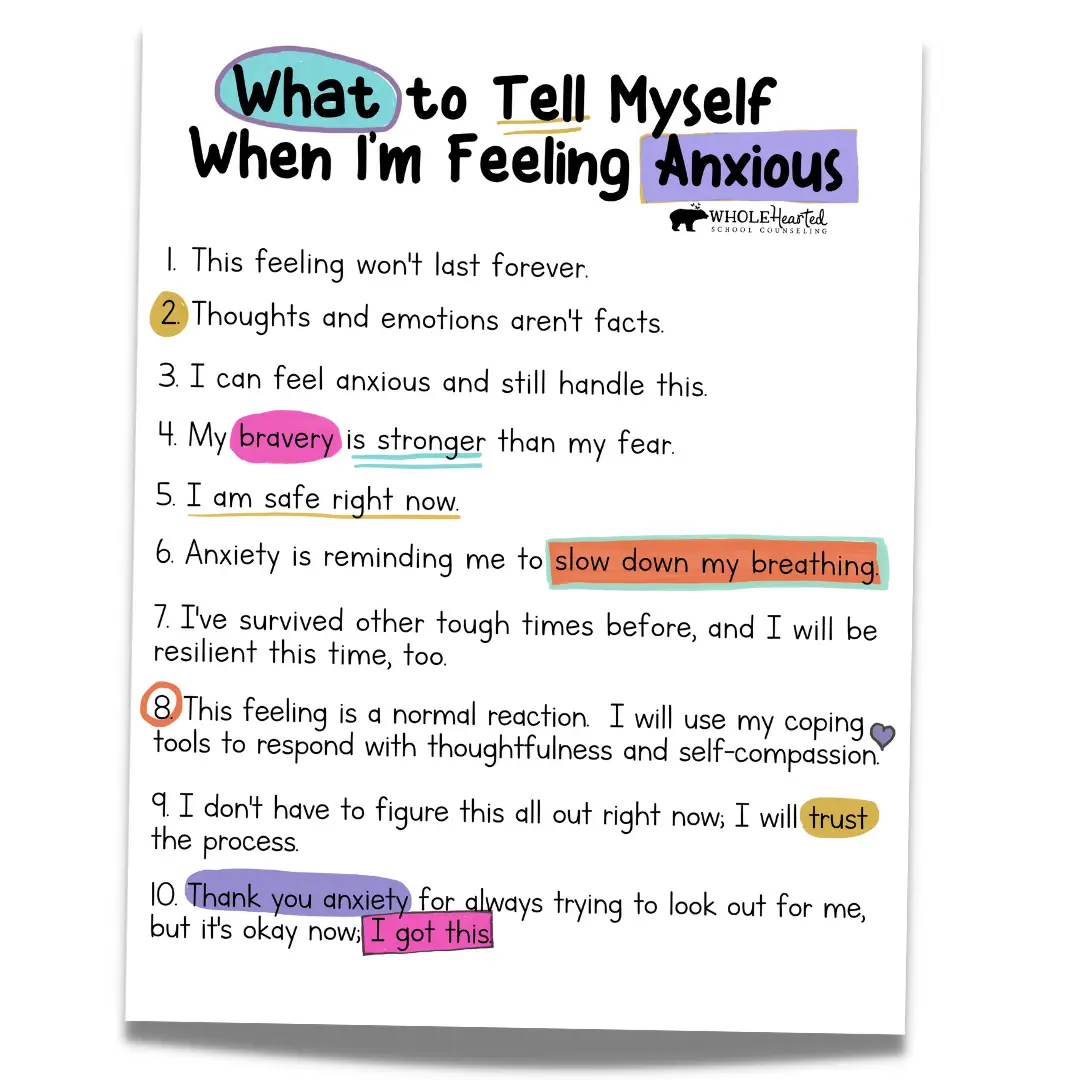
Credit: wholeheartedschoolcounseling.com
Data And Statistics: Do Affirmations Really Work?
Multiple studies show the benefits of affirmations:
- People who used affirmations for a month reported feeling 15% less stressed and 10% more confident than those who did not.
- In a workplace study, employees who practiced affirmations daily had a 12% increase in productivity after three weeks.
- Students who used affirmations before tests performed 8% better on average than those who did not.
These numbers show that affirmations, when used properly and consistently, can have a real effect.
For more scientific details, you can check this review from the Wikipedia page on self-affirmation.
Tips For Making Affirmations More Effective
To get the most from your affirmations, try these strategies:
- Use the Present Tense: Say "I am confident" instead of "I will be confident."
- Keep Statements Positive: Avoid negatives like "I am not afraid." Say "I am brave" instead.
- Feel the Words: Imagine the feeling as you say the affirmation.
- Personalize: Use your name or details that fit your life.
- Combine with Visualization: Picture yourself living the affirmation.
- Be Patient: Change takes time. Do not give up if you do not see instant results.
One extra tip: Try saying affirmations in front of a mirror. Looking at yourself as you speak can boost belief and focus.
How To Tell If Your Affirmations Are Working
Not all progress is obvious. Here are signs your affirmations are making a difference:
- You catch yourself thinking more positively.
- You react calmly to stress or setbacks.
- You feel more confident in new situations.
- You notice small wins, like speaking up or trying new things.
If you feel no change after several weeks, try adjusting your affirmations. Make them more specific or believable, and ensure you say them with real attention.
Should You Record Or Listen To Affirmations?
Some people record their affirmations and listen to them during the day. This can add variety and keep your practice fresh. Hearing your own voice can also strengthen belief.
If you prefer, you can find affirmation audio tracks online. Just make sure the statements match your goals and values.
Listening to affirmations works best as a supplement to speaking and writing them. The more ways you engage your mind, the stronger the effect.

Credit: debratrappen.com
Is There A "too Much" When It Comes To Affirmations?
Repeating affirmations all day long is not always helpful. Your brain can tune out the words if you say them too often without meaning. This is why quality and focus matter more than quantity.
If you start to feel bored, stressed, or annoyed by affirmations, take a break or reduce the number. Affirmations should feel supportive, not like a chore.
Remember, change happens slowly. Trust the process and give yourself time.
Frequently Asked Questions
How Long Should Each Affirmation Session Last?
A typical affirmation session can last 2 to 5 minutes. It’s enough time to repeat your statements several times with focus. If you have more time, you can add visualization or journaling. The main goal is quality, not just time spent.
Can I Say Affirmations While Doing Other Tasks?
Yes, you can repeat affirmations during simple tasks like walking, showering, or commuting. However, for best results, set aside quiet moments when you can focus fully. Mixing both focused and casual sessions works well for most people.
Do Affirmations Work For Everyone?
Most people can benefit from affirmations, but the effects vary. If you have serious mental health challenges, affirmations are not a replacement for professional help. For everyday stress, motivation, and self-esteem, affirmations help many people.
Is It Better To Have Many Affirmations Or Just A Few?
It’s usually best to start with one to three main affirmations. Too many can dilute your focus and make it hard to build belief. Once you feel progress, you can add more or change your statements.
What If I Do Not Believe My Affirmations?
It is normal to feel doubt at first. Repetition helps build belief over time. If a statement feels too unrealistic, adjust it to something you can accept, like "I am learning to be confident" instead of "I am always confident.
"
Using affirmations can be a simple but powerful tool for change. The key is to find a routine that fits your life, repeat your statements with focus, and be patient with the process. Over time, you may notice a shift in your thoughts, feelings, and actions—one affirmation at a time.

Credit: tiffanywoodfield.com
