

How Do You Write Affirmations for Lasting Positive Change
Writing affirmations can be a simple, yet powerful way to transform your mindset, support personal growth, and create positive change in your life. Many people hear about affirmations and think they are only for self-help enthusiasts or that they are just “positive thinking.
” But the truth is, when you understand how to write affirmations the right way, you unlock a tool used by athletes, business leaders, and everyday people to boost confidence, focus, and motivation.
If you’ve ever tried repeating phrases like “I am confident” or “I can succeed” but felt nothing changed, you are not alone. The problem is not affirmations themselves, but often how they are created and used. Writing affirmations is both an art and a science.
This guide will break down what affirmations really are, the psychology behind them, common mistakes, and—most importantly—step-by-step instructions to craft affirmations that actually work for you. Along the way, you’ll find examples, practical tips, and answers to questions most beginners never think to ask.
By the end, you’ll be ready to create affirmations that feel personal, believable, and truly life-changing.
What Are Affirmations?
Affirmations are positive statements you repeat to yourself. They describe a specific goal, quality, or outcome you want to achieve. The main purpose is to reinforce helpful beliefs, challenge negative thoughts, and guide your actions towards what you want.
Imagine your mind is like a garden. Negative thoughts are weeds, and affirmations are the seeds you plant to grow flowers. Over time, the more you repeat positive statements, the more they shape your thinking and behavior.
For example:
- “I am capable of learning new skills.”
- “Every day, I become stronger and more confident.”
- “I attract opportunities that help me grow.”
Affirmations work best when they are personal, present tense, and specific. They are not just wishful thinking—they help train your mind to focus on your goals and act in alignment with them.
The Science Behind Affirmations
Some people think affirmations are just “feel good” phrases, but there is real science behind them. Studies in psychology show that self-affirmation can reduce stress, improve performance, and even help change habits.
Here’s how affirmations work:
- Changing Self-Talk: Your inner voice influences your actions. Affirmations help replace negative self-talk with positive, supportive thoughts.
- Neuroplasticity: Repeating affirmations can help rewire your brain, making new pathways that reinforce positive beliefs.
- Focus and Motivation: Clear affirmations remind you of your goals and keep you motivated, especially during challenges.
According to research from the University of Pennsylvania, people who regularly use affirmations experience lower levels of stress and higher levels of self-control. However, it’s important to note that affirmations are most effective when they are realistic and personally meaningful.
Credit: www.reddit.com
Why Writing Affirmations Matters
You might wonder, “Why write affirmations instead of just saying them? ” Writing affirmations helps you clarify your goals and focus your thoughts. When you write something down, you engage more parts of your brain, making the message stronger and easier to remember.
Here’s why writing matters:
- Clarity: Writing forces you to think carefully about what you want.
- Commitment: Seeing your affirmation on paper feels more real and important.
- Memory: The act of writing helps you remember and internalize the message.
Research shows that people who write their goals are more likely to achieve them. The same is true for affirmations. The process of writing makes your intentions clear and concrete.
Key Principles Of Powerful Affirmations
Before you start writing, it’s essential to understand what makes an affirmation effective. Weak affirmations often sound vague or unbelievable. Strong affirmations have certain qualities that make them work.
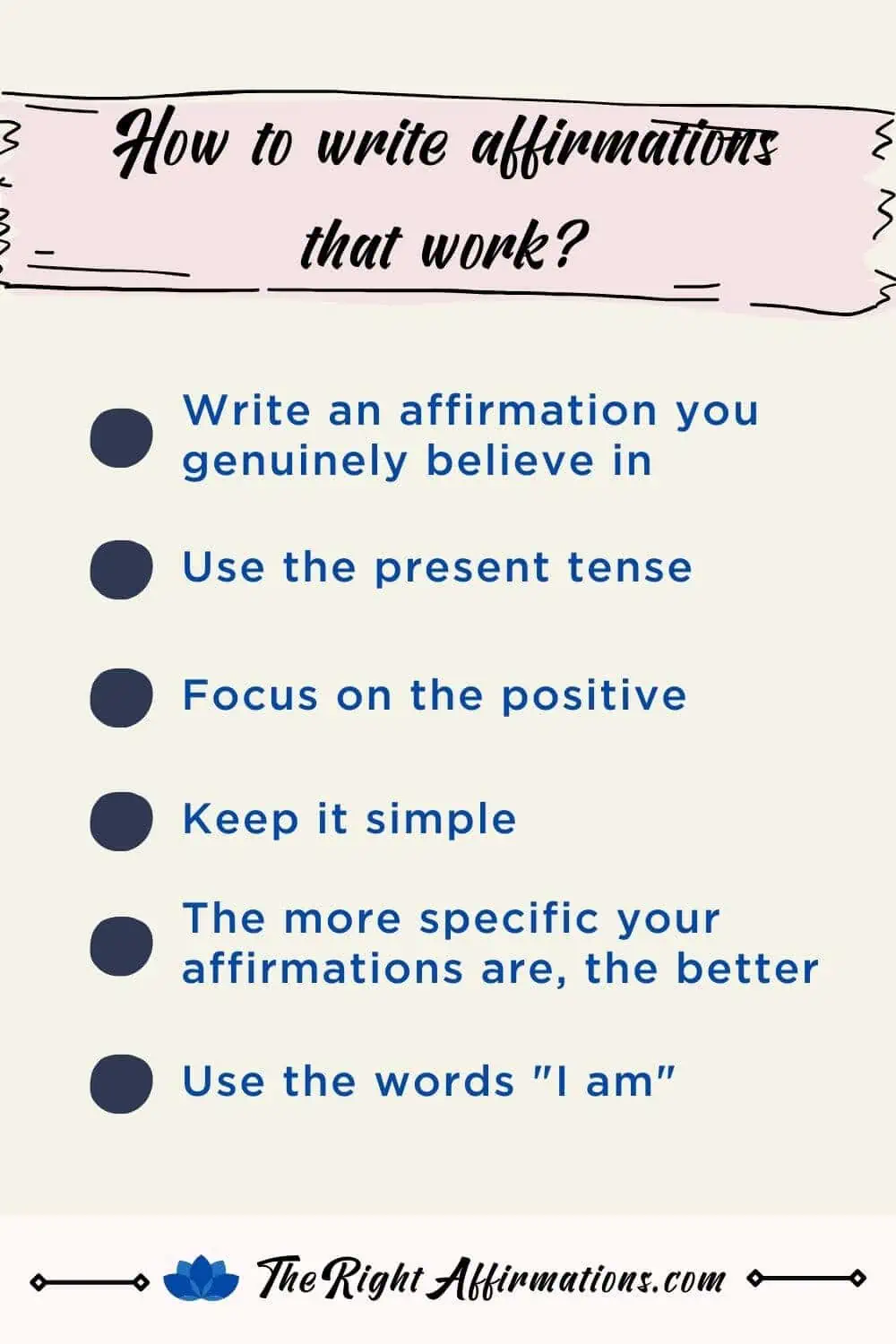
Here are the core principles:
1. Use Present Tense
Write as if your goal is happening now. For example, say “I am healthy” instead of “I will be healthy. ” This helps your brain accept the statement as true.
2. Be Positive
Focus on what you want, not what you don’t want. Instead of “I am not afraid,” write “I am courageous. ”
3. Be Specific
The clearer your affirmation, the more powerful it is. “I am improving my English skills every day” is stronger than “I am better. ”
4. Keep It Personal
Start with “I” or “My. ” The affirmation should feel like it belongs to you.
5. Make It Believable
If your affirmation feels impossible, your brain will reject it. Choose a statement that feels just beyond your current reality, but still possible.
6. Keep It Short And Simple
Long, complicated sentences are hard to remember and repeat. Short statements are easier to use daily.
7. Emotion Is Key
Add feeling words when possible. For example, “I joyfully welcome new opportunities. ”
8. Action-oriented
Use active words to inspire action. For example, “I choose healthy foods every day. ”
9. Consistency
Repeat your affirmations regularly. Repetition helps reinforce the message.
Credit: unfinishedsuccess.com
Step-by-step Guide: How To Write Affirmations
Writing your own affirmations can feel confusing at first. Here’s a clear process to help you create statements that actually work for you.
Step 1: Identify Your Goal Or Challenge
Start by thinking about one area of your life you want to improve. It could be self-confidence, health, career, relationships, or learning a new skill.
Ask yourself:
- What do I want to change?
- How do I want to feel?
- What is my ideal outcome?
Write down your answers. This will help you focus your affirmation.
Step 2: Choose Positive, Present-tense Language
Avoid negative words like “don’t,” “not,” or “stop. ” Focus on what you want, and write as if it’s happening now.
Examples:
- “I am calm and focused.”
- “I enjoy learning new things.”
Step 3: Make It Personal And Specific
Your affirmation should feel like it belongs only to you. Include details that make it meaningful.
Instead of “I am successful,” try “I am confidently presenting my ideas at work. ”
Step 4: Keep It Believable
If your affirmation feels fake or too far from your current reality, make it smaller. For example, if saying “I am rich” feels untrue, try “I am improving my financial situation every day. ”
You can also add words like “I am becoming…” or “I am learning to…” to make it more believable.
Step 5: Add Emotion Or Action
Include words that express how you want to feel or what you want to do.
Examples:
- “I am excited to meet new people.”
- “I choose to be patient with myself.”
Step 6: Write, Edit, And Refine
Write down your affirmation. Say it aloud. Does it feel right? If not, change the words until it feels personal and motivating. Don’t be afraid to try different versions.
Step 7: Use And Repeat Regularly
Write your affirmation somewhere you will see it daily—on a sticky note, in your journal, or as a phone reminder. Repeat it several times a day, especially in the morning and before bed.
Examples Of Strong Affirmations
Seeing real examples can help you understand what works. Here are some affirmations for different goals:
Self-Confidence
- “I trust myself to make good decisions.”
- “I am proud of who I am becoming.”
Health
- “I choose foods that nourish my body.”
- “I enjoy moving my body every day.”
Career
- “I am open to new opportunities at work.”
- “I am capable of overcoming challenges.”
Learning
- “I am improving my English skills every day.”
- “I enjoy learning and growing.”
Notice how each affirmation is positive, present-tense, and personal.

Credit: www.lomyrick.com
Common Mistakes When Writing Affirmations
Many people give up on affirmations because they make simple mistakes. Being aware of these can help you create statements that work.
1. Being Too Vague
General statements like “I am happy” are not as effective as “I find joy in small moments every day. ”
2. Using Negative Words
Phrases like “I am not lazy” focus on the negative. Instead, try “I am motivated and productive. ”
3. Making It Too Unrealistic
If you write “I am a millionaire” but don’t believe it, your brain will reject it. Start with a believable step: “I am building my savings each month.”
4. Not Repeating Regularly
Affirmations work through repetition. Saying it once or twice is not enough.
5. Ignoring Emotions
Affirmations without emotion can feel empty. Adding feeling words makes them more powerful.
6. Writing For Someone Else
Your affirmation should be about you, not what others do.
7. Making Them Too Long
Long statements are hard to remember. Keep it short and easy to repeat.
How To Make Affirmations Work Faster
People often ask, “How can I make affirmations work more quickly?” While there is no magic shortcut, you can use these techniques to get better results:
1. Visualize While Repeating
Imagine yourself living the affirmation. See, hear, and feel it in your mind.
2. Say It With Emotion
Speak your affirmation with feeling. Imagine how it feels to achieve your goal.
3. Use Written And Spoken Repetition
Write your affirmation daily and say it aloud several times.
4. Place Affirmations Where You See Them
Put them on your mirror, computer, or phone. This keeps them in your awareness.
5. Connect With Your Values
Link your affirmation to something deeply important to you.
6. Track Your Progress
Notice small changes in your thoughts and actions. Celebrate progress, even if it’s small.
7. Pair With Action
Affirmations support action, but they do not replace it. Take practical steps towards your goal each day.
Examples Of Weak Vs. Strong Affirmations
It’s helpful to compare weak and strong affirmations side by side. This can show you what to avoid and what to aim for.
| Weak Affirmation | Why It’s Weak | Stronger Version |
|---|---|---|
| I will be confident. | Future tense, not personal, not specific. | I am confident when I speak in meetings. |
| I don’t want to be stressed. | Negative wording, unclear goal. | I am calm and focused, even under pressure. |
| I am rich. | Feels unrealistic if not true now. | I am building my wealth step by step. |
| I should exercise more. | Not present tense, not personal. | I enjoy moving my body every day. |
Notice how the stronger versions are specific, positive, and believable.
Practical Tips For Using Affirmations
Writing affirmations is only the first step. How you use them daily makes a big difference.
1. Create A Routine
Repeat your affirmations at the same time each day, such as in the morning or before bed.
2. Combine With Journaling
Write your affirmation, then note how you feel or what actions you’ll take.
3. Use Visual Reminders
Place your affirmation where you’ll see it often—on your mirror, desk, or phone background.
4. Pair With Deep Breathing
Take a slow breath, then repeat your affirmation. This helps you feel calm and focused.
5. Record And Listen
Record yourself saying your affirmations. Listen to them while relaxing or exercising.
6. Stay Patient
Change takes time. Don’t worry if you don’t see results immediately.
7. Adjust As You Grow
Update your affirmations as your goals and beliefs change.
The Role Of Affirmations In Building Habits
Affirmations are not just for feeling good—they can help you build real habits. By repeating statements that support your goals, you remind yourself to take action.
For example, if you want to exercise more, an affirmation like “I enjoy moving my body every day” can motivate you to choose healthy activities. Over time, your mind and actions become aligned with the new habit.
A study from Health Psychology showed that people who used affirmations were more likely to stick to exercise routines and healthy eating plans. The key is consistency and linking the affirmation to small daily actions.
How To Test If Your Affirmation Is Working
It’s normal to wonder if your affirmation is making a difference. Here are signs your affirmation is effective:
- You start to notice positive changes in your thoughts or actions.
- The affirmation feels more believable with time.
- You feel motivated to take small steps toward your goal.
- Negative self-talk becomes less frequent.
If you don’t notice any changes after a few weeks, adjust your affirmation. Make it more specific, believable, or emotionally engaging.
Using Affirmations For Different Goals
Affirmations can be tailored for any area of life. Here are examples and advice for common goals:
Self-confidence
Write affirmations that remind you of your strengths and encourage you to take action.
Examples:
- “I handle new situations with confidence.”
- “I am proud of my progress.”
Health And Wellness
Focus on positive habits and how you want to feel.
Examples:
- “I choose foods that make me feel healthy.”
- “I enjoy taking care of my body.”
Career And Study
Support your professional growth and learning.
Examples:
- “I am open to learning new skills at work.”
- “I focus and do my best in every task.”
Relationships
Affirmations can improve how you relate to others.
Examples:
- “I listen with kindness and respect.”
- “I attract positive and supportive people.”
Stress And Anxiety
Use affirmations to create calm and focus.
Examples:
- “I breathe deeply and relax my mind.”
- “I am safe and in control.”
Comparing Written, Spoken, And Visual Affirmations
Affirmations can be used in different ways. Each method has strengths and weaknesses.
| Method | Strengths | Weaknesses |
|---|---|---|
| Written | Clear focus, stronger memory, easy to track progress | Takes more time, needs regular effort |
| Spoken | Quick to use, emotional impact, easy to repeat often | Easy to forget, less record of progress |
| Visual (pictures, vision boards) | Strong emotional connection, easy to remember | Less specific, needs creativity |
Many people find the best results by combining all three.
Examples Of Affirmations For English Learners
If you are improving your English, affirmations can help you stay motivated and confident.
Examples:
- “I am becoming more fluent in English every day.”
- “I am confident when speaking with others.”
- “I enjoy learning new words and phrases.”
- “I understand more English every week.”
These statements remind you of your progress and encourage daily practice.
Two Insights Beginners Often Miss
Most people new to affirmations overlook two important factors:
1. Link Your Affirmation To Real Action
An affirmation works best when paired with a daily action, even if it’s small. For example, saying “I am a confident speaker” is powerful, but it becomes much stronger if you also practice speaking with one new person each week.
2. Adjust Your Affirmation As You Grow
As you make progress, your beliefs change. Don’t be afraid to update your affirmation to match your new level. This keeps it feeling fresh and motivating.
How To Overcome Doubts About Affirmations
It’s common to feel doubt or discomfort when you first use affirmations. Your mind may resist new ideas, especially if they are very different from your current beliefs.
Here are ways to overcome doubt:
- Start with affirmations that feel only a little beyond your comfort zone.
- Use bridge phrases like “I am learning to…” or “I am becoming…”
- Remind yourself that change takes time.
- Pair your affirmation with action to build confidence.
If you keep using your affirmation, your mind will begin to accept it as possible.
The Power Of Group And Shared Affirmations
Affirmations are often seen as a private activity, but sharing them with others can make them even more powerful. In groups, affirmations can create a sense of support and shared purpose.
You can:
- Share affirmations with a friend or family member.
- Join a group that practices affirmations together.
- Use affirmations in team settings to boost motivation.
Group affirmations can help you stay accountable and remind you that you are not alone in your goals.
The Limitations Of Affirmations
While affirmations are a useful tool, they are not magic. They cannot replace real action or solve every problem. Here are some realistic points to remember:
- Affirmations do not work if you never act on them.
- They are not a cure for serious mental health issues.
- If your affirmation feels forced or causes stress, try changing it.
Affirmations work best as part of a larger plan that includes setting goals, taking action, and seeking support when needed.
Real-life Stories: Affirmations In Action
Many people have used affirmations to overcome challenges and reach their goals.
A student learning English wrote, “I am improving every day” on her notebook. She repeated it before every class. Over time, she noticed she felt less nervous and more willing to speak up.
A professional athlete used affirmations like “I am strong and focused” before games. This helped her stay calm under pressure and perform at her best.
These stories show that affirmations can support change, but only when used with intention and practice.
Comparing Affirmations To Other Self-help Tools
Affirmations are one tool among many. Here’s how they compare to other popular methods:
| Tool | Main Purpose | Best For |
|---|---|---|
| Affirmations | Change self-talk, support positive beliefs | Daily mindset, motivation, building confidence |
| Visualization | Imagine success, boost motivation | Goal setting, performance, creativity |
| Journaling | Reflect, set goals, track progress | Self-awareness, problem-solving |
| Meditation | Calm mind, reduce stress | Relaxation, focus, emotional control |
Often, the best results come from combining these tools.
Frequently Asked Questions
What Is The Best Time To Use Affirmations?
The best times are usually first thing in the morning and before bed. At these times, your mind is more open to new ideas. You can also use affirmations before important events, such as interviews or exams.
How Long Does It Take For Affirmations To Work?
This depends on the person and the goal. Some people notice changes in a few days, while others need weeks or months. The key is daily repetition and pairing affirmations with real action.
Can Affirmations Help With Anxiety Or Stress?
Affirmations can be helpful for anxiety and stress, especially when combined with relaxation techniques like deep breathing or meditation. However, they are not a replacement for professional help if you have serious mental health concerns.
Should I Write Or Say My Affirmations?
Both methods work. Writing makes your affirmation more concrete, while saying it aloud creates emotional impact. Many people find the best results by doing both.
Where Can I Find More Information About The Science Of Affirmations?
A good place to start is the Wikipedia page on affirmations, which covers the psychological background and research.
Writing affirmations is a skill you can develop with practice. By following the steps and principles in this guide, you can create statements that truly support your growth. With patience and consistency, affirmations can help you build confidence, stay focused, and turn your goals into reality.
Remember, the most powerful affirmation is the one that feels true for you. Start simple, keep going, and watch your mindset—and your life—change for the better.
