

How Do Affirmations Help Mental Health? Unlocking Positive Change
How Do Affirmations Help Mental Health
Everyone wants to feel happier, calmer, and more confident. But in daily life, stress, negative thoughts, and worries can make it hard. Many people look for simple tools to improve their mental health. One method that is getting more attention is using affirmations. These are short, positive statements you repeat to yourself. Some people call them “self-talk” or “mantras.” But how do affirmations really help mental health? Let’s explore the science, practical steps, and real-world examples of using affirmations to change your mind and your mood.
What Are Affirmations?
Affirmations are phrases or sentences you say to yourself. They are positive, clear, and focused on what you want. For example, “I am strong,” “I can handle challenges,” or “I deserve happiness. ” You can say them aloud, write them down, or think them quietly.
The goal is to replace negative thoughts with positive ones. Our brains often repeat old patterns of thinking. If you always say, “I can’t do this,” you may start to believe it. Affirmations help break this cycle and build a new way of thinking.
Common Types Of Affirmations
- Self-esteem: “I am worthy of love.”
- Stress relief: “I am calm and relaxed.”
- Motivation: “I can succeed.”
- Gratitude: “I am thankful for today.”
- Confidence: “I trust myself.”
You can make your own affirmations or use popular ones. The key is to use words that feel true and helpful for you.
How Do Affirmations Work In The Brain?
Many people wonder if affirmations are just “wishful thinking.” But research shows they can change how we think and feel. When you repeat positive statements, you activate parts of your brain linked to reward and motivation.
Scientists call this the neuroplasticity effect. Neuroplasticity means your brain can change and grow. You can build new pathways with practice. When you use affirmations, you are training your mind to focus on positive ideas.
The Science Behind Affirmations
Studies using brain scans show that positive self-talk lights up areas like the prefrontal cortex and ventral striatum. These regions control self-image and motivation. When you repeat affirmations, your brain starts to treat these positive thoughts as real.
Here’s a simple example:
- If you often say, “I am bad at public speaking,” your brain expects you to fail.
- If you start saying, “I can speak confidently,” your brain builds a new expectation.
- Over time, you feel less fear and more control.
Why Consistency Matters
Repeating affirmations once will not change your mind. You need to practice regularly. Just like learning a new skill, repetition is important. Many experts suggest saying affirmations every day, especially in the morning or before sleep.
Benefits Of Affirmations For Mental Health
Affirmations are not magic, but they have real benefits. Let’s look at how they help different parts of mental health.
1. Reducing Negative Thoughts
Most people have automatic negative thoughts (ANTs). These are quick, unhelpful ideas like “I’m not good enough” or “I always fail.” Affirmations can interrupt these thoughts and replace them with positive ones.
- Example: When you think, “I am not smart,” switch to, “I am capable of learning.”
2. Building Self-esteem
Self-esteem is how you feel about yourself. Low self-esteem can lead to anxiety, depression, and stress. Affirmations help you see your strengths and value.
- Example: “I am valuable and important.”
3. Managing Stress And Anxiety
Stress can make you feel tense, worried, or overwhelmed. Affirmations calm your mind and remind you that you can handle challenges.
- Example: “I am calm and in control.”
4. Improving Motivation And Focus
When you feel stuck or unmotivated, positive statements help you get back on track. They remind you of your goals and abilities.
- Example: “I am committed to my goals.”
5. Supporting Recovery From Trauma
After a difficult experience, it’s easy to feel hopeless. Affirmations help you rebuild trust in yourself and your future.
- Example: “I am healing and growing.”
Practical Steps To Use Affirmations
Anyone can use affirmations, but there are ways to make them work better. Here’s a step-by-step guide.
Step 1: Choose Your Affirmations
Pick statements that match your needs. If you want more confidence, use “I believe in myself. ” If you want less stress, use “I am peaceful. ”
- Tip: Avoid negative words. Say “I am healthy,” not “I am not sick.”
Step 2: Make Them Personal
Generic affirmations are less effective. Use your name or specific goals. For example, “I, Maria, am strong and capable. ”
Step 3: Repeat Daily
Set a routine. Say your affirmations every morning or evening. You can write them in a journal, say them aloud, or think them quietly.
- Tip: Use sticky notes or reminders on your phone.
Step 4: Use Emotion And Belief
Feel the words as you say them. It’s not just about speaking; it’s about believing. If it feels fake at first, keep practicing.
Step 5: Track Your Progress
Notice changes in your mood, thoughts, or actions. Write down your feelings each week. This helps you see improvement.
Common Mistakes With Affirmations
Affirmations are simple, but some mistakes can make them less effective.
1. Using Unrealistic Statements
If you say, “I am a millionaire,” but don’t believe it, your brain may reject it. Choose affirmations that feel possible.
2. Not Repeating Enough
One-time use does not work. You need regular practice for your brain to change.
3. Ignoring Negative Feelings
Affirmations are not a cure-all. If you feel sad or anxious, it’s okay. Use affirmations as part of a bigger plan, not the only solution.
4. Forgetting To Personalize
Generic phrases may not help. Tailor your affirmations to your life and goals.
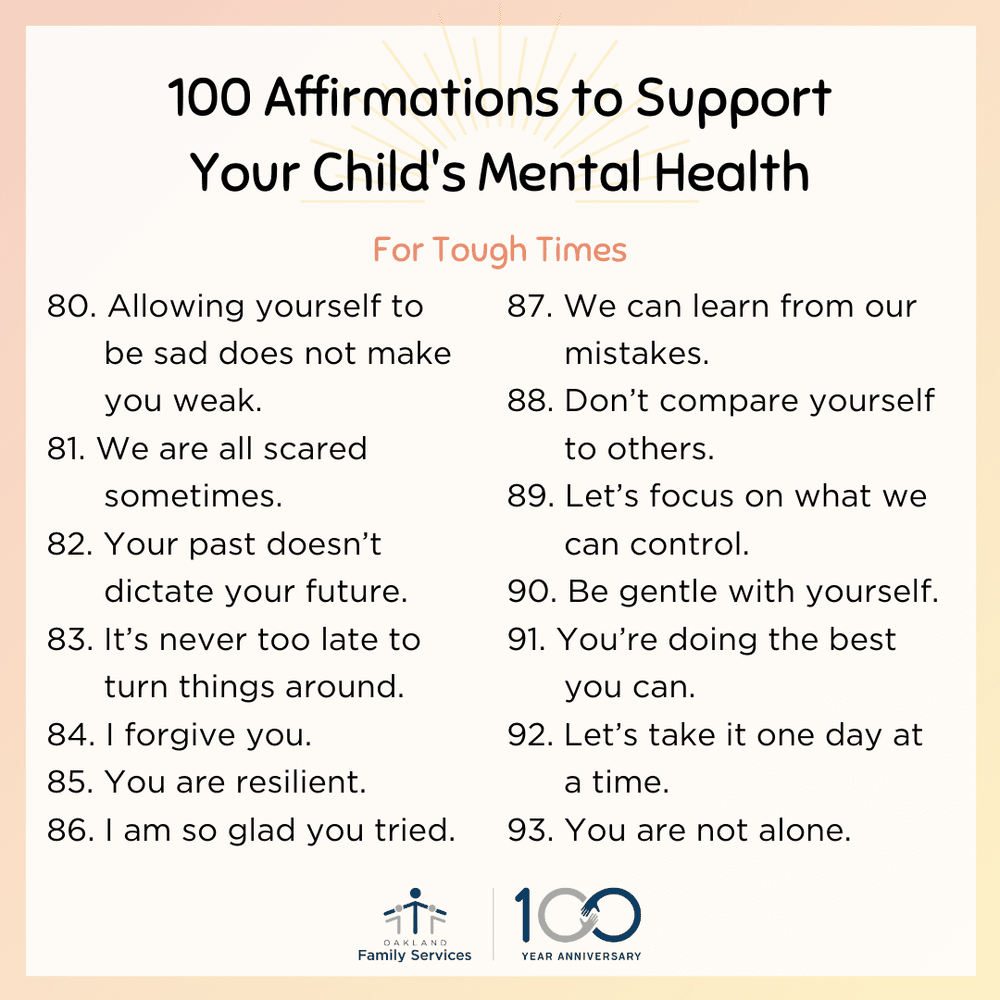
Real-life Examples Of Affirmations
Many people use affirmations every day. Here are some real stories and examples.
Example 1: Overcoming Fear
Sara was afraid of speaking in public. She started using the affirmation, “I am confident and prepared. ” After two weeks, she felt less nervous and spoke at her workplace.
Example 2: Improving Mood
John felt sad and tired. He used, “I am grateful for small joys. ” He wrote this every morning. Over time, he noticed more positive moments in his day.
Example 3: Handling Stress
Priya had a stressful job. She used, “I am calm under pressure,” during busy times. She felt more relaxed and made fewer mistakes.
Example 4: Building Self-love
Miguel struggled with self-worth. He used, “I am worthy of love and respect. ” He started to notice his strengths and felt better in relationships.
Credit: www.oaklandfamilyservices.org
Comparison: Affirmations Vs. Other Mental Health Tools
Affirmations are just one tool. Let’s compare them with other common methods.
| Method | How It Works | Best For | Limitations |
|---|---|---|---|
| Affirmations | Repeat positive statements | Building confidence, reducing negative thoughts | Needs belief, may not work for deep trauma |
| Meditation | Focus on breathing or quiet mind | Stress relief, relaxation | Takes time to learn |
| Cognitive Behavioral Therapy (CBT) | Change negative thought patterns | Anxiety, depression, serious mental health issues | Needs professional guidance |
| Journaling | Write thoughts and feelings | Self-reflection, emotional processing | May not work for everyone |
Affirmations are easy to start and fit into daily life. But for deeper problems, you may need other tools, too.
Data: How Effective Are Affirmations?
Many studies show that affirmations can improve mental health, but results depend on how you use them. Here’s a summary of findings.
| Study | Participants | Results | Notes |
|---|---|---|---|
| Self-Affirmation and Stress | College students | Reduced stress after exams | Worked best with regular practice |
| Affirmations and Self-Esteem | Adults with low self-worth | Improved self-esteem in most participants | Stronger effect if matched to personal goals |
| Positive Self-Talk for Anxiety | People with mild anxiety | Lower anxiety levels | Combined with breathing exercises |
Not every person sees big changes. But many report feeling more optimistic, confident, and calm.
Making Affirmations Part Of Your Routine
Affirmations work best as a habit. Here are ways to add them to your daily life.
Morning Routine
Start your day with positive statements. Stand in front of a mirror and say your affirmations. This sets a good mood for the day.
Journaling
Write your affirmations in a notebook. Reflect on how you feel after repeating them. This helps build belief.
Phone Reminders
Set reminders to repeat affirmations at different times. This keeps you focused and positive.
Meditation Practice
Combine affirmations with meditation. Breathe deeply and repeat your statements in your mind.
Group Sharing
Join a support group or share your affirmations with friends. This adds motivation and accountability.
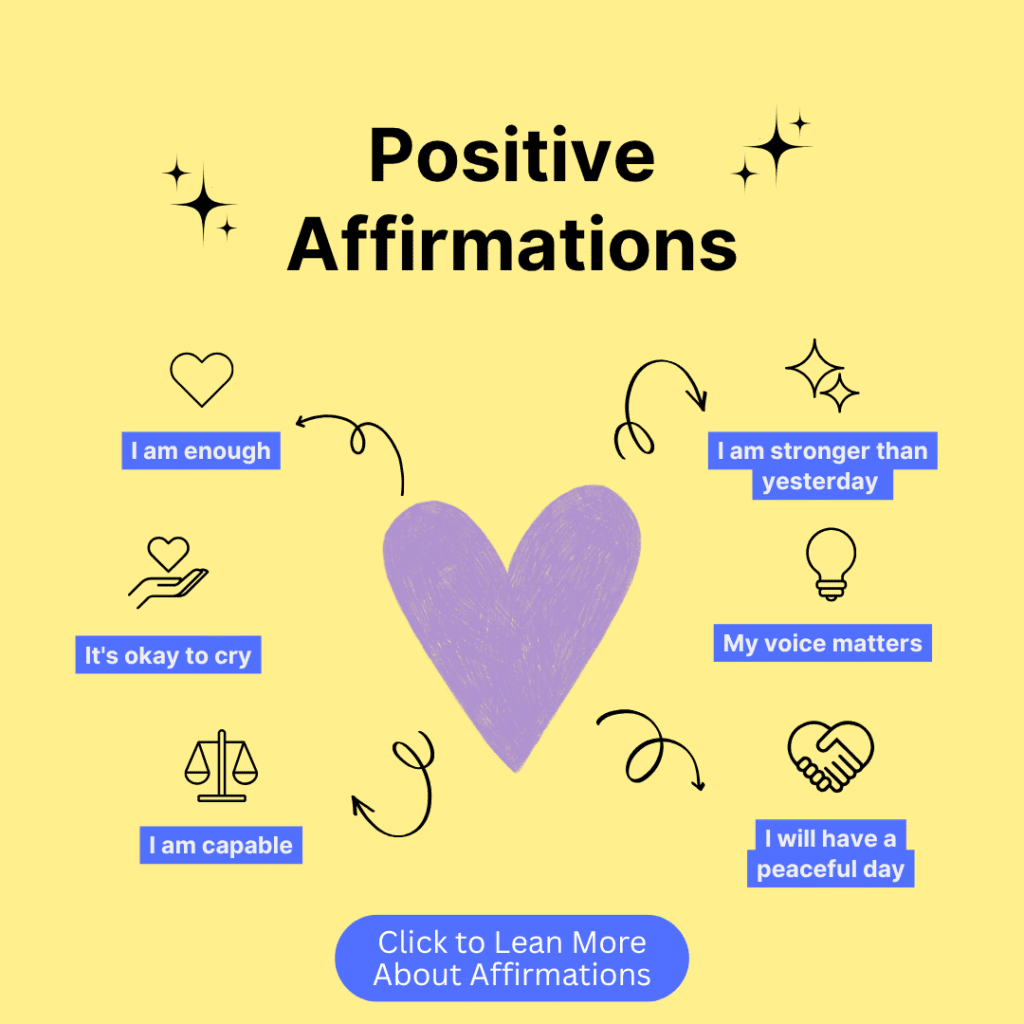
Tips To Strengthen Affirmations
Some people start affirmations but give up quickly. Here’s how to make them stick.
- Keep it simple: Use short, easy phrases.
- Be specific: Tailor to your needs (“I am improving my English skills”).
- Believe in the process: Trust that change takes time.
- Combine with action: Don’t just say it—act on it. For example, if you affirm “I am healthy,” eat well and exercise.
- Adjust as needed: Change your affirmations when your goals change.
Credit: aapsychiatry.com
Who Should Use Affirmations?
Affirmations are safe for most people. They can help:
- Students who want more confidence
- Workers dealing with stress
- Parents managing daily challenges
- People healing from loss or trauma
However, if you have serious mental health issues, affirmations alone may not be enough. It’s important to seek support from a doctor or therapist.
When Affirmations May Not Work
Affirmations are helpful, but not a cure for everything. Sometimes, they can feel empty or even make you feel worse if you don’t believe them. Here are signs affirmations may not be working:
- You feel more upset after repeating them
- You can’t believe the statements
- You have deep sadness or anxiety
In these cases, combine affirmations with other tools like therapy, medication, or support groups. Don’t force yourself if it feels wrong.
The Role Of Self-compassion
Affirmations work best with self-compassion. This means being kind to yourself, even when you make mistakes. Instead of judging yourself, use affirmations to encourage gentle change.
- Example: “I am learning and growing, even if I make mistakes.”
How To Write Powerful Affirmations
Writing your own affirmations can make them more effective. Here’s how:
- Start with “I am” or “I can”
- Use present tense
- Keep it positive
- Be clear and specific
- Focus on what you want, not what you don’t want
Examples:
- “I am confident in my abilities.”
- “I can handle new challenges.”
- “I am grateful for today.”

Credit: mindbodycoop.com
Comparing Affirmations With Mantras
Some people use “mantras” instead of affirmations. Both are repeated phrases, but mantras often come from spiritual traditions and may not always be positive. Affirmations focus on positive self-talk.
| Feature | Affirmations | Mantras |
|---|---|---|
| Origin | Modern psychology | Spiritual traditions |
| Purpose | Build self-esteem, reduce negativity | Focus, calm, spiritual growth |
| Language | Everyday words | Traditional phrases or sounds |
| Personalization | Highly personalized | Often fixed |
Both can help mental health, but affirmations are easier to personalize and use in daily life.
Non-obvious Insights About Affirmations
Many beginners miss key points when starting with affirmations:
- Affirmations work best when linked to action. If you affirm “I am healthy,” take steps to eat well and exercise. Action strengthens belief.
- Small changes lead to big results. You don’t need dramatic statements. Simple affirmations, used daily, can shift your mindset over time.
- Affirmations can reveal hidden doubts. If you feel resistance or discomfort, it shows areas where you need more support. Don’t ignore these feelings; explore them.
Research And Authority
Many universities and clinics study affirmations and their effects. For more details, you can check sources like Psychology Today.
Frequently Asked Questions
What Are The Best Affirmations For Mental Health?
The best affirmations are simple, positive, and personal. Examples include:
- “I am strong and capable.”
- “I am worthy of love.”
- “I can handle stress calmly.”
Choose statements that fit your needs and feel true.
How Many Times Should I Repeat Affirmations?
Most experts suggest repeating affirmations at least 5–10 times per session. Practice daily for best results. You can say them aloud, write them down, or think them quietly.
Can Affirmations Help With Anxiety Or Depression?
Affirmations can reduce mild anxiety and boost mood. They work best when combined with other tools like therapy, medication, or mindfulness. For serious depression or anxiety, seek professional help.
Are Affirmations The Same As Positive Thinking?
Affirmations are a form of positive thinking, but they are more focused and repeated. Positive thinking is a general mindset, while affirmations are specific statements you use to shape your thoughts.
What Should I Do If Affirmations Don’t Work For Me?
If affirmations feel fake or make you uncomfortable, try adjusting your statements. Make them smaller or more believable. If you still struggle, combine affirmations with other methods, or seek support from a therapist.
---
Affirmations offer a simple way to boost mental health, build confidence, and reduce stress. They are not a cure for all problems, but when used correctly, they can change your thinking and help you feel better. Practice daily, personalize your statements, and combine them with other healthy habits.
Over time, you may notice a stronger mind, a happier mood, and a more positive outlook on life.
