

Daily Affirmation Ideas to Boost Positivity Every Morning
Daily Affirmation Ideas
Everyone faces moments of doubt or stress. Whether you’re starting a new job, learning a language, or just hoping for a better day, the way you talk to yourself matters. Daily affirmations are simple, powerful statements you repeat to shape your thoughts and boost your confidence. They help you focus, let go of worries, and build a positive mindset. Many people use affirmations to feel happier, more motivated, and stronger when facing challenges.
But what makes an affirmation effective? Why do some phrases help, while others feel empty? This article will guide you through everything you need to know about daily affirmation ideas. You’ll discover practical examples, learn how to build your own, and see how to fit them into your routine.
Real-world tips and non-obvious insights will help you go beyond basic phrases and make affirmations work for your unique needs.
What Are Daily Affirmations?
Affirmations are short, positive sentences you say to yourself. They are meant to change your mindset, beliefs, and habits. For example: “I am confident,” “I can handle challenges,” or “I deserve respect.” These phrases help you focus on your strengths and goals.
Research shows that positive self-talk can reduce stress, improve health, and boost performance. One study found that people who used affirmations before stressful events felt less nervous and did better on tests. Another study showed that regular affirmations lowered anxiety and improved mood in patients.
It’s important to know that affirmations work best when they are personal and realistic. If you repeat a phrase that feels false, your mind may resist it. Instead, use statements that fit your situation and feel true for you. This builds trust and makes the practice more effective.
How Daily Affirmations Work
Affirmations are not magic. They don’t change your life overnight. Instead, they help you retrain your thoughts over time. Here’s how it works:
- Repeating positive phrases every day helps you notice negative thoughts and replace them with supportive ones.
- When you focus on strengths, you build confidence and motivation.
- By saying affirmations, you teach your brain to expect success, not failure.
Scientists call this process “neuroplasticity. ” Your brain can change its patterns by practicing new ways of thinking. Affirmations are one of the easiest tools to do this.
Practical Example
Let’s say you often worry about public speaking. Your usual thought: “I’ll mess up.” An affirmation could be: “I am prepared and confident.” By repeating this, you slowly shift your focus from fear to readiness. Over time, your anxiety drops, and you perform better.
Common Mistakes
Many beginners try affirmations but give up quickly. Here are two mistakes to avoid:
- Using phrases that are too broad or unrealistic (e.g., “I am perfect”)
- Forgetting to repeat them daily or connect them to real actions
If your affirmation doesn’t match your situation, it can feel empty. Always choose words that you believe and can practice.

Credit: heysimply.com
Benefits Of Daily Affirmations
People use affirmations for many reasons. Here are some proven benefits:
- Reduces stress: Positive self-talk calms your mind.
- Boosts confidence: Reminds you of your strengths and abilities.
- Improves focus: Helps you stay on track with goals.
- Encourages better habits: Supports healthy routines and actions.
- Enhances performance: Athletes and professionals use affirmations to prepare for challenges.
Data Insights
Studies show that daily affirmations can lead to real changes. Here is a comparison of results from three groups:
| Group | Affirmation Use | Stress Level | Performance |
|---|---|---|---|
| Group A | Daily | Low | High |
| Group B | Weekly | Medium | Medium |
| Group C | None | High | Low |
People who used affirmations daily had lower stress and higher performance. The effect was smaller when used less often.
How To Create Your Own Daily Affirmations
Making your own affirmations is simple, but there are some key steps to follow:
- Choose a goal or area: What do you want to improve? Confidence, health, learning, relationships?
- Make it positive: Focus on what you want, not what you fear.
- Keep it short: One sentence is best.
- Use present tense: Say “I am” or “I have,” not “I will.”
- Make it personal: Use words that feel right for you.
Example Process
Suppose you want to feel more confident at work. Start with your main concern: “I feel nervous during meetings.” Change it to a positive statement: “I speak clearly and share my ideas with confidence.”
Here’s a simple formula:
- Concern: “I am afraid of making mistakes.”
- Affirmation: “I learn from mistakes and grow stronger.”
Table: Affirmation Building Steps
| Step | Action | Example |
|---|---|---|
| 1 | Identify concern | I feel nervous |
| 2 | Reframe positively | I am confident |
| 3 | Use present tense | I speak well |
| 4 | Personalize | I share my ideas |
50 Powerful Daily Affirmation Ideas
Here are 50 daily affirmations you can use or adapt to your needs. These cover confidence, health, relationships, work, and more. Try different ones and notice which feel best for you.
- I am confident in my abilities.
- I accept myself as I am.
- I am strong and resilient.
- I deserve love and respect.
- I am calm and focused.
- I handle challenges with grace.
- I trust my decisions.
- I am grateful for today.
- I learn from every experience.
- I am worthy of happiness.
- I make positive choices.
- I forgive myself and others.
- I am proud of my progress.
- I am open to new ideas.
- I create healthy habits.
- I enjoy learning and growing.
- I am patient with myself.
- I listen to my needs.
- I attract good things.
- I am safe and protected.
- I am creative and resourceful.
- I respect my body and mind.
- I express my feelings honestly.
- I build strong relationships.
- I am motivated and energetic.
- I balance work and rest.
- I welcome change and growth.
- I make time for self-care.
- I focus on solutions, not problems.
- I believe in my dreams.
- I am generous and kind.
- I let go of worry and fear.
- I celebrate small wins.
- I value my time and energy.
- I speak with confidence.
- I am surrounded by support.
- I trust the process of life.
- I learn from feedback.
- I am calm under pressure.
- I practice gratitude daily.
- I set healthy boundaries.
- I am open to love and friendship.
- I stay positive in tough times.
- I use my talents wisely.
- I grow stronger every day.
- I give my best effort.
- I accept change with ease.
- I am proud of who I am.
- I choose happiness and peace.
- I look forward to new opportunities.
Fitting Affirmations Into Your Routine
One of the most important steps is making affirmations a habit. It’s not enough to say them once or twice. Here are some practical ways to add affirmations to your daily life:
Morning Routine
Start your day with positive statements. Stand in front of the mirror, look at yourself, and repeat your chosen affirmations. This sets a confident tone for the day.
During Work Or Study
When you face a challenge, pause and repeat your affirmation. For example, before a big meeting, remind yourself: “I am prepared and ready.”
Before Sleep
End your day by reflecting on your achievements and repeating affirmations. This calms your mind and helps you sleep better.
Using Technology
Set reminders on your phone or use apps designed for affirmations. Some people record their statements and listen during the day.
Table: Routine Integration Ideas
| Time | Action | Benefit |
|---|---|---|
| Morning | Repeat in mirror | Start day confident |
| Work | Use before meetings | Stay focused |
| Evening | Reflect and affirm | Reduce stress |
| Anytime | Phone reminders | Consistent practice |

Credit: www.thepathway2success.com
Non-obvious Insights For Effective Affirmations
Most articles stop at basic advice, but there are deeper ways to make affirmations more powerful:
1. Pair Affirmations With Actions
Words alone are not enough. If your affirmation is “I am healthy,” match it with real steps—like drinking water or taking a short walk. Actions reinforce beliefs, making affirmations work faster.
2. Visualize While Repeating
As you say your affirmation, imagine yourself living it. If you say “I am confident,” picture yourself speaking in a meeting or trying something new. This builds stronger mental connections.
3. Use “i Am Becoming” For Hard Goals
If a statement feels too hard to believe, change “I am” to “I am becoming.” For example: “I am becoming more confident.” This feels more honest and helps your mind accept change.
4. Write And Record Your Affirmations
Writing affirmations by hand makes them feel real. Some people record their voice and listen to it daily. This engages more senses and speeds up the effect.
5. Change Affirmations Often
Don’t use the same phrase forever. Adjust your affirmations as your goals change. This keeps them fresh and meaningful.
Affirmations For Specific Needs
Everyone’s life is different. Here are affirmation ideas for common situations:
For Students
- I understand new concepts easily.
- I am organized and prepared.
- I manage my time well.
- I ask for help when needed.
For Professionals
- I handle my tasks with skill.
- I communicate clearly.
- I am respected at work.
- I grow in my career.
For Health And Fitness
- I enjoy moving my body.
- I make healthy choices.
- I rest and recover well.
- I am strong and active.
For Relationships
- I listen and support others.
- I build trust and respect.
- I am open to connection.
- I give and receive love.
For Mental Health
- I accept my feelings.
- I take care of my mind.
- I am calm and balanced.
- I seek support when needed.
Real-life Examples And Success Stories
Many people have transformed their lives with daily affirmations. Here are some real stories:
Example 1: Overcoming Anxiety
Maria always felt anxious before job interviews. She started using the affirmation: “I am calm and prepared.” She repeated it every morning and before each interview. Over time, her nerves eased, and she landed her dream job.
Example 2: Improving Health
James wanted to lose weight but struggled with motivation. He used “I make healthy choices daily. ” He paired this with small actions—like eating fruits and walking. After a few months, he felt healthier and more confident.
Example 3: Building Confidence
Sara doubted her abilities as a student. Her affirmation: “I learn quickly and succeed.” She wrote it in her notebook and said it before exams. Her grades improved, and she felt more positive.
These examples show that affirmations are not just words—they lead to real change when practiced with intention.
How To Measure Your Progress
It’s easy to wonder if affirmations are working. Here’s how to track your growth:
- Keep a journal: Write your affirmations and note changes in mood, actions, or results.
- Set clear goals: Link affirmations to specific goals, like “Speak up in meetings” or “Exercise three times a week.”
- Review weekly: Check if you feel more confident, less stressed, or more motivated.
- Adjust as needed: If a phrase feels stale, update it to match your progress.
You may notice small improvements first—like feeling calmer or trying new things. Over time, bigger changes will appear.
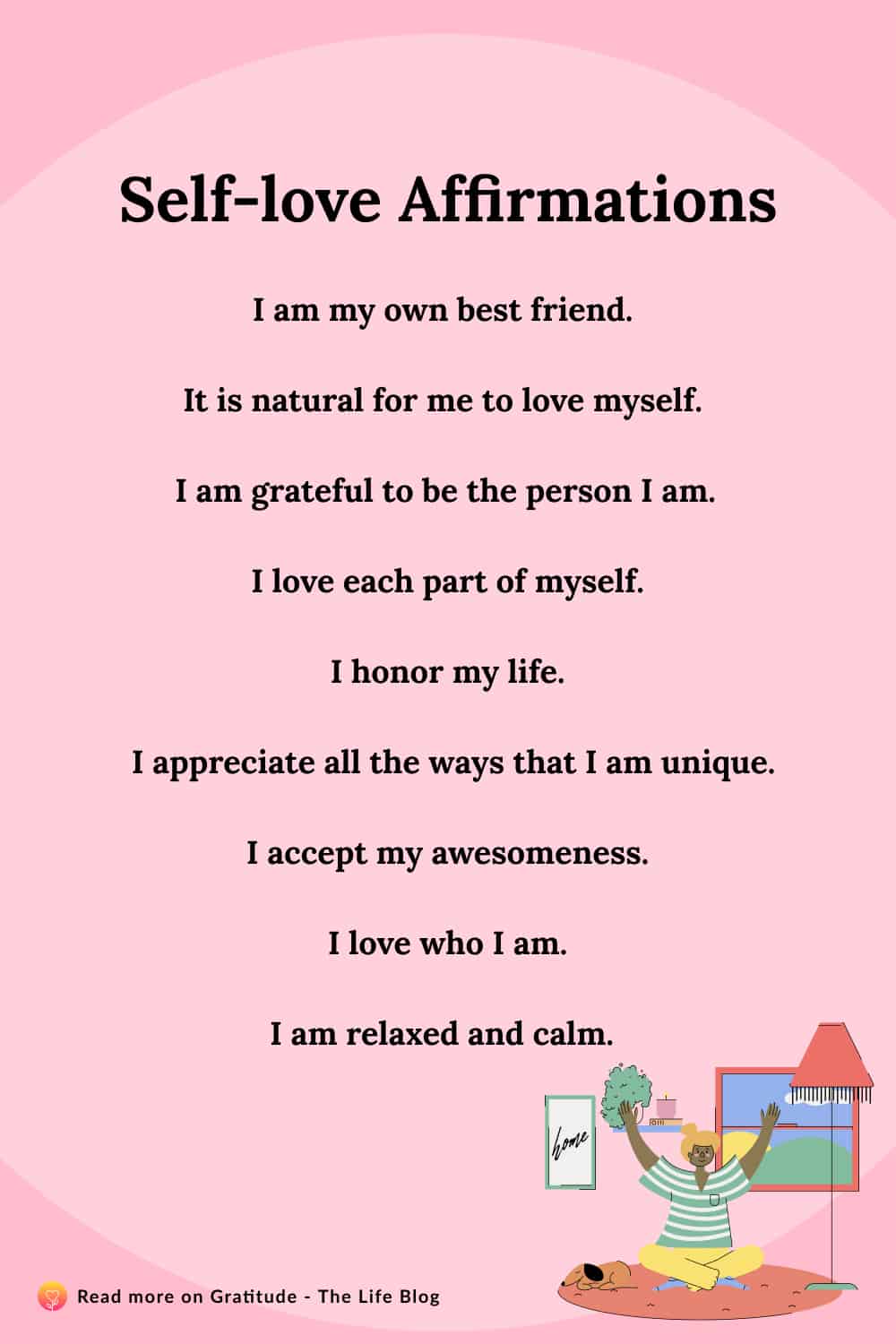
Credit: blog.gratefulness.me
Common Myths And Misunderstandings
Some people doubt the value of affirmations because of common myths. Here are the facts:
Myth 1: Affirmations Are Only For Positive People
Anyone can use affirmations, even if they feel negative or uncertain. The practice helps you build a new mindset step by step.
Myth 2: Affirmations Work Instantly
Affirmations take time and regular practice. Expect slow, steady progress—not overnight miracles.
Myth 3: You Must Believe Every Word
It’s normal if you don’t fully believe your affirmation at first. Repeat it, pair it with actions, and belief will grow.
Myth 4: Affirmations Replace Action
Affirmations support action, not replace it. Use them to motivate real steps, not avoid challenges.
The Science Behind Affirmations
Some people wonder if affirmations are backed by real science. Research shows that self-affirmation theory helps people handle stress and perform better. Studies found that affirmations reduce cortisol (stress hormone), improve problem-solving, and support mental health.
A study published by the National Institutes of Health demonstrated that affirmations before stressful tasks lowered anxiety and improved results. Another research project found that affirmations help students and professionals bounce back from setbacks.
For more in-depth information, check Wikipedia.
Tips To Make Affirmations Stick
If you want affirmations to become a habit, try these tips:
- Attach affirmations to daily tasks (like brushing teeth or commuting).
- Use sticky notes around your room or office.
- Repeat them aloud, not just in your head.
- Join a group or find a partner to share affirmations with.
- Celebrate small wins when your affirmation leads to action.
Frequently Asked Questions
What Is The Best Way To Use Daily Affirmations?
The best way is to repeat your affirmations aloud every day, preferably in the morning and evening. Pair them with actions and visualize yourself living the statement. Write them down for extra impact.
How Long Does It Take For Affirmations To Work?
Most people notice small changes within a few weeks. For bigger results, practice daily for at least a month. The key is consistency and adjusting your affirmations as needed.
Can Affirmations Help With Anxiety Or Depression?
Affirmations can support mental health by building a positive mindset and reducing negative self-talk. They work best with other healthy habits, like seeking support and practicing self-care.
What If I Don’t Believe My Affirmation?
It’s normal to doubt at first. Try using “I am becoming” or “I am learning to” in your statement. Repeat it daily and pair it with real actions. Over time, belief will grow.
How Many Affirmations Should I Use Each Day?
Start with 1–3 affirmations. Focus on phrases that match your goals and needs. Too many can feel overwhelming and lose impact. Adjust as you grow.
Daily affirmations are a simple tool, but they can lead to big changes when practiced with intention. By choosing phrases that fit your life and repeating them regularly, you build confidence, reduce stress, and move toward your goals. Remember to pair words with actions, adjust as you grow, and celebrate your progress.
Affirmations are not magic—they are a daily step toward a better, stronger you.
