

Can Affirmations Heal the Body? Science and Success Stories
Can Affirmations Heal The Body
Most people have heard about positive affirmations. Maybe you have read that repeating positive statements can help you feel better about yourself. But some people claim affirmations do more than just improve your mood—they say affirmations can actually heal the body.
Is this possible? What does science say? Can our words and thoughts really affect our physical health? This article explores the truth about affirmations and their potential impact on healing. We will look at the science, real-world examples, and what you should know before using affirmations for your health.
What Are Affirmations?
Affirmations are short, positive statements that you repeat to yourself, either out loud or in your mind. The goal is to shift your thinking and beliefs in a positive direction. For example, someone might say, “I am healthy and strong,” or “My body knows how to heal itself.
” Many people use affirmations as part of their daily routine, hoping to become more confident, reduce stress, or support healing.
Affirmations are different from wishes or daydreams. They are meant to help you change your mindset, which some believe can also change your reality. This idea comes from the belief that our thoughts affect our emotions, actions, and even our bodies.
How Do Affirmations Work?
To understand if affirmations can heal the body, it helps to know how they work in the mind. When you repeat an affirmation, you are training your brain to focus on certain ideas. This process is called neuroplasticity—the brain’s ability to change and create new connections.
If you often think negative thoughts like, “I am always sick,” your brain gets used to that pattern. Affirmations aim to build a new pattern by focusing on positive, healing thoughts. Over time, this can change the way you feel, act, and possibly even how your body responds.
The Mind-body Connection
There is a well-known link between the mind and the body. For example, stress can cause physical problems like headaches, upset stomach, or high blood pressure. On the other hand, feeling happy and relaxed can support the immune system and help the body heal faster.
Affirmations are a tool to use this mind-body connection. By calming the mind and focusing on positive outcomes, affirmations might help reduce stress and improve well-being.
What Does Science Say About Affirmations And Healing?
Many people want proof that affirmations can heal the body. Scientists have studied the effects of positive thinking, self-talk, and stress reduction on health. Here’s what they have found so far.
Research On Affirmations
Studies show that affirmations can:
- Lower stress levels in some situations
- Increase feelings of self-worth
- Improve mood and optimism
For example, research from the National Institutes of Health found that people who practiced self-affirmation before a stressful event felt less anxious and had lower levels of the stress hormone cortisol.
Studies On The Placebo Effect
One of the most interesting findings comes from research on the placebo effect. This is when people experience real health improvements after taking a fake treatment, simply because they believe it will help. The placebo effect shows that beliefs and expectations can affect the body’s response, sometimes leading to lower pain, better sleep, or even faster healing.
Affirmations work on a similar idea. By telling yourself that you are getting better, your brain may help your body feel and function better.
Physical Health Benefits
While affirmations alone may not cure serious diseases, they can support other treatments. For example, cancer patients who use affirmations and positive thinking often report less stress, better sleep, and more energy during treatment.
Here is a comparison of how affirmations might impact different aspects of health:
| Aspect of Health | Potential Impact of Affirmations |
|---|---|
| Stress | Can lower stress levels by calming the mind |
| Immune System | May support immune function by reducing stress hormones |
| Pain Management | May help people cope with pain by changing focus |
| Sleep | Improves relaxation and can lead to better sleep |
| Chronic Disease | Supports positive attitude and coping, but not a cure |
Limits Of The Science
It’s important to understand that while affirmations can help with stress, mood, and attitude, there is no strong evidence that they can directly cure diseases like cancer, diabetes, or infections. They are best used as a support for other treatments, not as a replacement.
Real-world Examples: How People Use Affirmations To Support Healing
Affirmations are popular in many cultures and healing systems. Here are some ways people use them to help their bodies heal:
- During Illness Recovery: People with long-term illnesses often use affirmations to keep hope alive and reduce fear. For example, someone recovering from surgery might repeat, “Every day I am getting stronger.”
- Managing Chronic Pain: Those with conditions like back pain or arthritis sometimes use affirmations such as, “I am learning to manage my pain,” to help shift their focus from suffering to coping.
- Supporting Mental Health: People dealing with anxiety or depression use affirmations to remind themselves of their strengths and ability to recover.
- Athletic Performance and Injury Recovery: Athletes often use positive self-talk to speed up recovery and stay motivated. Statements like, “My body heals quickly and fully,” are common.
- Sleep and Relaxation: Some use calming affirmations before bed, such as, “My mind and body are ready to rest,” to improve sleep quality.
In all these cases, affirmations are used alongside medical care, not as a replacement.
How To Create Effective Healing Affirmations
Not all affirmations are equally powerful. Here are some tips for making affirmations that support healing:
- Keep them positive: Focus on what you want, not what you fear. For example, say, “I am getting healthier every day,” instead of “I don’t want to be sick.”
- Use the present tense: Say “I am strong,” not “I will be strong.”
- Make them personal: Tailor your affirmations to your own needs. “My body is healing,” is more powerful than a general statement.
- Be specific: If you are healing from an injury, you might say, “My knee is getting stronger and healthier.”
- Repeat often: The more you repeat your affirmation, the more your mind will accept it.
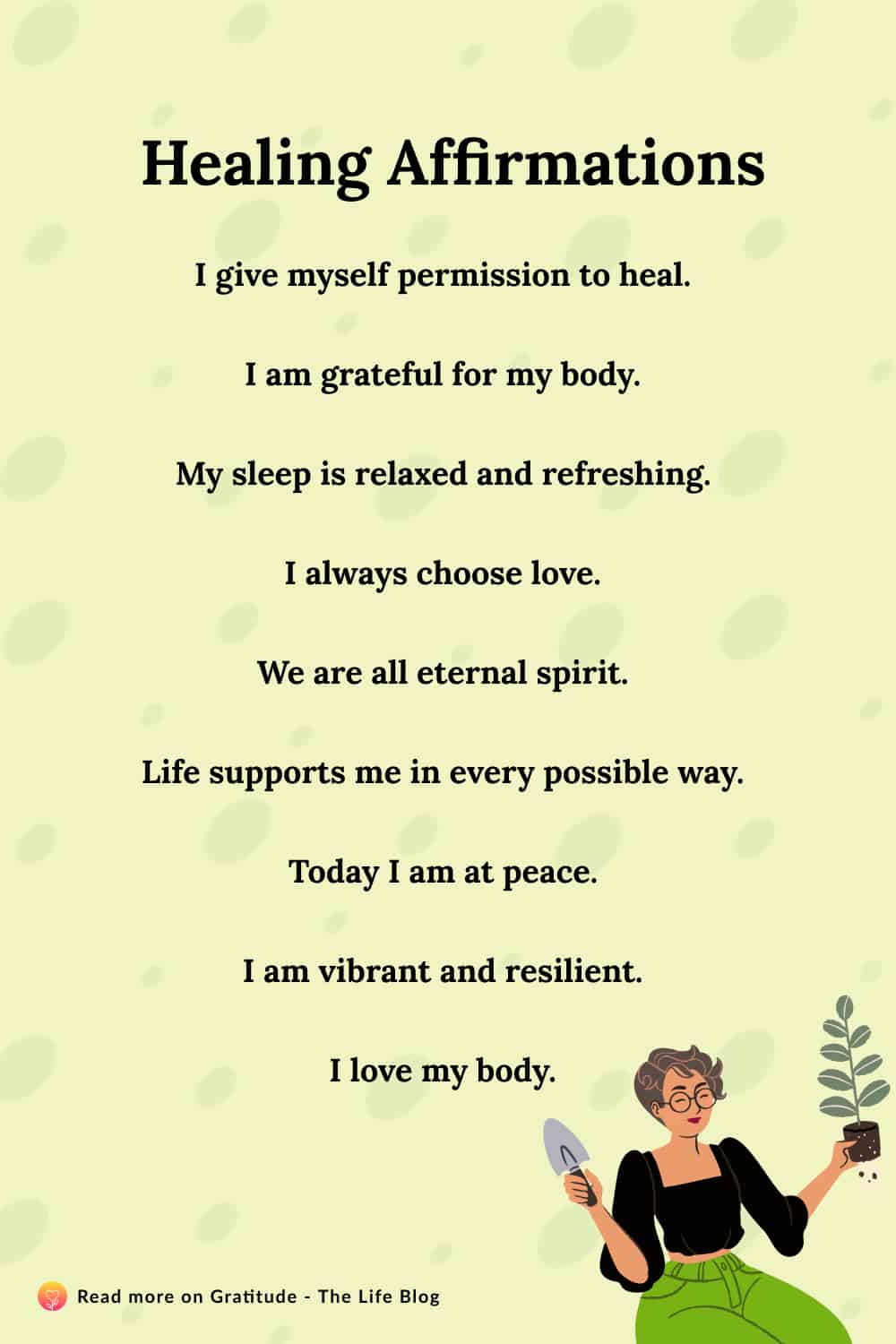
Here are some examples of healing affirmations:
- “My body knows how to heal itself.”
- “Every cell in my body is healthy and full of energy.”
- “I trust my body’s wisdom.”
- “I am grateful for my body’s ability to recover.”
The Science Of Belief: Why Mindset Matters
Belief is a powerful force in healing. When you believe you can get better, you are more likely to take positive actions like eating well, exercising, or following your doctor’s advice.
Studies have shown that optimistic patients recover faster from surgery and have better health outcomes. A positive mindset can also lower the risk of some diseases by reducing harmful stress hormones.
But belief alone is not enough. Affirmations work best when you combine them with healthy habits and medical care.
The Role Of Self-talk In Healing
Self-talk is the inner conversation you have with yourself every day. Negative self-talk can slow healing and make you feel worse. Positive self-talk, including affirmations, can lift your mood and help your body handle stress better.
Here’s a look at the difference:
| Negative Self-Talk | Positive Affirmation |
|---|---|
| “I will never get better.” | “Every day, I am healing.” |
| “My body is weak.” | “My body is strong and capable.” |
| “This pain will never end.” | “I am learning to manage my pain.” |
| “I am not in control.” | “I take positive steps for my health.” |
Switching from negative to positive self-talk takes time, but it can make a real difference in how you feel and act.
The Limits Of Affirmations In Healing
It’s important to be realistic about what affirmations can and cannot do. They are a helpful tool, but not a miracle cure.
What Affirmations Can Help With
- Reducing stress and anxiety
- Supporting mental health
- Improving sleep quality
- Boosting motivation for healthy habits
- Supporting recovery alongside medical treatment
What Affirmations Cannot Do
- Directly cure diseases or infections
- Replace medical treatment
- Guarantee complete healing
Believing in affirmations does not mean you should ignore your doctor’s advice or stop taking medication. Instead, use affirmations to support your overall healing process.
Common Mistakes People Make With Affirmations
Even though affirmations seem simple, people often use them in ways that are not effective. Here are some common mistakes and how to avoid them:
- Using Unrealistic Statements: Saying “I am perfectly healthy” when you are very sick can feel untrue and may make you feel worse. Choose affirmations that feel believable, like “I am doing my best to heal.”
- Forgetting Consistency: Affirmations work best when repeated daily. Using them only once or twice may not have much effect.
- Ignoring Emotions: If you repeat an affirmation but feel angry or doubtful, it can create inner conflict. Try to choose words that match your real feelings and hopes.
- Not Taking Action: Affirmations are most powerful when combined with healthy actions—like eating well, exercising, and following medical advice.
- Expecting Instant Results: Healing takes time. Affirmations help shift your mindset, but physical healing often needs patience and ongoing care.

Credit: www.amazon.com
How Affirmations Affect Stress And The Immune System
One of the main ways affirmations can support healing is by reducing stress. Chronic stress can weaken the immune system and slow recovery. When you use positive affirmations, your body may produce less cortisol (the stress hormone), making it easier for the immune system to work well.
Some studies show that people who practice positive self-talk have:
- Lower blood pressure
- Stronger immune responses
- Better recovery from illness
For example, in one research study, people who used daily affirmations before a stressful event had a milder stress response and recovered more quickly.
Different Types Of Healing Affirmations
Affirmations can be tailored for many different health goals. Here are some popular types:
Physical Healing
- “My body is becoming stronger every day.”
- “I give my body the rest and care it needs.”
Emotional Healing
- “I release fear and welcome peace.”
- “I am worthy of love and kindness.”
Chronic Illness Support
- “Even on tough days, I am moving forward.”
- “I trust my body’s ability to heal at its own pace.”
Pain Management
- “I am learning to cope with my pain.”
- “Comfort and healing flow through me.”
Recovery After Injury
- “My bones and muscles are healing quickly.”
- “I am patient with my body’s recovery.”
Choosing the right affirmation is personal. Pick words that make you feel calm, hopeful, and motivated.
Healing Affirmations And Meditation
Many people combine affirmations with meditation. This practice can help you focus more deeply and calm your mind, which supports healing.
A simple way to do this is:
- Find a quiet place to sit or lie down.
- Close your eyes and take a few deep breaths.
- Repeat your chosen affirmation slowly, either in your mind or out loud.
- Picture your body healing as you say the words.
- Continue for 5-10 minutes.
Practicing daily can help you feel more relaxed and optimistic.
The Role Of Visualization
Visualization is the practice of imagining a positive outcome. When you combine affirmations with visualization, you can boost their power. For example, if you say, “My knee is healing,” also picture your knee strong and pain-free.
Athletes and performers often use this method to speed up recovery or prepare for big events. Visualization can help your brain “practice” healing, which may support real physical changes.

Credit: www.youtube.com
Non-obvious Insights Beginners Miss
- Affirmations Must Feel True to Work: If your affirmation feels fake or impossible, your mind may resist it. Adjust the words until they feel believable. For example, instead of “I am fully healed,” try “I am moving toward better health every day.”
- Negative Affirmations Hurt Progress: Even if you don’t realize it, negative self-talk can slow healing. Pay attention to your inner voice and gently shift it toward more supportive words.
- You Can Write Your Own Healing Affirmations: Many beginners think they must use popular or famous affirmations. In truth, the most powerful statements are the ones you create for yourself, based on your own needs and hopes.
- Combining Affirmations With Other Practices Increases Results: Using affirmations along with journaling, gratitude, or gentle exercise can make them more effective. The more ways you support your healing, the better.
Comparing Affirmations With Other Healing Techniques
How do affirmations compare with other mind-body tools? Here’s a quick look:
| Healing Tool | Main Purpose | How It Supports Healing |
|---|---|---|
| Affirmations | Change mindset | Focuses thoughts on health and healing |
| Meditation | Calm the mind | Reduces stress and lowers blood pressure |
| Visualization | Imagine healing | Creates a mental image of recovery |
| Gratitude Practice | Increase positive emotions | Boosts mood and immune function |
| Journaling | Process emotions | Releases stress and clarifies thoughts |
Each tool works best when combined with others. For example, you might start your day with an affirmation, meditate for a few minutes, and write down what you are grateful for.
What Experts And Doctors Say
Most health experts agree that a positive mindset supports healing, but they caution against using affirmations as the only treatment. Doctors encourage patients to use affirmations as a tool for stress management, motivation, and emotional support.
The American Psychological Association notes that positive thinking and self-talk can help people cope with illness, but should always be used with proper medical care. Some therapists even teach patients how to use affirmations in therapy sessions.
For a deeper understanding, you can read more at the Wikipedia page on affirmations.
Practical Steps To Use Affirmations For Healing
If you want to try affirmations to support your health, here’s how to get started:
- Choose one or two affirmations that match your health goal.
- Repeat them daily, either in the morning, before bed, or during stressful moments.
- Say them with emotion—really feel the words as you say them.
- Write them down and put them where you can see them, like on your mirror or phone.
- Combine with healthy actions—eat well, move your body, and get enough sleep.
- Be patient. Notice small changes in your mood, energy, or stress level over time.
Frequently Asked Questions
What Are The Best Affirmations For Healing The Body?
The best affirmations are those that feel true and personal. For example, “My body is healing every day,” or “I trust my body’s ability to recover. ” Choose words that give you hope and feel believable to you.
Can Affirmations Replace Medical Treatment?
No, affirmations should not replace medical care. They can support your healing by reducing stress and improving mood, but always follow your doctor’s advice and treatment plan.
How Long Does It Take For Affirmations To Work?
Some people feel better after a few days, while others need weeks or months. Consistency is key. Use affirmations daily and give yourself time to notice changes in mood, stress, or energy.
Do Affirmations Work For Everyone?
Not everyone responds the same way. Some people feel a big difference, while others notice only small changes. The most important thing is to use affirmations that feel right for you and combine them with healthy habits.
Can Children And Older Adults Use Affirmations For Healing?
Yes, people of all ages can use affirmations. For children, keep the statements simple and fun. For older adults, focus on comfort, strength, and gratitude. Affirmations are safe and can be tailored for any age group.
Affirmations may not be a magic cure, but they are a valuable tool to support your body’s natural healing process. By combining positive words, belief, and healthy actions, you can create a stronger foundation for recovery and well-being. Remember, healing is a journey—affirmations can help you walk that path with more hope and confidence.
Credit: blog.gratefulness.me
