

Best Affirmation for Students: Boost Confidence and Focus Fast
Best Affirmation For Students
School and college life can feel overwhelming. Exams, deadlines, and new challenges make students doubt themselves. But a small, positive habit can make a big difference: using daily affirmations. These simple statements help students build confidence, focus, and motivation. When repeated often, affirmations change the way students think about themselves and their abilities. This guide will show you the best affirmations for students, explain why they work, and teach you how to use them for real results.
Many students think affirmations are just “feel good” words. But science shows that positive self-talk can actually reduce stress, improve performance, and boost mental health. In this article, you’ll find specific affirmations for different needs—like exams, overcoming anxiety, or building self-esteem.
You will also learn practical tips to create your own affirmations and how to turn them into a daily routine. Whether you’re in high school, college, or just starting to study, these insights will help you grow stronger from the inside out.
Why Affirmations Matter For Students
School is not just about grades. It’s also about learning how to handle pressure, recover from failure, and keep going when things get hard. Affirmations help in all these areas because they shape how students see themselves.
The Science Behind Affirmations
Research shows that regular positive self-talk can actually change brain patterns. When students repeat empowering statements, their brains start to believe these messages. This is called self-affirmation theory. According to psychologists, affirmations work by:
- Reducing negative thoughts
- Increasing resilience to stress
- Helping students focus on their strengths
A study from the Proceedings of the National Academy of Sciences found that self-affirmation reduced activity in the brain area linked to stress. This means affirmations are not just “wishful thinking”—they cause real changes in the brain.
Real-life Benefits
Using affirmations can help students:
- Feel less anxious before exams
- Stay motivated when studying feels boring
- Recover faster after a bad grade
- Build the courage to ask questions in class
Many top athletes and successful people use affirmations daily. For students, this tool is simple, free, and powerful—if used correctly.
How To Use Affirmations Effectively
Just reading positive statements once is not enough. To get the full benefit, students need to use affirmations the right way. Here is a step-by-step guide:
- Choose affirmations that feel true or possible for you. For example, saying “I will get perfect grades” may feel fake if you’re struggling. Instead, try “I am improving every day.”
- Say them out loud or write them down each day—morning and night work best.
- Repeat each affirmation slowly at least 3-5 times. Focus on the words and believe them as much as possible.
- Visualize what the affirmation means. Imagine yourself feeling confident, finishing your homework, or succeeding in exams.
- Stay consistent. Affirmations work best when used every day for several weeks.
- Adjust affirmations as you grow. Update or change them as your needs and goals change.
Most students give up too quickly. It takes time for affirmations to change your thinking. Stick with it, and you’ll notice small but powerful changes.
Best Affirmations For Students
Below are powerful affirmations for different challenges students face. You’ll find examples for confidence, motivation, focus, handling failure, exams, and more.
1. Affirmations For Confidence
Many students doubt themselves, especially in new situations. These statements help build a stronger, more positive self-image.
- “I am capable of learning new things.”
- “I believe in my abilities.”
- “I am proud of my progress.”
- “I can handle whatever comes my way.”
- “I trust myself to solve problems.”
Using these affirmations daily can help students speak up in class, try new activities, and take on challenges they once avoided.
2. Affirmations For Motivation
Lack of motivation is a common problem. These affirmations can spark energy and a sense of purpose.
- “I am motivated to achieve my goals.”
- “Every day, I am getting better.”
- “I enjoy the process of learning.”
- “I take action, even when I don’t feel like it.”
- “My hard work will pay off.”
Try saying these affirmations before starting your homework or studying for a big test.
3. Affirmations For Focus And Concentration
Distractions are everywhere—especially with phones and social media. These affirmations help train the mind to stay on task.
- “I am focused and attentive.”
- “I give my full attention to what I am doing.”
- “I can ignore distractions easily.”
- “I complete my tasks on time.”
- “I am present in this moment.”
Tip: Before starting a study session, pause and say these affirmations. Visualize yourself finishing your work with full focus.
4. Affirmations For Exam Success
Exams can create fear and stress. These affirmations help reduce anxiety and boost performance.
- “I am prepared for my exams.”
- “I remember what I study.”
- “I perform well under pressure.”
- “I trust my memory and understanding.”
- “I am calm and confident during tests.”
Repeat these affirmations in the days before exams, and especially right before you enter the exam room.
5. Affirmations For Overcoming Failure
Failure is part of learning. But for many students, it feels like the end. These affirmations help students see failure as a step toward success.
- “Mistakes help me learn and grow.”
- “Every setback is a lesson.”
- “I am resilient and bounce back quickly.”
- “I forgive myself and move forward.”
- “I am stronger after every challenge.”
Using these affirmations can change how students respond to bad grades or tough feedback.
6. Affirmations For Reducing Stress And Anxiety
School pressure can cause stress, worry, and even panic attacks. These affirmations help calm the mind.
- “I am in control of my feelings.”
- “I can relax and let go of worry.”
- “I handle challenges with a calm mind.”
- “I breathe deeply and feel peaceful.”
- “I trust that things will work out.”
Combine these affirmations with deep breathing or meditation for best results.
7. Affirmations For Self-esteem
Many students struggle with self-worth. These affirmations help build a healthy, positive self-image.
- “I am enough just as I am.”
- “I deserve success and happiness.”
- “I am proud of who I am becoming.”
- “I value my unique strengths.”
- “I accept myself fully.”
A healthy self-esteem helps students set boundaries, make friends, and try new things without fear.
8. Affirmations For Friendship And Social Life
School is also about relationships. Many students feel lonely or worry about fitting in. These affirmations can help.
- “I am a good friend to others.”
- “I attract positive people into my life.”
- “I am comfortable meeting new people.”
- “I am worthy of respect and kindness.”
- “I communicate clearly and confidently.”
Students who use these affirmations often feel less shy and make friends more easily.
9. Affirmations For Time Management
Balancing school, homework, and hobbies is tough. These affirmations help students manage their time wisely.
- “I use my time wisely and effectively.”
- “I plan and organize my day well.”
- “I finish what I start.”
- “I set priorities and stick to them.”
- “I make time for both work and fun.”
Try saying these affirmations while making your daily schedule or to-do list.
10. Affirmations For Creativity And Curiosity
Learning should be exciting. These affirmations encourage students to ask questions and think in new ways.
- “I am curious and eager to learn.”
- “I enjoy finding new solutions.”
- “My ideas are valuable.”
- “I think creatively and see many possibilities.”
- “I am open to new experiences.”
Students who use these affirmations are more likely to enjoy learning and take risks in their thinking.
Creating Your Own Affirmations
While ready-made affirmations are helpful, the most powerful ones are personal. Here’s how to create your own:
- Think about your main challenge (e.g., fear of failure, lack of focus).
- Use positive, present tense language. Say “I am” or “I can,” not “I will” or “I want.”
- Keep it short and simple. The best affirmations are easy to remember and repeat.
- Make it believable. If you don’t believe the statement, adjust it. For example, instead of “I am a genius,” try “I am improving every day.”
- Focus on action or feeling. Statements like “I am calm” or “I do my best” work well.
Examples:
- If you struggle to speak in class: “I share my ideas with confidence.”
- If you get nervous before tests: “I stay calm and do my best during exams.”
How To Build An Affirmation Routine
Turning affirmations into a daily habit is the key to success. Here is a simple routine:
- Pick 3-5 affirmations. Choose ones that match your current goals.
- Set a regular time. Morning and before bed are best.
- Stand or sit up straight. Good posture helps you feel confident.
- Say affirmations out loud. Speaking helps your brain remember better.
- Write them down. Keep a notebook and write each affirmation 3 times.
- Repeat for at least 21 days. It takes time for new habits to stick.
Pro tip: Place sticky notes with your affirmations on your mirror, notebook, or laptop. This keeps them in your mind all day.
Common Mistakes Students Make With Affirmations
Affirmations are simple, but students sometimes use them in ways that don’t work. Avoid these mistakes:
- Choosing unrealistic statements. If the affirmation feels false, your mind will reject it.
- Not repeating them often enough. Once a week is not enough.
- Ignoring feelings. If an affirmation makes you uncomfortable, explore why. Adjust it until it feels right.
- Using only words. Combine affirmations with action—study, ask questions, and review your progress.
- Giving up too soon. Change takes time. Stick with your routine.
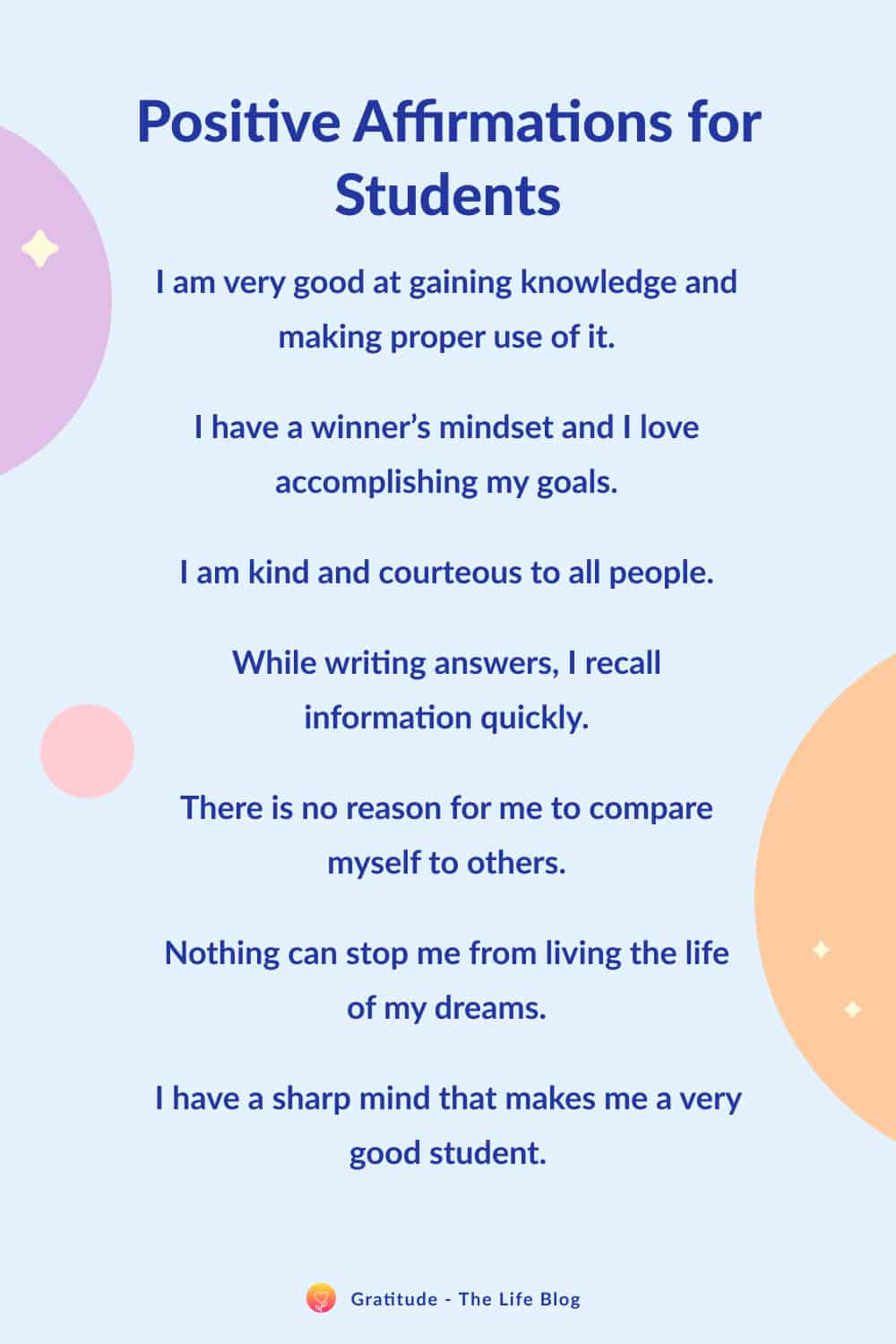
Credit: blog.gratefulness.me
Success Stories: How Affirmations Changed Student Lives
Many students have improved their lives by using affirmations. Here are a few examples:
- Maria, a college student, was terrified of public speaking. She repeated, “I speak clearly and confidently” every morning for a month. By the end, she volunteered to present in class and felt much less nervous.
- Akash struggled with math. He used the affirmation, “I am improving in math every day.” This helped him stay patient and keep practicing, even when he made mistakes. His grades improved after a few weeks.
- Sara felt lonely at her new school. She said, “I attract kind friends” each day. Soon, she started talking to new classmates and made two good friends.
The key lesson: Affirmations help students change their thinking, which leads to new actions and better results.
Data: Affirmations And Academic Performance
Here’s a comparison of students who use affirmations regularly versus those who don’t.
| Group | Stress Levels | Average Grades | Self-Confidence |
|---|---|---|---|
| Use Affirmations | Lower | Higher | Stronger |
| Don't Use Affirmations | Higher | Lower | Weaker |
This shows that students who use affirmations not only feel better but also perform better.
Comparing Popular Student Affirmations
Different affirmations work for different needs. Here is a comparison of common affirmations for students:
| Affirmation | Main Focus | Best Time to Use |
|---|---|---|
| I am confident | Self-Esteem | Before class or presentations |
| I am focused | Concentration | Before studying |
| I am calm and relaxed | Stress Reduction | During high-pressure moments |
| I am improving every day | Growth Mindset | Morning routine |
Choose the affirmation that fits your need and use it at the right time for best results.
Insightful Tips For Students Using Affirmations
- Start small. Don’t try to change everything at once. Begin with one area—like confidence or focus—and build from there.
- Record yourself. Listen to your own voice saying affirmations. This can make them even more powerful.
- Pair with action. For example, after repeating “I am organized,” spend five minutes cleaning your desk.
- Share with friends. Doing affirmations together can increase motivation and create a positive environment.
- Track your progress. Notice changes in your mood, grades, or how you handle stress.
- Combine with other habits. Pair affirmations with exercise, meditation, or journaling for even bigger benefits.
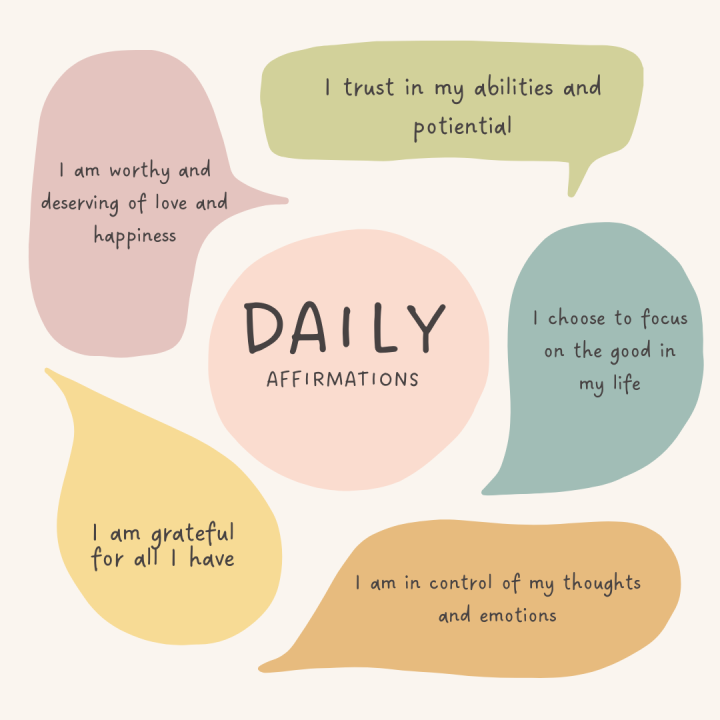
Credit: blacksourcemedia.com
The Role Of Affirmations In Mental Health
Affirmations are not just for grades or exams. They also help students stay mentally strong. Positive self-talk is linked to lower rates of anxiety and depression. According to research published by the American Psychological Association, students who practice affirmations show more resilience and better emotional balance.
However, affirmations are not magic. If you are facing serious stress or sadness, talk to a counselor or mental health professional. Affirmations are a helpful tool, but not a replacement for professional help.
How Teachers And Parents Can Support Affirmation Practice
Support from adults makes a big difference. Here’s how teachers and parents can help:
- Model the habit. Use affirmations yourself and share your experiences.
- Encourage, don’t pressure. Let students choose affirmations that matter to them.
- Create a positive environment. Use encouraging words and celebrate effort, not just results.
- Give reminders. Place positive quotes around the classroom or home.
- Listen. If a student finds an affirmation hard, help them adjust it to feel more comfortable.
When adults believe in students, students start to believe in themselves.
Credit: inside.ewu.edu
Affirmation Myths Students Should Ignore
There are many wrong ideas about affirmations. Here are the most common myths:
- “Affirmations are only for weak people.” This is false. Even top athletes and leaders use them.
- “You must believe every word right away.” It’s normal if affirmations feel strange at first. With time, they become more natural.
- “Affirmations are just daydreams.” Science shows they can change thinking and behavior.
- “One affirmation solves everything.” Change takes time, and affirmations are just one tool.
- “You can’t make your own.” Personal affirmations are often the most powerful.
Understanding these myths helps students use affirmations with the right mindset.
Signs Your Affirmations Are Working
How do you know if your affirmations are making a difference? Look for these signs:
- You feel more confident and less anxious in school situations.
- You handle stress and setbacks with a calmer mind.
- You notice small improvements in grades or focus.
- Your self-talk becomes more positive automatically.
- You feel more motivated to study and participate.
Change Is Slow But Steady. Celebrate Even Small Wins!
Inspirational Quotes To Boost Student Motivation
Sometimes, a quote can work as a powerful affirmation. Here are a few favorites:
- “Success is not the key to happiness. Happiness is the key to success.” —Albert Schweitzer
- “Believe you can and you’re halfway there.” —Theodore Roosevelt
- “The only way to do great work is to love what you do.” —Steve Jobs
- “Mistakes are proof that you are trying.” —Anonymous
Consider choosing a quote that inspires you and turning it into a daily affirmation.
When Affirmations Are Not Enough
Affirmations are a helpful tool, but sometimes students need more support. If you experience:
- Ongoing sadness or anxiety
- Trouble sleeping or eating
- Thoughts of giving up
It’s important to talk to a counselor, teacher, or trusted adult. Affirmations are not a replacement for professional help.
Useful Resources For Students
To learn more about affirmations and positive thinking, check out resources like Positive Psychology. You’ll find more examples, tips, and research to support your growth.
Frequently Asked Questions
What Is The Best Affirmation For Students Before An Exam?
One of the best affirmations before an exam is: “I am calm, confident, and prepared.” This statement helps reduce anxiety and reminds you to trust your preparation.
How Many Times A Day Should I Repeat Affirmations?
For best results, repeat each affirmation at least 3-5 times in the morning and again before bed. Consistency matters more than the exact number.
Can Affirmations Improve My Grades?
Affirmations alone won’t raise your grades, but they can boost confidence, focus, and motivation. This makes it easier to study and perform well, which often leads to better grades.
What If I Don’t Believe My Affirmation?
If an affirmation feels untrue, change the wording to something you can believe. For example, instead of “I am the best student,” try “I am improving every day. ”
Are Affirmations A Replacement For Studying?
No. Affirmations support your mindset, but you still need to study and do your homework. Use affirmations to help you stay motivated and focused during your studies.
Building a positive mindset is a journey, not a race. Affirmations help students develop inner strength and believe in their potential. With the right statements, daily practice, and a supportive environment, every student can face challenges with courage and grow into their best self.
