

Affirmations to Start the Work Day: Boost Your Morning Motivation
Starting your work day can sometimes feel overwhelming. You may wake up with worries about tasks, meetings, or deadlines. Maybe you feel tired or unmotivated. But you can change your mindset before you even sit at your desk. One powerful way to do this is with affirmations—short, positive statements that you repeat to yourself. Affirmations can help you feel more confident, focused, and ready for the day ahead.
You might wonder if saying a few words to yourself really makes a difference. But research shows that positive self-talk can improve mood, reduce stress, and even boost performance at work. Just a few minutes of daily affirmations can help you start your day with purpose, energy, and a clear mind. Let’s explore how you can use affirmations every morning to transform your work day, including why they work, how to create your own, and examples you can start using right now.
Why Affirmations Matter At Work
Many people face stress before the work day even begins. Emails, projects, and expectations can fill your mind the moment you wake up. Affirmations are more than just feel-good phrases. They are a tool to help reset your thoughts and focus on what you can control. When you repeat positive statements, your brain starts to believe them. This is called self-affirmation theory.
Studies show that people who use affirmations feel less anxious and more in control. For example, research from Carnegie Mellon University found that affirmations can protect against the negative effects of stress. When you start your day with an affirmation, you are training your brain to look for solutions, not problems.
This small habit can make a big difference in your attitude and productivity.
How Affirmations Work
You may have heard of the saying, “What you think, you become.” Affirmations help you guide your thinking in a positive direction. Here’s how it works:
- Repetition: When you repeat a phrase, your mind starts to focus on it.
- Belief: Over time, your brain accepts this positive statement as true.
- Behavior: Your actions start to match your new beliefs, leading to better outcomes.
For example, if you say, “I am focused and capable,” you may feel more organized and ready to tackle your work tasks. If you repeat, “I handle challenges calmly,” you are more likely to stay calm when a problem comes up.
Benefits Of Morning Affirmations
Using affirmations at the start of your work day offers many advantages:
- Reduces anxiety: Starting with positive thoughts can lower stress and worry.
- Increases confidence: Reminding yourself of your strengths helps you face challenges.
- Boosts motivation: Positive statements can help you feel more excited to work.
- Improves focus: Affirmations help you concentrate on your goals.
- Encourages resilience: When problems happen, you are more prepared to handle them.
Here’s a comparison of common morning feelings with and without affirmations:
| Without Affirmations | With Affirmations |
|---|---|
| Worried about tasks | Focused on what you can achieve |
| Feeling tired or stuck | Motivated and energized |
| Negative self-talk | Positive self-image |
| Low confidence | Belief in your abilities |
How To Use Affirmations Effectively
Affirmations are simple, but there are a few tips to make them more powerful:
- Be specific: Use affirmations that fit your work goals or challenges.
- Use the present tense: Say “I am successful” instead of “I will be successful.”
- Keep it positive: Focus on what you want, not what you fear.
- Repeat regularly: Make affirmations a daily habit.
- Say them out loud: Hearing your own voice helps your brain believe the words.
- Write them down: Writing reinforces the message.
Try saying your affirmations in front of a mirror, or write them on sticky notes and place them near your desk. You can also set reminders on your phone to repeat your affirmation during the day.
30 Powerful Affirmations To Start The Work Day
Here are thirty examples you can use or adapt for your own needs. Each one is designed to help you start your work day with strength and positivity.
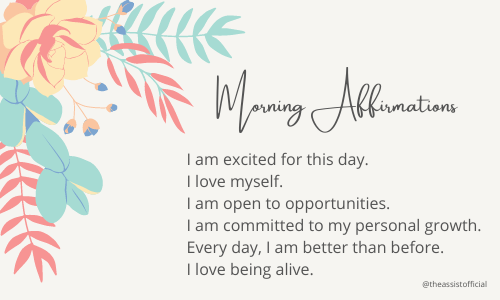
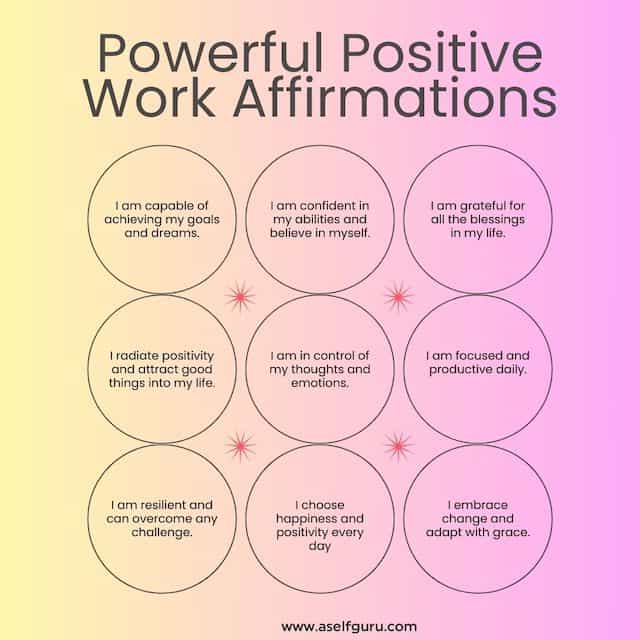
- I am ready to face today’s challenges with confidence.
- I am focused, organized, and productive.
- I bring value to my team and workplace.
- I handle stress calmly and effectively.
- I am proud of my skills and abilities.
- I make a difference in my work.
- I am open to new ideas and opportunities.
- I learn from every experience.
- I am in control of my time and priorities.
- I communicate clearly and confidently.
- I solve problems with creativity and patience.
- I am respected and appreciated at work.
- I achieve my goals through hard work and focus.
- I stay positive, even when things get tough.
- I am always improving and growing.
- I trust myself to make good decisions.
- I am a valuable part of my team.
- I manage my workload efficiently.
- I balance work and rest for my well-being.
- I am grateful for the job I have.
- I accept feedback as a tool for growth.
- I inspire others with my attitude.
- I am confident in my abilities to succeed.
- I set boundaries to protect my energy.
- I focus on solutions, not problems.
- I celebrate my achievements, big and small.
- I adapt easily to change.
- I bring enthusiasm to my work.
- I am patient with myself and others.
- I end each day feeling proud of what I accomplished.
Customizing Affirmations For Your Work Day
Every job is different. What works for an office manager might not fit a teacher or a healthcare worker. The best affirmations are the ones that speak to your daily reality. Here’s how to create your own:
- Identify your biggest challenge: Is it staying focused, handling stress, or speaking up in meetings?
- Turn it into a positive statement: Instead of “I don’t want to be nervous in meetings,” say “I speak in meetings with confidence.”
- Use your own words: Your affirmation should sound natural to you.
If you struggle with feeling overwhelmed by emails, your affirmation could be: “I handle my emails efficiently and keep my inbox organized.” If you’re working toward a promotion, try: “I am growing into a leader every day.”
Credit: ryanzofay.com
Combining Affirmations With Other Morning Routines
Affirmations work even better when combined with healthy morning habits. Here are a few ways to add them into your routine:
- During your morning walk: Repeat your affirmation as you walk to work or around your home.
- While making coffee or tea: Say your affirmation as you wait for your drink.
- As you get dressed: Look in the mirror and repeat your chosen statement.
- When you arrive at your desk: Take a deep breath and say your affirmation before opening your computer.
Pairing affirmations with deep breathing or a short meditation can help you feel even calmer and more prepared.
Affirmations For Different Work Situations
You may need different affirmations depending on what your work day looks like. Here are some ideas for common situations:
For High-stress Days
- I remain calm and steady under pressure.
- I handle challenges one step at a time.
- I am capable of finding solutions.
For Teamwork And Collaboration
- I listen and share ideas with respect.
- I am a supportive and reliable teammate.
- I build positive relationships with my coworkers.
For Leadership And Management
- I lead by example and inspire my team.
- I make decisions with confidence.
- I support my team’s growth and success.
For Remote Or Work-from-home Days
- I create a productive workspace at home.
- I stay connected with my team, even from a distance.
- I manage my time and tasks well, wherever I am.
For Starting A New Job Or Role
- I am learning and growing in my new position.
- I adapt quickly to new challenges.
- I bring fresh ideas and energy to my team.
Common Mistakes With Affirmations (and How To Avoid Them)
Even though affirmations are simple, some people make mistakes that limit their power. Here are common problems and tips to avoid them:
- Being too vague: “I will do well at work” is less effective than “I handle my tasks with focus and energy.”
- Focusing on the negative: Avoid words like “don’t,” “can’t,” or “won’t.” Your brain responds better to positive language.
- Lack of belief: If you don’t believe what you’re saying, start with something more believable. For example, “I am learning to handle stress better each day.”
- Saying too many affirmations: Focus on 1-3 key affirmations each morning instead of a long list.
- Forgetting to act: Affirmations work best when you also take action toward your goals.
The Science Behind Affirmations
You might be curious about why affirmations work. According to psychologists, affirmations activate the reward centers in the brain. This makes you feel good, which encourages you to repeat positive behavior. A study from the University of Pennsylvania found that people who used affirmations before stressful tasks performed better and felt more confident.
Another interesting fact: Your brain cannot always tell the difference between imagination and reality. When you visualize yourself succeeding and repeat positive statements, your brain starts to build new pathways. Over time, this makes it easier to act with confidence and handle challenges.
Here’s a comparison of brain activity during negative self-talk and positive affirmations:
| Negative Self-Talk | Positive Affirmations |
|---|---|
| Activates stress response | Activates reward centers |
| Increases anxiety | Improves mood |
| Reduces motivation | Boosts motivation |
Credit: snacknation.com
Data And Statistics: Affirmations At Work
To understand the impact of affirmations, let’s look at some data:
- According to the American Psychological Association, 64% of people say work is a significant source of stress.
- A survey by LinkedIn found that 67% of professionals say positive self-talk helps them feel more confident at work.
- Research published in the journal Social Cognitive and Affective Neuroscience shows that affirmations can reduce the effects of stress and improve problem-solving abilities.
- Companies that encourage positive thinking report higher employee satisfaction and productivity.
Here’s a simple overview of how affirmations can influence key areas at work:
| Work Area | Impact of Affirmations |
|---|---|
| Productivity | Improved focus and task completion |
| Confidence | Greater willingness to take on new challenges |
| Stress Management | Lower anxiety, better coping skills |
| Teamwork | More positive communication and collaboration |
Real-life Examples Of Affirmations In Action
To see how affirmations can help, consider these real-life examples:
- Maria, a project manager, used to feel overwhelmed by her long to-do list. She started each day saying, “I prioritize my tasks and complete them one by one.” Over time, she noticed she felt less stressed and more in control.
- Jamal, a sales executive, struggled with rejection. He began using, “I learn from every client interaction and keep improving.” This helped him stay positive after tough calls.
- Sara, an IT specialist, was nervous about giving presentations. Her affirmation, “I share my knowledge with clarity and confidence,” helped her speak up more often in meetings.
These stories show that affirmations are not just for people with a lot of free time. They can work for anyone, in any type of job, if used consistently.
Creating An Affirmation Plan For Your Work Day
To get the most out of affirmations, it helps to have a simple plan. Here’s a step-by-step guide:
- Choose 1-3 affirmations that fit your work goals or feelings.
- Say them out loud each morning before you start work.
- Write them down in a notebook or on sticky notes.
- Repeat them during breaks or whenever you feel stressed.
- Reflect at the end of the day: Did your affirmation help? What could you change?
If you want extra guidance, you can find many resources online. For example, Psychology Today offers tips and articles about the science of affirmations and how to use them.
Non-obvious Insights For Success With Affirmations
Many people know the basics of affirmations, but here are two important tips that beginners often miss:
- Pair your affirmations with small actions: If your affirmation is “I am organized,” spend two minutes tidying your desk right after saying it. Linking words with action helps your brain believe the statement.
- Visualize the feeling, not just the result: Instead of only saying “I succeed at work,” also imagine how success feels—relaxed shoulders, a smile, or a sense of pride. This makes the affirmation more powerful.
Another insight: If you struggle to believe your affirmation, add the phrase “I am learning to…” or “I am becoming…” This makes it easier for your mind to accept.
Credit: aselfguru.com
Making Affirmations Part Of Your Workplace Culture
If you are a manager or team leader, you can encourage your team to use affirmations. This doesn’t mean forcing everyone to say the same words each day. Instead, you can:
- Share a positive affirmation at the start of a meeting.
- Create a “positivity board” where team members can post their own affirmations.
- Encourage employees to set daily intentions or goals.
- Model positive self-talk yourself.
When teams focus on positive thinking, they tend to communicate better, solve problems faster, and feel more satisfied at work.
Affirmations And Long-term Work Success
Using affirmations is not just a “quick fix” for a bad mood. Over time, they help you build resilience, confidence, and a growth mindset. If you use affirmations every day, you may notice:
- Less stress and anxiety about work.
- More excitement to start your day.
- Better relationships with coworkers.
- A greater sense of achievement.
Remember, the key is consistency. Like any habit, affirmations take time to show results. But the more you use them, the stronger their impact on your work life.
Frequently Asked Questions
What Are The Best Times To Say Affirmations During The Work Day?
The best time is first thing in the morning, before you start work. But you can also use affirmations during breaks, before meetings, or any time you feel stressed. Some people repeat their affirmations at lunch or before important tasks. Find a time that fits your routine and helps you feel centered.
How Long Does It Take For Affirmations To Work?
Affirmations are not an instant solution. For most people, it takes a few weeks of daily practice to notice a real change. The key is to be consistent and patient. Over time, your brain will start to accept the positive messages and you will notice changes in your mood and behavior.
Can Affirmations Help With Specific Work Problems, Like Public Speaking Or Time Management?
Yes, affirmations can be tailored to any challenge. For public speaking, try “I speak clearly and confidently.” For time management, use “I use my time wisely and stay on track.” The more specific your affirmation, the more helpful it will be for your situation.
Should I Write My Own Affirmations Or Use Examples From Others?
It’s best to create your own affirmations because they will feel more personal and meaningful. However, you can start with examples from articles or books, and then adjust them to fit your needs. What matters most is that your affirmation sounds true and positive to you.
Do Affirmations Work For Everyone?
Most people can benefit from affirmations, but results can vary. If you have strong negative beliefs, it may take longer to see changes. Combining affirmations with other healthy habits, like exercise and good sleep, can help. If you have serious anxiety or depression, consider talking to a professional in addition to using affirmations.
Starting your work day with positive affirmations is a simple but powerful habit. With practice, these short statements can help you feel more confident, focused, and ready to handle whatever comes your way. Whether you’re facing a busy week or just want to improve your mindset, affirmations can be the boost you need.
Try adding them to your morning routine and watch how your attitude and work success begin to change.
