

Affirmations to Start the Work Day: Boost Productivity Instantly
Starting your workday in the right mindset can change everything. Many people rush into tasks, answer emails, and deal with stress before they even take a breath. But what if you could set a positive tone every morning, no matter what challenges you face? Affirmations—simple, strong statements you say to yourself—help you build that positive foundation. They can boost your confidence, reduce anxiety, and keep you focused throughout the day. In fact, science shows that what you tell yourself in the morning has a strong effect on your performance, your mood, and even your relationships at work.
This article is your complete guide to using affirmations to start the work day. You’ll learn why they work, how to use them, and which affirmations are the most effective for different situations. You’ll find practical tips, real examples, and a deeper look at how affirmations can become a powerful tool in your career. Whether you work from home or in a busy office, these ideas can help you shape your day, one positive thought at a time.
Why Affirmations Matter For Your Workday
Many people underestimate the power of their own thoughts. But research in psychology shows that self-talk—the things we repeat to ourselves—directly affects our feelings and actions. Positive affirmations can rewire your brain for success. When you start your day with strong statements like, “I am ready for new challenges,” or “I handle stress with calm,” your mind begins to believe these ideas. This isn’t just wishful thinking. Repeating affirmations helps you:
- Reduce anxiety before meetings or tasks
- Increase motivation to finish important work
- Build self-confidence for new challenges
- Stay focused even when distractions appear
For example, a study published in the journal *Social Cognitive and Affective Neuroscience* found that people who practiced self-affirmation showed less stress and more problem-solving ability during difficult tasks. This means your words really do matter.
How To Use Affirmations Effectively
Affirmations are simple, but using them the right way makes a big difference. Here’s how you can get the best results:
- Be Specific. Instead of “I am successful,” try “I handle my work with confidence and clarity.”
- Use Present Tense. Say affirmations as if they are already true: “I am organized,” not “I will be organized.”
- Repeat Daily. Consistency is key. Repeat your affirmations every morning, out loud if possible.
- Visualize Success. As you say each affirmation, imagine yourself acting that way at work.
- Write Them Down. Keep a list in your notebook, or post them on your desk or computer.
A common mistake is saying affirmations without feeling or attention. The more you believe and visualize, the stronger the effect.
Powerful Affirmations To Start The Work Day
Below are some of the most effective affirmations for a strong, positive work day. You don’t need to use all of them—choose the ones that fit your situation and goals. Mix and match, or create your own based on these examples.
Affirmations For Confidence
- “I am capable of handling anything that comes my way.”
- “I trust my skills and experience.”
- “My ideas and opinions are valuable.”
- “I am proud of my work and what I bring to my team.”
When you feel doubt or worry, these affirmations remind you of your strengths. They are especially useful before presentations, meetings, or interviews.
Affirmations For Focus
- “I give my full attention to each task.”
- “I am present and focused throughout my work.”
- “Distractions do not control my day.”
- “My mind is clear and sharp.”
Distractions are everywhere—emails, phones, noisy offices. Starting your day with these affirmations helps you set clear boundaries and keep your mind on what matters most.
Affirmations For Productivity
- “I finish my top priorities today.”
- “I use my time wisely and efficiently.”
- “I move forward with each action I take.”
- “Every small step brings me closer to my goals.”
These statements boost your energy and remind you that progress is made one step at a time.
Affirmations For Stress Management
- “I stay calm under pressure.”
- “I breathe deeply and release tension.”
- “I handle challenges with a positive attitude.”
- “I am in control of my reactions.”
Stress is a normal part of any job. These affirmations help you respond with resilience instead of panic.
Affirmations For Teamwork
- “I communicate clearly and listen with respect.”
- “I support my colleagues and celebrate their success.”
- “We achieve more together as a team.”
- “I am a positive force in my workplace.”
Work is rarely done alone. These affirmations help you build better relationships and a more supportive environment.
Affirmations For Leadership
- “I lead by example and inspire others.”
- “I make decisions with confidence and care.”
- “I guide my team with clarity and vision.”
- “I create opportunities for growth.”
Even if you are not a manager, these affirmations can help you show leadership in your actions and attitude.
Affirmations For Creativity
- “I am open to new ideas and solutions.”
- “My creativity flows naturally.”
- “I turn problems into opportunities.”
- “I see possibilities where others see obstacles.”
Creativity isn’t just for designers or writers. Everyone faces problems that need fresh thinking.
Affirmations For Self-care
- “I respect my limits and take breaks when needed.”
- “My well-being is important to my success.”
- “I balance work and rest.”
- “I deserve time to recharge.”
Burnout is common, especially in high-pressure jobs. These affirmations remind you that taking care of yourself is part of doing your best work.
Affirmations For Positive Relationships
- “I connect easily with others.”
- “I bring kindness and patience to my interactions.”
- “I resolve conflicts with understanding.”
- “I am grateful for the support of my colleagues.”
Building positive relationships at work can make even the hardest days easier.
Affirmations For Personal Growth
- “I learn and improve every day.”
- “Mistakes are chances to grow.”
- “I welcome feedback as a tool for progress.”
- “I am always becoming better.”
Growth doesn’t stop when you get the job. These affirmations help you stay open and ready to learn.
Choosing The Right Affirmations For You
Not every affirmation fits every person or situation. For best results, choose affirmations that match your current needs and goals. Here’s a simple way to pick the right ones:
| Situation | Suggested Affirmation Type | Example |
|---|---|---|
| Feeling anxious before a meeting | Confidence / Stress Management | “I speak clearly and calmly.” |
| Starting a big project | Focus / Productivity | “I break big tasks into small steps.” |
| Working with a difficult colleague | Teamwork / Positive Relationships | “I respond with patience and understanding.” |
| Feeling overwhelmed by tasks | Stress Management / Self-Care | “I prioritize and take one thing at a time.” |
| Leading a team | Leadership / Personal Growth | “I inspire and support my team.” |
Try different affirmations for a week and notice which ones give you the biggest boost. Adjust your list as your needs change.
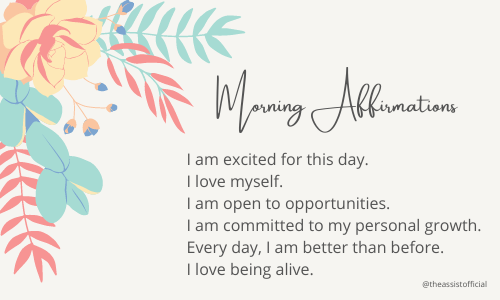
Credit: snacknation.com
Common Challenges When Using Affirmations
While affirmations are simple, they can feel awkward at first. Here are some common challenges and how to overcome them:
1. Feeling Silly Or Fake
Many people feel strange talking to themselves. Remember, affirmations are not about pretending. They are about setting your intention and training your brain. With practice, they feel more natural.
2. Not Believing The Words
At first, you might not believe your affirmations. That’s normal. Start with statements that feel mostly true, then build up. For example, instead of “I am always confident,” try “I am learning to be more confident every day. ”
3. Forgetting To Practice
It’s easy to forget affirmations during a busy morning. Connect them to a habit you already have—like brushing your teeth, making coffee, or turning on your computer.
4. Using Vague Affirmations
General statements don’t have much power. Get specific about what you want to feel or achieve.
5. Giving Up Too Soon
It takes time for affirmations to work. Stick with them for at least two weeks and notice the changes in your mood, energy, and focus.
Making Affirmations Part Of Your Routine
To get the most from affirmations, make them a daily habit. Here’s how you can fit them into your morning, even if you are busy:
- Write your top three affirmations on a sticky note and place it where you’ll see it—your computer, phone, or bathroom mirror.
- Say your affirmations out loud while you stretch or take a few deep breaths.
- Set a reminder on your phone to repeat your affirmations after you arrive at work.
- Share an affirmation with a friend or coworker—encouragement is powerful when shared.
- End your lunch break with a quick affirmation to reset your energy for the afternoon.
Small changes make a big difference when repeated every day.
Credit: ryanzofay.com
Practical Examples: Affirmations In Real Work Situations
Let’s look at some real-life work challenges and how affirmations can help:
Example 1: Preparing For A Presentation
Maria feels nervous before her weekly team presentation. She uses these affirmations:
- “I am well-prepared and ready.”
- “I share information clearly and confidently.”
- “I enjoy helping my team learn.”
By repeating these, Maria starts to feel less anxious and more excited about sharing her ideas.
Example 2: Dealing With A Difficult Client
James has a challenging client meeting. He chooses:
- “I listen with patience and understanding.”
- “I stay calm, no matter what happens.”
- “I find solutions, not problems.”
These affirmations help James stay calm and professional, even if things get tough.
Example 3: Starting A New Job
Lina is starting her first day at a new company. She says:
- “I am open to learning new things.”
- “I make positive connections easily.”
- “I belong here and will do my best.”
This helps her feel more at home and confident, even in a new environment.
The Science Behind Affirmations
Affirmations are not just feel-good quotes. They are backed by real science. Studies show that repeating positive statements can activate the reward centers in your brain, increase self-confidence, and even improve performance at work.
One study found that people who practiced self-affirmation were more open to feedback and handled stress better. Another study from *Carnegie Mellon University* showed that affirmations can reduce the physical effects of stress, like high blood pressure.
Here’s a summary of what science says:
| Benefit | How Affirmations Help | Research Highlight |
|---|---|---|
| Lower Stress | Helps calm anxiety before tasks | People who used affirmations had better problem-solving under pressure |
| Higher Motivation | Boosts energy for challenging projects | Affirmed individuals set higher goals for themselves |
| Better Focus | Reduces distractions and improves concentration | Brain scans show increased activity in focus areas |
| Improved Well-being | Supports positive mood and satisfaction at work | Daily affirmations linked to greater happiness |
If you want to learn more about the science of affirmations, check out this Wikipedia article on self-affirmation.
Customizing Affirmations For Different Work Environments
Workplaces are unique. What works in a quiet office may not suit a fast-paced factory or a remote job. Here are some tips for using affirmations in different settings:
Office Settings
- Use affirmations to start your day before you check emails.
- Keep a list in your desk drawer for quick reminders.
- Start meetings with a group affirmation to boost team spirit.
Remote Work
- Say affirmations before video calls to reduce “Zoom anxiety.”
- Use sticky notes on your computer for regular reminders.
- Include affirmations in your daily planner or digital task list.
Customer Service Roles
- Repeat affirmations before handling difficult calls or customers.
- Focus on statements that support patience, empathy, and resilience.
- Share positive affirmations with your team to build morale.
Leadership Roles
- Use affirmations to prepare for decision-making and leading meetings.
- Focus on statements about vision, support, and growth.
- Encourage your team to use affirmations for their own development.
Advanced Tips: Taking Affirmations To The Next Level
Once you’re comfortable with basic affirmations, you can deepen your practice:
- Combine Affirmations with Deep Breathing. Take three slow breaths while repeating each statement. This calms your body and mind together.
- Record Yourself. Make a quick audio of your top affirmations and listen to it on your way to work.
- Write a Morning Affirmation Journal. Spend five minutes writing your affirmations and how you want to feel today.
- Pair Affirmations with Action Steps. After your affirmation, write one small action you can take to support it. For example, after “I am organized,” make your to-do list for the day.
- Create Visual Affirmations. Use images or vision boards with your statements to engage both mind and senses.
These advanced tools help you get even more benefit, especially as you build the habit.
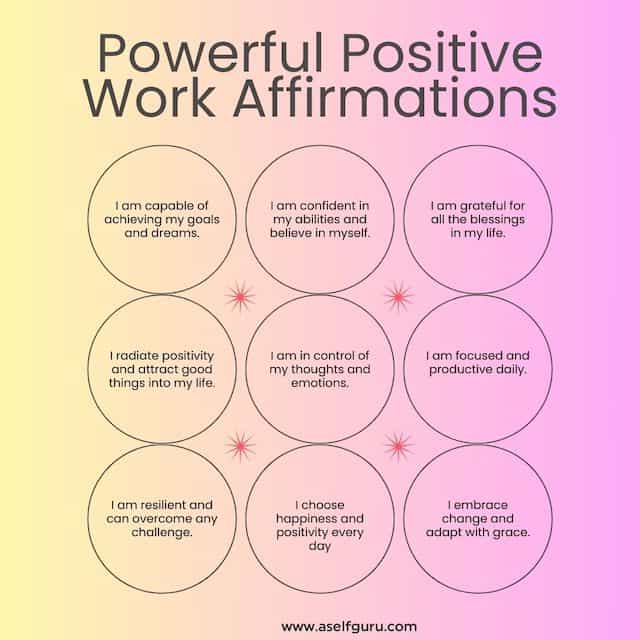
Credit: aselfguru.com
Common Myths About Affirmations
Some people believe affirmations are just wishful thinking or “magic words.” Here are the facts:
- Affirmations are not magic. They work best when combined with action.
- You don’t have to be positive all the time. It’s okay to have doubts or bad days.
- You can still use affirmations if you are not naturally optimistic. They help train your brain, even if it’s hard at first.
- Affirmations are not just for “motivational” people. Anyone can use them, in any field or role.
The key is consistency and a willingness to try.
Mistakes To Avoid When Using Affirmations
Here are some pitfalls beginners often face, and how to avoid them:
- Being too vague. Instead of “I am successful,” try “I complete my tasks with care and focus.”
- Choosing too many affirmations. Focus on 3–5 that matter most to you.
- Only saying affirmations when things go wrong. Make them part of your daily routine, not just for tough times.
- Forgetting to adjust affirmations as you grow. Update your list as your career and life change.
Avoiding these mistakes will help you see real results faster.
How Affirmations Improve Workplace Culture
Affirmations are not just a personal tool—they can influence the whole workplace. When people start their day with a positive mindset, teams become more supportive, communication improves, and problems are solved faster. Leaders who share affirmations can inspire their teams and set a tone of growth and possibility.
Some companies even include affirmations in their team meetings or newsletters. This is especially effective in industries with high stress or fast change, like healthcare, sales, or customer service.
Evidence From Real Companies
Many businesses now use affirmations as part of their team culture. For example, a tech company reported that employees who used daily affirmations had:
- 20% less reported stress
- Higher job satisfaction
- Improved teamwork scores
Another company found that affirmations shared at the start of meetings led to more creative ideas and fewer conflicts.
While every company is different, these examples show the power of a positive, intentional mindset.
Adapting Affirmations For Different Cultures And Languages
Affirmations are most powerful when they feel natural to you. If English is not your first language, try:
- Translating affirmations into your mother tongue
- Adjusting phrases so they sound normal and comfortable
- Using cultural sayings or proverbs with similar meaning
The goal is to make affirmations feel personal and believable, not forced.
Tracking Your Progress With Affirmations
You may wonder if affirmations are working for you. Here’s how to track your progress:
- Keep a simple journal. Write your affirmations each morning and note how you feel at the end of the day.
- Rate your mood and energy from 1 to 10 before and after affirmations.
- Notice changes in your behavior—are you more focused, confident, or calm?
- Ask for feedback from a trusted colleague or friend.
Most people see small changes in the first week, and bigger shifts after two to four weeks. The key is consistency.
Frequently Asked Questions
What Are Affirmations And How Do They Work?
Affirmations are positive statements you say to yourself to build confidence, focus, or calm. By repeating them, you help your mind believe these ideas. This can improve your mood, reduce stress, and help you perform better at work.
How Many Affirmations Should I Use Each Morning?
It’s best to start with three to five affirmations. Focus on areas you want to improve, like confidence or focus. Too many can be overwhelming. Choose the ones that fit your current needs.
How Long Does It Take To See Results From Affirmations?
Most people notice small changes in mood or energy within one or two weeks. For bigger changes in confidence or stress levels, give it at least a month. The key is daily practice and believing in what you say.
Can I Write My Own Affirmations?
Absolutely. In fact, personalized affirmations are often the most powerful. Make sure they are positive, specific, and in the present tense. Adjust them as your goals and needs change.
Are Affirmations A Replacement For Therapy Or Medical Help?
No. Affirmations are a helpful tool, but they do not replace professional support for mental health issues. If you feel very stressed or anxious, consider talking to a doctor or therapist.
Starting your workday with affirmations is a simple habit that can change your attitude, performance, and even your whole career. With practice and consistency, you’ll find yourself more confident, focused, and ready for anything your workday brings.
