

Affirmations Self Confidence: Boost Your Mindset Instantly
Affirmations Self Confidence
Feeling confident in yourself is not just a nice-to-have; it’s essential for success in almost every area of life. Yet, many people struggle with self-doubt, negative self-talk, or a lack of belief in their abilities. If you’ve ever wished you could speak to yourself with more kindness or boost your sense of worth, affirmations can be a powerful tool. When used correctly, affirmations can help you build self confidence from the inside out. Let’s explore how affirmations work, why they matter, and how you can use them every day to improve your life.
What Are Affirmations And Why Do They Matter?
Affirmations are positive statements that you repeat to yourself, often out loud, to encourage new, healthier beliefs. The idea is simple: by saying something positive about yourself, you start to believe it. Over time, these new beliefs can change the way you feel, act, and even the results you get in life.
For example, someone who often thinks, “I am not good enough,” might struggle to take on new challenges. But repeating a statement like, “I am capable and strong,” can help shift that belief. This change doesn’t happen overnight, but with practice, affirmations can become a normal, helpful part of your daily routine.
The Science Behind Affirmations
Research in psychology shows that self-affirmation activates the brain’s reward centers. This means positive statements can make you feel good, even before anything changes on the outside. Studies also show that people who practice affirmations are less stressed, more optimistic, and handle challenges better.
But here’s an insight many beginners miss: affirmations work best when they feel believable. If you say something that feels completely untrue, your mind may reject it. That’s why starting with statements you can accept—even if they stretch your comfort zone a little—can make a big difference.
Self Confidence: More Than A Feeling
Self confidence is not just about feeling good. It’s the trust you have in your abilities, decisions, and worth. Confident people are more likely to try new things, speak up for themselves, and recover from setbacks. Confidence also affects how others see you, often leading to more respect and opportunities.
But confidence is not fixed. It can grow or shrink, depending on your experiences, habits, and self-talk. That’s where affirmations come in—they help you build a new, positive story about yourself.
How Affirmations Shape Self Confidence
Affirmations are more than just words. They are tools for rewiring your mindset. Every time you repeat a positive statement, you’re helping your brain form new pathways. Over time, these new pathways make confidence feel more natural.
Changing Negative Self-talk
Everyone has an inner voice. Sometimes, this voice is helpful. But often, it’s critical or doubtful. Affirmations give you a way to interrupt these negative thoughts and replace them with something better.
For instance, if you often think, “I always mess things up,” an affirmation like, “I learn and grow from every experience,” can help you see mistakes as steps forward, not failures.
Building Resilience
Confidence isn’t just about success. It’s also about resilience—how you handle setbacks. Affirmations remind you of your strengths, even when things go wrong. This builds a more stable kind of confidence, one that doesn’t disappear when you make a mistake.
Supporting Your Goals
When you have a goal, your belief in yourself can make the difference between giving up and pushing through. Affirmations keep your mind focused on your strengths and possibilities. This can help you stay motivated and take action, even when you feel uncertain.
Common Myths About Affirmations
There are many ideas about affirmations, but not all of them are true. Here are some common myths, and the reality behind them.
- Affirmations are just wishful thinking.
- In reality, affirmations are about training your mind to see yourself and your abilities in a new way. Combined with action, they can create real change.
- You have to believe your affirmations right away.
- It’s normal to feel awkward at first. The key is repetition and choosing statements that feel possible, even if they’re a stretch.
- Affirmations work instantly.
- Like any habit, affirmations take time. The benefits come from regular practice, not a one-time effort.
- They only work for positive people.
- Anyone can use affirmations, no matter how negative their self-talk is right now. In fact, people with the most doubt may benefit the most.
Understanding these myths helps set realistic expectations. Affirmations are powerful, but they are just one part of building confidence.
How To Create Effective Affirmations
Not all affirmations are created equal. Some work better than others. Here’s how to make affirmations that truly help you feel more confident.
1. Use Present Tense
Say your affirmation as if it’s true now, not in the future. For example, “I am confident” instead of “I will be confident. ”
2. Keep Them Positive
Focus on what you want, not what you’re trying to avoid. For example, “I speak clearly and calmly” is better than “I don’t get nervous when speaking. ”
3. Make Them Believable
Choose statements that you can accept, even if they challenge you a little. If “I am a superstar” feels fake, try “I am growing more confident every day. ”
4. Be Specific
The more specific your affirmation, the more powerful it becomes. Instead of “I am successful,” try “I handle challenges at work with confidence. ”
5. Repeat Regularly
Consistency is key. Say your affirmations every day—ideally in the morning or before a big event.
6. Feel The Words
Don’t just say affirmations; try to feel them. Imagine what it would be like if they were true. This helps your mind accept the new belief.
7. Write Them Down
Writing affirmations can make them more powerful. You can post them where you’ll see them—like your mirror or phone.
50 Powerful Affirmations For Self Confidence
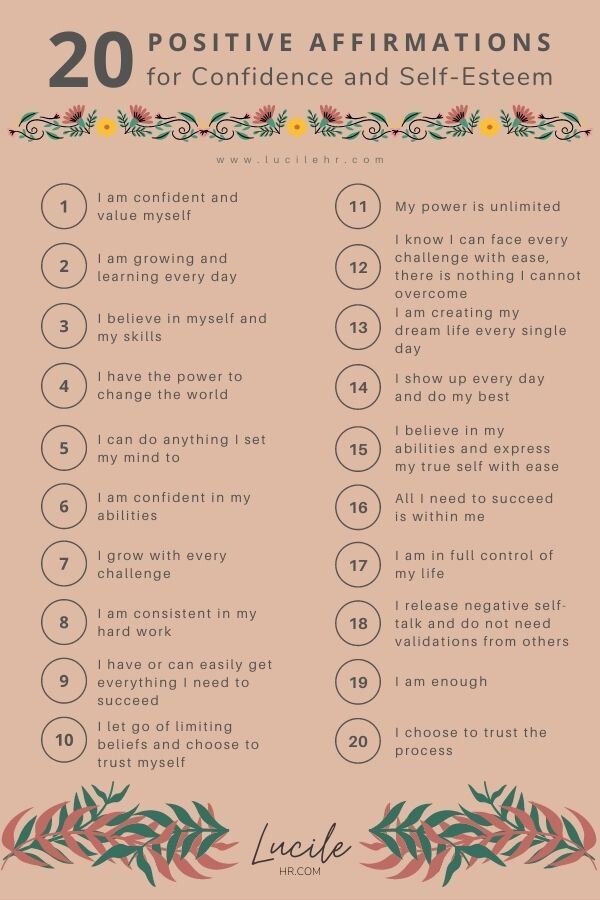
Here are 50 affirmations to help build your confidence. Choose the ones that speak to you, or use them as inspiration to write your own.
- I am worthy of respect and love.
- I trust my decisions.
- I believe in myself.
- I am proud of who I am.
- I am strong and capable.
- I can handle whatever comes my way.
- I am growing every day.
- I deserve happiness.
- I am enough, just as I am.
- I am not afraid to try new things.
- I learn from my mistakes.
- I am brave.
- I am comfortable in my own skin.
- I trust my intuition.
- I am a unique and valuable person.
- I speak up for myself.
- I have the power to change my life.
- I am worthy of success.
- I am calm and centered.
- I am not defined by my past.
- I am focused and determined.
- I deserve good things.
- I am resilient.
- I am a quick learner.
- I am confident in social situations.
- I am grateful for my strengths.
- I embrace challenges.
- I am open to new opportunities.
- I am patient with myself.
- I am a good friend to myself.
- I am respected by others.
- I listen to my needs.
- I am comfortable being myself.
- I am optimistic about my future.
- I am in control of my thoughts.
- I am proud of my achievements.
- I am open to feedback.
- I am creating the life I want.
- I am persistent.
- I am at peace with who I am.
- I am always learning.
- I am grateful for my journey.
- I am a positive thinker.
- I am not afraid to ask for help.
- I am deserving of kindness.
- I am confident in my abilities.
- I am not my mistakes.
- I am worthy of my dreams.
- I am strong in the face of challenges.
- I am excited about what lies ahead.
You don’t need to use all 50 every day. Start with a few that feel right, and build from there.
When And How To Use Affirmations
Using affirmations is simple, but a few strategies can make them much more effective. Let’s look at practical ways to add affirmations to your daily life.
Morning Routine
Saying affirmations in the morning helps set the tone for your day. Stand in front of a mirror, look yourself in the eye, and repeat your chosen statements. This can feel awkward at first, but it gets easier with practice.
Before Challenges
If you have an important meeting, test, or event, use affirmations to calm your nerves and boost your confidence. A few quiet moments repeating positive statements can help you show up as your best self.
During Stressful Moments
When you notice negative self-talk, pause and replace it with an affirmation. For example, if you think, “I can’t do this,” replace it with, “I am capable and prepared. ”
Writing And Visualization
Write your affirmations in a journal every day. Combine them with visualization—imagine yourself acting with confidence while you repeat your statements.
Using Technology
Set reminders on your phone to repeat affirmations throughout the day. You can also use apps designed for affirmations, which provide notifications and daily inspiration.
Credit: www.lucilehr.com
Real-life Examples: Affirmations In Action
Hearing real stories can make affirmations feel more practical. Here are three examples of how people have used affirmations to build self confidence.
Overcoming Public Speaking Fear
Maria struggled with public speaking. She often felt nervous and doubted her abilities. She started using the affirmation, “I speak clearly and confidently,” every morning. At first, it felt forced, but after a few weeks, she noticed less anxiety and more focus during presentations.
Now, she speaks in front of groups with much more ease.
Building Confidence After Failure
After losing his job, David felt like a failure. He began repeating, “I am resilient and open to new opportunities. ” This helped him shift his focus from loss to growth. He started applying for jobs with more confidence and soon found a new position that suited him better.
Gaining Self-worth
Sami always compared himself to others. He chose the affirmation, “I am enough, just as I am. ” Over time, he felt less pressure to be perfect and started appreciating his unique strengths.
These examples show how affirmations can support real, positive change.
Comparing Affirmations With Other Self Confidence Tools
Affirmations are not the only way to build confidence. Let’s compare them with other popular methods.
| Method | Main Focus | How It Helps Confidence | Typical Time to See Results |
|---|---|---|---|
| Affirmations | Positive Self-Talk | Rewires negative beliefs, boosts motivation | Weeks to Months |
| Journaling | Reflection | Builds self-awareness, tracks growth | Weeks |
| Meditation | Mindfulness | Reduces anxiety, improves focus | Varies |
| Therapy | Professional Guidance | Addresses deep-rooted issues | Months to Years |
| Skill Building | Practice | Builds competence through action | Depends on skill |
Affirmations often work best when combined with other tools. For example, journaling about your progress while using affirmations can make both practices more effective.
Common Mistakes When Using Affirmations
Even though affirmations are simple, there are a few mistakes that can hold you back. Here’s what to watch out for:
- Choosing Unrealistic Statements
- If your affirmation feels too far from your current reality, your mind may reject it. Start with statements that feel possible.
- Lack of Consistency
- Using affirmations once in a while doesn’t have much effect. Regular practice is key.
- Ignoring Negative Feelings
- Affirmations are not about ignoring problems. If you feel bad, acknowledge it, then use affirmations to encourage growth.
- Expecting Immediate Results
- Building confidence is a process. Be patient with yourself.
- Saying Them Without Emotion
- The power comes from feeling the words, not just saying them.
Avoiding these mistakes can help you get the most from your affirmation practice.
The Role Of Self-image In Confidence
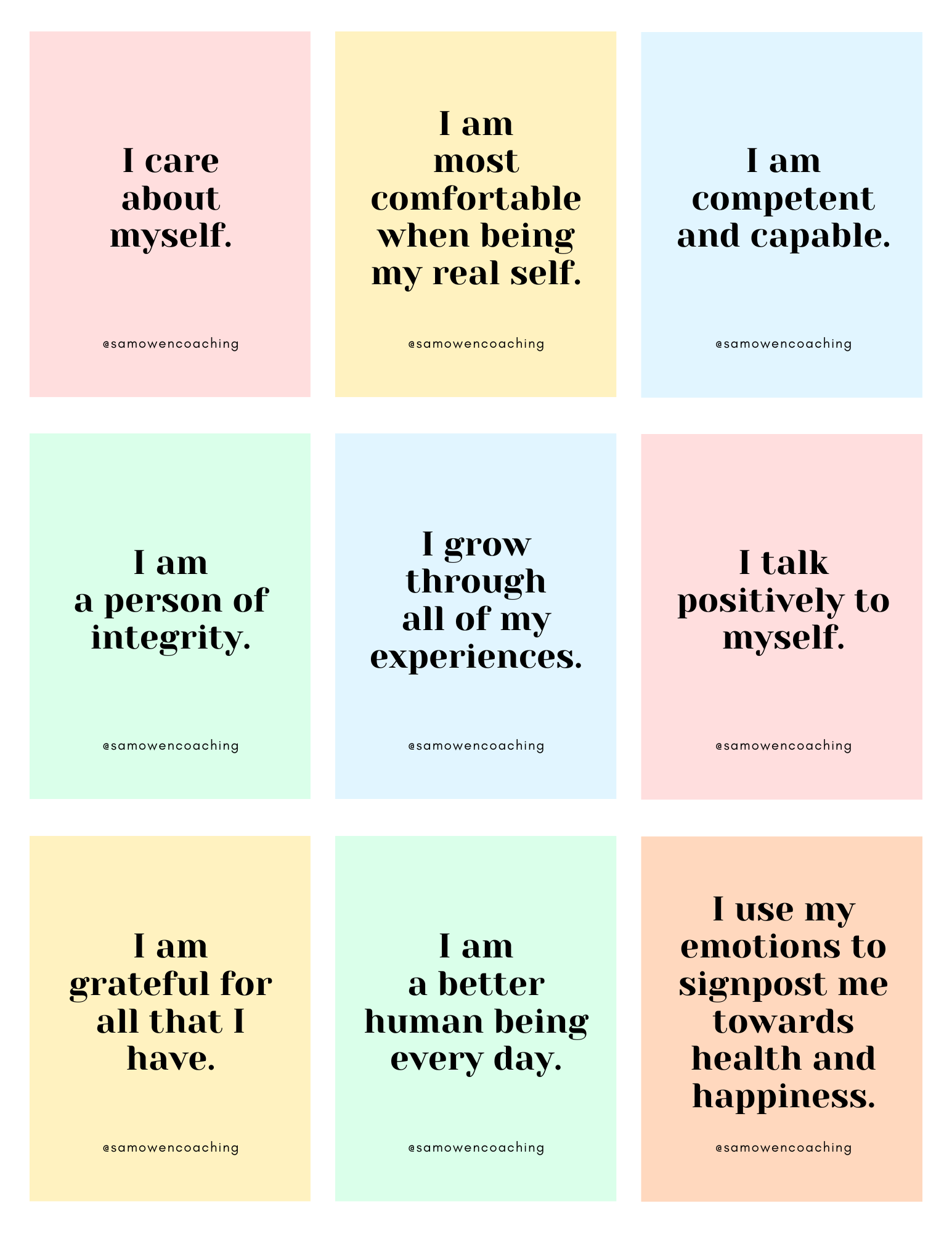
Your self-image—the way you see yourself—shapes your confidence. If you view yourself as capable and worthy, you’ll act with more certainty. Affirmations help you change your self-image, one thought at a time.
Many people don’t realize that self-image is flexible. It changes as you learn, grow, and experience new things. By using affirmations, you’re actively shaping a new, more positive self-image. This makes lasting confidence much more likely.
Credit: www.relationshipscoach.co.uk
Affirmations For Different Areas Of Life
Confidence is not just about one part of your life. You might feel confident at work but unsure in social situations, or vice versa. Here are examples of affirmations for common areas:
Work
- I am skilled at my job.
- I contribute valuable ideas.
- I handle challenges with professionalism.
Social Life
- I make friends easily.
- I am comfortable meeting new people.
- I am a good listener.
Health And Body
- I appreciate my body for all it does.
- I am healthy and strong.
- I care for myself with kindness.
Relationships
- I am worthy of love and respect.
- I communicate clearly and honestly.
- I attract positive relationships.
Learning
- I am always growing.
- I am open to feedback.
- I enjoy learning new things.
Tailoring your affirmations to your needs makes them even more powerful.
How Affirmations Impact The Brain
It’s not just your feelings that change with affirmations—your brain changes too. Neuroscience shows that repeating positive statements can create new neural pathways. This means you’re literally teaching your brain new ways to think.
One common beginner mistake is giving up too soon. You might not feel different after a few days. But keep going. Just like learning a new language, your brain needs time to adjust.
Another insight: pairing affirmations with visualization (seeing yourself succeed in your mind) can make the effect even stronger. When you both say and picture your affirmation, your brain treats it almost like a real experience.
Combining Affirmations With Daily Habits
Affirmations work best when they become part of your daily routine. Here are a few ways to combine them with everyday habits:
- Say affirmations while brushing your teeth.
- Repeat them during your commute.
- Use them as a mantra while exercising.
- Add them to your gratitude journal.
The key is to find moments in your day where affirmations fit naturally. This makes it easier to stick with the practice.
Tracking Your Progress
One way to stay motivated is to track the changes you notice as you use affirmations. Here’s a simple way to do it:
| Week | Confidence Level (1-10) | Notable Changes |
|---|---|---|
| 1 | 4 | Felt awkward saying affirmations |
| 2 | 5 | Less negative self-talk |
| 3 | 6 | Tried something new at work |
| 4 | 7 | Handled feedback with more calm |
Tracking helps you see progress, even when it feels slow. This can boost your motivation and make the practice more rewarding.
Affirmations For Children And Teens
Building self confidence early can have a big impact on a child’s life. Affirmations are a simple way for children and teens to learn positive self-talk.
For children, keep affirmations short and simple:
- I am a good friend.
- I am smart.
- I can try new things.
For teens, focus on challenges they face:
- I am enough, just as I am.
- I am proud of my efforts.
- I can handle hard things.
Encourage children and teens to say affirmations out loud, write them down, or even draw pictures. Making it fun helps the habit stick.
The Limits Of Affirmations
Affirmations are powerful, but they’re not magic. They can’t replace action. If you want to be more confident, you still need to practice new skills, face your fears, and learn from mistakes.
Also, affirmations are not a substitute for professional help. If you struggle with deep or lasting confidence issues, talking to a therapist or counselor can offer more support.
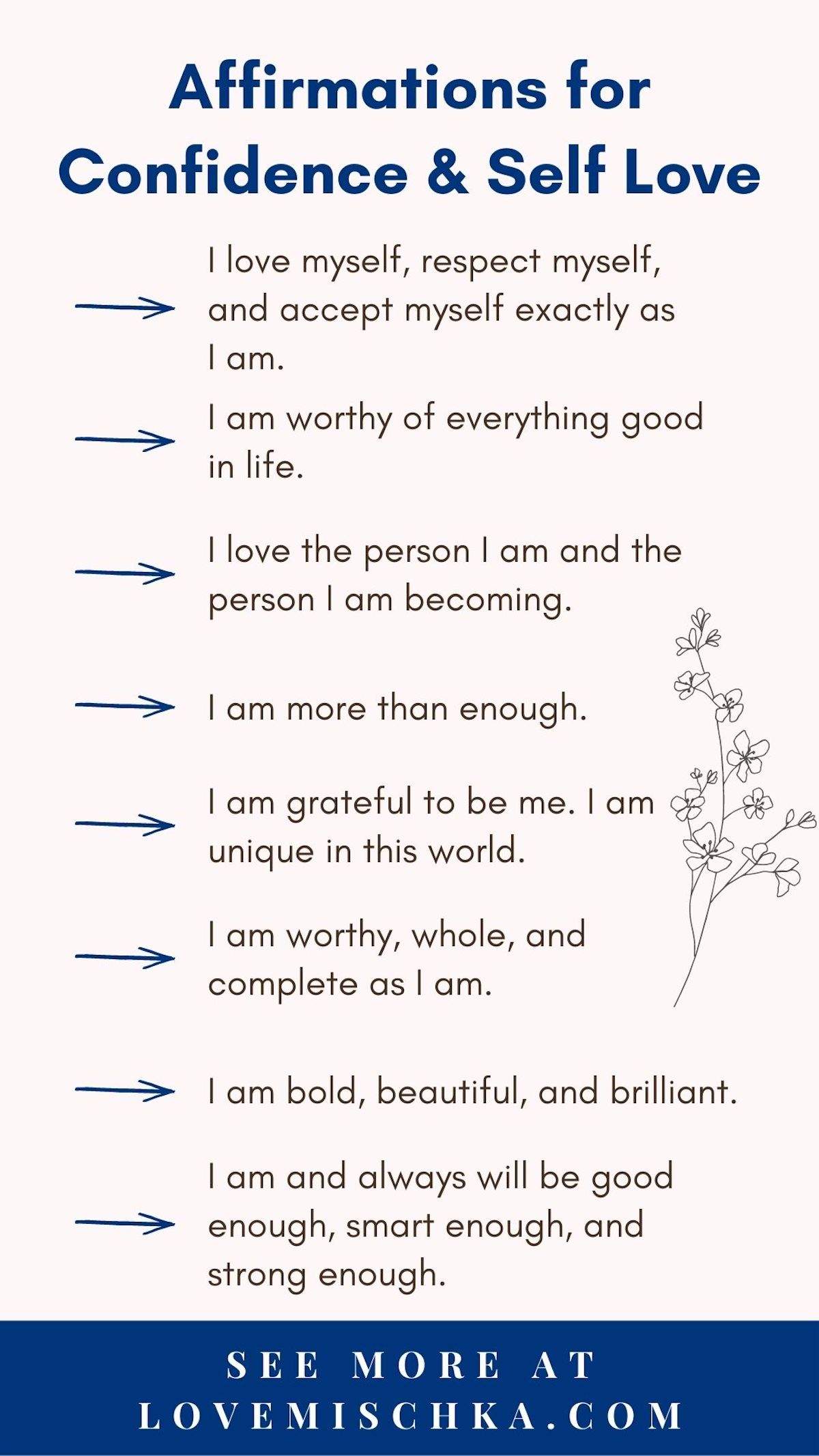
Affirmations are a tool—a way to help yourself see your strengths and possibilities. Combine them with action, and you’ll see the best results.
Credit: lovemischka.com
Additional Resources For Self Confidence
If you want to learn more about building confidence, there are many excellent books, podcasts, and websites. One helpful resource is the Positive Psychology site, which explains the science behind affirmations and offers more strategies for self improvement.
Frequently Asked Questions
What If I Don’t Believe My Affirmations?
It’s common to feel doubtful at first. Start with statements that feel possible. For example, instead of saying “I am completely confident,” try “I am learning to be more confident. ” As you repeat them, your mind will start to accept the new belief.
How Long Does It Take For Affirmations To Work?
There’s no set time. Some people notice changes in a few weeks; for others, it takes longer. Consistency is key. Track your progress and be patient—confidence grows with practice.
Can I Use Affirmations For Other Goals?
Absolutely. Affirmations can help with any area of life—health, relationships, success, or happiness. The key is to make them specific to your goal and repeat them regularly.
Should I Say Affirmations Out Loud Or Silently?
Both ways work. Saying them out loud adds power because you hear the words. But if you’re in a place where you can’t speak, repeating them silently in your mind still helps.
What Should I Do If Affirmations Make Me Feel Worse?
If affirmations trigger negative feelings, try changing the statement. Use gentler, more believable words. For example, “I am open to feeling more confident” may feel better than “I am always confident. ” If negative feelings continue, consider talking with a professional for guidance.
Self confidence is a journey, not a destination. By practicing affirmations, you’re taking an important step toward believing in yourself and creating the life you want.
