

Affirmations Scripture
Many people look for hope, strength, and direction in their daily lives. For some, positive self-talk is helpful. For others, scripture affirmations are a powerful way to build faith and confidence. These are short statements taken from the Bible, spoken with belief, to remind us of truth and encourage our hearts. Using affirmations from scripture is different from general positive thinking—it connects your mind and spirit to God's promises.
Why do so many people turn to these scriptural affirmations? Because life is often stressful, uncertain, or even overwhelming. When you speak words from the Bible, you are not only repeating positive phrases, but also declaring truth over your situation.
The Bible contains many promises and teachings that help people face challenges, fears, and doubts. By using these affirmations, you can re-focus your mind, find peace, and build spiritual strength.
This article will explore the meaning of affirmations scripture, how to use them, their benefits, practical examples, and common mistakes. Whether you are new to this practice or want to deepen your understanding, you will find helpful guidance here.
What Are Affirmations Scripture?
Affirmations scripture are Bible verses or truths spoken aloud or silently to encourage, guide, or comfort yourself. Unlike simple positive statements, these are based on God's Word. They are often personalized, so the message feels direct and relevant. For example, instead of saying, "I am strong," you might declare, "I can do all things through Christ who strengthens me" (Philippians 4:13).
People use affirmations scripture for many reasons:
- To remember their identity in God
- To overcome fear or worry
- To build confidence for daily tasks
- To help heal emotional pain
- To stay focused on God's promises
Affirmations scripture can be spoken, written, or even sung. Some people write them on cards or sticky notes to see throughout the day. Others memorize verses to say during tough moments. The key is to believe and accept the truth behind the words.
The Science And Spirituality Of Affirmations
Both science and faith recognize the power of words. Research shows that speaking positive statements can improve mood, lower stress, and strengthen mental health. But when affirmations come from scripture, they offer even deeper impact. You are not just repeating hopeful phrases—you are connecting to spiritual truth and divine promises.
How Words Affect The Brain
When you speak positive affirmations, your brain responds. Words can change how you feel, think, and act. Studies show that positive self-talk can:
- Lower anxiety
- Improve self-image
- Boost motivation
- Help change negative habits
For example, a study from the University of Michigan found that repeating affirmations can activate parts of the brain connected to reward and self-confidence.
Spiritual Benefits
Scripture affirmations also nourish the spirit. Many people believe the Bible is God's Word, full of promises that never fail. When you declare these truths, you invite faith, hope, and peace into your life. You are not just encouraging yourself—you are trusting God's plan for you.
This spiritual dimension makes scripture affirmations different from general positive statements. They offer lasting strength because they are rooted in eternal truth, not just human ideas.
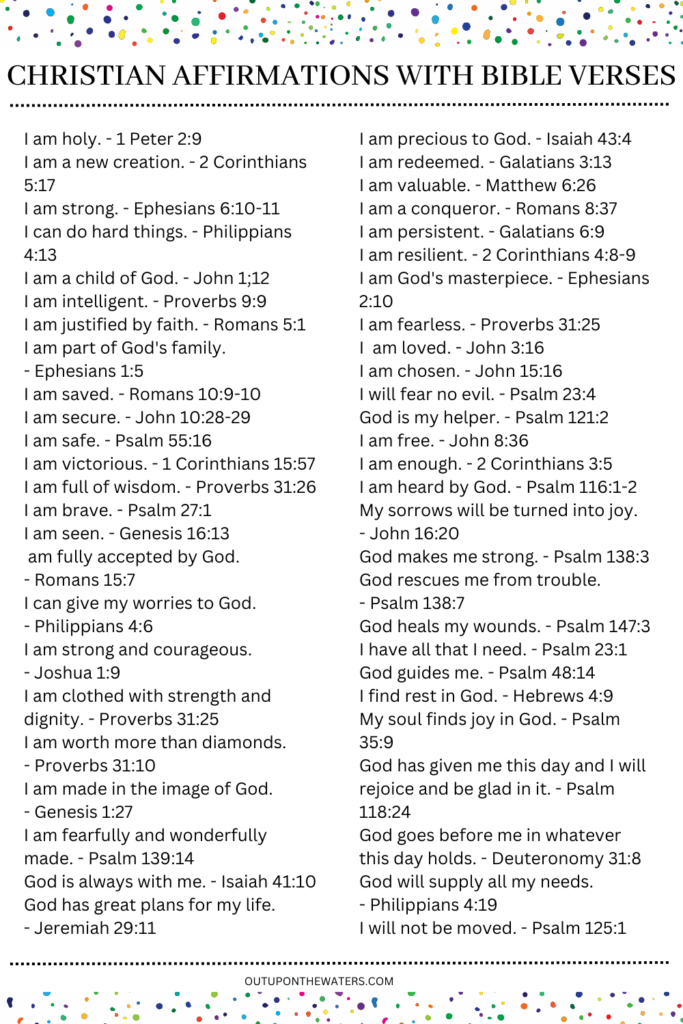
Credit: outuponthewaters.com
How To Create Your Own Affirmations Scripture
Making your own affirmations scripture is simple and personal. Here are practical steps to help you:
- Choose a Bible Verse: Pick a verse that speaks to your situation or need. For example, if you feel anxious, look for verses about peace or comfort.
- Personalize the Verse: Turn it into a statement for yourself. Use "I" or "my" to make it direct. For example, "God gives me peace" instead of "God gives peace."
- Speak or Write It Regularly: Say it aloud in the morning, write it in your journal, or put it on your wall. Repetition helps the truth sink in.
- Believe It: Don't just repeat words. Believe the promise. Ask God to help you understand and receive it fully.
- Use in Prayer: Include affirmations scripture in your prayers. Thank God for His promises and ask Him to make them real in your life.
Example Process
Suppose you are facing a difficult time and need strength. You find Isaiah 41:10: "Do not fear, for I am with you; do not be dismayed, for I am your God." You personalize it: "I will not fear, for God is with me." You repeat this daily, especially when you feel weak or worried.
Common Mistakes
Many beginners try to use too many affirmations at once or choose verses that do not connect to their real needs. It is better to select one or two meaningful affirmations and focus deeply on them. Also, avoid using affirmations without understanding the context of the Bible verse.
Read the whole passage to grasp the real meaning.
Top 10 Powerful Affirmations Scripture
Here are ten examples of popular scripture affirmations that many people use. Each is short, personal, and full of truth.
- "I am loved by God" (Romans 8: 38-39)
- "I can do all things through Christ who strengthens me" (Philippians 4: 13)
- "God gives me peace" (John 14: 27)
- "I am forgiven" (1 John 1: 9)
- "God supplies my needs" (Philippians 4: 19)
- "I am not alone" (Deuteronomy 31: 6)
- "I am healed" (Isaiah 53: 5)
- "God is my protector" (Psalm 91: 2)
- "I am chosen" (1 Peter 2: 9)
- "I am more than a conqueror" (Romans 8: 37)
These affirmations can be spoken, written, or memorized. Choose the ones that match your situation and use them daily.
Comparison: Scripture Affirmations Vs. General Positive Affirmations
Some people wonder if there is a real difference between scripture affirmations and general positive statements. Here is a clear comparison:
| Feature | Scripture Affirmations | General Positive Affirmations |
|---|---|---|
| Source | Bible verses | Personal ideas |
| Spiritual Impact | Connects to faith and God's promises | Mainly boosts self-confidence |
| Longevity | Timeless and lasting | May fade over time |
| Depth | Rooted in eternal truths | Rooted in human optimism |
| Usage | Prayer, meditation, daily life | Motivation, career, self-help |
Scripture affirmations are not just about feeling better—they help anchor your life in faith, especially when times are tough.
Using Affirmations Scripture For Specific Needs
Scripture affirmations can address many types of needs. Here are practical examples for different situations:
For Anxiety And Fear
If you feel anxious, use affirmations about peace and God's presence.
- "God gives me peace that passes all understanding" (Philippians 4: 7)
- "I will not fear, for God is with me" (Isaiah 41: 10)
For Self-worth And Identity
When you struggle with self-doubt, declare your value in God.
- "I am God's masterpiece" (Ephesians 2: 10)
- "I am chosen and loved" (Colossians 3: 12)
For Healing And Health
Facing sickness or emotional pain? Speak promises of healing.
- "I am healed by Jesus' wounds" (Isaiah 53: 5)
- "God restores my soul" (Psalm 23: 3)
For Guidance And Wisdom
If you need direction, use affirmations about God's guidance.
- "God leads me in the right path" (Psalm 23: 3)
- "I have wisdom from God" (James 1: 5)
For Strength And Courage
When life feels overwhelming, declare strength.
- "God is my strength and shield" (Psalm 28: 7)
- "I am strong and courageous" (Joshua 1: 9)
Practical Ways To Use Affirmations Scripture
You might wonder how to make affirmations scripture part of your daily routine. Here are practical ideas:
- Morning Routine: Start your day by speaking your chosen affirmation aloud.
- Writing Practice: Keep a journal and write your affirmation each morning and night.
- Sticky Notes: Place written affirmations on your mirror, desk, or fridge.
- Prayer Time: Include affirmations in your prayers, thanking God for His promises.
- Memorization: Commit key verses to memory for quick recall during stress.
- Music and Art: Create songs or artwork based on your favorite affirmations.
Family And Group Practice
Affirmations scripture can also be shared in families or groups. Parents can speak them over their children. Churches may include them in worship. Sharing affirmations builds unity and strengthens faith together.
Data: Impact Of Affirmations Scripture
Many people report benefits from using scripture affirmations. While there is limited formal research, surveys and personal stories show clear improvements in spiritual and emotional health.
| Area | Reported Improvement (%) | Source |
|---|---|---|
| Peace of Mind | 72 | Survey of faith-based groups |
| Confidence | 68 | Church testimonials |
| Reduced Anxiety | 61 | Self-reporting studies |
| Sense of Purpose | 76 | Faith-based counseling |
Most people say that scripture affirmations bring real change, especially when used regularly and with belief.

Credit: www.amazon.com
Common Mistakes When Using Scripture Affirmations
While affirmations scripture are powerful, people often make mistakes. Here are the most common:
- Repeating Without Belief: Just saying the words is not enough. You must believe and accept the truth.
- Choosing Verses Out of Context: Using a Bible verse without understanding its meaning can lead to confusion.
- Trying Too Many at Once: Focus on one or two meaningful affirmations instead of a long list.
- Ignoring Personal Needs: Pick affirmations that match your situation. Generic verses may not help.
- Skipping Consistency: Regular practice brings results. Occasional use may not make a difference.
How To Avoid These Mistakes
Take time to read the full passage before choosing an affirmation. Reflect on what you really need. Speak with faith, not just routine. Make affirmations part of your daily life, not only during crisis.
Real-life Stories Of Affirmations Scripture
Hearing from others can inspire and encourage you to try affirmations scripture yourself. Here are two real-life examples:
Story 1: Overcoming Anxiety
Maria struggled with anxiety for years. She often worried about her job and family. She began using the affirmation, "God gives me peace" from John 14:27. Every morning, she spoke this verse aloud and prayed for calm. Over time, Maria noticed she felt less anxious and more hopeful. She says the affirmation helped her trust God's care.
Story 2: Finding Strength In Hard Times
James faced a difficult health crisis. He felt weak and afraid. He used the affirmation, "I can do all things through Christ who strengthens me" from Philippians 4:13. James repeated this verse daily, especially during treatments. He says this affirmation gave him courage and reminded him that God was with him.
Both stories show that scripture affirmations can bring real change, even in tough times.
How Affirmations Scripture Fit Different Faith Traditions
While most people using scripture affirmations are Christians, some Jewish communities use similar practices with verses from the Hebrew Scriptures. The principle is the same: declaring truth from sacred texts to encourage and strengthen.
Different denominations may use affirmations in various ways. Some focus on healing, others on identity or guidance. The approach may change, but the core idea is consistent—speaking God's Word brings faith and hope.
Comparing Different Affirmation Practices
Affirmations are popular in many traditions, not only Christian faith. Here is a comparison of how affirmations are used in religion and secular self-help.
| Practice | Focus | Typical Affirmation | Goal |
|---|---|---|---|
| Scripture Affirmations | God's promises and truth | "God is my strength" | Build faith and spiritual strength |
| Secular Affirmations | Personal growth | "I am confident" | Boost self-esteem and motivation |
| Mindfulness Mantras | Peace and presence | "I am present" | Calm the mind |
| Therapeutic Affirmations | Mental health | "I am worthy" | Heal emotional wounds |
Scripture affirmations stand out because they connect to faith and eternal truth, not just self-help or motivation.
Practical Tips For Beginners
If you are new to affirmations scripture, here are practical tips to help you start well:
- Begin with One Verse: Choose a verse that speaks to your current need.
- Make It Personal: Use "I" or "my" to make the affirmation direct.
- Speak Aloud: Hearing yourself say the words strengthens belief.
- Write It Down: Keep a notebook or cards with your affirmation.
- Repeat Often: Morning, night, and during challenges.
- Reflect and Pray: Ask God to help you understand and receive the truth.
Non-obvious Insights
- Pair Affirmations With Action: Use affirmations as motivation to take positive steps. For example, "God gives me wisdom"—then seek advice or study.
- Notice Emotional Shifts: Some people feel change not right away, but after a few weeks. Keep a journal to track progress.
How Affirmations Scripture Help With Life Challenges
Many life challenges can be eased through scripture affirmations. Here are specific examples:
- Stress at Work: Use "God gives me wisdom" (James 1:5) when facing tough decisions.
- Family Conflict: Speak "God's love fills my heart" (Romans 5:5) to build patience.
- Financial Trouble: Declare "God supplies my needs" (Philippians 4:19) to trust provision.
- Health Problems: Use "I am healed" (Isaiah 53:5) for hope and strength.
Affirmations do not change circumstances instantly, but they help you respond with faith and courage.
Challenges And Criticisms Of Affirmations Scripture
Some people question if affirmations scripture really work. Critics say repeating verses may not lead to real change. Others worry about taking verses out of context or using them as "magic words. "
Addressing Concerns
- Context Matters: Always understand the meaning of the verse.
- Faith, Not Magic: Affirmations are about belief, not quick fixes.
- Balance: Use affirmations alongside practical steps—prayer, action, and wise choices.
Many experts and faith leaders encourage using affirmations scripture as one part of a balanced spiritual life.
Resources For Finding Scripture Affirmations
There are many resources to help you find and use scripture affirmations:
- Bible Apps: Many apps offer verse-of-the-day features and affirmations.
- Books: Search for devotionals focused on affirmations.
- Church Groups: Join small groups or Bible studies.
- Online Tools: Websites offer lists of affirmations and printable cards.
For more information and research on affirmations and their impact, see Psychology Today.

Credit: wellnessmanifest.wordpress.com
Frequently Asked Questions
What Makes Scripture Affirmations Different From Regular Affirmations?
Scripture affirmations are based on the Bible, not just positive ideas. They connect to faith, offer spiritual strength, and remind you of God's promises. Regular affirmations focus on self-confidence and motivation, but scripture affirmations anchor your mind in eternal truth.
How Often Should I Use Affirmations Scripture?
There is no set rule, but daily practice is best. Speak your affirmation in the morning, before bed, and during challenges. Consistency helps the truth become part of your thinking and belief.
Can I Use More Than One Scripture Affirmation At A Time?
Yes, but start with one or two. Focusing deeply on a few meaningful affirmations works better than using a long list. Choose verses that match your current needs or struggles.
Is It Okay To Personalize Bible Verses For Affirmations?
Personalizing verses is helpful, as long as you respect the meaning and context. Use "I" or "my" to make the affirmation direct, but always read the full passage to understand what the verse really says.
What If I Do Not Feel Any Change Using Affirmations Scripture?
Change can be slow. Keep using your affirmation with belief and patience. Track your emotional and spiritual progress in a journal. If needed, ask for support from faith leaders or trusted friends.
Scripture affirmations offer a simple, powerful way to build faith, hope, and confidence. Whether you face stress, doubt, or pain, these truths can guide you forward. Choose your affirmation, speak it with belief, and let God's Word renew your mind and spirit each day.
