

Affirmations of Self Love: Transform Your Mindset Daily
Affirmations Of Self Love
Self-love is more than a popular trend. It’s a powerful tool for mental health, happiness, and personal growth. Many people struggle with negative thoughts, doubt, and low self-esteem. Affirmations of self love can help change these habits. By repeating positive statements, you can start to believe them, and this belief can transform your life.
This article will show you how affirmations work, why they matter, and how to use them for real results. You’ll learn practical ways to make self-love part of your daily routine, even if you’re new to affirmations.
Understanding Self-love
Self-love means respecting, accepting, and caring for yourself. It’s not selfishness or arrogance. It’s about being kind to yourself, even when things go wrong. When you love yourself, you make better choices. You set healthy boundaries. You forgive yourself for mistakes.
You treat your mind and body well.
Many people confuse self-love with self-indulgence. Self-love is deeper. It helps you build confidence, deal with stress, and handle criticism. It’s the foundation for healthy relationships and a positive outlook on life.
Why Self-love Matters
Research shows that people with strong self-love enjoy better mental health. They feel less anxiety and depression. They cope with challenges more easily. According to a study by the National Institutes of Health, self-compassion leads to greater emotional resilience and well-being.
This means you can handle tough times without losing hope.
Self-love also affects physical health. People who care for themselves are more likely to eat healthy, exercise, and avoid harmful habits. They sleep better and recover faster from illness. In other words, loving yourself helps you thrive.
The Role Of Affirmations
Affirmations are short, positive statements you repeat to yourself. They help change negative beliefs and build confidence. For example, instead of thinking “I’m not good enough,” you can say “I am worthy and capable. ” Over time, your brain starts to accept these new ideas.
Psychologists call this “self-affirmation theory. ” It’s backed by science. Studies show that affirmations reduce stress, improve performance, and boost self-esteem. They’re simple, but powerful. You don’t need special equipment or expert guidance. Just your voice and your intention.
How Affirmations Work
Affirmations work by changing your inner dialogue. Most people have an automatic stream of thoughts. These thoughts can be positive or negative. If you constantly criticize yourself, you start to believe these judgments. Affirmations interrupt this process. They replace old patterns with new, healthy beliefs.
The Science Behind Affirmations
Your brain is always learning. When you repeat a thought, it creates new connections. This is called “neuroplasticity. ” If you repeat negative thoughts, your brain gets used to them. If you repeat positive affirmations, your brain changes in a good way.
A research study published in the journal Social Cognitive and Affective Neuroscience found that affirmations activate the reward centers in your brain. This means you feel happier and more motivated. Another study from Carnegie Mellon University showed that self-affirmations reduce stress and improve problem-solving skills.
Common Mistakes With Affirmations
Many beginners make mistakes when using affirmations:
- Saying things you don’t believe: If your affirmation feels fake, your brain may reject it.
- Using negative words: Avoid statements like “I am not afraid.” Use positive words: “I am brave.”
- Repeating too many affirmations at once: Focus on a few key phrases.
- Being inconsistent: Affirmations only work if you use them regularly.
A non-obvious insight: it’s better to start with small, believable affirmations. For example, instead of “I love myself completely,” try “I am learning to accept myself.” As your confidence grows, you can use stronger statements.
Creating Effective Self-love Affirmations
The best affirmations are simple, positive, and personal. They reflect your values and goals. Here are steps to create affirmations that work:
- Identify your needs: What do you want to improve? Confidence, self-acceptance, forgiveness?
- Use positive language: Avoid words like “can’t,” “don’t,” or “never.”
- Keep it short: One or two sentences is enough.
- Make it present tense: Say “I am,” not “I will be.”
- Personalize your affirmations: Use your name or “I” to make them feel real.
Examples Of Self-love Affirmations
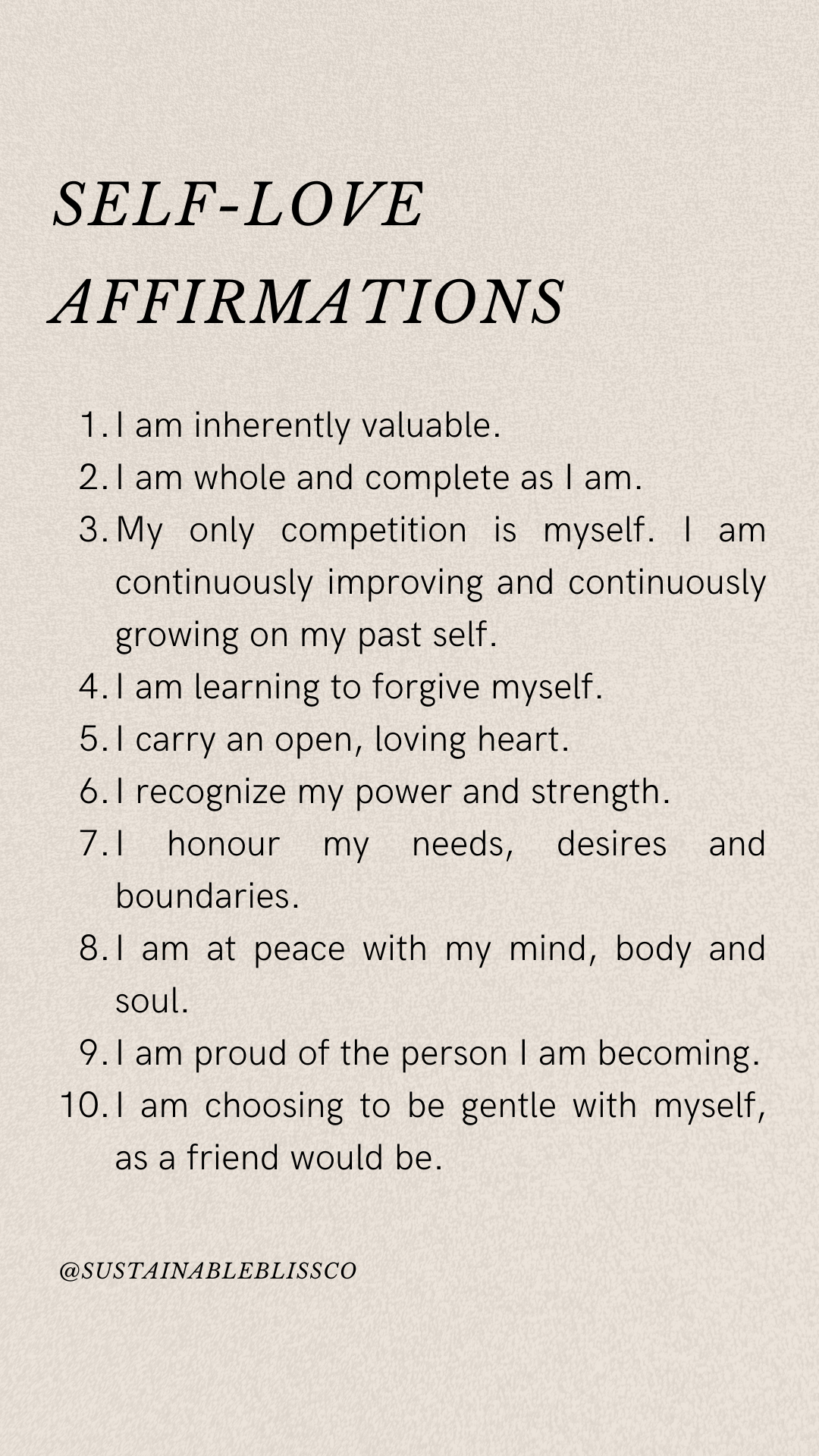
Here are some effective self-love affirmations:
- I am worthy of love and respect.
- I accept myself as I am.
- I forgive myself for past mistakes.
- I am proud of who I am becoming.
- I deserve happiness and success.
- I am enough.
- My body and mind are valuable.
- I trust myself to make good decisions.
- I am learning and growing every day.
Personalizing your affirmation makes it more powerful. For example, “I, Maria, am strong and capable. ” This connects your statement to your identity.
Comparing Good Vs. Weak Affirmations
Here’s a simple table to highlight the difference:
| Type | Example | Why it Works (or Not) |
|---|---|---|
| Strong | I am worthy of love. | Positive, believable, present tense. |
| Weak | I wish I was loved. | Uncertain, not present tense, lacks confidence. |
| Strong | I accept myself fully. | Direct, positive, focuses on self-acceptance. |
| Weak | I don't hate myself. | Uses negative language, unclear message. |
How To Use Affirmations Daily
Affirmations work best when you use them regularly. Here are practical ways to include them in your routine:
Morning Rituals
Start your day with self-love affirmations. Say them aloud while you get ready. You can write them in a journal or stick notes on your mirror. This sets a positive tone for your day.
Mindful Practice
Use affirmations during meditation or mindfulness exercises. Sit quietly, breathe deeply, and repeat your affirmation. Focus on the words and their meaning.
In Challenging Moments
When you face stress or doubt, use affirmations to calm your mind. For example, before a big meeting, repeat “I am confident and prepared. ” This helps you stay focused and positive.
Before Sleep
End your day with affirmations. Reflect on your achievements and strengths. Repeat statements like “I am grateful for who I am. ” This promotes restful sleep and a sense of peace.
A non-obvious tip: pair your affirmation with a physical gesture. For example, place your hand on your heart while saying “I am enough.” This creates a stronger mind-body connection.
Comparing Different Affirmation Routines
Let’s look at how different routines affect results:
| Routine | Frequency | Reported Benefit |
|---|---|---|
| Morning Only | Once daily | Improved mood, mild confidence boost |
| Morning & Night | Twice daily | Stronger self-esteem, deeper self-acceptance |
| Throughout Day | Several times | Greater resilience, faster belief change |

Credit: www.amazon.com
The Power Of Repetition And Consistency
Consistency is key. Your brain needs time to accept new beliefs. Most experts recommend using affirmations for at least 21 days. This builds a habit. If you skip days, the effect is weaker.
Some people notice changes in a week. Others need more time. The important thing is to stay patient. Track your progress in a journal. Write down how you feel before and after saying your affirmation.
Measuring Progress
You can measure progress in several ways:
- Mood changes: Do you feel happier or calmer?
- Behavior changes: Are you kinder to yourself?
- Confidence: Do you take more risks or try new things?
- Relationships: Are you more open with others?
A practical tip: rate your self-love on a scale of 1 to 10 before you start. Every week, check your score. This shows your growth.
Overcoming Doubt And Resistance
It’s normal to feel awkward when you start using affirmations. You might doubt their effectiveness or feel uncomfortable. This is a common barrier.
Common Reasons For Resistance
- Belief gap: The affirmation feels too far from your current reality.
- Fear of change: You worry about becoming different.
- Negative self-talk: Old habits are hard to break.
To overcome resistance, use “bridge affirmations. ” These are gentle steps between your current belief and your goal. For example, “I am open to loving myself” is easier to accept than “I love myself completely. ”
Practical Example
Let’s say you struggle with self-acceptance. Instead of saying “I accept myself fully,” start with “I am willing to accept myself. ” Once this feels true, move to stronger affirmations. This gradual process builds lasting change.

Credit: mblwrites.com
Affirmations For Different Needs
Self-love affirmations can be tailored for specific needs. Here are some examples:
For Body Positivity
- My body is valuable and strong.
- I appreciate my body for all it does.
- I treat my body with kindness and respect.
For Emotional Healing
- I forgive myself for past mistakes.
- I am gentle with my feelings.
- I allow myself to heal and grow.
For Confidence
- I trust myself to make good choices.
- I am capable of handling challenges.
- I believe in my abilities.
For Relationships
- I set healthy boundaries.
- I am worthy of love and connection.
- I attract positive and supportive people.
Customizing affirmations for your needs makes them more effective. You can use different statements for different areas of your life.
The Impact Of Self-love Affirmations
Using self-love affirmations has real, measurable effects. People who practice regularly report:
- Higher self-esteem
- Better stress management
- Improved relationships
- Greater happiness
- More motivation to pursue goals
According to data from the American Psychological Association, self-affirmation exercises help reduce anxiety and improve performance in stressful situations.
Here’s a comparison table showing the impact of self-love affirmations versus no affirmations:
| Group | Self-Esteem Score | Reported Happiness | Resilience |
|---|---|---|---|
| Affirmation Users | 8/10 | High | Strong |
| Non-users | 5/10 | Medium | Moderate |
This data shows that affirmations can make a meaningful difference. They help you build a positive self-image and cope with life’s challenges.
The Link Between Self-love And Success
Self-love is not just about feeling good. It’s also linked to success. People who believe in themselves are more likely to set goals, take risks, and overcome setbacks. They handle criticism better and bounce back from failure.
A study in the Journal of Personality and Social Psychology found that self-compassion improves motivation and performance. When you treat yourself kindly, you’re more likely to try new things and learn from mistakes.
Here’s how self-love affects different aspects of life:
- Career: Higher confidence leads to better job performance.
- Education: Students with strong self-esteem get better grades.
- Relationships: Self-love helps build healthy connections.
- Health: People with self-love make healthier choices.
A non-obvious insight: self-love doesn’t mean ignoring your flaws. It means accepting them and working to improve. This balanced approach leads to lasting growth.
Common Myths About Self-love Affirmations
Many myths surround self-love and affirmations. Let’s address some:
Myth 1: Affirmations Are Only For “positive Thinkers”
Anyone can use affirmations. They’re not just for people who already feel good. In fact, those struggling with self-doubt can benefit the most.
Myth 2: Affirmations Work Instantly
Affirmations need time. They’re not magic words. You need regular practice to see results.
Myth 3: You Must Believe Your Affirmation Right Away
It’s normal to feel doubt at first. Over time, your belief will grow. Start with small, believable statements.
Myth 4: Affirmations Fix Everything
Affirmations are a tool, not a cure-all. Combine them with other healthy habits like exercise, sleep, and mindfulness.
Myth 5: Self-love Is Selfish
Self-love helps you care for others. When you respect yourself, you can support and respect others better.
Integrating Affirmations With Other Practices
Affirmations work well with other wellness practices:
- Meditation: Repeat affirmations during meditation for deeper impact.
- Journaling: Write your affirmations and reflect on their meaning.
- Visualization: Picture yourself living your affirmation.
- Gratitude practice: Combine affirmations with gratitude for a stronger effect.
A practical tip: if you struggle to remember your affirmations, set reminders on your phone or use sticky notes. Make self-love part of your environment.
Real-life Examples And Success Stories
Many people have changed their lives using self-love affirmations. Here are some real-life examples:
Maria’s Story
Maria felt unworthy after a tough breakup. She started using the affirmation “I am worthy of love. ” At first, it felt strange. But after three weeks, she noticed a change. She felt more confident, started new hobbies, and made new friends.
Her relationships improved because she valued herself.
David’s Story
David struggled with self-criticism at work. He began repeating “I am capable and strong. ” He wrote it in his journal every morning. Over time, his performance improved. He handled feedback better and became more productive.
Group Example
A support group used self-love affirmations in their weekly meetings. Members reported higher self-esteem and lower anxiety. They encouraged each other, making the practice even more effective.
These examples show that affirmations can work for anyone. The key is consistency and belief.
Credit: www.sustainableblissco.com
How To Teach Self-love Affirmations To Others
If you want to help others, here are steps to teach self-love affirmations:
- Explain the concept: Share what affirmations are and how they work.
- Help create personal statements: Guide them to write positive, simple, and present-tense affirmations.
- Encourage regular practice: Suggest daily routines.
- Model the behavior: Use affirmations yourself.
- Offer support: Celebrate progress and address doubts.
Teaching affirmations can benefit groups, families, or friends. It spreads positivity and builds a supportive environment.
Frequently Asked Questions
What Are Self-love Affirmations?
Self-love affirmations are positive statements you repeat to yourself. They help build confidence, self-acceptance, and emotional strength. By focusing on positive beliefs, you replace negative self-talk with healthy thoughts.
How Many Times Should I Repeat My Affirmation?
Most experts suggest repeating your affirmation at least 5–10 times daily. The key is consistency. You can say them aloud, write them, or use them during meditation.
Can Affirmations Really Change My Life?
Yes, when practiced regularly, affirmations can change your mindset and behavior. Research shows they improve self-esteem, reduce stress, and promote emotional well-being. The effects grow over time with consistent use.
What If I Don’t Believe My Affirmation?
It’s normal to feel doubt at first. Start with smaller, believable statements. For example, “I am open to loving myself. ” As your belief grows, use stronger affirmations.
Are There Any Scientific Studies Supporting Affirmations?
Yes. Studies from the National Institutes of Health, Carnegie Mellon University, and others show that affirmations improve mental health, reduce stress, and boost performance. For more details, you can read this Wikipedia article on self-affirmation.
Self-love affirmations are simple, but they can make a real difference. With regular practice, you can build confidence, improve your mood, and create a happier life. Start today, and watch how your mindset changes. The journey to self-love begins with a single, positive word.
