

Affirmations Morning Or Night: Best Time for Powerful Results
Affirmations Morning Or Night
What time is best for affirmations—morning or night? If you’ve asked yourself this question, you’re not alone. Many people use affirmations to change their mindset, improve motivation, or build self-confidence. But the timing of these statements can make a real difference. Should you start your day with affirmations, or end it with positive thoughts? This guide will help you understand how timing affects the power of affirmations, how to pick the right time for you, and what science says about the best practice. You’ll also see practical examples, expert advice, and common mistakes to avoid. Whether you’re new to affirmations or want to improve your routine, you’ll find answers here.
What Are Affirmations?
Affirmations are positive statements you repeat to yourself. The goal is to change negative thinking and build a strong mindset. For example, saying “I am confident” or “I will succeed” can help you feel more positive and focused.
Many people use affirmations to:
- Boost self-esteem
- Reduce stress
- Improve motivation
- Change habits
- Support mental health
These statements are simple, but they can be powerful. Studies show that affirmations can help people perform better at work, school, or sports. They also support emotional health by reducing negative thoughts.
How Affirmations Work
Repeating positive statements helps your brain believe them. This process is called self-affirmation theory. When you say something often, your mind starts to accept it as true. This can change how you think and act.
Here’s how affirmations affect you:
- They replace negative thoughts with positive ones.
- They build new habits in your thinking.
- They help you focus on your goals.
For example, if you often say “I am strong,” your mind starts to believe it. This makes you act more confidently.
But it’s important to use affirmations in the right way. They work best when you:
- Use clear, positive language
- Repeat them often
- Believe in what you say
Morning Affirmations: Benefits And Practice
Many people use affirmations in the morning. This is a popular time because it sets the tone for the day. Morning affirmations help you start your day with motivation and energy.
Why Morning Works
Your mind is fresh after sleep. In the morning, your brain is more open to new ideas. This is called neuroplasticity. It means your mind can change and learn more easily.
Morning affirmations:
- Build confidence for the day ahead
- Help you focus on goals
- Reduce stress before work or school
For example, saying “Today I will succeed” gives you a positive mindset for the day.
How To Practice Morning Affirmations
- Find a quiet place.
- Choose 3–5 positive statements.
- Repeat each one slowly, with feeling.
- Look in the mirror if possible.
- Take deep breaths between statements.
Some popular morning affirmations:
- “I am ready for today.”
- “I will make smart decisions.”
- “I am strong and capable.”
- “I am grateful for this new day.”
Try to repeat your affirmations for 3–5 minutes. You can write them down, say them aloud, or listen to recordings.
Practical Examples
Let’s say you have an important meeting. In the morning, you might say:
- “I am confident in my abilities.”
- “I will speak clearly and calmly.”
This prepares your mind for success.
Night Affirmations: Benefits And Practice
Night is also a powerful time for affirmations. At night, your mind is winding down. You can use affirmations to release stress, let go of worries, and prepare for restful sleep.
Why Night Works
Before sleep, your brain processes memories and emotions. Affirmations can help you end the day with peace and gratitude.
Night affirmations:
- Reduce anxiety before sleep
- Help you reflect on your day
- Support positive dreams and rest
Repeating positive statements at night helps your mind relax and heal. This can improve sleep quality and mental health.
How To Practice Night Affirmations
- Sit or lie comfortably in bed.
- Choose calming, gentle statements.
- Repeat each one quietly.
- Close your eyes and breathe deeply.
- Focus on the feeling of peace.
Some popular night affirmations:
- “I am grateful for today’s lessons.”
- “I release all worries.”
- “I am calm and ready for rest.”
- “I forgive myself and others.”
Repeat your affirmations for 5–10 minutes. You can use soft music or relaxing sounds to help.
Practical Examples
If you felt stressed during the day, you might say:
- “I release stress and tension.”
- “I am safe and peaceful.”
This helps your mind let go and sleep better.
Comparing Morning Vs Night Affirmations
Choosing between morning or night affirmations depends on your goals and lifestyle. Each time has unique benefits. Below is a comparison to help you decide:
| Feature | Morning Affirmations | Night Affirmations |
|---|---|---|
| Purpose | Motivation, focus, confidence | Peace, relaxation, gratitude |
| Mind State | Fresh, open to ideas | Reflective, winding down |
| Common Statements | “I am ready”, “I will succeed” | “I release stress”, “I am grateful” |
| Duration | Short (3–5 min) | Longer (5–10 min) |
| Best For | Starting the day strong | Ending the day peacefully |
Some people use both. For example, they start the day with confidence and end it with gratitude. Others prefer one time. Both can work well.
Scientific Evidence: Does Timing Matter?
Research on affirmations shows that they work, but timing is less studied. However, studies on habit formation and brain function suggest that both morning and night have advantages.
Morning Science
Your brain is more alert in the morning. This is because of higher cortisol levels, which help you wake up and focus. Morning is also when habits are easier to build, since your mind is fresh.
- A study found that morning routines improve motivation and productivity.
- Affirmations in the morning can help you start new habits and stay positive.
Night Science
At night, your brain prepares for sleep. The parasympathetic nervous system is more active, helping you relax and recover. Repeating positive statements can reduce stress and help you sleep better.
- Research shows that nighttime routines lower anxiety and improve sleep quality.
- Night affirmations can help your mind process emotions and end the day positively.
There is no clear winner. The best time depends on your personal needs and goals. Some experts suggest trying both and choosing what feels right.
Choosing The Best Time For You
Everyone is different. The best time for affirmations depends on your lifestyle, goals, and personal rhythm.
Factors To Consider
- Your routine: Are you busy in the morning? Do you have time at night?
- Your mood: When do you feel most positive or relaxed?
- Your goals: Are you trying to boost motivation or reduce stress?
- Sleep patterns: Do affirmations help you sleep, or do they wake you up?
For example:
- If you need energy and focus, try morning affirmations.
- If you want peace and calm, try night affirmations.
You can also mix both. Some people use affirmations in the morning for confidence, and at night for gratitude.
Personalized Approach
Try the following steps:
- Test morning affirmations for one week.
- Test night affirmations for one week.
- Notice how you feel and what works best.
- Adjust your routine based on your results.
This helps you find the best time for your needs.
Real-life Examples And Case Studies
To understand how affirmations help, let’s look at real-life stories and data.
Example 1: Morning Affirmations For Motivation
A young professional named Amy used morning affirmations before work. She repeated “I am ready for new challenges” and “I will succeed today.” Over time, she noticed:
- Increased confidence
- Higher productivity
- Fewer negative thoughts
Amy’s boss noticed her improvement. She was given new tasks and felt more motivated.
Example 2: Night Affirmations For Stress Relief
John, a college student, struggled with anxiety at night. He began using affirmations like “I am calm and safe” before bed. After two weeks, he reported:
- Better sleep quality
- Less worry before sleep
- More peaceful dreams
John’s grades improved because he was more rested and focused.
Example 3: Both Times For Balance
Maria, a teacher, used affirmations both morning and night. In the morning, she said “I am confident and prepared.” At night, she said “I am grateful for today’s lessons.” She felt:
- More balanced emotions
- Better energy in the morning
- More peace at night
These stories show that affirmations can be flexible and effective.
Common Mistakes With Affirmations
Affirmations are simple, but some mistakes can make them less effective. Here are common errors and how to avoid them:
- Using negative language: Affirmations should be positive. Avoid words like “not” or “never.”
- Repeating without feeling: You must believe what you say. Say affirmations with emotion.
- Too many statements: Focus on a few key phrases. Too many can confuse your mind.
- Inconsistent practice: Affirmations work best when you use them regularly.
- Ignoring timing: Choose a time when you can focus, not when you’re rushed.
For example, saying “I am not anxious” is less effective than “I am calm. ” Always use positive, simple statements.
Advanced Tips For Effective Affirmations
Most people know the basics, but a few advanced tips can boost your results.
- Visualize the outcome: When you say an affirmation, picture yourself achieving it.
- Write them down: Writing helps your brain remember and believe your statements.
- Use present tense: Say “I am” instead of “I will be.” This makes your affirmation stronger.
- Personalize your statements: Make affirmations fit your goals and needs.
- Combine with breathing: Deep breathing while repeating affirmations increases relaxation.
For example, instead of “I will be successful,” say “I am successful. ” Imagine yourself completing a task and feeling proud.

Credit: www.amazon.com
Affirmations For Different Goals
Affirmations can be used for many goals. The statements you choose should match your needs.
For Confidence
- “I am confident and strong.”
- “I believe in myself.”
For Stress Relief
- “I am calm and peaceful.”
- “I let go of worries.”
For Gratitude
- “I am thankful for today.”
- “I appreciate the good in my life.”
For Motivation
- “I am ready for new challenges.”
- “I will achieve my goals.”
Choose affirmations that fit your current goal. Change them as your needs change.
Data: How People Use Affirmations
A survey by a wellness website found:
- 60% of people use morning affirmations
- 30% use night affirmations
- 10% use both
Another study showed that people who use affirmations regularly report:
- 40% less stress
- 25% higher confidence
- 30% better sleep
Below is a table showing results from regular affirmation users:
| Benefit | Morning Users | Night Users | Both Times |
|---|---|---|---|
| Less Stress | 35% | 40% | 45% |
| Better Sleep | 20% | 30% | 35% |
| Higher Confidence | 30% | 25% | 35% |
| More Motivation | 40% | 20% | 50% |
The data shows that using affirmations at both times can provide the most benefits.
Creating Your Affirmation Routine
Building a routine helps you get the most from affirmations. Here’s how to set up a plan:
- Choose the best time: Morning, night, or both.
- Pick 3–5 affirmations: Focus on your main goals.
- Set a reminder: Use your phone or calendar.
- Create a quiet space: Find a spot where you can focus.
- Practice daily: Consistency is key.
You can adjust your routine as needed. For example, add new affirmations or change the time based on your results.
Sample Routine
Morning:
- Wake up
- Repeat affirmations for 5 minutes
- Visualize your day
Night:
- Before bed
- Repeat affirmations for 10 minutes
- Focus on gratitude and peace
This routine is simple and easy to follow.
How To Measure Your Progress
It’s important to track how affirmations help you. Here are ways to measure your progress:
- Journal your feelings: Write down how you feel before and after affirmations.
- Notice changes: Look for improvements in mood, confidence, or sleep.
- Ask for feedback: Family or friends may notice positive changes.
- Set small goals: For example, “Feel less anxious this week.”
Below is a table showing a sample progress tracker:
| Day | Morning Mood | Night Mood | Confidence Level | Sleep Quality |
|---|---|---|---|---|
| Monday | Positive | Calm | 7/10 | Good |
| Tuesday | Motivated | Peaceful | 8/10 | Great |
| Wednesday | Confident | Relaxed | 9/10 | Excellent |
Tracking your progress helps you see what works and adjust your routine.
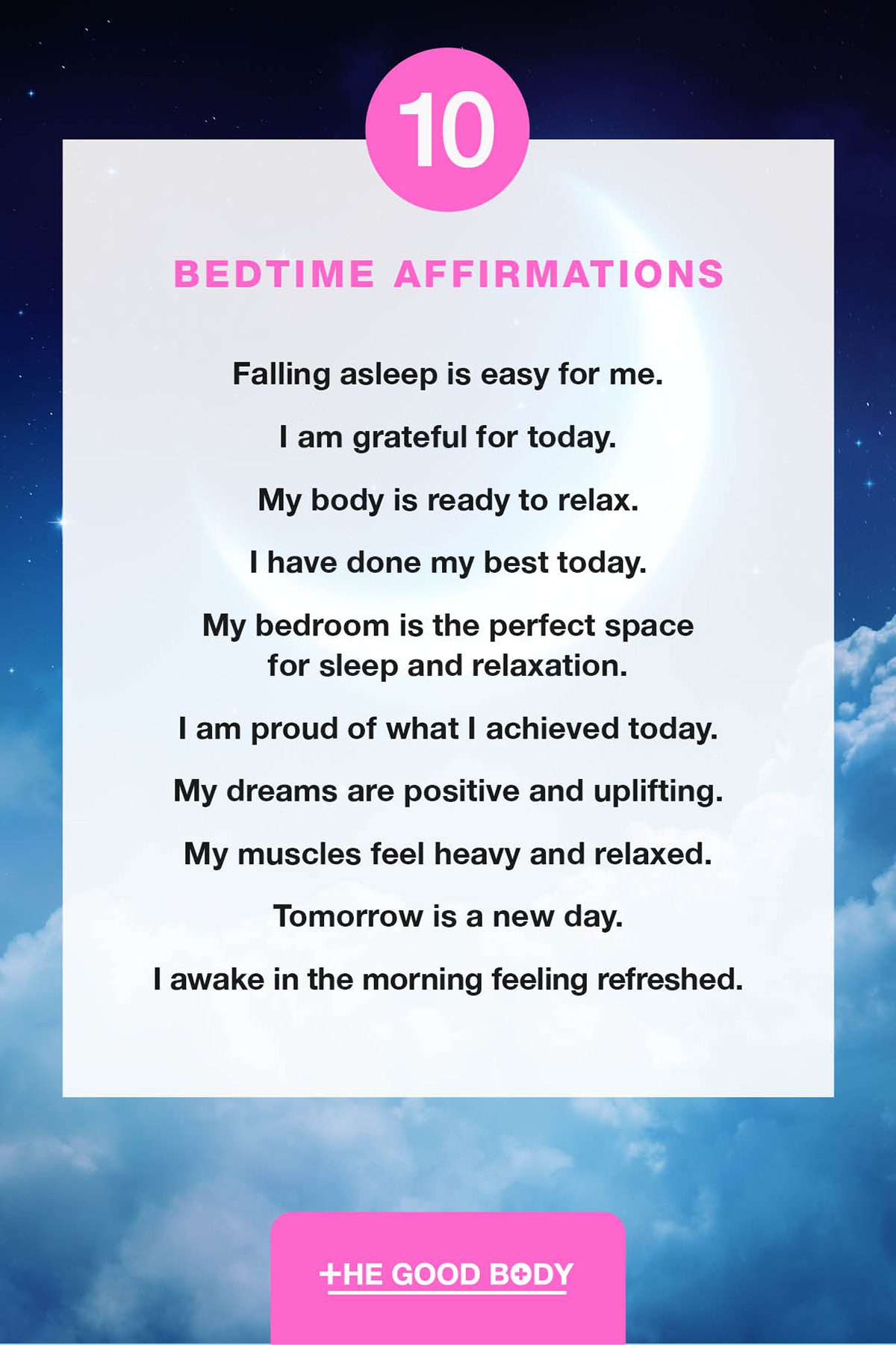
Credit: www.thegoodbody.com
Non-obvious Insights: What Most Beginners Miss
Many beginners think affirmations are just words. But there are deeper insights:
- Timing affects your mindset: Morning affirmations work best for motivation, while night affirmations help with relaxation and stress. Most people don’t realize the impact of timing on emotional health.
- Consistency is more important than quantity: Repeating a few affirmations every day is better than many statements once a week.
- Personalization increases effectiveness: Tailoring affirmations to your life and goals makes them stronger. Generic phrases don’t work as well.
- Combining with other habits: Affirmations work better when paired with meditation, breathing, or journaling. This boosts results.
For example, combining affirmations with deep breathing at night can improve sleep quality. Or, pairing morning affirmations with exercise can increase motivation.
Expert Guidance: Getting The Most From Affirmations
Experts suggest a few ways to make affirmations more powerful:
- Practice mindfulness: Stay present while repeating your statements.
- Use affirmations after challenging moments: For example, after a stressful event, use affirmations to reset your mind.
- Adjust as needed: Change your statements if they don’t feel right.
According to psychologists, affirmations work best when you believe them and use them regularly. If you struggle with belief, start with smaller, believable statements. For example, “I am learning to be confident” instead of “I am completely confident. ”
If you want to learn more about the science behind affirmations, visit Wikipedia.
Frequently Asked Questions
What Are The Best Affirmations For Morning?
The best morning affirmations are simple, positive, and focus on motivation. Examples include:
- “I am ready for today.”
- “I will achieve my goals.”
- “I am strong and confident.”
Choose statements that match your goals for the day.
Can I Use Affirmations At Both Morning And Night?
Yes, you can use affirmations at both times. Many people find this gives the most benefits. Morning affirmations build motivation, while night affirmations bring peace and gratitude.
How Long Should I Repeat Affirmations Each Day?
Most experts suggest 3–5 minutes in the morning and 5–10 minutes at night. The key is consistency. Repeat your statements with emotion and focus.
What If I Don’t Believe My Affirmations?
Start with statements you can believe. For example, “I am learning to be confident. ” Over time, your belief will grow. Pair affirmations with visualization and deep breathing for best results.
Are There Scientific Studies About Affirmations?
Yes, studies show affirmations can reduce stress, improve confidence, and support mental health. Timing is less studied, but both morning and night have unique benefits.
Final Thoughts
Affirmations are a simple, powerful tool for changing your mindset. Whether you use them in the morning or at night, the key is to choose the right time for your goals. Morning affirmations boost motivation and energy, while night affirmations help you relax and find peace.
Try both times, track your progress, and adjust your routine to fit your life. With consistency and belief, affirmations can help you build confidence, reduce stress, and improve your well-being. The power is in your hands—choose the timing that works best for you and make affirmations part of your daily routine.

Credit: www.etsy.com
