

Affirmations for Self-Love: Transform Your Confidence Daily
Affirmations For Self-love
Self-love is more than just a buzzword. It’s a lifelong practice of treating yourself with kindness, respect, and understanding. Many people struggle with negative self-talk or self-doubt, which can hold them back from reaching their true potential. This is where affirmations for self-love come in. These are positive statements you repeat to yourself, designed to shift your mindset and help you build a healthier relationship with who you are.
If you have ever felt you are not good enough, or that you don’t deserve happiness, you are not alone. Many people feel this way at some point in their lives. The good news is that, with conscious effort, you can change these beliefs.
Affirmations are a simple tool, but when used consistently, they can help you break negative patterns and create new, empowering ones.
In this article, you’ll learn what self-love really means, how affirmations work, and how to use them effectively. You’ll find practical examples, common mistakes, and insights backed by psychology. Whether you are new to affirmations or want to deepen your practice, you’ll discover everything you need to start your self-love journey today.
Understanding Self-love
Self-love is not about being selfish or arrogant. It’s about accepting yourself, flaws and all, and treating yourself as you would a good friend. It means caring for your own needs, setting healthy boundaries, and believing you are worthy of good things.
Many people misunderstand self-love and think it means putting yourself above others. In reality, it’s about balance. When you love yourself, you are better able to love and support others too. Research shows that people with higher self-love have better mental health, stronger relationships, and more resilience in the face of challenges.
Common Barriers To Self-love
Most people aren’t born with strong self-love. Family upbringing, culture, and personal experiences all shape the way we see ourselves. Here are some common barriers:
- Negative self-talk: Critical inner voices that tell you you’re not enough.
- Comparing yourself to others: Feeling less valuable because of what you see in others.
- Perfectionism: Believing you must be perfect to be worthy.
- Past trauma or criticism: Old wounds or harsh words that still affect your self-image.
Recognizing these barriers is the first step to overcoming them. With awareness, you can start to change the way you think and feel about yourself.
What Are Affirmations?
Affirmations are positive, present-tense statements you repeat to yourself to encourage a new way of thinking. They are not just wishful thinking or magic words. Instead, they help you challenge negative beliefs and replace them with healthier, more supportive ones.
For example, if you often think, “I’m not smart enough,” a self-love affirmation might be, “I am intelligent and capable. ” By repeating this new statement, you create space for a different story about yourself.
How Affirmations Work
Affirmations work by taking advantage of the brain’s ability to change, known as neuroplasticity. When you repeat positive statements regularly, your mind starts to accept them as true. This doesn’t happen overnight, but with practice, affirmations can help rewire negative thought patterns.
A key point many beginners miss is that affirmations are most powerful when you connect with the emotion behind the words. If you just say them without feeling, they may not have much effect. Try to really believe and feel the truth of what you’re saying, even if it feels strange at first.

Credit: www.amazon.com
The Science Behind Self-love Affirmations
There’s real science supporting the use of affirmations. Studies have found that self-affirmation can reduce stress, improve performance, and even increase resilience to negative feedback. According to research published in the journal *Social Cognitive and Affective Neuroscience*, positive affirmations activate the reward centers of the brain.
The process works like this: when you repeat positive statements, your brain starts to build new neural pathways. Over time, these new pathways become stronger, making it easier to think positively about yourself.
But affirmations alone are not enough. They work best when combined with action. For example, if your affirmation is “I am worthy of love,” you might also practice self-care or seek out healthy relationships to reinforce this belief.
Data: Effects Of Affirmations On Well-being
Here’s a simple comparison of outcomes for people who use affirmations regularly versus those who do not:
| Group | Reported Stress Levels | Self-Esteem (Scale 1-10) | Positive Mood |
|---|---|---|---|
| Uses Affirmations | Lower | 8.2 | Higher |
| Does Not Use Affirmations | Higher | 5.4 | Lower |
This data shows that consistent use of affirmations is linked to lower stress, higher self-esteem, and a more positive mood.
How To Create Effective Self-love Affirmations
Not all affirmations are created equal. To get the most benefit, your affirmations should be:
- Positive: Focus on what you want, not what you want to avoid.
- Present tense: State them as if they are already true.
- Personal: Use “I” statements that feel real for you.
- Believable: You don’t need to start with big, unbelievable claims. Choose statements you can accept, even if they stretch your comfort zone.
For example, instead of saying, “I will never feel bad about myself again,” try, “I am learning to accept and love myself each day. ” The second statement is positive, present, personal, and believable.
Examples Of Self-love Affirmations
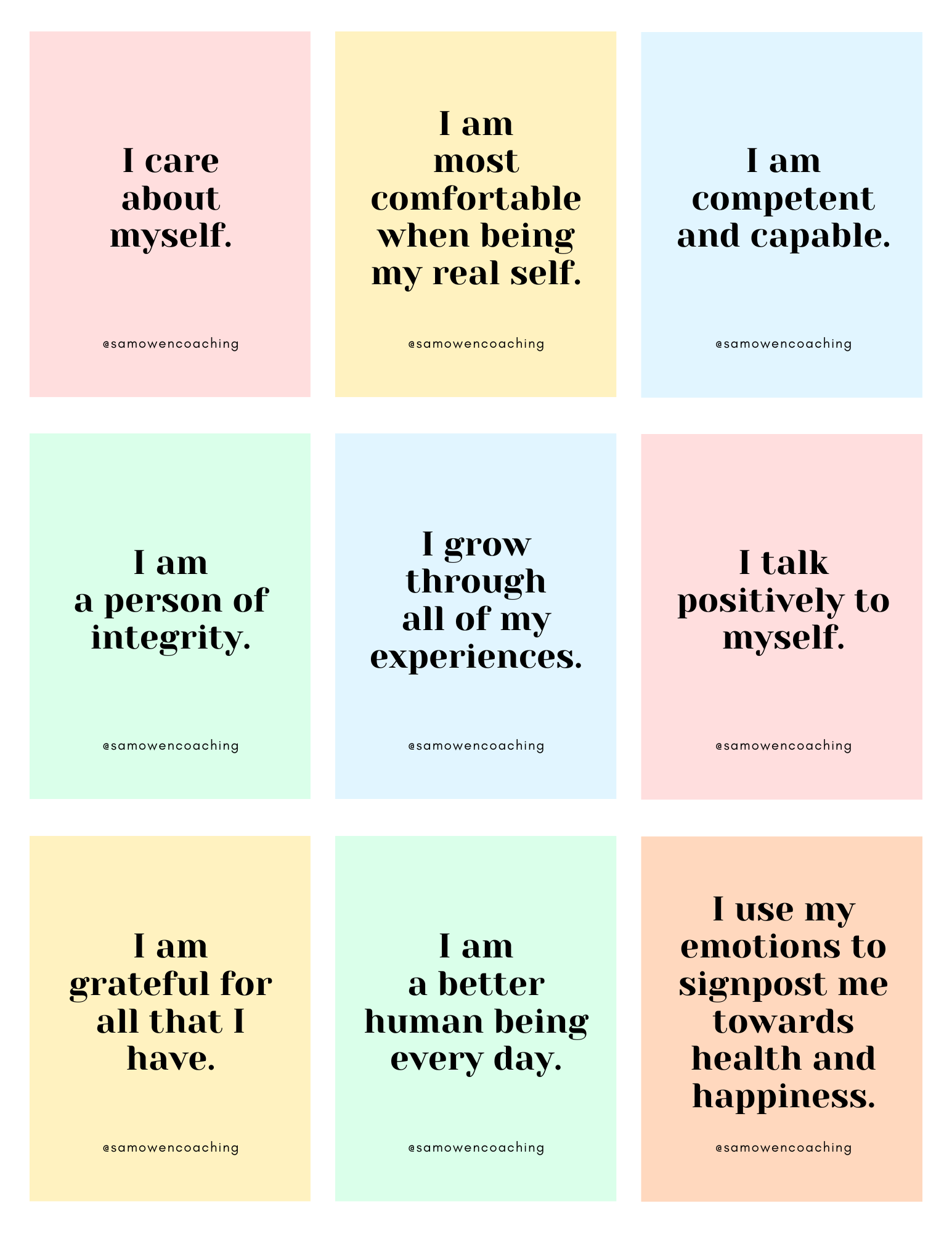
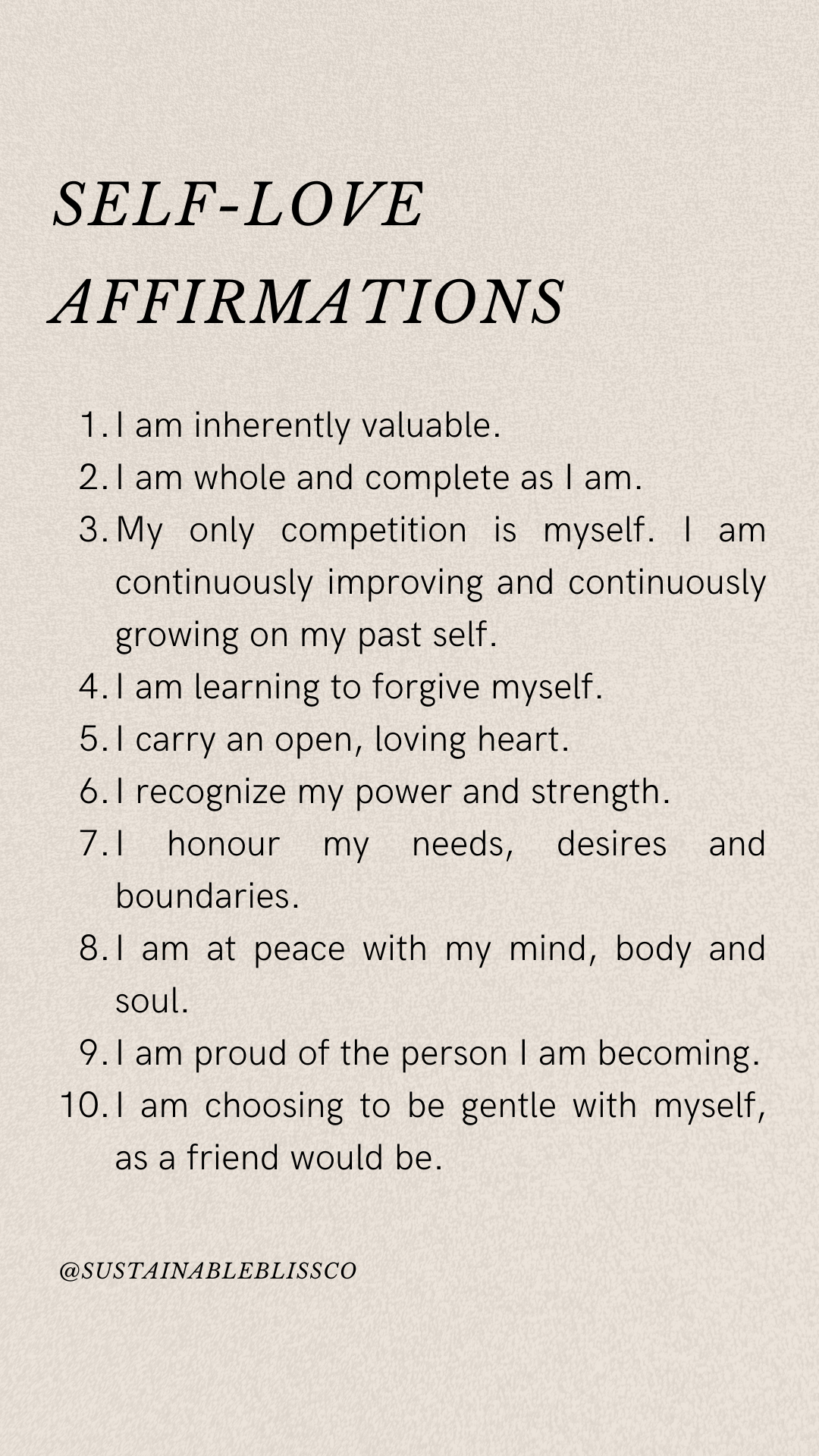
Here are 15 effective affirmations for self-love:
- I am worthy of love and respect.
- I accept myself exactly as I am.
- I am enough.
- I forgive myself for past mistakes.
- I am proud of who I am becoming.
- I deserve happiness and peace.
- I trust myself to make good decisions.
- I am gentle with myself when I make mistakes.
- I celebrate my unique qualities.
- My self-worth is not based on others’ opinions.
- I am deserving of good things.
- I honor my needs and boundaries.
- I am patient and compassionate with myself.
- I radiate confidence and self-love.
- I choose to love myself every day.
You don’t need to use all of these at once. Start with one or two that feel most meaningful to you.
Credit: www.relationshipscoach.co.uk
How To Use Affirmations For Self-love
Saying affirmations once is not enough. Consistency is key. Here’s how you can make affirmations a daily habit:
- Pick your affirmations: Choose 2-5 that feel powerful and relevant.
- Set a routine: Repeat them at the same time each day, such as in the morning or before bed.
- Say them out loud: Speaking the words helps you connect with their meaning.
- Write them down: Keeping a journal reinforces the message.
- Look in the mirror: Saying affirmations while looking at yourself can be very powerful.
- Feel the emotion: Try to feel the truth of the words as you say them.
Some people like to set reminders on their phone or post sticky notes around their home. Find what works for you and stick with it for at least a few weeks.
Combining Affirmations With Action
Affirmations are most effective when combined with positive actions. For example:
- If your affirmation is “I care for myself,” follow up by eating a healthy meal or taking a walk.
- If you say, “I honor my boundaries,” practice saying “no” when you need to.
Taking even small steps helps your mind believe the affirmations are true.
Common Mistakes When Using Affirmations
Many people start using affirmations but give up when they don’t see quick results. Here are some common mistakes and how to avoid them:
1. Choosing Unrealistic Affirmations
If you pick statements you don’t believe at all, your mind may reject them. Start small and gradually increase the strength of your affirmations as your confidence grows.
2. Being Inconsistent
Sporadic use won’t change deep-rooted beliefs. Make affirmations a daily habit, just like brushing your teeth.
3. Ignoring Negative Feelings
Affirmations are not about ignoring pain or pretending to be happy all the time. Allow yourself to feel all emotions, and use affirmations to gently guide your thoughts.
4. Expecting Instant Results
Changing your mindset takes time. Stick with your practice even when you don’t notice changes right away.
5. Not Taking Action
Affirmations alone are not enough. Combine them with small, supportive actions to reinforce your new beliefs.
Credit: www.sustainableblissco.com
Deep Dive: Why Self-love Is Difficult For Many People
Self-love is simple in theory but often hard in practice. Here are a few reasons why:
- Childhood experiences: If you didn’t receive unconditional love or support as a child, it can be hard to give it to yourself now.
- Cultural messages: Many cultures value self-sacrifice and humility over self-acceptance.
- Social media: Seeing only the highlights of others’ lives can fuel self-doubt and insecurity.
- Fear of arrogance: Some worry that self-love will make them selfish or proud.
Understanding these barriers can help you be kinder to yourself. Remember, self-love is a journey, not a destination.
Practical Tips To Strengthen Your Self-love Practice
Affirmations are one tool, but they work best with other self-love practices. Here are some strategies that support your journey:
1. Practice Self-compassion
Treat yourself as you would a friend. If you make a mistake, offer gentle words instead of harsh criticism.
2. Set Healthy Boundaries
Learn to say no to things that don’t serve you. Protect your time, energy, and well-being.
3. Take Care Of Your Body
Eat well, move your body, and get enough sleep. Physical care boosts emotional well-being.
4. Surround Yourself With Support
Spend time with people who lift you up and encourage your growth.
5. Celebrate Your Wins
Notice and celebrate your successes, no matter how small.
6. Forgive Yourself
Release guilt over past mistakes. Remind yourself that learning and growth are part of being human.
Self-love Affirmations For Specific Situations
Sometimes, you need affirmations for specific challenges. Here are a few examples:
For Overcoming Self-doubt
- I trust my inner wisdom.
- I believe in my abilities.
- I am confident in who I am.
For Healing After Criticism
- I am not defined by others’ opinions.
- My worth is constant, no matter what others say.
- I am gentle with myself.
For Facing Fear Or Failure
- I learn and grow from every experience.
- Mistakes do not define me.
- I am brave and resilient.
Using targeted affirmations can help you face specific obstacles with more strength and self-acceptance.
Case Study: Real-life Impact Of Self-love Affirmations
Consider the story of Maya, a young professional who struggled with low self-esteem. She constantly compared herself to her coworkers and felt she wasn’t good enough. After learning about affirmations, she started a daily practice. Each morning, she repeated, “I am enough” and “I am proud of my progress.
”
After three months, Maya noticed she felt more confident speaking up in meetings. She stopped apologizing for her ideas and started setting boundaries with her time. Her boss even commented on her new energy and self-assurance.
Maya’s story is not unique. Many people see similar benefits when they commit to using self-love affirmations consistently.
Data: Benefits Of Self-love On Mental Health
Let’s look at some data comparing people with high and low self-love:
| Level of Self-Love | Reported Anxiety | Relationship Satisfaction | Resilience |
|---|---|---|---|
| High Self-Love | Lower | Higher | Strong |
| Low Self-Love | Higher | Lower | Weak |
This table highlights a clear connection: higher self-love is linked to less anxiety, better relationships, and stronger resilience. These are real, life-changing benefits.
Self-love Affirmations For Different Life Stages
Your needs change as you move through different stages of life. Here are some affirmations tailored to common situations:
For Teens
- I am unique and valuable.
- I accept myself, even when I feel different.
- My feelings matter.
For Adults
- I am proud of my journey.
- I balance caring for others with caring for myself.
- I trust my decisions.
For Parents
- I am a loving parent, doing my best each day.
- I care for myself so I can care for my family.
- My love is enough.
For Older Adults
- I honor my life experience.
- I am grateful for who I am.
- My worth grows with time.
Adapting your affirmations to your life stage makes them more relevant and powerful.
How To Measure Your Progress
Many people wonder, “How do I know if affirmations are working?” Here are some ways to track your growth:
- Mood tracking: Write down how you feel before and after saying affirmations each day.
- Journaling: Note any changes in your thoughts, feelings, or actions.
- Feedback from others: Sometimes friends or family notice positive changes before you do.
- Self-reflection: Ask yourself, “Do I speak more kindly to myself now? Do I set better boundaries?”
Don’t expect overnight transformation. Look for small shifts over weeks or months.
Combining Affirmations With Mindfulness
Mindfulness means paying attention to the present moment without judgment. When you combine affirmations with mindfulness, you strengthen their power. Here’s how:
- Before saying your affirmations, take a few deep breaths.
- Notice any resistance or negative feelings that come up.
- Accept those feelings, then gently repeat your affirmations.
- Stay present and allow the words to sink in.
This practice helps you connect more deeply with your affirmations and makes them more effective.
Digital Tools And Resources For Self-love Affirmations
Technology can help you stay consistent with your affirmation practice. Here are some helpful tools:
- Apps: There are many affirmation apps that send daily reminders or offer guided practices.
- YouTube: You’ll find videos with guided self-love affirmations and relaxing music.
- Podcasts: Listen to interviews or guided affirmations while you walk or commute.
- Printable worksheets: These can help you track your progress and stay motivated.
One well-known resource is Psychology Today, which offers articles and tips on building self-love.
The Power Of Community In Self-love
While self-love starts with you, having a supportive community makes the journey easier. Consider joining a group or finding a friend who is also working on self-love. Sharing experiences, challenges, and victories can keep you motivated.
Many people find that talking openly about self-love helps break the stigma and builds stronger relationships. Remember, you are not alone in this process.
Affirmations For Challenging Days
Some days are harder than others. On tough days, gentle affirmations can help:
- It’s okay to have a hard day.
- I am allowed to rest.
- I am still worthy, even when I struggle.
On these days, focus on self-compassion and acceptance. Progress is not always a straight line.
Personalizing Your Affirmations
The most effective affirmations are the ones you create yourself. Here’s how to write your own:
- Identify a negative belief you want to change.
- Write a positive, present-tense statement that counters it.
- Make it specific and personal to your life.
- Test it out. Does it feel believable? Can you connect with it emotionally?
For example, if you often think, “I’m not lovable,” your affirmation might be, “I am worthy of love and kindness. ” With practice, your own words will have the most power.
Frequently Asked Questions
What If I Don’t Believe My Affirmations?
It’s normal to feel resistance at first. Start with statements that feel believable, even if they’re small. For example, “I am learning to accept myself. ” Over time, as you repeat and take small actions, your belief will grow.
How Long Does It Take To See Results From Affirmations?
Everyone is different, but most people notice small changes in their thoughts or feelings within a few weeks. Consistency matters more than speed. Stick with your practice and give yourself time.
Can I Use Affirmations For Other Goals?
Absolutely. While this article focuses on self-love, you can create affirmations for confidence, health, relationships, or any area you want to improve. The same principles apply.
What Should I Do If I Feel Silly Saying Affirmations?
Feeling awkward is very common, especially at the beginning. Remind yourself that you are building a new habit. Try saying your affirmations in private, writing them down, or listening to recordings if that feels easier.
Are There Any Risks To Using Affirmations?
Affirmations are generally safe and helpful. However, if you have deep emotional pain or trauma, affirmations alone may not be enough. Consider seeking support from a mental health professional for extra guidance.
Self-love is a lifelong journey. Affirmations are a gentle, powerful tool to support you along the way. With patience, practice, and kindness, you can transform the way you see yourself and create a more joyful, resilient life.
