

Affirmations for Men: Boost Confidence and Success Daily
Affirmations For Men: Building Strength, Confidence, And Self-worth
There’s a quiet pressure many men feel to stay strong, show no fear, and keep their struggles hidden. Society often tells men to “man up” or “deal with it.” But this old way of thinking can make life harder. It can lead to self-doubt, anxiety, and stress. In recent years, more men have started looking for tools to help them manage these pressures in a healthier way. One of the simplest, yet most powerful tools is using affirmations.
Affirmations are positive statements you say to yourself, often out loud or in your mind. Over time, they can change how you think, feel, and act. They are not magic, but they help to reshape your thoughts and boost your confidence.
For men, affirmations can be a way to balance expectations, improve mental health, and find their own voice. This article will explore why affirmations matter for men, how they work, and which affirmations are most effective. You’ll also find real examples, tips for success, and answers to common questions.
Why Affirmations Matter For Men
Men face unique challenges, both from society and from their own beliefs. Many men grow up hearing that showing emotion is weak, or that they should always be in control. These messages can make it hard to deal with stress, failure, or even simple daily problems.
Over time, these pressures can affect mental health and self-esteem.
Affirmations help challenge old beliefs and create new, positive ones. Research in psychology shows that positive self-talk can reduce stress, improve performance, and even change how the brain works. For example, studies have found that repeating positive statements helps people handle difficult situations better and recover faster from setbacks.
What many men don’t realize is that affirmations are not only about feeling good. They are about building mental habits that help you face life’s challenges. By choosing the right words, you can start to change your inner dialogue and become your own best supporter.
How Affirmations Work: The Science Behind The Practice
Affirmations may sound simple, but they have a real impact on the brain. When you repeat a positive statement, your brain starts to believe it, especially if you say it often. This is called neuroplasticity—the brain’s ability to change and grow.
Here’s what happens:
- Interrupting Negative Thoughts: Affirmations stop negative thinking in its tracks. By saying something positive, you break the cycle of doubt or worry.
- Building New Pathways: The brain creates new connections each time you repeat an affirmation. Over time, these positive pathways become stronger and more automatic.
- Changing Emotions: As your thoughts change, your feelings do too. You start to feel more confident, hopeful, and calm.
Real-life example: Imagine a man who feels nervous before meetings. He uses the affirmation, “I am prepared and confident.” At first, it feels strange. But after a few weeks, he finds he’s less anxious and more focused. The affirmation becomes part of his thinking.

Credit: beam.community
Common Myths About Affirmations For Men
Many men are skeptical about affirmations. Some worry that it’s “not masculine” or that it doesn’t work. Let’s look at a few common myths and the truth behind them:
- “Affirmations are only for women.”
- Not true. Everyone has an inner voice. Men benefit from positive self-talk just as much as women do.
- “It’s just wishful thinking.”
- Affirmations are more than wishes. They help you focus on your strengths and take action.
- “It feels fake or silly.”
- At first, saying positive things about yourself may feel strange. This is normal. With practice, it becomes natural.
- “Real men don’t need help.”
- Asking for help or using tools like affirmations is a sign of strength, not weakness.
Understanding these myths can remove barriers and make it easier for men to try affirmations without judgment.
Types Of Affirmations For Men
Affirmations can target different parts of life. Here are some of the most important areas:
Confidence And Self-esteem
Confidence is the foundation for success in work, relationships, and health. Many men struggle with self-doubt, especially in competitive environments.
- “I am strong and capable.”
- “I trust myself to handle challenges.”
- “My worth is not based on others’ opinions.”
- “I am proud of who I am.”
Stress And Anxiety
Stress can affect sleep, focus, and health. Positive statements help men manage these feelings.
- “I am calm under pressure.”
- “I breathe deeply and let go of tension.”
- “I control my thoughts and reactions.”
Work And Success
Career and money pressures are a big source of stress for many men. Affirmations can help with motivation and focus.
- “I am focused and productive.”
- “I am open to new opportunities.”
- “I learn and grow every day.”
Relationships And Family
Being a good partner, father, or friend is important for most men. Affirmations can build healthy connections.
- “I listen with patience and respect.”
- “I express my feelings honestly.”
- “I am a caring and supportive partner.”
Health And Fitness
Physical health is often linked to self-image. Affirmations can keep you motivated and positive about your body.
- “I take care of my body and mind.”
- “I am disciplined in my habits.”
- “I am getting stronger every day.”
Overcoming Failure
Everyone fails. The key is how you respond. Affirmations help you bounce back and keep moving forward.
- “Failure is a step toward success.”
- “I learn from my mistakes.”
- “I am resilient and persistent.”
How To Use Affirmations Effectively
It’s easy to read affirmations. The challenge is making them work for you. Here are some steps for getting real results:
- Be Specific. Generic affirmations are less effective. Use words that fit your situation. For example, “I am a good leader at work” is better than “I am good.”
- Say Them Out Loud. Hearing your own voice makes affirmations more powerful. Try saying them in front of a mirror.
- Repeat Often. Consistency is key. Say your affirmations every morning, before bed, or during stressful times.
- Feel the Words. Don’t just repeat—try to feel the meaning. Imagine yourself being confident, calm, or successful.
- Write Them Down. Putting affirmations on paper (or your phone) helps you remember and believe them.
- Pair With Action. Affirmations work best when you also take real steps. If you say, “I am healthy,” also try to eat better or exercise.
Example Routine
- Morning: Repeat 3 affirmations in the mirror while getting ready.
- Before a meeting: Say your top affirmation for confidence.
- Night: Write one positive thing about yourself in a journal.
Data: Men, Mental Health, And Self-talk
To see why affirmations matter, let’s look at some data on men and mental health:
| Issue | Percentage of Men Affected | Notes |
|---|---|---|
| Stress at Work | 60% | Report high daily stress |
| Low Self-Esteem | 45% | Feel not good enough |
| Fear of Failure | 50% | Worry about making mistakes |
| Hesitant to Ask for Help | 65% | Feel they must solve problems alone |
This data shows that many men struggle with the very issues affirmations can help address.
50 Powerful Affirmations For Men
Here are fifty affirmations designed for different needs. You can choose a few that fit your life, or use them as inspiration to write your own.
- I am strong and resilient.
- I believe in my abilities.
- I am worthy of respect.
- I handle challenges with courage.
- I am a good friend and partner.
- I am proud of my progress.
- I trust my decisions.
- I am calm under pressure.
- I am focused on my goals.
- I learn from every experience.
- I am grateful for my life.
- I am open to growth.
- I am disciplined and motivated.
- I forgive myself for past mistakes.
- I am a positive influence.
- I am comfortable with who I am.
- I express my feelings honestly.
- I am patient and understanding.
- I am committed to my health.
- I am successful in my work.
- I am a caring father (or son, brother, friend).
- I am creative and resourceful.
- I set healthy boundaries.
- I am confident in social situations.
- I am a leader when needed.
- I am proud of my unique qualities.
- I am present in the moment.
- I am kind to myself and others.
- I am always learning.
- I am grateful for the support I have.
- I am not defined by my mistakes.
- I am open to new opportunities.
- I am in control of my reactions.
- I am dependable and trustworthy.
- I am making a difference.
- I am at peace with my past.
- I am excited about the future.
- I am a problem solver.
- I am worthy of love and happiness.
- I am balanced in mind and body.
- I am a source of strength for others.
- I am proud of my achievements.
- I am persistent and determined.
- I am comfortable with change.
- I am grateful for each day.
- I am worthy of success.
- I am respected by those around me.
- I am responsible and reliable.
- I am growing stronger every day.
- I am enough.
Common Mistakes Men Make With Affirmations
Affirmations are simple, but there are a few pitfalls. Here’s what to watch for:
1. Not Believing The Words
Some men choose affirmations that feel too far from reality. For example, saying “I am rich” when you are struggling with money can feel fake. It’s better to use statements like, “I am learning to manage my money better. ” Start where you are.
2. Inconsistency
Saying affirmations once or twice won’t work. Consistency is key. Build a daily habit.
3. Focusing Only On Words
Affirmations need action. If you say, “I am fit,” but never exercise, it won’t help. Pair words with real steps.
4. Comparing To Others
Affirmations are personal. Don’t use words just because someone else does. Choose what feels true for you.
5. Ignoring Emotions
If you feel uncomfortable, notice it. Sometimes, discomfort means you are challenging an old belief. This is part of growth.
Real-life Examples: Men Using Affirmations
Let’s look at how real men use affirmations to improve their lives.
Case 1: Career Growth
John, a manager in his 40s, struggled with self-doubt at work. He started using the affirmation, “I am a confident and effective leader. ” He repeated it each morning before work. Over a few months, his team noticed he spoke up more in meetings and took on bigger projects.
He says affirmations helped him change his mindset and believe in his strengths.
Case 2: Handling Stress
David, a young father, often felt overwhelmed by family and job stress. His affirmation was, “I am calm and present with my family. ” He wrote it on a sticky note by his desk. Whenever stress rose, he paused, took a deep breath, and repeated his affirmation.
This small habit helped him stay patient and focused, even on busy days.
Case 3: Building Self-esteem
Michael, a college student, felt like he didn’t fit in. He started saying, “I am enough just as I am. ” Over time, he noticed he felt less pressure to act like others. He found it easier to make friends and enjoy social events.
These examples show that affirmations are not just words—they can change how you think, feel, and act.
Top 10 Tips For Success With Affirmations
Success with affirmations takes more than just saying words. Here are practical tips:
- Make them personal. Use “I” statements that fit your life.
- Keep them positive. Focus on what you want, not what you don’t want.
- Use the present tense. Say “I am” instead of “I will be.”
- Combine with deep breathing. This helps the mind accept new ideas.
- Use reminders. Write affirmations on notes, phone alarms, or apps.
- Visualize success. Imagine yourself living the affirmation.
- Be patient. Change takes time—stick with it.
- Celebrate small wins. Notice when you feel better or act differently.
- Share with a friend. Support makes habits stick.
- Adjust as you grow. Change your affirmations as your needs change.

Credit: www.amazon.com
Advanced Approaches: Combining Affirmations With Other Tools
For even better results, mix affirmations with other self-improvement tools. Here are some combinations:
1. Affirmations And Journaling
Write your affirmation at the top of a journal page. Each day, note how you lived that affirmation. For example, “Today I showed confidence by speaking up in class. ”
2. Affirmations And Visualization
Picture yourself living the words. For example, if your affirmation is, “I am a calm leader,” imagine leading a meeting with calm and clarity.
3. Affirmations And Mindfulness
While meditating or breathing deeply, repeat your affirmation. This helps the brain accept the message.
4. Affirmations And Goal Setting
Link affirmations to goals. If your goal is to get fit, use affirmations like, “I am dedicated to my health,” and track your progress.
Here’s a quick comparison of how affirmations can work alone or with other tools:
| Method | Effectiveness | Best For |
|---|---|---|
| Affirmations Alone | Good | Daily mindset boost |
| Affirmations + Journaling | Very Good | Tracking growth |
| Affirmations + Visualization | Excellent | Building confidence |
| Affirmations + Mindfulness | Excellent | Reducing stress |
| Affirmations + Goal Setting | Excellent | Creating lasting change |
How To Write Your Own Affirmations
Ready-made affirmations are a great start, but writing your own can be even more powerful. Here’s how:
- Identify a Challenge. What is one area you want to improve? For example: Confidence at work.
- Find a Positive Opposite. If you feel “I’m not good enough,” the opposite is “I am capable and skilled.”
- Make It Present Tense. Use “I am” or “I have.”
- Keep It Short and Clear. Simple statements are easier to remember.
- Test the Feeling. If it feels inspiring but a little challenging, it’s right.
Example:
- Challenge: “I worry I’m not a good dad.”
- Affirmation: “I am a loving and present father.”
When Affirmations Don’t Work: What To Do
Sometimes, affirmations don’t bring results right away. Here are some reasons and how to fix them:
Not Believing The Statement
If your affirmation feels impossible, adjust it. Instead of “I am always confident,” try “I am learning to be more confident each day. ”
Emotional Blocks
Strong negative feelings can block progress. Try pairing affirmations with therapy, journaling, or talking with a trusted friend.
Lack Of Action
Affirmations are not magic. They help most when you also take real action. If you say “I am healthy,” also make small healthy choices daily.
Expecting Instant Results
Change is slow. Most people need weeks or months to see real change. Be patient and keep going.
Affirmations For Men In Different Life Stages
Affirmations can help at any age. Here are examples for different stages:
Young Men And Students
- “I am smart and capable.”
- “I am open to learning new things.”
- “I am confident in my own path.”
Working Professionals
- “I am skilled and valuable at my job.”
- “I am a leader in my field.”
- “I balance work and life well.”
Fathers And Family Men
- “I am a loving father and partner.”
- “I am present with my family.”
- “I am patient and understanding.”
Older Men
- “I am wise and experienced.”
- “I am grateful for all I have learned.”
- “I am still growing and learning.”
Non-obvious Insights For Success
Here are a few tips most beginners miss:
- Environment Shapes Success: The people and places around you can help or hurt your progress. If possible, spend time with others who support your growth. For example, joining a men’s group or online community can keep you motivated.
- Language Matters: Small changes in language can make affirmations more believable. For example, “I am becoming more confident” may work better than “I am always confident.”
- Physical Movement Helps: Saying affirmations while walking or exercising can boost their effect. The body and mind are connected.
Comparing Affirmations With Other Self-help Tools
Affirmations are just one tool among many. Here’s how they compare to other popular methods:
| Method | Time Needed | Main Benefit | Best Use |
|---|---|---|---|
| Affirmations | 1-5 mins/day | Positive mindset | Daily routine |
| Journaling | 10-20 mins/day | Self-reflection | Processing feelings |
| Meditation | 5-20 mins/day | Stress relief | Reducing anxiety |
| Therapy | 1 hr/week | Deep change | Overcoming big challenges |
Affirmations fit well with any routine because they are quick and easy.
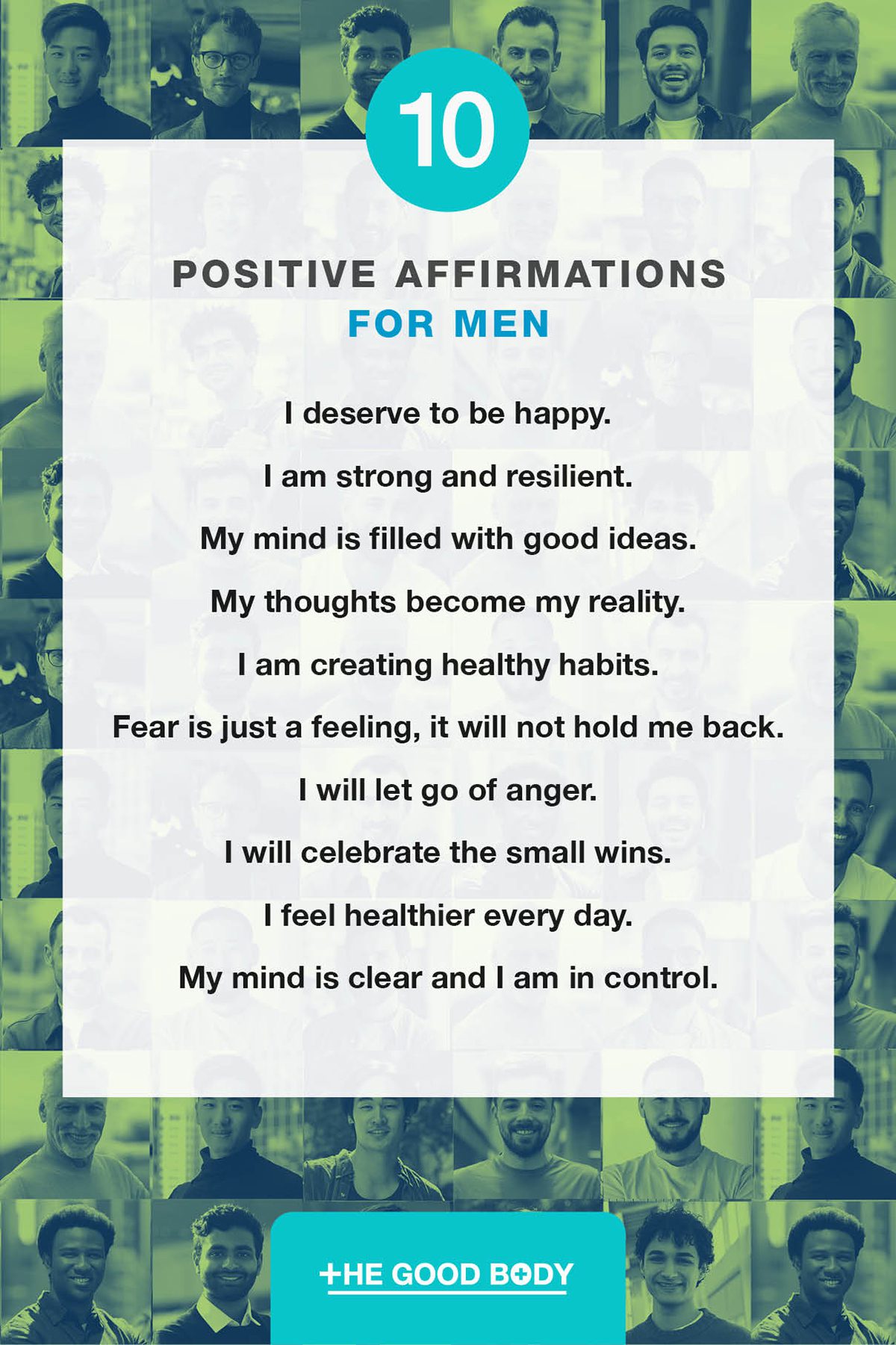
Credit: www.thegoodbody.com
Resources And Where To Learn More
If you want to go deeper, many books, podcasts, and websites offer guidance on affirmations and self-talk. For example, the American Psychological Association has resources on self-affirmation and mental health. You can read more about this on the Wikipedia: Self-affirmation page.
Frequently Asked Questions
What Are The Best Affirmations For Men?
The best affirmations are those that fit your goals and struggles. Focus on statements about confidence, resilience, self-worth, and healthy relationships. Examples include “I am strong and capable” or “I am a caring and present father.”
How Long Does It Take For Affirmations To Work?
Change is gradual. Most men notice small shifts in mood and mindset within a few weeks. For deeper changes, it can take several months of daily practice.
Can Affirmations Replace Therapy Or Medical Help?
No. Affirmations are a tool, not a cure. If you have serious mental health challenges, seek help from a professional. Affirmations work best alongside other support.
Should I Say Affirmations Out Loud Or In My Head?
Both work, but saying them out loud is usually more powerful. Hearing your own voice helps the brain accept new ideas. Writing them down also helps.
What If I Feel Silly Or Uncomfortable Saying Affirmations?
Feeling awkward is normal at first. Keep going. Over time, it gets easier, and you’ll start to believe your positive statements.
Affirmations are a simple tool, but they can make a big difference in your life. By choosing words that matter, repeating them often, and pairing them with real action, you can change your mindset and build a stronger, healthier you.
Start today—your best self is waiting.
