

Affirmations for Gratitude: Transform Your Mindset Daily
Affirmations For Gratitude
Gratitude is more than saying “thank you.” It’s a mindset that transforms how we see life, helps us notice small joys, and improves our health and happiness. But sometimes, feeling grateful doesn’t come naturally. Stress, routine, or negative thoughts can block our appreciation for what we have. This is where affirmations for gratitude become powerful. By repeating positive statements every day, you can train your mind to notice the good, appreciate the present, and build a habit of thankfulness.
Many people use affirmations to boost their self-confidence, but gratitude affirmations are different. They focus on recognizing blessings, big and small. Research shows that practicing gratitude can lower stress, increase happiness, and even improve sleep. Affirmations make this practice easy and accessible for everyone, even for those who struggle to feel grateful.
In this guide, you’ll discover how gratitude affirmations work, how to use them, and which statements are most effective. You’ll also find practical tips, common mistakes, and real examples to help you start your own gratitude journey.
Why Gratitude Matters
Gratitude isn’t just a nice feeling—it has real benefits for your body and mind. Studies show that people who practice gratitude have lower blood pressure, stronger relationships, and less depression. When you focus on what’s good, your brain releases chemicals like dopamine and serotonin.
These chemicals help you feel happier and calmer. Gratitude also shifts your attention away from what you lack, toward what you already have.
Here are some key benefits of gratitude:
- Improved mood: Grateful people feel happier and more positive.
- Better relationships: Saying thank you brings people closer.
- Stronger health: Gratitude lowers stress and improves sleep.
- Less negativity: Focusing on good things reduces jealousy and anger.
Many beginners miss the fact that gratitude can be practiced even on bad days. You don’t need perfect circumstances to be grateful. The habit itself makes life feel richer and more satisfying.
What Are Gratitude Affirmations?
Affirmations are short, positive statements you repeat to yourself. Gratitude affirmations are focused on thankfulness. They help you see the positive side of life and remind you of what you have. Saying these affirmations daily trains your mind to notice good things, even during tough times.
Examples of gratitude affirmations include:
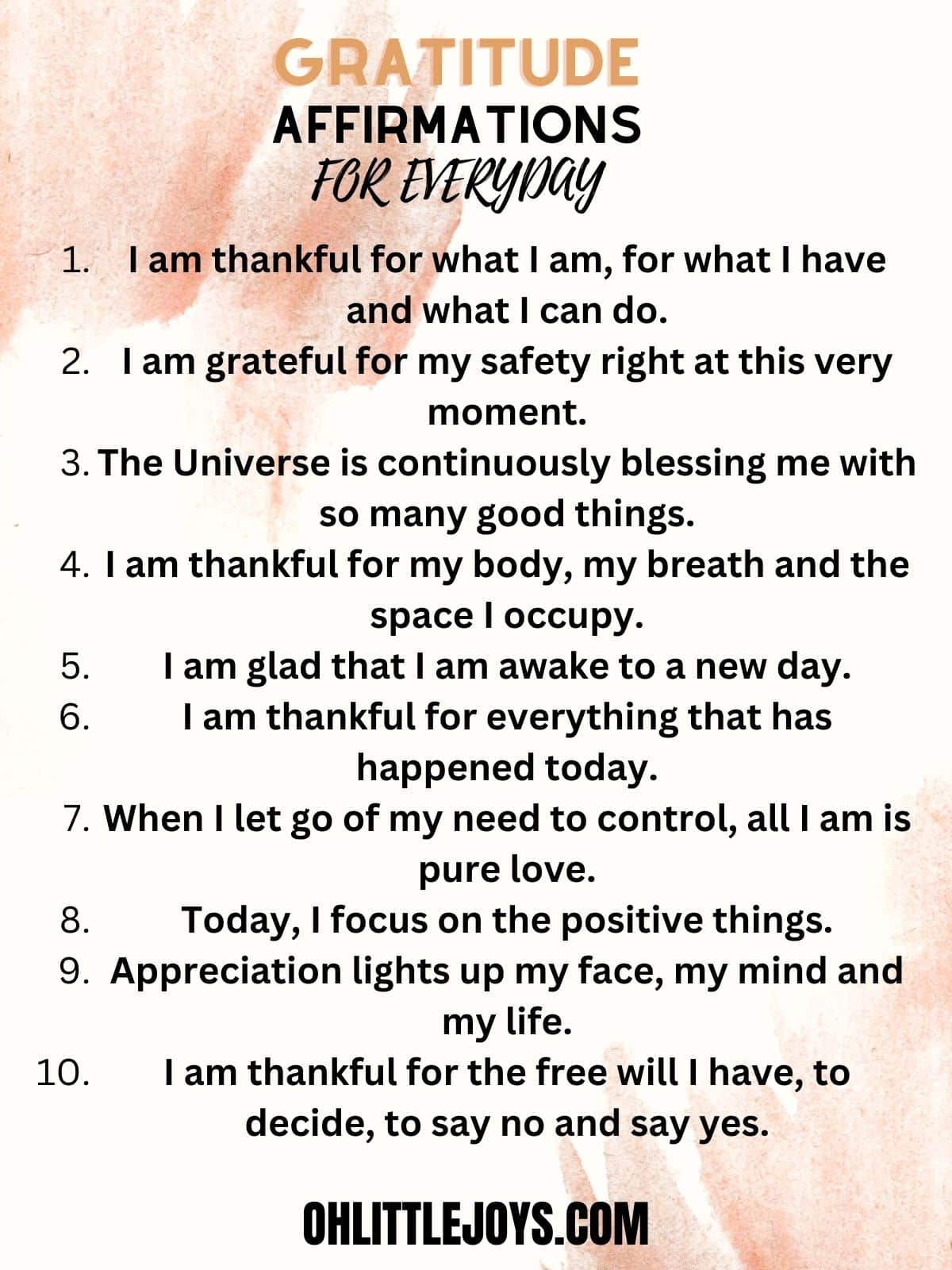
- “I am grateful for the love in my life.”
- “I appreciate the small joys of today.”
- “My life is full of blessings.”
Many people think affirmations must be complicated, but simple statements are often most powerful. The key is to repeat them regularly, especially when you feel stressed or negative. Over time, your brain starts to believe these statements, changing how you see your world.
Science Behind Gratitude And Affirmations
Researchers have studied the effects of gratitude for years. According to a survey from the Greater Good Science Center, people who wrote daily gratitude lists felt 25% happier than those who didn’t. Another study found that repeating positive statements helps rewire the brain, making gratitude feel more natural.
Here’s how gratitude affirmations work:
- Neural pathways: Repeating affirmations creates new connections in your brain. This makes it easier to notice positive things.
- Emotional balance: Gratitude lowers stress hormones and boosts happy chemicals.
- Habit formation: Daily repetition turns gratitude into a habit.
One non-obvious insight: affirmations work best when you combine them with real actions. For example, saying “I am grateful for my health” while drinking water or walking makes the affirmation stronger. Another tip: gratitude affirmations help most when you use your own words. Personalizing statements makes them feel real and believable.
How To Practice Gratitude Affirmations
Using gratitude affirmations isn’t complicated, but there are ways to make the practice more effective. Here’s a simple step-by-step guide:
- Choose your affirmations: Select 3–5 statements that feel meaningful to you. Start with simple phrases like “I am thankful for today.”
- Find a quiet space: Stand or sit where you can focus, without distractions.
- Repeat daily: Say your affirmations out loud or silently. Do this every morning or night for at least 2–3 minutes.
- Visualize: Imagine the feelings behind your words. Picture the people or things you’re grateful for.
- Write them down: Keep a gratitude journal. Writing your affirmations makes them more powerful.
- Use reminders: Place sticky notes on your mirror or phone. Reminders help you stay consistent.
- Combine with actions: Thank someone, smile, or do something kind after your affirmations.
A common mistake is rushing through affirmations. Take your time and focus on each word. Another error is using too many statements. Start small and add more as you feel comfortable.
Examples Of Powerful Gratitude Affirmations
Not all affirmations work for everyone. The best statements are simple, clear, and personal. Here are some effective gratitude affirmations to get you started:
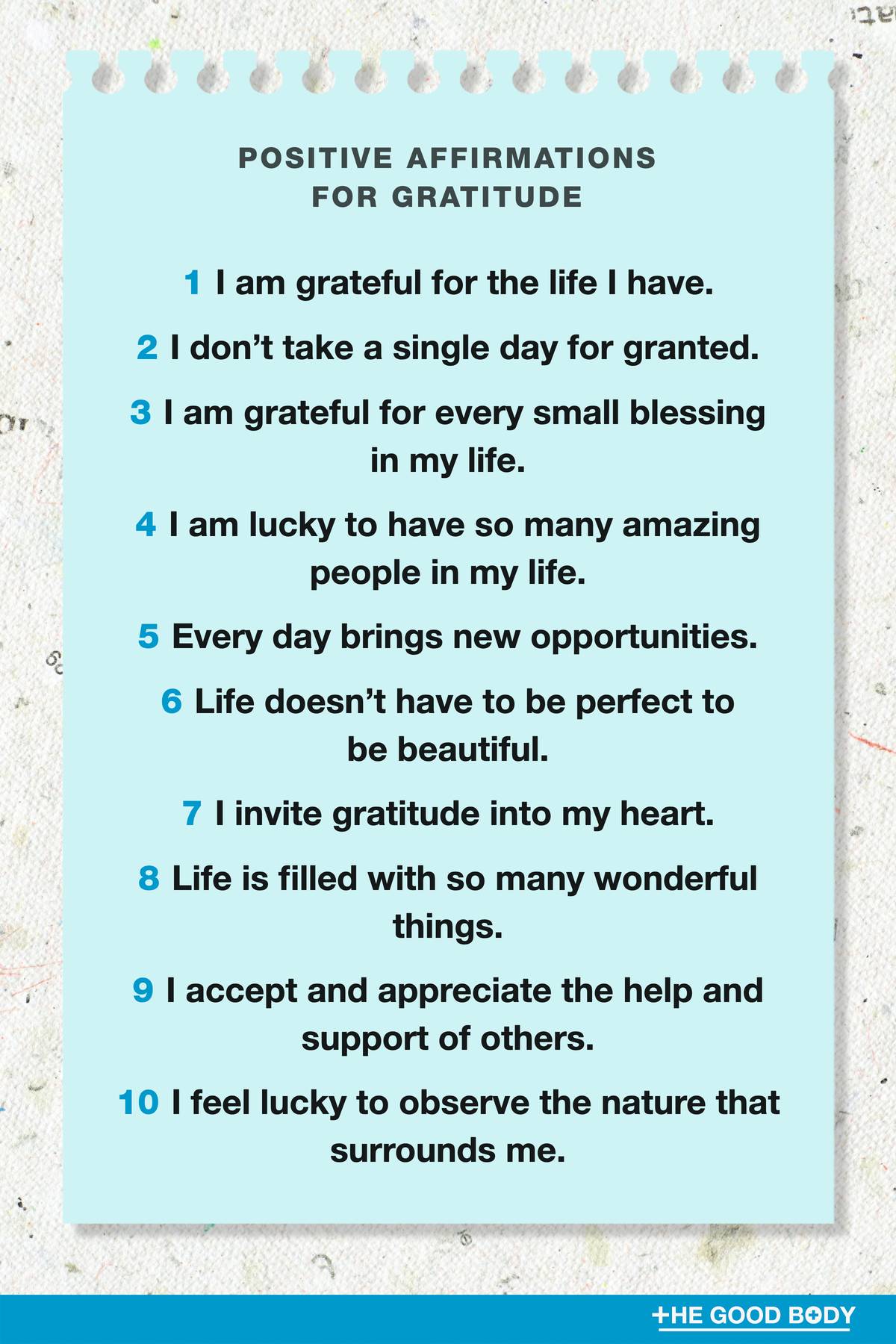
- “I am grateful for my body and mind.”
- “I appreciate the kindness around me.”
- “Thank you for the opportunities today brings.”
- “My heart is open to joy and gratitude.”
- “I welcome abundance and blessings.”
- “I am thankful for friends and family.”
- “Today, I notice the beauty in life.”
- “I am grateful for challenges that help me grow.”
- “I cherish moments of peace and calm.”
- “I am thankful for all I have and all I will receive.”
Remember, you can adjust these statements to fit your life. If you want to focus on health, try “I am grateful for my healthy body. ” If relationships are important, use “I appreciate the love in my life. ”
When And How Often To Use Gratitude Affirmations
Timing matters when building any new habit. For gratitude affirmations, consistency is more important than frequency. Most experts recommend repeating affirmations once or twice a day.
Best times for gratitude affirmations:
- Morning: Start your day with positive energy.
- Night: End your day feeling peaceful and thankful.
- During stress: Use affirmations to calm your mind when feeling anxious.
Some people use affirmations before meals or during meditation. Others write them in journals. The key is to pick a routine that fits your life. If you miss a day, don’t feel guilty. Just start again tomorrow.
Comparing Gratitude Affirmations With Other Practices
Many people wonder how gratitude affirmations compare to other positive habits. Here’s a quick overview:
| Practice | Main Benefit | Time Needed | Ease of Use |
|---|---|---|---|
| Gratitude Affirmations | Builds positive mindset | 2–5 minutes | Very easy |
| Gratitude Journaling | Deepens awareness | 5–10 minutes | Easy |
| Meditation | Reduces stress | 10–20 minutes | Moderate |
| Mindfulness | Improves focus | Varies | Moderate |
Affirmations are quick and simple, but journaling can help you go deeper. Meditation and mindfulness require more practice, but offer more long-term benefits. Combining these habits gives the best results.
Real-life Examples And Stories
Gratitude affirmations work for people in all walks of life. Here are two real examples:
Sara, a busy mother: Sara felt overwhelmed by daily chores and stress. She started using the affirmation, “I am grateful for the love in my home,” every morning. Within weeks, she noticed more patience and joy with her family.
Javier, a college student: Javier struggled with anxiety and negative thoughts. He repeated, “I appreciate the small joys of today,” before classes. This helped him focus on positive moments, like friendly conversations and sunny weather.
These stories show that gratitude affirmations don’t require big changes. Small, daily actions can shift your perspective.
Common Mistakes With Gratitude Affirmations
Many beginners make mistakes that reduce the power of affirmations. Here are some errors to avoid:
- Using generic statements: If your affirmation feels empty, personalize it.
- Repeating without feeling: Connect emotionally with your words.
- Skipping days: Consistency is key.
- Judging yourself: If you don’t feel grateful, don’t criticize yourself. Keep practicing.
- Expecting instant results: Affirmations take time. Be patient.
One insight: Some people force positive statements when they feel negative. Instead, try softer affirmations like “I am open to finding gratitude.” This helps bridge the gap between how you feel and what you want to believe.
How To Write Your Own Gratitude Affirmations
Creating your own affirmations makes the practice more meaningful. Here’s how:
- Start with “I am” or “I appreciate.” These phrases build positive identity.
- Keep it simple: Use clear language. Example: “I am grateful for my home.”
- Focus on what you have: Avoid statements about what you want to receive.
- Be specific: Mention people, places, or moments. Example: “I appreciate my morning coffee.”
- Use present tense: Affirmations work best when focused on now.
If you’re unsure, write a list of things you’re thankful for. Turn these items into affirmations. For example, “I am grateful for my supportive friends. ”
Credit: www.thegoodbody.com
Advanced Tips For Gratitude Affirmations
Once you’re comfortable, you can make your practice stronger. Here are some advanced tips:
- Pair with breathing exercises: Deep breaths help you feel calm and focused.
- Use affirmations during challenges: When facing problems, repeat statements like “I am grateful for lessons learned.”
- Share with others: Saying affirmations with friends or family builds connection.
- Record your voice: Listen to your affirmations during the day.
- Try visualization: Imagine the feeling of gratitude in your body.
Another insight: Don’t just focus on good times. Use gratitude affirmations during hard moments. This builds resilience and helps you find meaning in difficulties.
Data On Gratitude And Well-being
Gratitude is one of the most studied positive habits. Here are some numbers that show its power:
- People who practice gratitude sleep 15% better, according to a study by the University of California.
- Grateful people are 23% less likely to feel stressed.
- Practicing daily gratitude can increase happiness scores by 20% over three months.
These results show that gratitude is more than a feeling—it’s a proven way to improve your life.
Integrating Gratitude Affirmations Into Daily Life
Building a gratitude habit is easier than you think. Here are practical ways to make affirmations part of your routine:
- Morning routine: Say your affirmations while brushing your teeth.
- Work breaks: Pause and repeat a statement during lunch.
- Bedtime: Reflect on your day and express thanks.
- Family time: Share gratitude moments at dinner.
Use technology to help you. Set reminders on your phone or use apps that encourage positive thinking. Mixing affirmations with daily actions makes them stick.
Here’s a comparison of methods for integrating gratitude affirmations:
| Method | Best For | Ease of Adoption | Consistency |
|---|---|---|---|
| Morning Routine | Busy schedules | Very easy | High |
| Bedtime Reflection | Calm evenings | Easy | Moderate |
| Family Sharing | Families | Moderate | High |
| App Reminders | Tech users | Easy | Moderate |
Choose the method that fits your lifestyle. Remember, consistency matters more than perfection.
The Role Of Gratitude Affirmations In Mental Health
Gratitude affirmations are becoming popular in therapy and mental health support. Therapists use these statements to help clients shift from negative thinking to positive awareness. While affirmations don’t cure deep problems, they create a foundation for emotional health.
For people with anxiety or depression, gratitude affirmations offer a safe, gentle way to practice positivity. You can start with small statements, like “I am grateful for my breath,” and build from there. Combining affirmations with professional help gives stronger results.
How Gratitude Affirmations Improve Relationships
Thankfulness isn’t only about what you have—it’s also about who you have. Using gratitude affirmations can improve your connections with others.
- Saying thank you: Expressing gratitude builds trust and warmth.
- Appreciating small gestures: Noticing kindness strengthens bonds.
- Reducing conflict: Grateful people are more forgiving and patient.
Try repeating “I am grateful for the support in my relationships. ” This simple statement can help you notice positive actions from friends and family.
Using Gratitude Affirmations At Work
Workplaces can be stressful, but gratitude affirmations help you stay positive and motivated. Here’s how:
- Focus on achievements: Repeat “I am grateful for my skills and progress.”
- Appreciate coworkers: Say “I am thankful for teamwork and support.”
- Reduce stress: Use “I am grateful for the challenges that help me grow.”
Gratitude at work increases job satisfaction and reduces burnout. Many companies now encourage staff to practice daily gratitude.
Credit: ohlittlejoys.com
Supporting Gratitude With Other Tools
Affirmations work well with other positive habits. Here are some tools to support your gratitude practice:
- Gratitude journals: Write three things you’re thankful for each day.
- Mindfulness apps: Use guided meditations for gratitude.
- Thank-you notes: Send messages to people you appreciate.
- Vision boards: Display images that represent blessings.
Combining tools creates a strong foundation for lasting gratitude.
Gratitude Affirmations For Children And Teens
Teaching gratitude early helps children and teens build lifelong habits. Affirmations are simple enough for all ages.
Examples for kids:
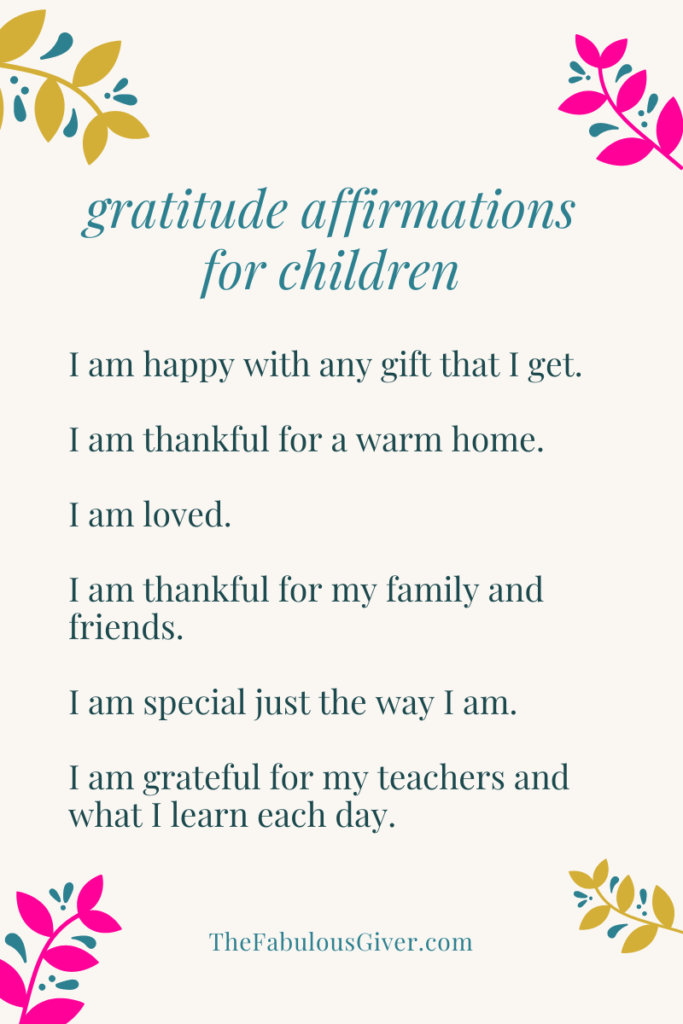
- “I am thankful for my family.”
- “I appreciate my friends.”
- “I am grateful for my toys and games.”
For teens, try:
- “I am grateful for my talents.”
- “I appreciate support from my teachers.”
- “I am thankful for new experiences.”
Parents and teachers can use affirmations during family time or classroom activities. Encouraging gratitude builds confidence and kindness.
How To Measure Progress With Gratitude Affirmations
It’s easy to wonder if gratitude affirmations are working. Here’s how to check your progress:
- Mood tracking: Write down your feelings before and after affirmations.
- Notice changes: Look for more positive thoughts and less stress.
- Check relationships: Are you more patient and thankful with others?
- Review journal entries: See if your gratitude list is growing.
Measuring progress helps you stay motivated. If you don’t see changes right away, keep practicing. Habits take time to build.
Making Gratitude Affirmations Last
The biggest challenge is keeping your gratitude habit strong. Here are some ways to make affirmations last:
- Change statements: Refresh your affirmations every few weeks.
- Join a group: Practice gratitude with friends or online communities.
- Celebrate milestones: Reward yourself for sticking with the habit.
- Reflect on growth: Look back and notice how your mindset has changed.
Staying flexible and creative keeps gratitude fresh and meaningful.
Credit: thefabulousgiver.com
Frequently Asked Questions
What Are The Best Gratitude Affirmations?
The best gratitude affirmations are simple, positive, and personal. For example, “I am grateful for my health,” or “I appreciate the support in my life. ” Choose statements that feel true for you and repeat them daily.
How Long Does It Take For Gratitude Affirmations To Work?
Most people notice changes in their mood within 2–4 weeks of daily practice. It depends on how often you repeat affirmations and how deeply you connect with the words. Consistency and patience are key.
Can Gratitude Affirmations Help With Anxiety Or Depression?
Yes, gratitude affirmations can help reduce anxiety and depression by shifting your focus to positive aspects of life. They work best as part of a larger mental health plan, including therapy and self-care. For more research on gratitude and health, see National Institutes of Health.
Is It Better To Write Or Speak Gratitude Affirmations?
Both methods work well. Speaking affirmations helps you feel the words, while writing them makes them more concrete. Many people combine both: they write affirmations in a journal and say them out loud.
Can Children Use Gratitude Affirmations?
Absolutely. Gratitude affirmations are simple and safe for all ages. Parents and teachers can help children create their own statements. This builds positive thinking and emotional health early in life.
Gratitude affirmations are a powerful tool for building happiness, resilience, and connection. By practicing daily, you can shift your mindset, improve your relationships, and enjoy a richer life. Start small, stay consistent, and let gratitude grow in your heart.
