

Affirmation Vs Manifestation: Key Differences and Benefits Explained
Affirmation Vs Manifestation: Understanding The Differences And Practical Use
Many people want to change their lives for the better. Some use affirmations. Others try manifestation. These two words sound similar, but they are not the same. If you are confused about which to use, you are not alone. By the end of this article, you will know exactly what makes affirmation different from manifestation, how each works, and how to use them for real results in daily life.
Let’s explore their definitions, psychology, common mistakes, and practical tips, so you can confidently choose the right tool for your goals.
What Is Affirmation?
An affirmation is a positive statement you repeat to yourself. People use affirmations to shape their thoughts and boost self-belief. For example, saying “I am confident” each morning is an affirmation. The main goal is to change the way you think and feel about yourself.
Affirmations are usually about:
- Self-worth (“I am valuable”)
- Abilities (“I am creative”)
- Goals (“I am becoming healthier”)
Affirmations are often used in self-help, therapy, and even sports. They help break negative thinking patterns and install new, positive beliefs. However, affirmations are not magic. They work best when you use them with real action.
What Is Manifestation?
Manifestation is the process of bringing something you want into your life by focusing your thoughts, emotions, and beliefs on it. The idea is that what you focus on grows. If you think a lot about success, you attract more success. If you focus on fear, you attract more problems.
Manifestation usually involves:
- Visualizing your goals (“I see myself running my own business”)
- Feeling as if you already have what you want
- Taking steps that move you closer to your goal
Many people link manifestation with the “law of attraction,” which says that positive or negative thoughts bring positive or negative experiences into your life.
Key Differences Between Affirmation And Manifestation
Although both terms relate to positive thinking, their methods and goals are different. Here’s a clear comparison:
| Aspect | Affirmation | Manifestation |
|---|---|---|
| Main Focus | Self-talk, beliefs | Outcomes, experiences |
| How It Works | Repeating positive statements | Visualizing and feeling goals |
| Purpose | Change mindset | Create reality |
| Action Needed | Useful but not required | Essential for results |
| Timeframe | Short-term or long-term | Usually long-term |
The Psychology Behind Affirmation
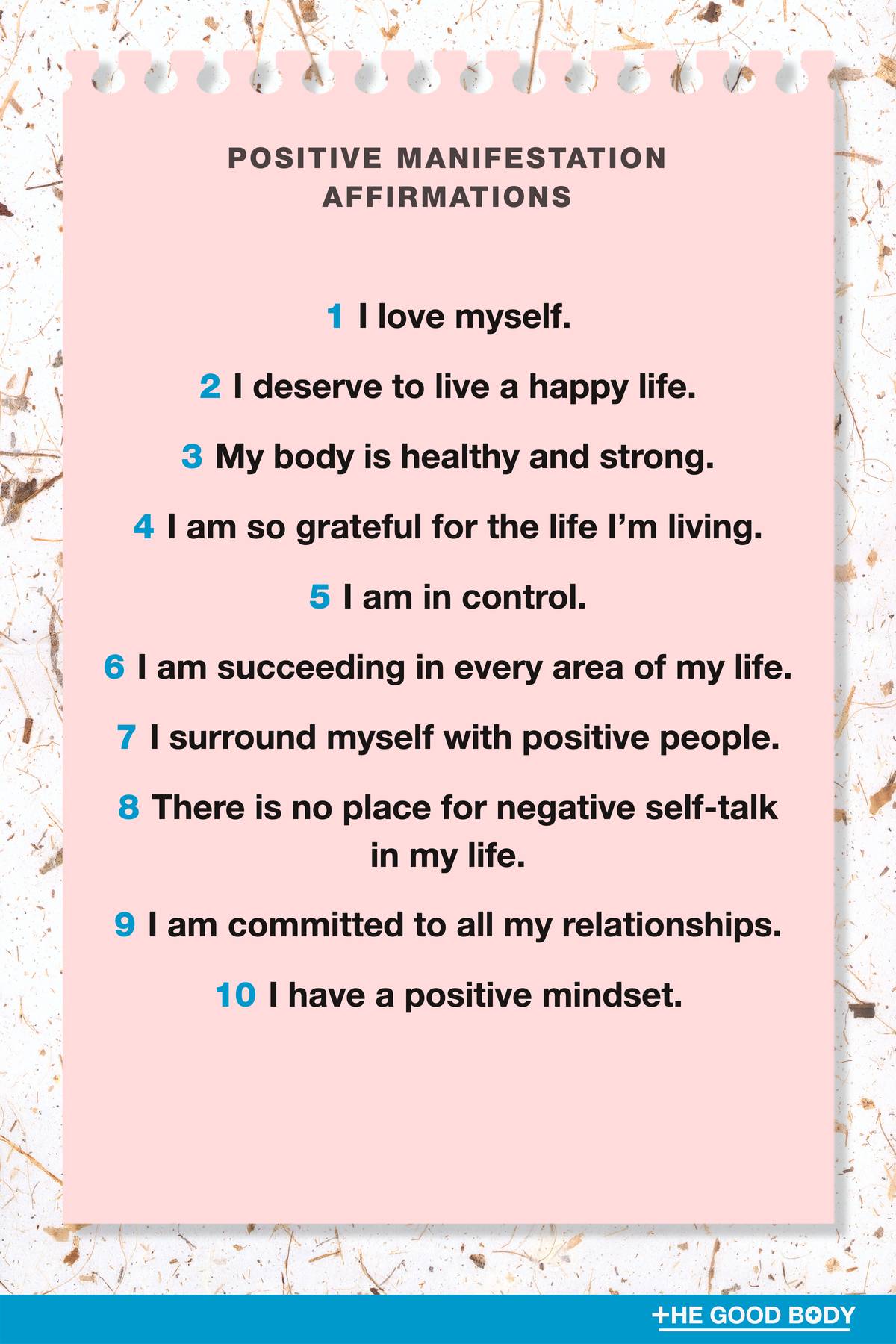
Affirmations are not just positive words. They have a deep effect on the brain. When you say or think something again and again, your mind starts to accept it as true. This is called self-affirmation theory.
Here’s how affirmations work in your mind:
- They replace negative thoughts with positive ones.
- They build self-confidence over time.
- They help reduce stress and anxiety.
- They can even improve performance, as seen in sports and work.
Studies show that positive self-talk can activate reward centers in the brain. This can increase motivation and even reduce pain. However, for people with very low self-esteem, affirmations can sometimes feel fake. In these cases, starting with smaller, more believable statements works better.
Credit: www.thegoodbody.com
The Psychology Behind Manifestation
Manifestation is based on the idea that thoughts shape reality. This is known as the law of attraction. When you focus your energy on something, you start to notice chances and make choices that bring you closer to your goal.
Here’s what happens:
- You create a clear vision of what you want.
- Your brain looks for ways to reach that vision.
- You become more motivated to take action.
- You notice and grab opportunities that match your goal.
Research in positive psychology shows that visualization (a key part of manifestation) can improve goal achievement. Olympic athletes use mental imagery to boost performance. People who visualize their goals are also more likely to stick to them.
Common Myths And Misunderstandings
Many people mix up affirmations and manifestation. Here are some myths you might hear:
- “If I repeat an affirmation, my life will change overnight.”
In reality, affirmations help you change your mindset, but you still need to take action.
- “Manifestation means just wishing for something and it will happen.”
Manifestation works best when you combine positive thinking with real steps toward your goal.
- “Manifestation and affirmations are just for dreamers.”
Both methods are used by successful athletes, business leaders, and therapists.
- “If it does not work right away, it means I’m doing it wrong.”
Change often takes time and patience. Results depend on consistency and effort.
Credit: selfhealjourney.com
How To Practice Affirmations Effectively
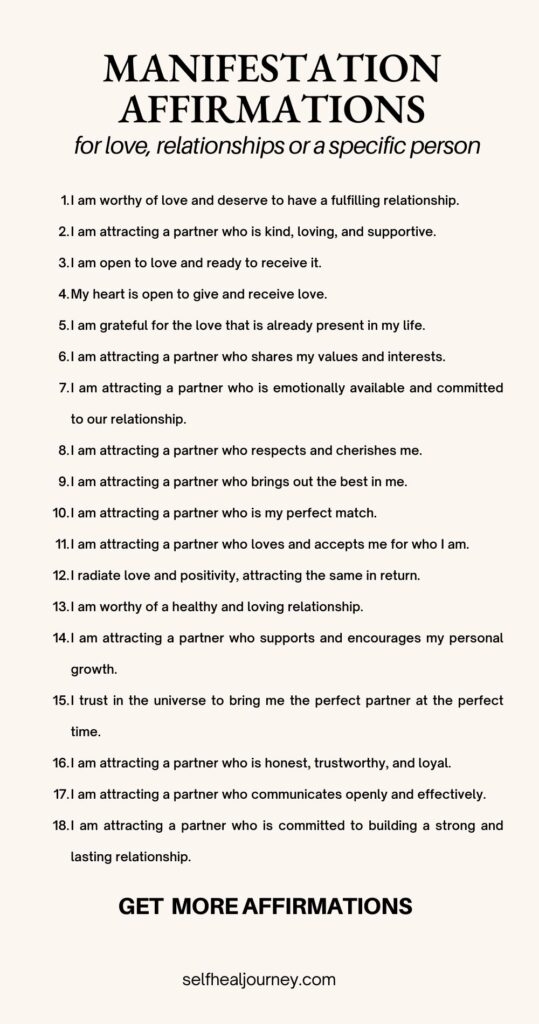
You can start using affirmations today. Here’s a simple guide:
- Choose a statement that matches your goal.
For Example: “i Am Learning New Skills.”
- Make it positive and in the present tense.
Say “i Am Confident,” Not “i Will Be Confident.”
- Repeat it daily, preferably in the morning or before sleep.
- Say it out loud, write it down, or even look in the mirror.
- Feel the meaning as you say it. Don’t just repeat the words.
- Use reminders. Place sticky notes on your desk or set phone alerts.
- Be patient. Change takes time.
Example Affirmations
- “I am worthy of success.”
- “I believe in my abilities.”
- “Every day, I grow stronger.”
Practical Tips
- Start with 1–3 affirmations at a time.
- If a statement feels too big, adjust it. For example, “I am becoming more confident each day.”
- Record yourself saying your affirmations and listen to them.
- Pair affirmations with small actions, like practicing a skill.
How To Practice Manifestation In Real Life
Manifestation is more than just thinking about what you want. It’s about creating a plan and moving towards your goals with intention.
Here’s how to get started:
1. Get Clear On Your Goal
Be specific. Instead of “I want to be happy,” try “I want to start a job I love. ”
2. Visualize The Outcome
Imagine your goal as if it’s already real. Picture the details: sights, sounds, feelings.
3. Feel The Emotion
Try to feel the excitement or gratitude you would have if your goal was achieved.
4. Write It Down
Journaling your goals helps focus your mind. Write in the present tense, as if it’s already true.
5. Take Action
Break your goal into small steps. Do something each day, even if it’s small.
6. Stay Open To Opportunities
Sometimes, the path to your goal is different from what you expect.
7. Practice Gratitude
Notice and appreciate progress, even if it’s small.
Example Manifestation Routine
- Morning: Visualize your goal for 5 minutes.
- Midday: Take one small action (send an email, research, practice).
- Evening: Write what you are grateful for and any progress.
Common Mistakes In Manifestation
- Waiting without acting: Manifestation is not passive. Action is key.
- Focusing on lack: Always thinking about what you don’t have can attract more lack.
- Giving up too soon: Results often come after consistent effort.
When To Use Affirmation Vs Manifestation
Sometimes, you need a mindset change. Other times, you want to achieve a big dream. Here’s when each tool works best:
- Use affirmations if you:
- Want to boost self-esteem
- Need to break negative thinking
- Are working on small daily habits
- Use manifestation if you:
- Have a clear goal you want to achieve
- Are ready to take consistent action
- Want to change something big in your life
Often, the best results come from using both together. For example, affirmations can build confidence, while manifestation helps you reach a specific goal.
Real-life Examples And Case Studies
Understanding theory is good, but real examples make the difference clear.
Affirmation In Action: Overcoming Public Speaking Fear
Ana always felt nervous about speaking in meetings. She started saying, “I am calm and confident when I speak. ” She repeated this every morning and wrote it before each meeting. After a few weeks, her anxiety dropped. She started sharing ideas more often.
Her colleagues noticed her new confidence.
Manifestation In Action: Building A New Career
Rahul wanted to become a graphic designer. He visualized himself working with clients, saw the kind of work he wanted to do, and felt excited about it. Each day, he learned new skills, applied for jobs, and built a portfolio.
After months of effort, he landed his first client. Manifestation helped him stay motivated, but action brought the results.
Using Both: Improving Health
Maria wanted to feel healthier and lose weight. She used affirmations like “I enjoy moving my body” and “I make healthy choices. ” She also visualized herself feeling energetic. She started walking daily, prepared healthy meals, and tracked her progress.
Her mindset changed, and her actions followed.
Scientific Insights And Evidence
While some people see affirmation and manifestation as “wishful thinking,” science gives useful insights.
- Affirmations: Studies show that positive self-affirmation can reduce stress, increase problem-solving ability, and improve performance under pressure. Self-affirmation can also help people cope with failure and setbacks.
- Manifestation: Research on visualization shows that imagining success can increase motivation and improve chances of achieving goals. However, focusing only on the outcome without planning or action can lead to disappointment.
A study published in the journal *Psychological Science* found that people who used “if-then” planning (like, “If I feel nervous, then I will say my affirmation”) were more likely to reach their goals.
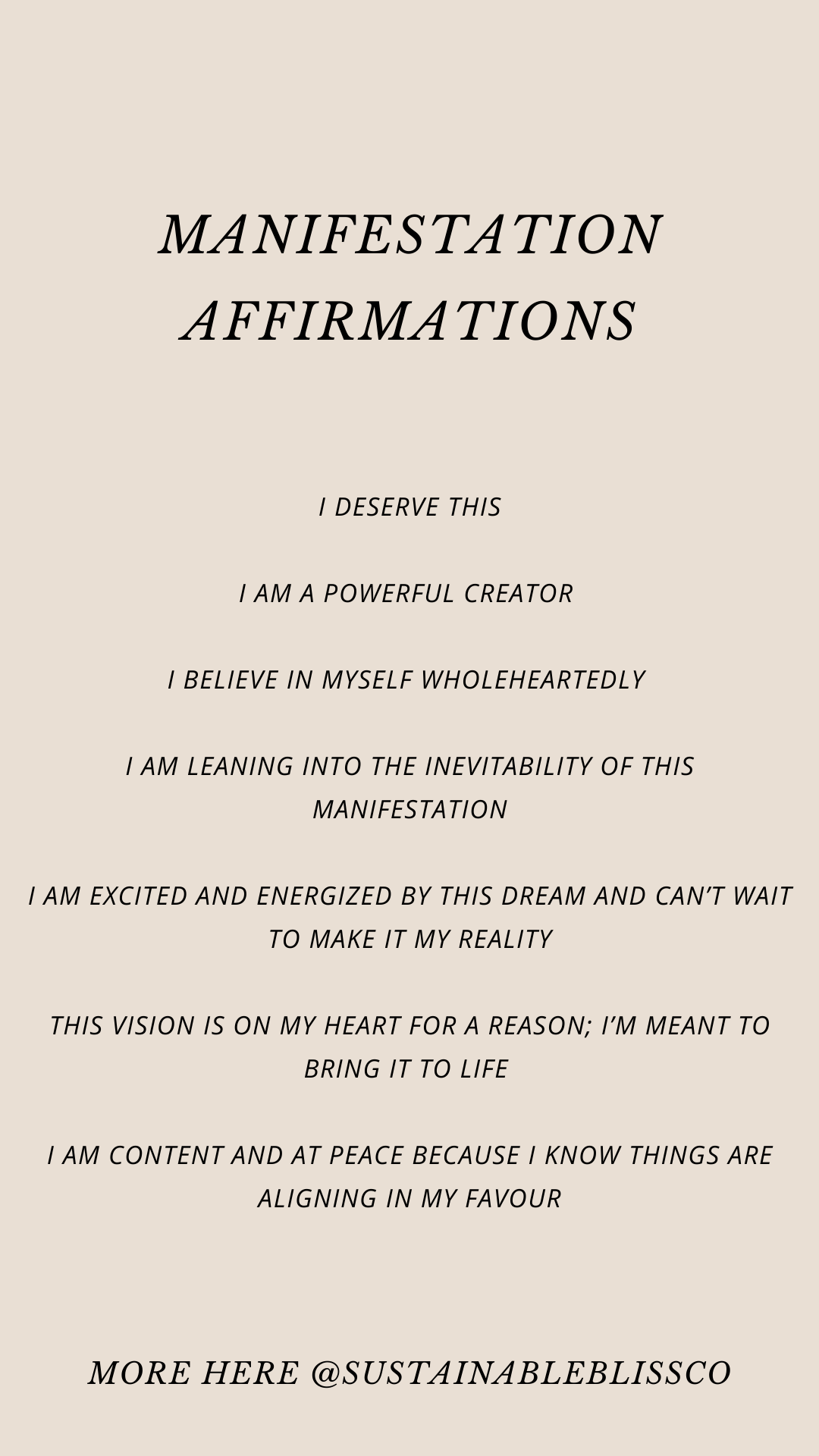
Practical Comparison: Affirmation Vs Manifestation In Everyday Life
Let’s see how both tools look when used for common goals.
| Goal | Affirmation Example | Manifestation Example |
|---|---|---|
| Getting a Job | “I am skilled and ready for new opportunities.” | Visualize getting a job offer, feel the excitement, apply to jobs daily. |
| Improving Relationships | “I am a loving and caring friend.” | Imagine happy time with friends, reach out and spend more time together. |
| Better Health | “I enjoy eating healthy food.” | Picture yourself feeling energetic, make healthy choices daily. |
| Learning a Skill | “I learn new things easily.” | See yourself using the skill, practice every day. |
Credit: www.sustainableblissco.com
How Affirmation And Manifestation Fit Into Personal Growth
Both affirmation and manifestation are tools for personal development. They help you focus your mind, feel more positive, and take charge of your life. However, real growth comes from using them with action.
Here’s how to get the most out of both:
- Set clear intentions: Know what you want and why.
- Use affirmations to build belief in yourself.
- Use manifestation to keep your focus on the end goal.
- Take action, even if small, every day.
- Be patient and adjust your approach when needed.
Non-obvious Insights Beginners Miss
Many people start with affirmations or manifestation and stop because they do not see quick results. Here are two important lessons most beginners miss:
1. Believability Matters
If your affirmation feels untrue (“I am a millionaire” when you struggle with bills), your mind may resist. Start with statements you can partly believe (“I am open to new ways to earn money”).
2. Emotion Is Key
Both affirmation and manifestation work best when you feel the words, not just say or think them. Bring real emotion to your practice. This helps your brain make the change real.
How To Choose: Affirmation, Manifestation, Or Both?
Choosing between affirmation and manifestation depends on your needs.
Ask yourself:
- Do I want to change my self-belief or thinking? (Try affirmations)
- Do I want to reach a specific goal or dream? (Try manifestation)
- Can I use both for better results?
If you feel stuck, start small. Use affirmations to build your confidence, then set a clear goal to manifest.
The Role Of Habits And Environment
Your daily environment affects how well affirmation and manifestation work. If you are surrounded by negativity, it’s harder to stay positive. Here’s how to improve your results:
- Spend time with people who support your growth.
- Remove or limit negative media and influences.
- Create a routine that includes time for affirmations and visualization.
- Track progress to stay motivated.
Measuring Success: What To Expect
Many people ask, “How long does it take to see results?” There is no fixed answer. Some see changes in days, others in months. Here are signs you are on the right track:
- You start to notice new ideas and solutions.
- You feel more motivated and less stressed.
- Small successes begin to appear.
- Others notice positive changes in you.
Remember, both affirmation and manifestation are lifelong tools. The more you practice, the more natural they become.
Useful Resources And Where To Learn More
If you want to go deeper, many books, courses, and articles can help. For a scientific overview, see the Law of Attraction article on Wikipedia.
Other helpful resources include:
- Guided affirmation apps (like ThinkUp)
- Journals for daily affirmation and goal tracking
- Meditation and visualization audios
- Online communities focused on personal growth
Frequently Asked Questions
What Is The Main Difference Between Affirmation And Manifestation?
Affirmation is about changing your inner self-talk to build belief and confidence. Manifestation is about creating real-life results by focusing your thoughts, feelings, and actions on a goal.
Can I Use Both Affirmation And Manifestation At The Same Time?
Yes, using both together can be powerful. Affirmations build your confidence, while manifestation helps you focus on and achieve your goals.
How Long Does It Take For Affirmation Or Manifestation To Work?
There is no set time. Some people notice changes in a few days. Others need weeks or months. Consistency and action are important for results.
What Are Common Mistakes People Make With Affirmation And Manifestation?
Some common mistakes include: not believing the words, not taking action, focusing only on the outcome, and giving up too soon.
Do Affirmations And Manifestation Work For Everyone?
Most people can benefit, but results vary. Success depends on belief, emotion, and taking real action. If you have strong negative beliefs, start with small, believable affirmations.
Affirmation and manifestation are not magic, but they are powerful tools for change when used wisely. Choose the right method for your needs, add action, and watch your life improve, one step at a time.
