

Affirmation Vs Affidavit: Key Differences Explained Simply
Affirmation Vs Affidavit: Key Differences, Uses, And Legal Importance Explained
When you deal with legal documents, you may come across the words affirmation and affidavit. At first glance, these terms might look similar. Both relate to giving a statement and both are used in courts, legal agreements, and official matters. But they are not the same. Understanding the difference is more than just knowing the dictionary meaning. It can affect how your statement is accepted in a legal setting and whether your rights are protected.
Many people, even those with some legal experience, often use these words interchangeably. However, choosing the wrong one can lead to your document being rejected or even legal penalties for false statements. Knowing what each term means and when to use it can make a real difference, especially if you are asked to sign a document for court, a bank, or a business deal.
This article will give you a clear, in-depth explanation of affirmation and affidavit. You will learn what each term means, their main differences, real-world examples, and how to choose the right one for your situation. By the end, you will feel confident using these terms, and you will avoid common mistakes that many people make.
What Is An Affirmation?
An affirmation is a formal declaration that a statement is true. It serves as a promise that the information you are giving is correct, honest, and complete to the best of your knowledge. An affirmation does not involve any religious element. Instead, it is used by people who do not want to take an oath based on religious beliefs, or for those who simply prefer a non-religious way of making a legal promise.
You might be asked to give an affirmation in court, when signing a legal document, or in other official situations. When you affirm, you are saying, “I promise that this is true,” but without referencing any religious belief or deity.
Key Features Of Affirmation
- Non-religious: It is a secular (non-religious) promise of truth.
- Legally binding: Making a false affirmation can lead to the same penalties as lying under oath.
- Personal choice: People can choose to affirm instead of swearing an oath, often for personal, ethical, or religious reasons.
- Used in court and documents: Affirmations are accepted in most courts and legal systems as equal to an oath.
Example Of An Affirmation
Imagine you are a witness in a court case. The judge or official may ask, “Do you swear that the evidence you will give is the truth, the whole truth, and nothing but the truth? ” If you do not want to swear an oath, you can say, “I solemnly, sincerely, and truly declare and affirm that the evidence I shall give shall be the truth, the whole truth, and nothing but the truth.
”
What Is An Affidavit?
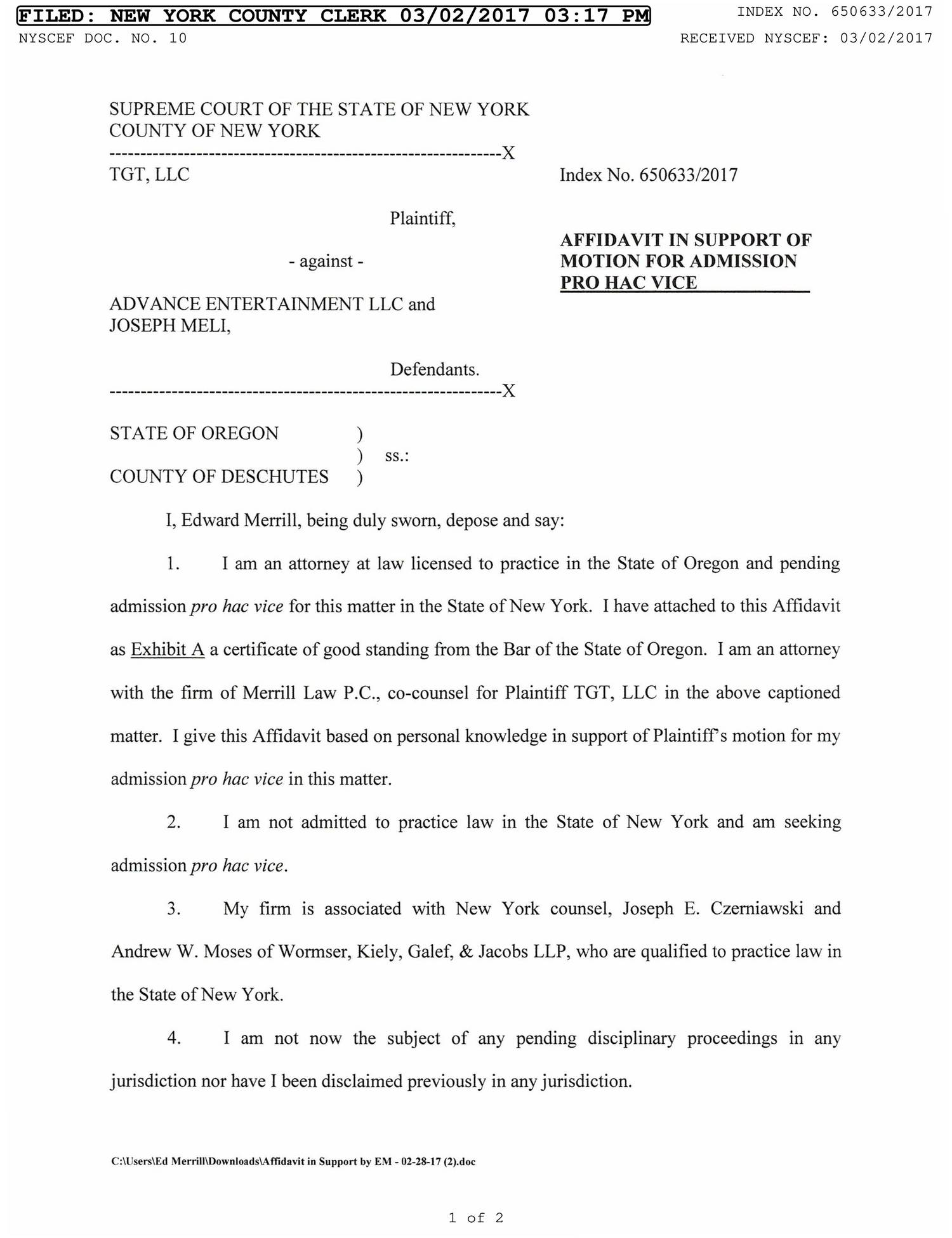
An affidavit is a written statement made under oath or affirmation. It is used as evidence in court or for official purposes. An affidavit is usually signed by the person making the statement (called the deponent) in front of a qualified person, such as a notary public, commissioner of oaths, or a court official. The person signing is promising that everything written is true.
Affidavits are required in many legal situations. For example, you might have to submit an affidavit to prove your identity, your income, or your relationship to someone else. Affidavits are used in civil cases, criminal cases, business dealings, immigration applications, and more.
Key Features Of Affidavit
- Written document: An affidavit is always in writing.
- Made under oath or affirmation: The statement must be sworn or affirmed as true.
- Signed before an authorized person: A notary or similar official must witness the signature.
- Legal evidence: Courts accept affidavits as evidence.
- Penalties for lying: Making a false affidavit is considered perjury, a serious crime.
Example Of An Affidavit
Suppose you are applying for a visa and need to prove your address. You may write an affidavit stating, “I, John Smith, living at 123 Main Street, declare that this is my current address. ” You would then sign this statement in front of a notary public, who confirms your identity and witnesses your signature.
Credit: www.docdroid.net
How Affirmation And Affidavit Are Used In Law
Both affirmation and affidavit play critical roles in legal procedures, but their uses are different. Let’s look at how each is used in practice.
Use Of Affirmation
- Courtroom testimony: Witnesses can choose to give an affirmation instead of swearing an oath before testifying.
- Signing legal documents: Some forms ask if you want to affirm the truthfulness of your statements.
- Official declarations: When a person’s beliefs prevent them from taking a religious oath, affirmations allow them to participate fully in legal processes.
Use Of Affidavit
- Evidence in court: Affidavits are often used when a person cannot appear in court but needs to provide facts.
- Business and financial matters: Banks, insurance companies, and other organizations may require affidavits to confirm identity, loss, or other facts.
- Immigration and family law: Affidavits are common in proving relationships, financial support, or other personal matters.
- Real estate: During property transactions, affidavits are used to prove ownership, residency, or the absence of liens.
Main Differences Between Affirmation And Affidavit
It is easy to confuse these terms because both involve making a promise about the truth. But their differences are important.
| Aspect | Affirmation | Affidavit |
|---|---|---|
| Type | Oral or written statement of truth | Written statement of facts under oath/affirmation |
| Form | Usually spoken, sometimes written | Always written |
| Who uses it | Witnesses, declarants | Deponents (person making the affidavit) |
| Purpose | Promise to tell the truth (non-religious) | Provide legal evidence in writing |
| Witness required? | Often, but not always | Yes, a notary or official must witness the signature |
| Legal status | Equal to an oath | Used as legal evidence |
Legal Importance And Consequences
Both affirmation and affidavit are legally binding. If you lie in an affirmation or affidavit, you can face serious legal trouble, including charges of perjury. Perjury means lying after promising to tell the truth, and is a crime in most countries.
Consequences Of False Affirmation
- Criminal charges: You can be prosecuted for perjury.
- Fines and imprisonment: Courts may impose severe penalties.
- Impact on credibility: Your honesty may be questioned in future legal matters.
Consequences Of False Affidavit
- Perjury charges: False statements in affidavits are taken very seriously.
- Legal penalties: Fines, imprisonment, and loss of legal rights.
- Document invalidity: If your affidavit is proven false, it may be thrown out, and any decisions based on it may be reversed.
Many people do not realize that even if you “just sign” a document without reading it, you are still responsible for its contents. Courts expect you to know what you are signing.
How To Choose Between Affirmation And Affidavit
Understanding when to use each document is key to handling legal matters smoothly. Here’s a practical approach to making the right choice.
When To Use An Affirmation
- If you are being asked to take an oath but prefer not to for personal or religious reasons.
- When you are making a statement in court and want a non-religious option.
- In any official situation where you must promise that your words are true but do not wish to swear an oath.
When To Use An Affidavit
- If you need to provide written evidence for a legal matter.
- When an organization or authority requests a sworn written statement.
- If you cannot attend a hearing or meeting but need your facts to be considered officially.
If you are not sure which to use, it is best to ask the official, lawyer, or authority involved. They can guide you based on local laws and the specific requirements of your case.
Real-world Examples And Case Studies
To make things clearer, let’s look at how affirmation and affidavit are used in real life.
Example 1: Courtroom Testimony
Maria is called as a witness in a civil case. The court clerk asks her to “swear to tell the truth. ” Maria does not want to take a religious oath. She requests to affirm instead. She then gives her evidence, and her affirmation is treated exactly the same as an oath.
Example 2: Property Transaction
Raj is selling his apartment. The buyer’s lawyer asks him for proof that there are no outstanding debts on the property. Raj provides an affidavit, stating “I affirm that there are no liens or loans on this property. ” He signs the affidavit before a notary public.
This affidavit becomes part of the official records.
Example 3: Immigration Application
Fatima is applying to bring her spouse to a new country. She submits an affidavit confirming that they are legally married and living together. The immigration officer uses this affidavit as part of the decision process.
Example 4: Official Declaration Without Religion
John refuses to swear on any religious text. When asked to give a statement for a government form, he chooses the affirmation option. The form allows him to affirm the truth of his answers, making his statement legally valid.
Example 5: Business Loss Claim
A company loses goods in a warehouse fire. The insurance company asks for an affidavit confirming the list and value of lost items. The company manager writes, signs, and swears this affidavit before a notary. The insurer relies on this document to process the claim.
Similarities Between Affirmation And Affidavit
While they are different, affirmation and affidavit have some important similarities:
- Both are legal promises: You are promising to tell the truth.
- Both are accepted in court: Courts treat affirmations and affidavits as valid.
- Both can lead to perjury charges: Lying in either can result in criminal penalties.
- Both require honesty and accuracy: The law expects full honesty in both cases.
Common Misunderstandings And Mistakes
Many people, even experienced professionals, make mistakes about these terms. Here are a few common errors:
- Thinking they are the same thing: Some believe affirmation and affidavit are interchangeable. They are not—one is a form of promise, the other is a written document.
- Not knowing when to affirm: Some people are uncomfortable with religious oaths but do not know they can choose to affirm.
- Signing affidavits without understanding: People sometimes sign affidavits without reading or understanding them, risking legal problems.
- Using affidavits for simple statements: Not all facts require an affidavit; sometimes a simple declaration or affirmation is enough.
A less obvious mistake is not checking local rules. Laws about affidavits and affirmations can vary, so what works in one country or state may not be accepted in another. Always check requirements before preparing or signing official documents.
Legal Requirements For Affirmation And Affidavit
Different countries and regions have specific rules for how affirmations and affidavits are made and accepted. Here are some common requirements:
For Affirmation
- The person must understand what an affirmation means.
- The wording must be clear and show a promise to tell the truth.
- It can be spoken or written, depending on the context.
- In court, the judge or official must accept the affirmation as equal to an oath.
For Affidavit
- The statement must be in writing.
- The person making the affidavit must sign it in front of a qualified witness (often a notary public).
- The affidavit should include the date, place, and full details of the facts.
- Some jurisdictions require specific forms or wording for affidavits.
Non-obvious insight: In some places, an affidavit without the correct format or without a notary’s stamp is not legally valid. Always check local requirements before preparing an affidavit.
Step-by-step: How To Make An Affirmation
- State your intent: Clearly say that you are making an affirmation, not an oath.
- Use the correct words: Most courts or forms provide standard wording, such as “I solemnly affirm…”
- Declare the truth: Clearly state that your statement is true.
- Sign or speak: Depending on the situation, you may need to sign a form or say the affirmation aloud.
- Witnessed if needed: Sometimes, an official must witness your affirmation.
Example spoken affirmation: “I solemnly, sincerely, and truly declare and affirm that the evidence I shall give shall be the truth, the whole truth, and nothing but the truth.”
Step-by-step: How To Write And Sign An Affidavit
- Write the facts: Clearly state all facts you want to include.
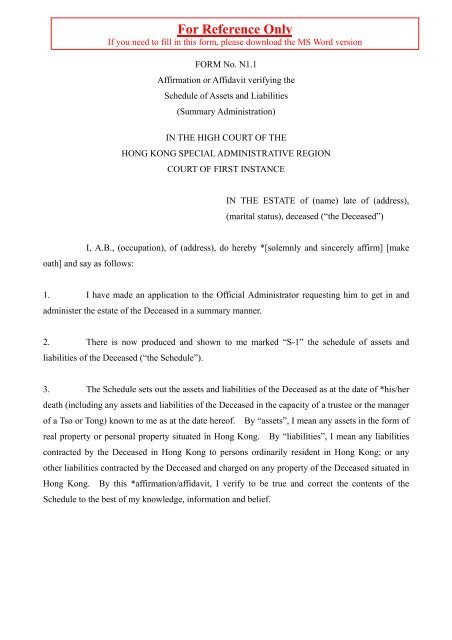
- Use first-person language: Begin with “I, [your name], of [your address], state as follows…”
- Keep it factual: Only include facts you know are true. Avoid opinions.
- Include a statement of truth: Add a line such as “I make this affidavit in good faith, believing it to be true.”
- Sign before an official: Take the affidavit to a notary public or authorized witness. Show your identification.
- Official signs and stamps: The notary or official will sign and stamp the affidavit to make it legal.
Non-obvious tip: Always keep a copy of the signed affidavit for your records. Sometimes, you may need to provide proof that you made the statement.
Credit: www.yumpu.com
Typical Wording: Affirmation And Affidavit
Here are examples of how each might be worded:
Affirmation Example
“I solemnly, sincerely, and truly declare and affirm that the contents of this statement are true and correct to the best of my knowledge and belief. ”
Affidavit Example
“I, [Full Name], of [Address], do hereby make oath and state as follows: [State the facts here]. I make this affidavit in good faith, believing it to be true and correct.”
Who Can Administer Affirmations And Affidavits?
Not everyone can witness or accept affirmations and affidavits. Here are the usual officials:
- Affirmations: Judges, court clerks, or designated officials.
- Affidavits: Notary public, commissioner of oaths, or similar authorized person.
This prevents fraud and ensures that the process is official.
Regional Differences And Cultural Considerations
Laws and customs about affirmations and affidavits can vary widely. Some countries have strong traditions of religious oaths, while others use affirmations as the default. In some places, an affidavit must be in a local language or use exact wording set by law.
For example, in some countries, an affidavit must be notarized, while in others, a commissioner of oaths is enough. Some cultures may prefer affirmations to respect the beliefs of all people.
If you are dealing with an international or cross-border legal issue, always check the specific requirements. Failing to do so can cause delays or even make your documents invalid.
Pros And Cons: Affirmation Vs Affidavit
Here’s a summary to help you compare:
| Feature | Affirmation | Affidavit |
|---|---|---|
| Ease of use | Quick, no paperwork needed if oral | Requires writing and witnessing |
| Flexibility | Can be spoken or written | Always written |
| Legal strength | Accepted in court, but less detailed | Strong legal evidence due to detail |
| Cost | Usually free | May have notary fees |
| Common mistakes | Forgetting to request affirmation instead of oath | Missing notary or official requirements |
Credit: www.template.net
Practical Tips For Making Legal Declarations
- Be honest: Never include information you are unsure about.
- Read before signing: Never sign a legal document unless you have read and understood it fully.
- Keep copies: Always keep a copy of any affirmation or affidavit you make.
- Check local rules: Requirements can change by country, state, or even local court.
- Ask questions: If you are unsure, ask the official or a lawyer before making a statement.
Many beginners miss that even a simple mistake (like a wrong date or missing detail) can make an affidavit or affirmation invalid. Double-check everything.
Importance In Modern Legal And Business Settings
Affirmations and affidavits have become more important as legal and business processes become more global. Digital signatures, remote notarization, and online court hearings now allow people to affirm or submit affidavits from almost anywhere. However, the basic rules remain: truthfulness, proper format, and official witnessing are still required.
For example, some courts now accept affidavits signed electronically, as long as they follow strict guidelines. In business, an affidavit can be the key document that proves a fact without requiring a person to travel or attend a hearing.
For more on the legal standards and history of these documents, see Wikipedia: Affidavit.
Frequently Asked Questions
What Is The Main Difference Between An Affirmation And An Affidavit?
The main difference is that an affirmation is a promise to tell the truth, often spoken and used as an alternative to an oath, while an affidavit is a written statement of facts sworn or affirmed to be true, and signed in front of an authorized official.
Can I Use An Affirmation Instead Of An Affidavit?
No, they serve different purposes. An affirmation is a way to make a promise of truth in court or on a form, while an affidavit is a detailed written document used as evidence. If you need to provide written facts, you must use an affidavit.
What Happens If I Lie In An Affirmation Or Affidavit?
Lying in either is considered perjury. This is a serious crime. You could face fines, jail time, and damage to your reputation or credibility in future legal matters.
Who Can Witness An Affidavit?
Usually, a notary public, commissioner of oaths, or similar official must witness the signing of an affidavit. The rules can vary depending on your country or state.
Is An Affirmation Legally As Strong As An Oath?
Yes, in most legal systems, an affirmation has the same legal strength and effect as an oath. Both are promises to tell the truth, and both can lead to perjury charges if you lie.
The difference between affirmation and affidavit may seem small, but it is important. By understanding each term and their uses, you can handle legal and official matters with greater confidence and avoid costly mistakes.
