

Affirmation Ideas for Students: Boost Confidence and Success
Affirmation Ideas For Students
School life is full of challenges. From exams to social situations, students often face pressure and self-doubt. Sometimes, stress makes it hard to focus or feel confident. Many students struggle with negative thoughts like “I can’t do this” or “I’m not good enough.
” These thoughts can lower motivation and even lead to anxiety.
However, there’s a simple tool that can make a big difference—affirmations. Affirmations are positive statements you repeat to yourself. They help shift your mindset, boost self-esteem, and encourage you to keep going when things get tough. While they may sound simple, regular use of affirmations can help students break negative thinking patterns and build a stronger, more positive outlook.
This article explores why affirmations work, the science behind them, and how you can use them effectively as a student. You’ll find plenty of practical affirmation ideas, examples for different situations, and tips on making affirmations part of your daily routine.
Whether you’re in high school, college, or any learning environment, these strategies can help you succeed both academically and personally.
Why Affirmations Matter For Students
Many students underestimate the power of words. What you say to yourself shapes how you feel and act. Negative self-talk, like “I always fail,” can become a self-fulfilling prophecy. On the other hand, positive affirmations help train your brain to expect success and stay motivated.
Research shows that self-affirmation can reduce stress and improve academic performance. For example, studies from respected universities found that students who used affirmations before tests felt less anxious and scored higher. This isn’t just about “thinking positive”—it’s about creating new pathways in your brain. When you repeat affirmations, your mind starts to believe them, just like it believes negative thoughts if you repeat those.
Affirmations are especially useful for students because:
- They help manage exam stress
- They build self-confidence
- They encourage a growth mindset
- They remind you of your strengths
- They keep you focused on your goals
Many students face imposter syndrome—the feeling that you don’t belong or aren’t good enough. Regular affirmations can help quiet this inner critic and remind you of your abilities.
How Affirmations Work: The Science Explained
To understand why affirmations are powerful, it helps to look at how your brain works. Your brain forms habits by repeating thoughts and actions. When you think something negative over and over, your brain gets used to it. Soon, it feels normal to doubt yourself.
Affirmations work by replacing these negative patterns with positive ones. When you repeat a positive statement, your brain slowly starts to accept it as true. This is called neuroplasticity—the brain’s ability to change and adapt. Over time, affirmations help you build new beliefs about yourself.
For students, this means you can train your brain to feel confident about learning new things or handling stress. Affirmations aren’t magic, but they are a proven tool for building mental strength.

Credit: wholeheartedschoolcounseling.com
Choosing The Right Affirmations: What Makes Them Effective
Not all affirmations are equally helpful. The best ones are:
- Personal: They should matter to you.
- Positive: Focus on what you want, not what you fear.
- Present tense: Say “I am” or “I can,” not “I will.”
- Realistic: Choose statements you can believe, at least a little.
For example, saying “I am a perfect student” may feel fake. But “I am learning and growing every day” is believable and encouraging.
It’s also important to match your affirmations to your current challenge. If you’re nervous about public speaking, use one that addresses confidence in speaking, not just general success.
50 Affirmation Ideas For Students
Below are 50 affirmation ideas to help students in different situations. You can use them as they are or change the words to fit your needs.
- I am capable of learning anything I set my mind to.
- I believe in my ability to succeed.
- I am getting better every day.
- My mistakes help me learn and improve.
- I am prepared and ready for my exams.
- I handle challenges with courage.
- I am focused and organized.
- I manage my time well.
- I am proud of my progress.
- I am calm during tests and exams.
- I trust myself to solve problems.
- I am creative and think outside the box.
- I learn from feedback, not fear it.
- I am worthy of success.
- I am not afraid to ask for help.
- I am persistent, even when things are hard.
- I am in control of my thoughts.
- I can balance my studies and my life.
- I enjoy learning new things.
- I am confident in sharing my ideas.
- I am surrounded by support.
- I deserve to take breaks and rest.
- I am patient with myself.
- I am grateful for my education.
- I am open to growth and change.
- I am resilient in the face of setbacks.
- I am a good listener.
- I am motivated and determined.
- I am proud of how far I’ve come.
- I am enough, just as I am.
- I am responsible for my learning.
- I am organized in my studies.
- I am respectful to myself and others.
- I am curious and ask good questions.
- I am strong, even when I feel nervous.
- I am learning at my own pace.
- I am open to new ideas.
- I am improving my skills every day.
- I am not defined by one test or grade.
- I am building a bright future.
- I am brave when trying something new.
- I am proud of my unique talents.
- I am able to overcome distractions.
- I am focused on my goals.
- I am a positive influence on others.
- I am responsible with my time.
- I am always learning, inside and outside the classroom.
- I am thankful for supportive teachers and friends.
- I am in charge of my own happiness.
- I am growing into the person I want to be.
These affirmations cover many common student situations, from test anxiety to motivation and self-worth.
When And How To Use Affirmations
Affirmations work best when you use them regularly. Here are some practical ways to fit them into your day:
- Morning routine: Start your day with three affirmations.
- Before studying: Say an affirmation to set a positive tone.
- Before tests or presentations: Use calming affirmations to reduce anxiety.
- After setbacks: Remind yourself that mistakes are part of learning.
- Before bed: Reflect on what went well and use affirmations for tomorrow.
You can say affirmations out loud, write them in a journal, or even record them and listen back. Some students like to put sticky notes on their desk or mirror as reminders.
Example: A Day Using Affirmations
Imagine a typical school day. You wake up and say, “I am ready for what today brings. ” Before class, you tell yourself, “I am focused and alert. ” After a tough quiz, you think, “I learn from my mistakes.
” At night, you write in your journal, “I am proud of my effort today. ”
This routine helps you start and finish the day with confidence, and it supports you in moments of stress.
Affirmations For Specific Student Challenges
Students face many unique pressures. Using the right affirmation for each situation can make them more effective.
Affirmations For Exam Stress
Exams cause anxiety for many students. The right words can calm your mind and help you focus. Try these:
- I am prepared and ready.
- I trust my memory and skills.
- I stay calm and positive during exams.
Affirmations For Procrastination
Putting off work is a common problem. Affirmations can boost motivation:
- I take action, even on small tasks.
- I make progress every day.
- I use my time wisely.
Affirmations For Self-doubt
Self-doubt can hold you back. Use affirmations like:
- I believe in my abilities.
- I am worthy of good grades.
- I am not defined by others’ opinions.
Affirmations For Social Confidence
School isn’t just about academics; social life matters too. These affirmations help with confidence:
- I am comfortable being myself.
- I make friends easily.
- I communicate clearly and kindly.
Affirmations For Focus
Staying focused is hard with so many distractions. Try these:
- I concentrate fully on my work.
- I ignore distractions and stay on task.
- I give my best effort to every subject.
Making Affirmations A Habit: Practical Tips
It’s easy to try affirmations once and then forget about them. Here’s how to make them a daily habit:
- Choose 3-5 affirmations that really speak to you.
- Write them down where you will see them often—on your phone, notebook, or wall.
- Repeat them every day, ideally at the same time (like in the morning).
- Say them with feeling, not just words. Imagine them being true.
- Review and change your affirmations as your goals or challenges change.
Many students stop using affirmations because they expect instant results. But like exercise, the benefits grow with time and practice.
Insight: Affirmations Are Not Just For Problems
A common mistake is using affirmations only when things go wrong. They are even more powerful when used as a regular part of your routine, not just in emergencies. This way, you build confidence and resilience before challenges appear.
Insight: Make Affirmations Visual
Some students find it helpful to pair affirmations with images. For example, you can create a vision board with your goals and favorite affirmations. Visual reminders can make your statements feel more real.
Common Mistakes Students Make With Affirmations
Affirmations are simple, but there are a few common mistakes:
- Choosing unrealistic statements: If you don’t believe your affirmation at all, it won’t help. Start small and believable.
- Not being consistent: Repeating affirmations only once doesn’t build a habit.
- Focusing on what you don’t want: Affirmations should be positive. For example, say “I am calm” instead of “I am not nervous.”
- Ignoring your feelings: If you feel upset, don’t force a happy statement. Instead, try, “I am learning to handle tough emotions.”
Recognizing these mistakes can help you get better results from your affirmations.
Data: Do Affirmations Really Help Students?
Many students wonder if affirmations truly work or if they are just wishful thinking. Here’s a look at some findings:
| Study | Group | Result |
|---|---|---|
| University Research (Self-Affirmation & Exams) | High school students | Lower stress and higher test scores after using affirmations |
| Classroom Intervention | College students | Improved confidence and classroom participation |
| Growth Mindset Study | Elementary students | Greater resilience and better grades |
These results show that affirmations can improve both emotional well-being and academic performance. While not a replacement for study or good habits, affirmations are a valuable support tool.
Examples: Student Experiences With Affirmations
Hearing how others use affirmations can offer inspiration. Here are a few real-life examples:
- Sara, a university student, struggled with public speaking. She started saying, “I am confident when sharing my ideas.” Over time, she noticed less anxiety before presentations and even volunteered to speak in class.
- Ahmed, a high school student, had trouble with math. His affirmation was, “I am getting better at math every day.” With daily practice and his new mindset, his grades improved, and he no longer dreaded math class.
- Maya, a middle school student, felt left out by classmates. She used, “I am a good friend and attract positive people.” Soon, she found herself connecting with new friends.
These stories show that affirmations can help in both academic and social areas.
Table: Affirmations For Different Student Needs
Choosing the right affirmation depends on your situation. Here’s a quick guide:
| Situation | Recommended Affirmation |
|---|---|
| Exam stress | I am calm and prepared. |
| Procrastination | I take action now. |
| Self-doubt | I believe in myself. |
| Social anxiety | I am comfortable around others. |
| Low motivation | I am motivated and determined. |
Use this as a starting point to create your own personal affirmations.
Table: Affirmations Vs. Negative Self-talk
Seeing the difference between affirmations and negative self-talk can help you notice your habits. Here’s a comparison:
| Negative Self-Talk | Affirmation Replacement |
|---|---|
| I always mess up exams. | I do my best and learn from each test. |
| I’m not smart enough. | I am capable of learning new things. |
| No one likes me at school. | I am a good friend and attract positive people. |
| I can’t finish my homework. | I am organized and complete my assignments on time. |
| I am terrible at public speaking. | I am confident when I speak in front of others. |
By replacing negative thoughts with affirmations, you can change your mindset and your results.
Additional Tips: Making Affirmations Work For You
- Pair affirmations with action: Affirmations are more effective when you also take steps toward your goals. For example, saying “I am a good student” and then studying helps your brain connect words with action.
- Share with a friend: Find a study buddy and share affirmations. Supporting each other can make you both more consistent.
- Use technology: Apps and reminders can help you remember to use affirmations. Some apps even send daily positive messages.
- Adjust for your needs: If an affirmation stops feeling helpful, change it. Your mindset and challenges will change as you grow.
- Celebrate small wins: Every time you see improvement, even a little, notice it. This builds confidence in your affirmations.
Real-world Example: Affirmations In A Study Group
A group of university students decided to start each study session with a positive affirmation. At first, it felt a bit awkward, but after a few weeks, they noticed better focus and less stress. Group members began to support each other’s growth, and their grades improved.
This shows that affirmations can work even better when done together.
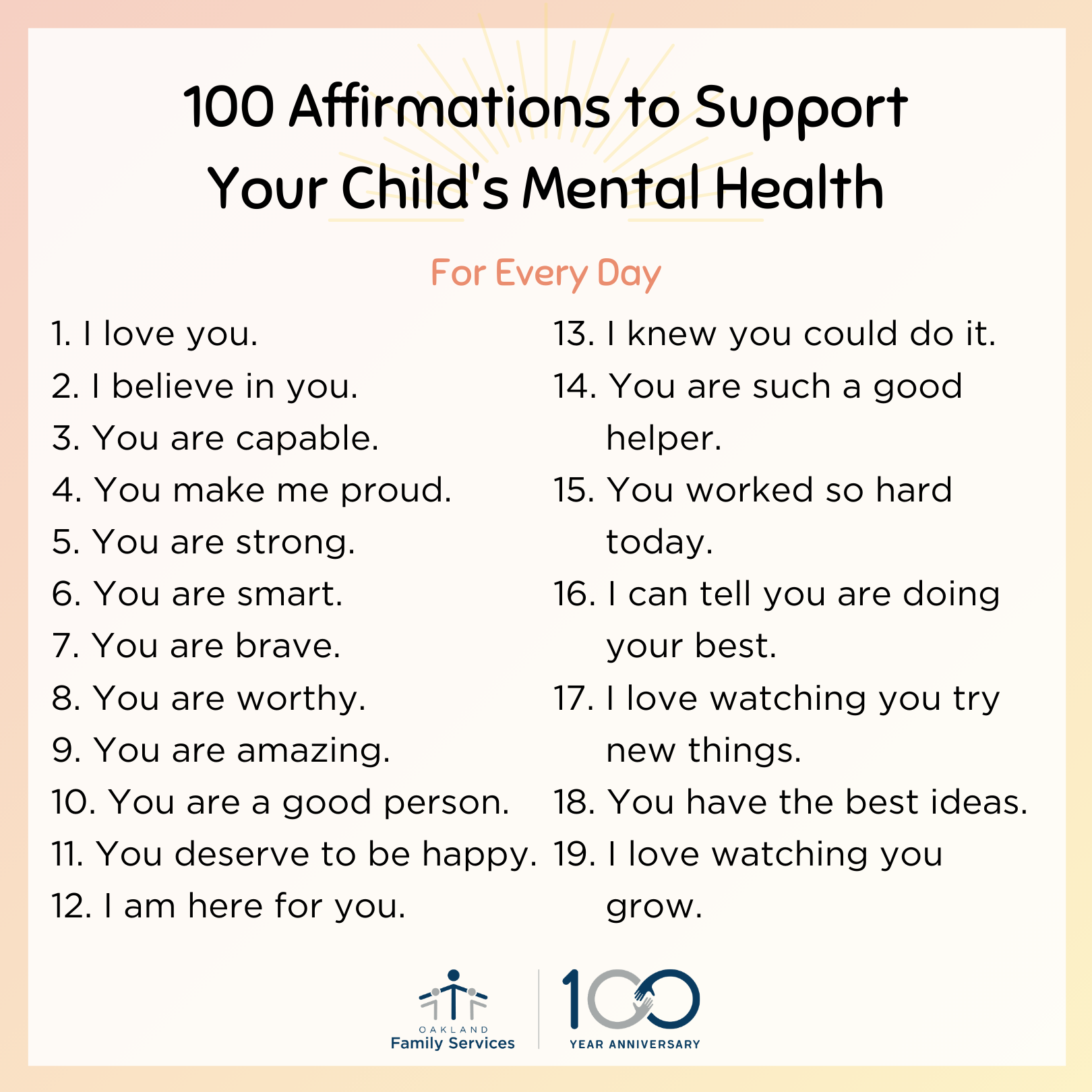
Credit: www.oaklandfamilyservices.org
The Limitations Of Affirmations
Affirmations are a useful tool, but they are not a magic fix. If you are struggling with serious anxiety, depression, or learning difficulties, it’s important to seek help from a teacher, counselor, or mental health professional. Affirmations should support—not replace—other healthy habits and strategies.
Helpful Resources For Students
If you want to learn more about the science behind affirmations, you can check out this Wikipedia article on self-affirmation.
Other resources include books on positive psychology, school counseling services, and mindfulness apps designed for students.

Credit: www.thepathway2success.com
Frequently Asked Questions
What Are Affirmations And Why Should Students Use Them?
Affirmations are short, positive statements you repeat to yourself. They help students change negative thinking, build self-confidence, and manage stress. Regular use of affirmations can improve both academic performance and personal well-being.
How Often Should I Use Affirmations As A Student?
For best results, use affirmations daily. Many students find it helpful to repeat them in the morning, before studying, or before exams. Consistency is key—try to make affirmations a regular habit.
Can Affirmations Help With Exam Stress And Anxiety?
Yes, affirmations can reduce exam stress. By focusing on positive, calming statements like “I am prepared and calm,” students can lower anxiety and perform better during tests.
Do Affirmations Really Work, Or Is It Just Wishful Thinking?
Research supports the effectiveness of affirmations. Studies show that students who use affirmations have lower stress, higher confidence, and sometimes even better grades. The key is to use realistic, personal affirmations and combine them with action.
What Should I Do If Affirmations Don’t Seem To Help?
If affirmations don’t help right away, don’t give up. It takes time to change your thinking habits. Make sure your affirmations are believable, positive, and specific to your needs. If you’re struggling with strong negative feelings, consider talking to a teacher, counselor, or mental health professional for extra support.
Using affirmations is a small change that can have a big impact. By choosing the right words and making them a part of your daily life, you can build confidence, handle stress, and enjoy your learning journey even more. Remember: the most important voice in your life is your own—make it a positive one.
