

Affirmation Ideas for Adults: Boost Confidence and Positivity
Affirmation Ideas For Adults
Every adult faces moments of self-doubt, stress, or a lack of motivation. Sometimes, life gets overwhelming and it feels hard to move forward with confidence. This is where affirmations can make a real difference. Affirmations are positive statements you say to yourself to encourage growth, resilience, and happiness. They are not just for children or people struggling with mental health—they are practical tools that anyone can use, at any stage of life, to build a stronger mindset.
Saying or writing affirmations can help you change negative thoughts, boost your mood, and even improve your physical health. Research shows that regular use of positive self-talk can reduce stress, increase well-being, and support better decision-making. But for many adults, finding the right words or knowing how to use affirmations effectively can be a challenge.
This article will guide you through a wide range of affirmation ideas for adults, practical ways to use them, and some common mistakes to avoid. You will also find real-world examples, comparison tables, and answers to the most frequently asked questions about affirmations.
What Makes Affirmations Work For Adults?
Affirmations are more than just repeating words. They work by helping your brain focus on positive beliefs and possibilities. When you say an affirmation, you are training your mind to notice opportunities, handle setbacks better, and feel more in control.
This is especially important for adults, who often have busy schedules, stressful jobs, and personal responsibilities.
Many people assume affirmations are only for boosting self-esteem. In reality, they can help with a wide range of goals: managing anxiety, improving work performance, building better relationships, and even supporting healthy habits. The power comes from consistency and believability. If you repeat a statement often and truly try to believe it, your brain starts to act as if it’s true.
Types Of Affirmations Adults Can Use
There is no single formula for the perfect affirmation. What matters most is that the words feel personal and relevant to your life. Here are some common types of affirmations adults find helpful:
- Self-Confidence Affirmations: Focus on your strengths and abilities.
- Stress Relief Affirmations: Help you stay calm and centered.
- Motivation Affirmations: Encourage you to keep going, even when it’s tough.
- Relationship Affirmations: Support positive connections with others.
- Health and Wellness Affirmations: Encourage healthy choices and habits.
- Financial Affirmations: Build confidence in handling money.
- Personal Growth Affirmations: Focus on learning and self-improvement.
Let’s explore each type in more detail.

Credit: www.teacherspayteachers.com
Self-confidence Affirmation Ideas
Building self-confidence is important for adults in work, relationships, and personal goals. Here are some affirmation ideas to help you believe in yourself:
- “I am capable of handling whatever comes my way.”
- “My skills and talents are valuable.”
- “I trust myself to make good decisions.”
- “I am worthy of respect and kindness.”
- “Every day, I become more confident in my abilities.”
A common mistake is using affirmations that feel too far from your current reality. For example, saying “I am the best at my job” when you don’t believe it can backfire. Instead, focus on small, believable steps like “I am learning and improving every day.
”
Stress Relief Affirmation Ideas
Stress is a part of adult life, but it doesn’t have to control you. Affirmations for stress relief can help you feel more relaxed and in control.
- “I am calm, even when things get busy.”
- “I breathe deeply and let go of tension.”
- “I cannot control everything, but I can control my response.”
- “I give myself permission to take breaks and rest.”
- “I trust that things will work out in the end.”
One non-obvious insight: Pairing affirmations with a physical action, like deep breathing, can make them more effective.

Credit: fixmassaazid.ee
Motivation Affirmation Ideas
Staying motivated is hard, especially when facing setbacks. These affirmations can help you push through challenges:
- “I am committed to my goals, even on tough days.”
- “I have the power to create change in my life.”
- “Each step forward counts, no matter how small.”
- “I am persistent and don’t give up easily.”
- “My efforts are moving me closer to success.”
Try writing these on sticky notes and placing them where you see them often. This helps keep motivation high throughout the day.
Relationship Affirmation Ideas
Healthy relationships require effort and positive thinking. Use affirmations to improve how you connect with others:
- “I communicate clearly and listen with empathy.”
- “I attract positive and supportive people into my life.”
- “I am deserving of love and respect.”
- “I let go of past hurts and focus on the present.”
- “I value the people in my life and show appreciation.”
Many adults overlook the power of affirmations for relationships. They can reduce conflict, improve understanding, and help you set healthy boundaries.
Health And Wellness Affirmation Ideas
Physical and mental health are deeply connected to our thoughts. Use these affirmations to support your well-being:
- “I make choices that are good for my body and mind.”
- “I am strong and healthy.”
- “Each day, I grow healthier and more energetic.”
- “I listen to my body’s needs.”
- “Taking care of myself is a priority.”
Pairing affirmations with healthy actions—like drinking water or going for a walk—can reinforce positive habits.
Financial Affirmation Ideas
Money worries are common among adults. These affirmations can help you develop a healthier relationship with finances:
- “I am responsible with my money.”
- “Opportunities to earn and save are always available to me.”
- “I deserve financial security.”
- “I make wise financial decisions.”
- “My financial situation is improving.”
It’s important to be honest with yourself. If you struggle with money, start with small, realistic statements rather than grand promises.
Personal Growth Affirmation Ideas
Adults often feel stuck or unsure of how to grow. Use these affirmations to focus on learning and becoming your best self:
- “I am open to new experiences and ideas.”
- “Mistakes help me learn and grow.”
- “Every challenge is a chance to improve.”
- “I am proud of how far I have come.”
- “I am always learning and developing.”
Growth takes time. Affirmations can help you stay patient and focused on progress instead of perfection.
How To Create Your Own Affirmations
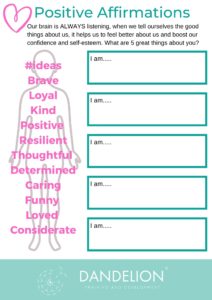
While ready-made affirmations are helpful, creating your own makes them more powerful. Here’s how you can craft affirmations that fit your life:
- Be Specific: Focus on a particular area you want to improve.
- Use Present Tense: Say it as if it’s happening now.
- Keep It Positive: Avoid negative words like “don’t” or “can’t.”
- Make It Believable: Choose words you can truly accept.
- Keep It Short: Simple statements are easier to remember.
For example, instead of saying “I won’t be anxious at work,” try “I am calm and confident at work. ”
Credit: dandeliontraininganddevelopment.com
Practical Ways To Use Affirmations In Daily Life
Saying an affirmation once will not make a big difference. The key is to use them regularly and in ways that fit your routine. Here are some practical ideas:
- Morning Routine: Start your day by saying affirmations in front of a mirror.
- Journaling: Write down your affirmations each day.
- Phone Reminders: Set daily reminders with your favorite affirmations.
- Sticky Notes: Place them on your desk, fridge, or bathroom mirror.
- During Stressful Moments: Repeat affirmations when you feel anxious or upset.
One insight many adults miss: Affirmations can be spoken out loud, written, or even sung. Experiment to find what feels most natural.
Common Mistakes When Using Affirmations
Even though affirmations are simple, some mistakes can reduce their impact. Here are a few to watch out for:
- Choosing Unrealistic Statements: If you pick affirmations that feel impossible, your mind will reject them.
- Being Inconsistent: Skipping days or only using affirmations when you’re upset won’t build a habit.
- Ignoring Feelings: If you say an affirmation but don’t try to feel it, the impact is weaker.
- Copying Others Without Personalizing: Generic affirmations may not fit your unique situation.
- Expecting Instant Results: Change takes time. Stick with it.
Comparing Affirmation Methods
Different people use affirmations in different ways. Some speak them out loud, others write them down, and some use audio recordings. Here is a comparison of common methods:
| Method | Pros | Cons |
|---|---|---|
| Speaking Aloud | Boosts confidence; easy to add to routines | May feel awkward at first; not always private |
| Writing | Helps remember affirmations; deeper reflection | Takes more time; easy to forget |
| Listening to Recordings | Hands-free; great for busy people | Less personal; requires preparation |
| Visual Reminders | Constant cues; easy to see throughout the day | May become “background noise” |
Sample Affirmation Routines For Adults
If you want to start using affirmations but are not sure how to fit them into your day, try these sample routines:
Morning Affirmation Routine
- Wake up and take three deep breaths.
- Stand in front of the mirror and say 2–3 affirmations for confidence or motivation.
- Write one affirmation in your journal for the day.
- As you get ready, repeat your favorite affirmation in your head.
Workday Affirmation Routine
- Start your work with a positive affirmation about your skills.
- When you feel stressed, close your eyes and repeat a calming affirmation.
- End your workday by reflecting on one thing you did well and affirming your progress.
Evening Affirmation Routine
- Before bed, write down an affirmation for gratitude or personal growth.
- Repeat an affirmation as you relax or do gentle stretching.
- Visualize yourself achieving a goal while saying your affirmation.
Data: How Effective Are Affirmations?
Studies have shown that affirmations can lead to real changes in mood and behavior. For example, research published in the journal Social Cognitive and Affective Neuroscience found that self-affirmation activates parts of the brain connected to reward and positive feelings. Another study showed that people who used affirmations before stressful events had lower levels of the stress hormone cortisol.
Here’s a summary of findings:
| Benefit | Study Result |
|---|---|
| Reduced Stress | Participants using affirmations had lower cortisol levels |
| Improved Performance | Affirmations before a test led to higher scores |
| Greater Well-Being | Regular users reported more optimism and happiness |
| Healthier Habits | Affirmations helped people stick with exercise and diet plans |
Best Times To Use Affirmations
The timing of affirmations can make a difference in how well they work. Here are some ideal moments:
- First thing in the morning: Sets a positive tone for the day.
- Before important events: Like meetings, interviews, or difficult conversations.
- During stressful moments: Helps calm your mind and body.
- Before sleep: Encourages relaxation and positive thoughts.
Many adults miss the chance to use affirmations during transitions—for example, when moving from work to home, or before starting a new task. Try adding affirmations to these moments for better results.
How To Measure Your Progress
Using affirmations should lead to real changes in your feelings and actions. But how do you know if they are working? Here are some ways to track progress:
- Mood Journal: Write down how you feel before and after using affirmations.
- Habit Tracker: Mark each day you use your affirmations.
- Goal Review: Check if you are moving closer to your goals.
- Feedback from Others: Notice if people comment on changes in your attitude or confidence.
One insight many overlook: Progress may be slow at first, but small shifts—like feeling calmer or more hopeful—are signs your affirmations are working.
Combining Affirmations With Other Self-help Tools
Affirmations are powerful, but they work even better when combined with other strategies:
- Visualization: Imagine yourself living out your affirmation.
- Mindfulness: Stay present and aware while repeating affirmations.
- Gratitude Practice: Pair affirmations with things you are thankful for.
- Physical Movement: Use affirmations during exercise or stretching.
For more evidence-based tools to support mental health, you can visit Psychology Today.
Advanced Tips For Affirmation Success
After you have mastered the basics, try these advanced techniques:
- Affirmation Stacking: Combine several affirmations into one longer statement.
- Anchor Affirmations: Pair a statement with a physical gesture, like touching your heart.
- Affirmation Cards: Create a deck of cards with different affirmations to draw from each day.
- Group Affirmations: Share and repeat affirmations with a friend or support group.
Another insight: The more senses you involve (sight, sound, touch), the stronger the impact.
Sample Affirmations For Specific Adult Challenges
Every adult faces unique challenges. Here are sample affirmations for common adult issues:
For Career Growth
- “I am open to new opportunities in my career.”
- “I handle challenges at work with confidence.”
- “My contributions are valued and recognized.”
For Parenting
- “I am patient and loving with my children.”
- “I do my best, and that is enough.”
- “Each day, I grow as a parent.”
For Dealing With Change
- “I adapt easily to new situations.”
- “Change brings new possibilities.”
- “I am strong in the face of uncertainty.”
For Overcoming Mistakes
- “I forgive myself and learn from my mistakes.”
- “Every mistake is a step toward growth.”
- “I choose to focus on progress, not perfection.”
For Building Healthy Habits
- “I enjoy taking care of my body.”
- “Healthy choices come naturally to me.”
- “Each day, I build habits that support my well-being.”
Affirmations And Cultural Differences
It’s important to remember that affirmations are not “one size fits all. ” Cultural beliefs and personal values shape how affirmations feel and work. In some cultures, talking about your strengths openly may feel uncomfortable or strange. In these cases, try using softer language, focusing on gratitude, or adapting the affirmation to fit your beliefs.
For example, instead of “I am the best,” you might say “I am grateful for my abilities and do my best each day. ” The key is to choose words that feel right for you.
Affirmations And Mental Health
If you struggle with anxiety, depression, or other mental health issues, affirmations can support your recovery—but they are not a replacement for professional help. Use affirmations as part of a larger self-care plan, and seek support if needed. Some people find it helpful to work with a therapist to create affirmations that address specific challenges.
Data Table: Affirmation Impact By Area
To better understand where affirmations have the most impact, see the table below:
| Focus Area | Reported Improvement (Percentage of Users) | Example Benefit |
|---|---|---|
| Self-Confidence | 78% | Greater belief in abilities |
| Stress Management | 65% | Lower anxiety and worry |
| Motivation | 72% | Higher energy to reach goals |
| Relationships | 59% | Improved communication |
| Health Habits | 54% | Better consistency with exercise/diet |
This data suggests that while affirmations help in many areas, they are especially powerful for building self-confidence and motivation.
Frequently Asked Questions
What Are Affirmations And Why Do Adults Use Them?
Affirmations are positive statements you repeat to yourself to change negative thoughts, boost confidence, or reach specific goals. Adults use them to manage stress, stay motivated, and support healthy habits. Research shows that affirmations can improve mood and help people handle challenges better.
How Often Should I Say My Affirmations?
For the best results, use affirmations daily. Most people find success by repeating them in the morning, during stressful moments, or before bed. Consistency is important—try to make affirmations a regular part of your routine.
Can Affirmations Really Change My Life?
Affirmations work by changing your mindset over time. They help you focus on your strengths and possibilities, which can lead to better choices and more positive feelings. While they are not magic, many people find that regular use leads to real improvements in confidence, motivation, and well-being.
What If I Don’t Believe My Affirmations At First?
It is normal to feel awkward or doubtful at first. Start with statements that feel true or almost true to you. As you repeat them and notice small positive changes, your belief will grow. You can also adjust the wording to make it more believable.
Should I Use Affirmations For Serious Mental Health Issues?
Affirmations can support mental health but should not replace professional help. If you are dealing with anxiety, depression, or other serious issues, use affirmations alongside therapy, medication, or other treatments. Always reach out to a mental health professional if you need more support.
Affirmations can be a simple yet powerful part of your self-care toolkit. With regular practice, the right words, and a bit of patience, you can build a more confident, resilient, and positive mindset. Start today—your future self will thank you.
